The European Commission has proposed changes to the GDPR and the EU AI Act as part of its Digital Omnibus Package, seeking to clarify how personal data may be processed for AI development and operation across the EU.
A new provision would recognise AI development and operation as a potential legitimate interest under the GDPR, subject to necessity and a balancing test. Controllers in the EU would still need to demonstrate safeguards, including data minimisation, transparency and an unconditional right to object.
The package also introduces a proposed legal ground for processing sensitive data in AI systems where removal is not feasible without disproportionate effort. Claims that strict conditions would apply, requiring technical protections and documentation throughout the lifecycle of AI models in the EU.
Further amendments would permit biometric data processing for identity verification under defined conditions and expand the rules allowing sensitive data to be used for bias detection beyond high-risk AI systems.
Overall, the proposals aim to provide greater legal certainty without overturning existing data protection principles. The EU lawmakers and supervisory authorities continue to debate the proposals before any final adoption.
Would you like to learn more about AI, tech and digital diplomacy? If so, ask our Diplo chatbot!
Derived from the Latin word ‘superanus’, through the French word ‘souveraineté’, sovereignty can be understood as: ‘the ultimate overseer, or authority, in the decision-making process of the state and in the maintenance of order’ – Britannica. Digital sovereignty, specifically European digital sovereignty, refers to ‘Europe’s ability to act independently in the digital world’.
In 2020, the European Parliament already identified the consequences of reliance on non-EU technologies. From the economic and social influence of non-EU technology companies, which can undermine user control over their personal data, to the slow growth of the EU technology companies and a limitation on the enforcement of European laws.
Today, these concerns persist. From Romanian election interference on TikTok’s platform, Microsoft’s interference with the ICC, to the Dutch government authentication platform being acquired by a US firm, and booming American and Chinese LLMs compared to European LLMs. The EU is at a crossroads between international reliance and homegrown adoption.
The issue of the EU digital sovereignty has gained momentum in the context of recent and significant shifts in US foreign policy toward its allies. In this environment, the pursuit of the EU digital sovereignty appears as a justified and proportionate response, one that might previously have been perceived as unnecessarily confrontational.
In light of this, this analysis’s main points will discuss the rationale behind the EU digital sovereignty (including dependency, innovation and effective compliance), recent European-centric technological and platform shifts, the steps the EU is taking to successfully be digitally sovereign and finally, examples of European alternatives
Rationale behind the move
The reasons for digital sovereignty can be summed up in three main areas: (I) less dependency on non-EU tech, (ii) leading and innovating technological solutions, and (iii) ensuring better enforcement and subsequent adherence to data protection laws/fundamental rights.
(i) Less dependency: Global geopolitical tensions between US-China/Russia push Europe towards developing its own digital capabilities and secure its supply chains. Insecure supply chain makes Europe vulnerable to failing energy grids.
More recently, US giant Microsoft threatened the International legal order by revoking US-sanctioned International Criminal Court Chief Prosecutor Karim Khan’s Microsoft software access, preventing the Chief Prosecutor from working on his duties at the ICC. In light of these scenarios, Europeans are turning to developing more European-based solutions to reduce upstream dependencies.
(ii) Leaders & innovators: A common argument is that Americans innovate, the Chinese copy, and the Europeans regulate. If the EU aims to be a digital geopolitical player, it must position itself to be a regulator which promotes innovation. It can achieve this by upskilling its workforce of non-digital trades into digital ones to transform its workforce, have more EU digital infrastructure (data centres, cloud storage and management software), further increase innovation spending and create laws that truly allow for the uptake of EU technological development instead of relying on alternative, cheaper non-EU options.
(iii) Effective compliance: Knowing that fines are more difficult to enforce towards non-EU companies than the EU companies (ex., Clearview AI), EU-based technological organisations would allow for corrective measures, warnings, and fines to be enforced more effectively. Thus, enabling more adherence towards the EU’s digital agenda and respect for fundamental rights.
Can the EU achieve Digital Sovereignty?
The main speed bumps towards the EU digital sovereignty are: i) a lack of digital infrastructure (cloud storage & data centres), ii) (critical) raw material dependency and iii) Legislative initiatives to facilitate the path towards digital sovereignty (innovation procurement and fragmented compliance regime).
i) lack of digital infrastructure: In order for the EU to become digitally sovereign it must have its own sovereign digital infrastructure.
In practice, the EU relies heavily on American data centre providers (i.e. Equinix, Microsoft Azure, Amazon Web Services) hosted in the EU. In this case, even though the data is European and hosted in the EU, the company that hosts it is non-European. This poses reliance and legislative challenges, such as ensuring adequate technical and organisational measures to protect personal data when it is in transit to the US. Given the EU-US DPF, there is a legal basis for transferring EU personal data to the US.
However, if the DPF were to be struck down (perhaps due to the US’ Cloud Act), as it has been in the past (twice with Schrems I and Schrems II) and potentially Schrems III, there would no longer be a legal basis for the transfer of the EU personal data to a US data centre.
Previously, the EU’s 2022 Directive on critical entities resilience allowed for the EU countries to identify critical infrastructure and subsequently ensure they take the technical, security and organisational measures to assure their resilience. Part of this Directive covers digital infrastructure, including providers of cloud computing services and providers of data centres. From this, the EU has recently developed guidelines for member states to identify critical entities. However, these guidelines do not anticipate how to achieve resilience and leave this responsibility with member states.
ii) Raw material dependency: The EU cannot be digitally sovereign until it reduces some of its dependencies on other countries’ raw materials to build the hardware necessary to be technologically sovereign. In 2025, the EU’s goals were to create a new roadmap towards critical raw material (CRM) sovereignty to rely on its own energy sources and build infrastructure.
Thus, the RESourceEU Action Plan was born in December 2025. This plan contains 6 pillars: securing supply through knowledge, accelerating and promoting projects, using the circular economy and fostering innovation (recycling products which contain CRMs), increasing European demand for European projects (stockpiling CRMs), protecting the single market and partnering with third countries for long-lasting diversification. Practically speaking, part of this plan is to match Europe and or global raw material supply with European demand for European projects.
iii) Legislative initiatives to facilitate the path towards digital sovereignty:
Tackling difficult innovation procurement: the argument is to facilitate its uptake of innovation procurement across the EU. In 2026, the EU is set to reform its public procurement framework for innovation. The Innovation Procurement Update (IPU) team has representatives from over 33 countries (predominantly through law firms, Bird & Bird being the most represented), which recommends that innovation procurement reach 20% of all public procurement.
Another recommendation would help more costly innovative solutions to be awarded procurement projects, which in the past were awarded to cheaper procurement bids. In practice, the lowest price of a public procurement bid is preferred, and if it meets the remaining procurement conditions, it wins the bid – but de-prioritising this non-pricing criterion would enable companies with more costly innovative solutions to win public procurement bids.
Alleviating compliance challenges: lowering other compliance burdens whilst maintaining the digital aquis: recently announced at the World Economic Forum by Commission President Ursula von der Leyen, EU.inc would help cross-border business operations scaling up by alleviating company, corporate, insolvency, labour and taxation law compliance burdens. By harmonising these into a single framework, businesses can more easily grow and deploy cross-border solutions that would otherwise face hurdles.
Power through data: another legislative measure to help facilitate the path towards the EU digital sovereignty is unlocking the potential behind European data. In order to research innovative solutions, data is required. This can be achieved through personal or non-personal data. The EU’s GDPR regulates personal data and is currently undergoing amendments. If the proposed changes to the GDPR are approved, i.e. a broadening of its scope, data that used to be considered personal (and thus required GDPR compliance) could be deemed non-personal and used more freely for research purposes. The Data Act regulate the reuse and re-sharing of non-personal data. It aims to simplify and bolster the fair reuse of non-personal data. Overall, both personal and non-personal data can give important insight that research can benefit from in developing European innovative sovereign solutions.
European alternatives
European companies have already built a network of European platforms, services and apps with European values at heart:
Category
Currently Used
EU Alternative
Comments
Social media
TikTok, X, Instagram
Monnet (Luxembourg)
‘W’ (Sweden)
Monnet is a social media app prioritises connections and non-addictive scrolling. Recently announced ‘W’ replaces ‘X’ and is gaining major traction with non-advertising models at its heart.
Email
Microsoft’s Outlook and Google’s gmail
Tuta (mail/calendar), Proton (Germany), Mailbox (Germany), Mailfence (Belgium)
Replace email and calendar apps with a privacy focused business model.
Search engine
Google Search and DuckDuckGo
Qwant (France) and Ecosia (German)
Qwant has focused on privacy since its launch in 2013. Ecosia is an ecofriendly focused business model which helps plant trees when users search
Video conferencing
Microsoft Teams and Slack a
Visio (France), Wire (Switzerland, Mattermost (US but self hosted), Stackfield (Germany), Nextcloud Talk (Germany) and Threema (Switzerland)
These alternatives are end-to-end encrypted. Visio is used by the French Government
Writing tools
Microsoft’s Word & Excel and Google Sheets, Notion
Most of these options provide cloud storage and NexCloud is a recurring alternative across categories.
Finance
Visa and Mastercard
Wero (EU)
Not only will it provide an EU wide digital wallet option, but it will replace existing national options – providing for fast adoption.
LLM
OpenAI, Gemini, DeepSeek’s LLM
Mistral AI (France) and DeepL (Germany)
DeepL is already wildly used and Mistral is more transparent with its partially open-source model and ease of reuse for developers
Hardware
Semi conductors: ASML (Dutch) Data Center: GAIA-X (Belgium)
ASML is a chip powerhouse for the EU and GAIA-X set an example of EU based data centres with it open-source federated data infrastructure.
A dedicated website called ‘European Alternatives’ provides exactly what it says, European Alternatives. A list with over 50 categories and 100 alternatives
Conclusion
In recent years, the Union’s policy goals have shifted towards overt digital sovereignty solutions through diversification of materials and increased innovation spending, combined with a restructuring of the legislative framework to create the necessary path towards European digital infrastructure.
Whilst this analysis does not include all speed bumps, nor avenues towards the road of the EU digital sovereignty, it sheds light on the EU’s most recent major policy developments. Key questions remain regarding data reuse, its impact on data protection fundamental rights and whether this reshaping of the framework will yield the intended results.
Therefore, how will the EU tread whilst it becomes a more coherent sovereign geopolitical player?
Would you like to learn more about AI, tech and digital diplomacy? If so, ask our Diplo chatbot!
Google published its latest Responsible AI Progress Report, showing how AI Principles guide research, product development, and business decisions. Rising model capabilities and adoption have moved the focus from experimentation to real-world industry integration.
Governance and risk management form a central theme of the report, with Google describing a multilayered oversight structure spanning the entire AI lifecycle.
Advanced testing methods, including automated adversarial evaluations and expert review, are used to identify and mitigate potential harms as systems become more personalised and multimodal.
Broader access and societal impact remain key priorities. AI tools are increasingly used in science, healthcare, and environmental forecasting, highlighting their growing role in tackling global challenges.
Collaboration with governments, academia, and civil society is presented as essential for maintaining trust and setting industry standards. Sharing research and tools continues to support responsible AI innovation and broaden its benefits.
Would you like to learn more about AI, tech and digital diplomacy? If so, ask our Diplo chatbot!
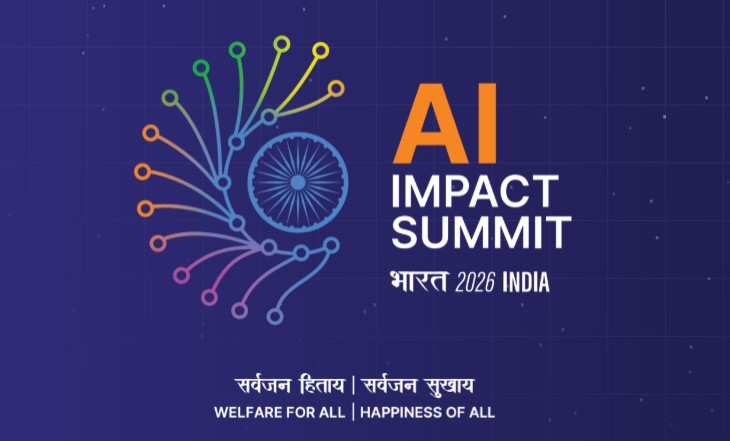
India will host the AI Impact Summit 2026 on 19–20 February at Bharat Mandapam in New Delhi, marking the first global AI summit to be held in the Global South. Announced by Prime Minister Narendra Modi, the event is positioned as a major international forum aimed at advancing inclusive and action-oriented AI cooperation.
Organised by the Ministry of Electronics and Information Technology, the summit seeks to build on previous global AI gatherings while shifting the focus from high-level political statements to measurable outcomes.
Officials say the objective is to ensure that AI supports social development, sustainable growth and broader access to technological opportunities, particularly for developing nations.
India AI Impact Summit 2026: 35,000+ Registrations so far, 100+ Countries, 500+ Startups to engage across 500 Sessions
The summit will be guided by three core principles known as the ‘Three Sutras’, namely People, Planet and Progress, and structured around seven thematic areas including human capital, inclusion, trusted AI, scientific collaboration and democratising AI resources.
These domains are intended to translate broad ambitions into concrete areas of multilateral action. A series of pre-summit initiatives, including global challenges focused on inclusive AI, women-led innovation and youth participation, will take place in the lead-up to the event.
Organisers have also issued a global call for proposals, inviting institutions to host in-person sessions aligned with the summit’s themes, reinforcing India’s effort to shape a broader international conversation on AI governance and impact.
Would you like to learn more about AI, tech and digital diplomacy? If so, ask our Diplo chatbot!
Artificial general intelligence remains a future ambition rather than a present reality, according to Google DeepMind chief executive Demis Hassabis. Speaking at an AI summit in New Delhi, he said current systems still fall short of matching human-level intelligence in several vital areas.
Hassabis identified three key limitations. Existing AI models lack continual learning, meaning they cannot update their knowledge dynamically once deployed. Instead, they rely on static training completed before release, preventing them from adapting to new contexts or personalising responses over time.
Long-term planning is another weakness. While advanced models can handle short-term reasoning tasks, they struggle to plan strategically over extended periods, as humans do.
Consistency also remains an issue, as systems may perform exceptionally well in complex domains but make unexpected errors in simpler tasks.
Despite these shortcomings, Hassabis has previously suggested that genuine AGI could emerge within the next five to ten years. For now, however, he maintains that present systems have not yet reached that threshold.
Would you like to learn more about AI, tech and digital diplomacy? If so, ask our Diplo chatbot!
Major updates to AI tooling are reshaping website creation as WordPress.com brings an integrated assistant directly into its editor.
The new system works within each site rather than relying on external chat windows, allowing users to adjust layouts, create content, and modify designs in real time. The tool is available to customers on Business and Commerce plans, although activation requires a manual opt-in.
The assistant appears across several core areas of the platform. Inside the editor, it can refine writing, modify styles, translate text and generate new sections with simple instructions.
In the Media Library, you can create new images or apply targeted edits through the platform’s in-house Nano Banana models, eliminating the need for separate subscriptions. Block notes provide an additional way to request suggestions, checks, or link-based context directly within each page.
The updates aim to make site building faster and more efficient by keeping all AI interactions within the existing workflow. Users who prefer a manual experience can ignore the feature entirely, since the assistant remains inactive unless deliberately enabled.
WordPress.com also notes that the system works best with block themes, although image tools are still available for classic themes.
Would you like to learn more about AI, tech and digital diplomacy? If so, ask our Diplo chatbot!
The cost of running AI systems is shifting towards memory rather than compute, as the price of DRAM has risen sharply over the past year. Efficient memory orchestration is now becoming a critical factor in keeping inference costs under control, particularly for large-scale deployments.
Analysts such as Doug O’Laughlin and Val Bercovici of Weka note that prompt caching is turning into a complex field.
Anthropic has expanded its caching guidance for Claude, with detailed tiers that determine how long data remains hot and how much can be saved through careful planning. The structure enables significant efficiency gains, though each additional token can displace previously cached content.
The growing complexity reflects a broader shift in AI architecture. Memory is being treated as a valuable and scarce resource, with optimisation required at multiple layers of the stack.
Startups such as Tensormesh are already working on cache optimisation tools, while hyperscalers are examining how best to balance DRAM and high-bandwidth memory across their data centres.
Better orchestration should reduce the number of tokens required for queries, and models are becoming more efficient at processing those tokens. As costs fall, applications that are currently uneconomical may become commercially viable.
Would you like to learn more about AI, tech and digital diplomacy? If so, ask our Diplo chatbot!
Leading Chinese AI developers have unveiled a series of advanced models ahead of the Lunar New Year, strengthening the country’s position in the global AI sector.
Major firms such as Alibaba, ByteDance, and Zhipu AI introduced new systems designed to support more sophisticated agents, faster workflows and broader multimedia understanding.
Industry observers also expect an imminent release from DeepSeek, whose previous model disrupted global markets last year.
Alibaba’s Qwen 3.5 model provides improved multilingual support across text, images and video while enabling rapid AI agent deployment instead of slower generation pipelines.
ByteDance followed up with updates to its Doubao chatbot and the second version of its image-to-video tool, SeeDance, which has drawn copyright concerns from the Motion Picture Association due to the ease with which users can recreate protected material.
Zhipu AI expanded the landscape further with GLM-5, an open-source model built for long-context reasoning, coding tasks, and multi-step planning. The company highlighted the model’s reliance on Huawei hardware as part of China’s efforts to strengthen domestic semiconductor resilience.
Meanwhile, excitement continues to build for DeepSeek’s fourth-generation system, expected to follow the widespread adoption and market turbulence associated with its V3 model.
Authorities across parts of Europe have restricted the use of DeepSeek models in public institutions because of data security and cybersecurity concerns.
Even so, the rapid pace of development in China suggests intensifying competition in the design of agent-focused systems capable of managing complex digital tasks without constant human oversight.
Would you like to learn more about AI, tech and digital diplomacy? If so, ask our Diplo chatbot!
A Pakistani American surgeon has launched what is described as the UAE’s first AI clinical intelligence platform across the country’s public healthcare system. The rollout was announced in Dubai in partnership with Emirates Health Services.
Boston Health AI, founded by Dr Adil Haider, introduced the platform known as Amal at a major health expo in Dubai. The system conducts structured medical interviews in Arabic, English and Urdu before consultations, generating summaries for physicians.
The company said the technology aims to reduce documentation burdens and cognitive load on clinicians in the UAE. By organising patient histories and symptoms in advance, Amal is designed to support clinical decision making and improve workflow efficiency in Dubai and other emirates.
Before entering the UAE market, Boston Health AI deployed its platform in Pakistan across more than 50 healthcare facilities. The firm states that over 30,000 patient interactions were recorded in Pakistan, where a local team continues to develop and refine the AI system.
Would you like to learn more about AI, tech and digital diplomacy? If so, ask our Diplo chatbot!
Officials in Russia have confirmed that no plans are underway to restrict access to Google, despite recent public debate about the possibility of a technical block. Anton Gorelkin, a senior lawmaker, said regulators clarified that such a step is not being considered.
Concerns centre on the impact a ban would have on devices running Android, which are used by a significant share of smartphone owners in the country.
A block on Google would disrupt essential digital services instead of encouraging the company to resolve ongoing legal disputes involving unpaid fines.
Gorelkin noted that court proceedings abroad are still in progress, meaning enforcement options remain open. He added that any future move to reduce reliance on Google services should follow a gradual pathway supported by domestic technological development rather than abrupt restrictions.
The comments follow earlier statements from another lawmaker, Andrey Svintsov, who acknowledged that blocking Google in Russia is technically feasible but unnecessary.
Officials now appear focused on creating conditions that would allow local digital platforms to grow without destabilising existing infrastructure.
Would you like to learn more about AI, tech and digital diplomacy? If so, ask our Diplo chatbot!