South Korea is seeking international support for a proposed global AI hub to advance cooperation on technology and governance. The initiative was discussed during talks with Switzerland’s leadership.
Officials in Switzerland met with South Korea’s prime minister to strengthen bilateral ties and support the project. The programme is intended to promote collaboration on AI rules, education and innovation.
The government of South Korea has also engaged several UN agencies to support the initiative. Agreements outline cooperation to help establish the hub and expand global dialogue on AI development.
Leaders in South Korea say the country aims to contribute its strong information technology capabilities to the project. The initiative reflects broader efforts to position the nation as a key player in global AI policy and innovation.
Would you like to learn more about AI, tech and digital diplomacy? If so, ask our Diplo chatbot!
Digital technologies and AI are increasingly shaping economic development, governance and international cooperation. As these technologies expand rapidly, international organisations are working to ensure that innovation is accompanied by responsible governance, inclusive access and coordinated global policies.
Within the United Nations system, a range of initiatives aim to strengthen cooperation on digital transformation and the development of AI. These efforts address issues such as digital infrastructure, data governance, technological innovation and equitable participation in emerging digital ecosystems. International collaboration plays an essential role in ensuring that the benefits of digital technologies support sustainable development while reducing global inequalities in access to digital resources.
Several programmes across the United Nations system reflect these priorities, combining global governance initiatives with practical AI applications in areas such as development, humanitarian response and digital inclusion. The following sections examine selected initiatives that illustrate how AI and digital cooperation are being advanced across different areas of the UN system.
Global Digital Compact
The Global Digital Compact is a comprehensive international framework adopted by United Nations member states to guide global digital cooperation and enhance the governance of AI. Negotiated by the 193 member states and reflects broad consultations aimed at shaping a shared vision for a digital future that is open, inclusive, safe, and secure for all. The Compact is part of the Pact for the Future, adopted at the 2024 Summit of the Future in New York.
At its core, the Compact seeks to address persistent digital divides by promoting universal connectivity, affordable access and inclusive participation in the digital economy. Governments and stakeholders have committed to connecting all individuals, schools, and hospitals to the internet, increasing investment in digital public infrastructure, and ensuring that technologies are accessible in diverse languages and formats.
The Compact also emphasises human rights and the protection of fundamental freedoms in the digital space, calling for the strengthened legal and policy frameworks that uphold international law and protect users from harms such as misinformation and discrimination. It promotes an open, global, stable, and secure internet while supporting access to independent, fact-based information.
The key objective of the Compact is to enhance international cooperation on data governance and AI for the benefit of humanity. It includes commitments to develop interoperable national data governance frameworks, advance responsible and equitable approaches to AI governance, and establish mechanisms for global dialogue and scientific guidance on AI. These elements reflect the need for collaborative, multistakeholder governance that balances innovation with transparency, accountability, and respect for human rights.
Independent International Scientific Panel on AI
The Independent International Scientific Panel on AI is a mechanism called for within the Global Digital Compact to support evidence‑based policymaking in AI governance. Member states requested the establishment of a multi‑disciplinary panel under the United Nations to assess the opportunities, risks and societal impacts of AI, and to promote scientific understanding across geographic and sectoral divides.
The panel is intended to contribute robust, independent scientific analysis to global AI discussions, ensuring that policy decisions are grounded in research rather than short‑term market pressures or fragmented national approaches. Its mandate includes conducting comprehensive risk and impact assessments, developing common methodologies for evaluating AI systems, and advising on interoperable governance frameworks that respect human rights and international law.
By bringing together experts from diverse disciplines and regions, the panel aims to bridge the gap between scientific developments and policymaking. It is a key institutional mechanism for fostering inclusive AI governance, with balanced geographic representation to ensure that insights reflect global needs rather than narrow technological interests.
The panel also complements the broader Global Dialogue on AI Governance, which seeks to engage governments, international organisations, civil society and technical communities in ongoing discussions about normative approaches, standards, and principles for global AI governance.
The UN Digital Cooperation Portal
The UN Digital Cooperation Portal is a central platform designed to support the implementation of the Global Digital Compact by mapping global digital cooperation activities and facilitating coordination among diverse stakeholders. The portal invites governments, UN entities, civil society organisations, researchers, and private sector actors to voluntarily submit information on initiatives related to the Compact’s objectives.
Launched in December 2025, the portal aggregates initiatives across thematic areas, including digital inclusion, AI governance, data governance, digital infrastructure, and the protection of human rights online. By visualising how activities align with agreed international frameworks, the platform supports strategic collaboration, strengthens transparency and highlights opportunities for joint action across regions and sectors.
The portal generates interactive data visualisations that illustrate how digital cooperation initiatives are evolving at the national, regional and global levels. These tools help identify gaps and overlaps in current efforts, enabling stakeholders to coordinate more effectively in pursuit of shared objectives such as closing digital divides and advancing equitable digital development.
As a resource for governments, UN agencies and external partners, the portal also contributes to the preparatory process for the high‑level review of the Global Digital Compact scheduled for 2027, providing an evidence‑based foundation assessing progress and emerging policy priorities.
Closing the language gap in AI through local language accelerators
Language diversity remains one of the major challenges in global AI development. More than half of the world’s population speaks one of over seven thousand languages, yet most AI systems currently support only a small number of widely used global languages.
Around 1.2 billion people rely on low-resource languages that remain poorly represented in digital technologies. Limited language representation can restrict access to AI-powered services in sectors such as agriculture, healthcare, education and civic participation.
The initiative combines technological development with partnerships involving universities, research institutions and local language communities. The technologies involved include optical character recognition systems that digitise written texts, automatic speech recognition tools capable of processing spoken language and text-to-speech technologies that generate digital audio.
Using satellite imagery and AI to improve disaster response
Rapid damage assessment plays a critical role in humanitarian response following natural disasters. Traditional assessment methods often require manual analysis of satellite images and field inspections conducted by experts, a process that can take weeks.
Emergency response operations, however, require reliable information within the first seventy-two hours after a disaster to prioritise rescue operations and humanitarian assistance.
The SKAI platform, developed by the World Food ProgrammeInnovation Accelerator, uses AI-based computer vision to analyse satellite imagery and identify damaged buildings automatically. The system enables humanitarian organisations to assess destruction at the level of individual structures across large geographic areas.
Developed as an open-source project in collaboration with Google Research, the platform can generate prioritised damage assessments within approximately twenty-four hours. Since 2022, the system has analysed more than 3.9 million buildings and identified around 450,000 severely damaged or destroyed structures.
Expanding inclusive participation through the UN Women AI School
Increasing participation in AI development is another priority across the United Nations system. Women remain underrepresented in many AI-related fields, including machine learning engineering and data science.
The UN WomenAI School addresses this challenge by providing training programmes designed for policymakers, civil society organisations, UN staff, and young innovators. The initiative aims to strengthen AI literacy and encourage broader participation in shaping the future of digital technologies.
Participants follow structured training tracks combining technical education with discussions on AI governance, ethics, and social impact. Collaborative learning environments encourage participants to develop solutions tailored to the needs of their communities.
More than three thousand participants have taken part in the programme since its launch. A train-the-trainer (ToT) model enables graduates to support future training programmes and expand the initiative to additional regions.
Responsible AI in satellite technologies and earth observation
AI technologies are increasingly integrated into satellite systems and Earth observation platforms. These systems analyse large volumes of geospatial data and generate near-real-time insights about environmental conditions.
Applications include monitoring climate change, analysing natural disasters, and supporting environmental policy planning. Rapid technological progress in this field also raises governance challenges related to transparency and accountability.
Many AI models used in satellite analysis operate as black box systems whose internal decision-making processes are difficult to interpret. Limited transparency can create risks when such systems are used to inform critical policy decisions.
Data bias represents another concern. Training datasets often originate primarily from the Global North, which may lead to inaccurate interpretations of environmental conditions in other regions of the world.
The methodology examines multiple dimensions of national AI ecosystems, including infrastructure, research capacity, institutional readiness and regulatory frameworks. Rather than ranking countries, the assessment identifies strengths and areas requiring further development.
Since its introduction in 2022, the methodology has been implemented in more than seventy countries. More than seventeen thousand stakeholders have participated in consultations associated with the initiative.
Assessment results have contributed to the development of national AI strategies and policy frameworks in several regions. An updated version of the methodology is expected to be released in 2026.
Additionally, UNESCO promotes the ethical development and use of AI through its Recommendation on the Ethics of Artificial Intelligence. The global framework sets out principles on transparency, accountability, fairness, and respect for human rights to guide national policies and international cooperation.
AI for Good and global capacity building
The International Telecommunication Union coordinates the AI for Good initiative, which focuses on applying AI technologies to global challenges while strengthening international cooperation in governance and standards.
The programme operates across multiple areas, including multistakeholder dialogue, technical standard development, governance support and capacity development activities.
More than four hundred AI-related standards have already been developed in areas such as multimedia technologies, energy efficiency and cybersecurity. Governance dialogues organised through the initiative have involved more than one hundred ministers and regulators.
Educational programmes linked to the initiative aim to expand digital skills among young people worldwide through robotics competitions, machine learning challenges and educational partnerships.
The AI for Good Global Summit 2026, set to take place from 7–10 July in Geneva, will convene governments, industry leaders and civil society to advance AI governance, promote responsible innovation, and highlight initiatives that foster inclusive and equitable digital development.
AI tools supporting refugee entrepreneurship
AI technologies are also being used to support the economic opportunities for displaced populations. The United Nations Refugee Agency has developed an AI-powered virtual assistant designed to help refugees and asylum seekers transform business ideas into structured business plans.
The platform guides users through financial planning, market analysis and the preparation of investment proposals. The development of the system involved collaboration with NGOs, governments, and entrepreneurial networks across Latin America.
The tool was initially implemented in Paraguay and was designed with input from refugee communities. Remote access allows users to engage with the platform regardless of geographical or institutional constraints.
More than 340 refugee entrepreneurs have used the platform since its launch, with women representing approximately sixty percent of participants. The model is designed to be scalable and could be implemented in additional regions.
Promoting responsible innovation in civilian AI for peace and security
The rapid expansion of AI technologies brings increasing security challenges, particularly due to the potential misuse of civilian AI systems in military, conflict-related, or high-risk contexts. Dual-use applications mean that tools designed for civilian purposes, such as data analysis or autonomous systems, could also be repurposed in ways that threaten international peace, stability or human safety.
The United Nations Office for Disarmament Affairs works to foster responsible innovation practices, ensuring that the development and deployment of AI technologies consider their broader implications for global peace and security. Addressing these risks requires ongoing collaboration and dialogue among policymakers, researchers, industry stakeholders, and civil society, creating a shared framework for understanding and mitigating potential threats.
To support this, the programme organises a comprehensive set of initiatives, including thematic multistakeholder dialogues, academic workshops, public panels, private sector roundtables and in-person training sessions for graduate students. These activities aim not only to raise awareness of emerging security risks, but also to provide practical guidance and tools that promote safe, transparent and accountable AI practices in civilian applications worldwide.
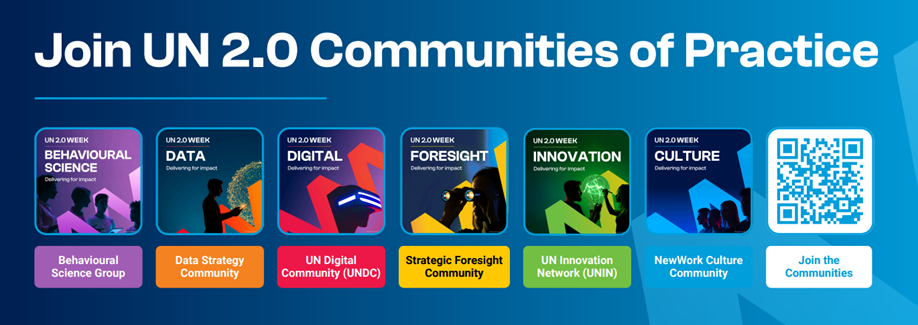
UN 2.0 Communities of Practice
Knowledge sharing and collaboration are strengthened through UN 2.0 Communities of Practice, connecting partners across the United Nations system and beyond. The networks facilitate the exchange of expertise and approaches on digital transformation, data strategy, innovation, and strategic foresight.
Over 18,000 practitioners from more than 160 countries participate, enhancing the collective capacity to address complex AI and digital challenges. Thematic groups, including those focused on digital and data initiatives, support peer-to-peer engagement, professional development, and collaborative problem-solving. Participation allows stakeholders to contribute to a wider ecosystem of expertise and innovation, promoting inclusive digital governance and supporting the Sustainable Development Goals.
Would you like to learn more about AI, tech and digital diplomacy? If so, ask our Diplo chatbot!
Support organisations in the UK report that some abuse survivors are turning to AI tools such as ChatGPT before contacting helplines. Charities in the UK say individuals increasingly use AI to explore experiences and seek guidance before approaching professional support services.
The National Association of People Abused in Childhood said callers in the UK have recently reported being referred to its helpline after conversations with ChatGPT. Staff say AI is being used as an informal step in processing trauma.
Law enforcement and support groups in the UK have also recorded a rise in disclosures involving ritualistic sexual abuse. Authorities in the UK say only 14 criminal cases since 1982 have formally recognised such practices.
Police and support organisations are responding by improving training and launching specialist working groups. Officials aim to strengthen the identification and investigation of complex cases of abuse.
Would you like to learn more about AI, tech and digital diplomacy? If so, ask our Diplo chatbot!
In 2027, Geneva will host the AI Summit at a pivotal moment in the global race to shape AI. Previous summits reflected the character of their hosts. Bletchley Park focused on existential risk, Seoul on innovation and security, Paris on economic and societal impact, and New Delhi on development and inclusion.
Switzerland now has the opportunity to define the next chapter by promoting a practical, balanced, and human-centred approach to AI.
At the heart of Switzerland’s potential contribution is a model built on innovation, governance, and subsidiarity. The country’s strong innovation culture favours grounded, low-hype solutions that address real needs, as illustrated by open-source initiatives such as the multilingual Apertus language model.
But Swiss thinking goes beyond technology alone, recognising that meaningful AI progress also requires advances in education, management, and disciplines such as law, philosophy, linguistics, and the arts.
On governance, Switzerland is well placed to encourage a pragmatic approach. Rather than creating entirely new rules, much of AI’s impact can be addressed through existing frameworks on trade, human rights, intellectual property, and security, provided they are effectively implemented.
As home to numerous international organisations, Geneva offers a natural venue for aligning AI with established global institutions. At the same time, Switzerland’s tradition of bottom-up policymaking ensures that citizens remain part of the conversation.
The principle of subsidiarity, which holds that decisions be made as close as possible to the people affected, adds another dimension. In an era when AI power is concentrated in a handful of global platforms, Switzerland can champion more distributed models that anchor AI development in local communities.
By linking technology to local knowledge, culture, and economic life, AI can become a tool that empowers citizens rather than centralising control.
Trust, institutions, and multilateral cooperation will also be central themes on the road to 2027. Public confidence in AI has been shaken by alarmist narratives and fears of job loss, disinformation, and monopolisation.
Switzerland’s high-trust political culture and lean but effective institutions provide a model for rebuilding confidence through transparency and accountability. Strengthening, rather than sidelining, international organisations and equipping them with AI tools to enhance participation and legitimacy could help ensure that global governance keeps pace with technological change.
Ultimately, the Geneva AI Summit has the potential to mark a shift from polarised debates about doom or blind acceleration towards a mature conversation about how AI can serve humanity in concrete ways. By combining innovation with ethical reflection, sovereignty with interdependence, and global cooperation with local empowerment, Switzerland could help set a steady and credible course for the next phase of AI transformation.
Diplo’s role
Diplo is positioning itself as an active contributor to the road to the 2027 Geneva AI Summit by combining research, training, and practical policy engagement. Drawing on decades of experience in internet governance and digital diplomacy, Diplo approaches AI not as an abstract technological race, but as a policy and societal challenge that requires informed, inclusive, and realistic responses.
Through its humAInism methodology, Diplo situates AI within a broader human context, linking technology with philosophy, sociology, law, and diplomacy to ensure that innovation remains anchored in human values.
Beyond analysis, Diplo focuses on capacity development. Its AI Apprenticeship model promotes learning-by-doing, enabling diplomats, civil society representatives, and professionals to build AI skills through hands-on engagement.
At the same time, Diplo monitors global AI policy developments through the Digital Watch Observatory and develops practical tools, such as AI-supported reporting and knowledge preservation systems, to strengthen institutional memory and multilateral processes.
In this way, Diplo aims not only to observe the AI transformation but to help shape it in a way that is informed, inclusive, and fit for the realities of global governance.
First AI Tuesday of the Month
As preparations for the 2027 Geneva AI Summit gather pace, engagement will be key. One practical way to join the conversation is through the ‘First AI Tuesday of the Month’ luncheon series. These informal networking and briefing sessions bring together diplomats, experts, and practitioners to explore three core AI vectors shaping Geneva today. Those vectors are the road to the AI Summit, evolving governance dynamics, and the latest technological developments.
The next session takes place on Tuesday at 13:00, offering participants an opportunity to exchange ideas, build connections, and contribute to a more informed and inclusive AI debate. By marking the first Tuesday of each month in their calendars, stakeholders can take an active step on the Road to Geneva 2027 and help shape a balanced and forward-looking AI agenda.
The European Commission has confirmed it will again delay publishing guidance on high-risk AI systems under the EU AI Act. The guidelines were due by 2 February 2026, but will now follow a revised timeline.
According to Euractiv, the document is intended to clarify which AI systems fall into the high-risk category and therefore face stricter obligations. Officials said more time is needed to incorporate significant stakeholder feedback.
The delay marks the second missed deadline and adds to broader implementation setbacks surrounding the EU AI Act. Several member states have yet to designate national enforcement bodies, complicating oversight preparations.
Brussels is also considering postponing the application of high-risk rules through a digital simplification package. Parliament and Council appear supportive of moving the August deadline back by more than a year, easing pressure on companies awaiting guidance.
Would you like to learn more about AI, tech and digital diplomacy? If so, ask our Diplo chatbot!
The UN Secretary General has warned that AI must augment human potential rather than replace it, speaking at the India AI Impact Summit in New Delhi. Addressing leaders at Bharat Mandapam in New Delhi, he urged investment in workers so that technology strengthens, rather than displaces, human capacity.
In New Delhi, he cautioned that AI could deepen inequality, amplify bias and fuel harm if left unchecked. He called for stronger safeguards to protect people from exploitation and insisted that no child should be exposed to unregulated AI systems.
Environmental concerns also featured prominently in New Delhi, with Guterres highlighting rising energy and water demands from data centres. He urged a shift to clean power and warned against transferring environmental costs to vulnerable communities.
The UN chief proposed a $3 billion Global Fund on AI to build skills, data access and affordable computing worldwide. In New Delhi, he argued that broader access is essential to prevent countries from being excluded from the AI age and to ensure AI supports sustainable development goals.
Would you like to learn more about AI, tech and digital diplomacy? If so, ask our Diplo chatbot!
French President Emmanuel Macron told the AI Impact Summit in New Delhi that Europe would remain a safe space for AI innovation and investment. Speaking in New Delhi, he said the European Union would continue shaping global AI rules alongside partners such as India.
Macron pointed to the EU AI Act, adopted in 2024, as evidence that Europe can regulate emerging technologies and AI while encouraging growth. In New Delhi, he claims that oversight would not stifle innovation but ensure responsible development, but not much evidence to back it up.
The French leader said that France is doubling the number of AI scientists and engineers it trains, with startups creating tens of thousands of jobs. He added in New Delhi that Europe aims to combine competitiveness with strong guardrails.
Macron also highlighted child protection as a G7 priority, arguing in New Delhi that children must be shielded from AI driven digital abuse. Europe, he said, intends to protect society while remaining open to investment and cooperation with India.
Would you like to learn more about AI, tech and digital diplomacy? If so, ask our Diplo chatbot!
Google CEO Sundar Pichai said at the India AI Impact Summit 2026 in New Delhi that he never imagined Visakhapatnam would become a global AI hub. Speaking in New Delhi, he recalled passing through the coastal city as a student and described its transformation as remarkable.
In New Delhi, Pichai announced that Google will establish a full-stack AI hub in Visakhapatnam as part of a $15 billion investment in India. The facility is expected to include gigawatt-scale compute capacity and a new international subsea cable gateway.
The project in Visakhapatnam is set to generate jobs and deliver advanced AI services to businesses and communities across India. Authorities in Andhra Pradesh have allotted more than 600 acres of land near the port city for the proposed hyperscale AI data centre.
Reacting in New Delhi, Andhra Pradesh IT and HRD Minister Nara Lokesh welcomed the announcement and thanked Pichai for expressing confidence in Visakhapatnam. The development positions Visakhapatnam as a major AI infrastructure hub within India’s expanding technology sector.
Would you like to learn more about AI, tech and digital diplomacy? If so, ask our Diplo chatbot!
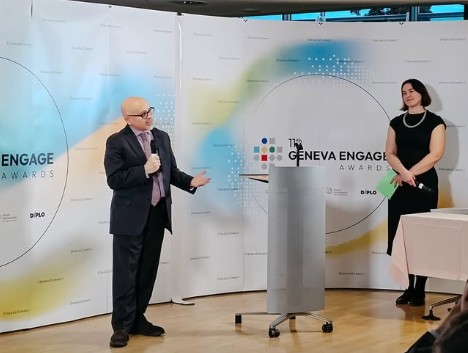
The Geneva Engage initiative, launched in 2016 by the Geneva Internet Platform under DiploFoundation with the support of the Republic and Canton of Geneva, continues to track how International Geneva connects with audiences worldwide. Through research and annual awards, it assesses how Geneva-based actors communicate on global policy issues ranging from development and human rights to health, the environment, and digital governance.
The 11th edition of the Geneva Engage Awards was held on 3 February 2026 at the World Meteorological Organization building, and it came at a moment of significant change in how people access information. Under the theme ‘Back to basics in the AI era’, the event explored how International Geneva can remain a trusted source as users increasingly rely on AI assistants rather than traditional searches, websites, and reports.
Each year, the Geneva Engage Awards recognise excellence in digital outreach across three main categories: international organisations, non-governmental organisations, and permanent representations. The evaluation focuses on how effectively these actors use digital tools to engage global audiences, build trust, and remain visible in an evolving information ecosystem.
The methodology combines quantitative analysis across three areas, social media outreach, web relevancy, and web accessibility. Performance is measured using engagement data from social media platforms, the visibility and relevance of web content in global search results, and accessibility standards that assess how usable and inclusive websites are for diverse audiences.
Together, this year’s results highlight how digital trust, accessibility, and relevance are becoming central to diplomacy in an AI-driven information landscape.
Would you like to learn more about AI, tech and digital diplomacy? If so, ask our Diplo chatbot!
Human Rights Day takes place on 10 December each year to commemorate the Universal Declaration of Human Rights (UDHR), adopted by the UN in 1948. It functions as a reminder of shared international commitments to dignity, equality and freedom, and seeks to reaffirm the relevance of these principles to contemporary challenges.
In 2025, the theme ‘Human Rights: Our Everyday Essentials’ aimed to reconnect people with how rights shape daily life, emphasising that rights remain both positive and practical foundations for individual and collective well-being.
Human Rights Day also serves as a moment for reflection and action. In a world shaped by rapid technological change, geopolitical instability and social inequalities, the day encourages institutions, governments and civil society to coordinate on priorities that respond to contemporary threats and opportunities.
In this context, the RightsX Summit was strategically scheduled. By centring discussions on human rights, technology, data and innovation around Human Rights Day, the event reinforced that digital governance issues are central to rights protection in the twenty-first century. The alignment elevated technology from a technical topic to a political and ethical concern within human rights debates.
The RightsX Summit 2025
The summit brought together governments, the UN system, civil society, private sector partners and innovators to explore how technology can advance human rights in the digital age. Its aim was to produce practical insights, solution-focused dialogues and discussions that could inform a future human rights toolbox shaped by technology, data, foresight and partnerships.
Central themes included AI, data governance, predictive analytics, digital security, privacy and other emerging technologies. Discussions analysed how these tools can be responsibly used to anticipate risks, improve monitoring, and support evidence-based decision-making in complex rights contexts.
The summit also examined the challenge of aligning technological deployment with internationally recognised human rights norms, exploring the mechanisms by which innovation can reinforce equity, justice and accountability in digital governance.
The summit emphasised that technological innovation is inseparable from global leadership in human rights. Aligning emerging tools with established norms was highlighted as critical to ensure that digital systems do not exacerbate existing inequalities or create new risks.
Stakeholders were encouraged to consider not only technical capabilities but also the broader social, legal and ethical frameworks within which technology operates.
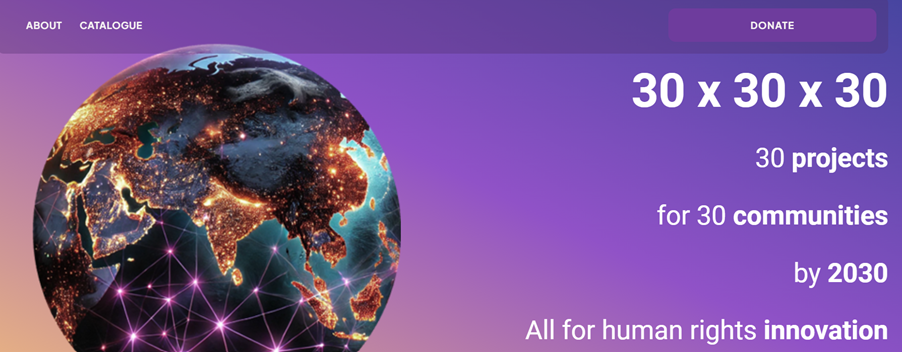
The 30x30x30 Campaign
The 30x30x30 initiative represents an ambitious attempt to operationalise human rights through innovation. Its objective is to deliver 30 human rights innovations for 30 communities by 2030, aligned with the 30 articles of the UDHR.
The campaign emphasises multistakeholder collaboration by uniting countries, companies and communities as co-creators of solutions that are both technologically robust and socially sensitive. A distinctive feature of 30x30x30 is its focus on scalable, real-world tools that address complex rights challenges.
Examples include AI-based platforms for real-time monitoring, disaster tracking systems, digital storytelling tools and technologies for cyber peace. These tools are intended to serve both institutional responders and local communities, demonstrating how technology can amplify human agency in rights contexts.
The campaign also highlights the interdependence of innovation and human rights. Traditional approaches alone cannot address multidimensional crises such as climate displacement, conflict, or systemic inequality, and innovation without human-rights grounding risks reinforcing existing disparities.
‘Innovation is Political’
Volker Türk, UN High Commissioner for Human Rights, emphasised that ‘innovation is political’. He noted that the development and deployment of technology shape who benefits and how, and that decisions regarding access, governance and application of technological tools carry significant implications for equity, justice and human dignity.
Our rights connect us all. Like water nourishing the roots of a tree, they are essential for our common humanity.
This framing highlights the importance of integrating human rights considerations into innovation policy. By situating human rights at the centre of technological development, the summit promoted governance approaches that ensure innovation contributes positively to societal outcomes.
It encouraged multistakeholder responsibility, including governments, companies and civil society, to guide technology in ways that respect and advance human rights.
Human Rights Data Exchange (HRDx)
HRDx is a proposed global platform intended to improve the ethical management of human rights data. It focuses on creating systems where information is governed responsibly, ensuring that privacy, security and protection of personal data are central to its operation.
The platform underlines that managing data is not only a technical issue but also a matter of governance and ethics. By prioritising transparency, accountability and data protection, it aims to provide a framework that supports the responsible use of information without compromising human rights.
Through these principles, HRDx highlights the importance of embedding ethical oversight into technological tools. Its success relies on maintaining the balance between utilising data to inform decision-making and upholding the rights and dignity of individuals. That approach ensures that technology can contribute to human rights protection while adhering to rigorous ethical standards.
Trustworthy AI in human rights
AI offers significant opportunities to enhance human rights monitoring and protection. For example, AI can help to analyse large datasets to detect trends, anticipate crises, and identify violations of fundamental freedoms. Predictive analytics can support human rights foresight, enabling early interventions to prevent conflicts, trafficking, or discrimination.
At the same time, trust in AI for decision-making remains a significant challenge. AI systems trained on biassed or unrepresentative data can produce discriminatory outcomes, undermine privacy and erode public trust.
These risks are especially acute in applications where algorithmic decisions affect access to services or determine individual liberties. That requires governance frameworks that ensure transparency, accountability and ethical oversight.
In the human rights context, trustworthy AI means designing systems that are explainable, auditable and accountable. Human oversight remains essential, particularly in decisions with serious implications for individuals’ rights.
The Summit highlighted the importance of integrating human rights principles such as non-discrimination, equality and procedural fairness into AI development and deployment processes.
Ethics, Accountability and Governance
Aligning technology with human rights necessitates robust ethical frameworks, effective governance, and transparent accountability. Digital systems must uphold fairness, transparency, inclusivity, and human dignity throughout their lifecycle, from design to deployment and ongoing operation.
Human rights impact assessments at the design stage help identify potential risks and guide responsible development. Engaging users and affected communities ensures technologies meet real needs.
Continuous monitoring and audits maintain compliance with ethical standards and highlight areas for improvement.
Effective governance ensures responsibilities are clearly defined, decisions are transparent, and corrective actions can be taken when rights are compromised. By combining ethical principles with robust governance and accountability, technology can actively protect and support human rights.
Future pathways for rights-centred innovation
The integration of human rights into technology represents a long-term project. Establishing frameworks that embed accountability, transparency and ethical oversight ensures that emerging tools enhance freedom, equality and justice.
Digital transformation, when guided by human rights, creates opportunities to address complex challenges. RightsX 2025 demonstrated that innovation, governance and ethical foresight can converge to shape a digital ecosystem that safeguards human dignity while fostering progress.
Would you like to learn more about AI, tech, and digital diplomacy? If so, ask our Diplo chatbot!