South Korea’s National Intelligence Service (NIS) has raised concerns about the Chinese AI app DeepSeek, accusing it of excessively collecting personal data and using it for training purposes. The agency warned government bodies last week to take security measures, highlighting that unlike other AI services, DeepSeek collects sensitive data such as keyboard input patterns and transfers it to Chinese servers. Some South Korean government ministries have already blocked access to the app due to these security concerns.
The NIS also pointed out that DeepSeek grants advertisers unrestricted access to user data and stores South Korean users’ data in China, where it could be accessed by the Chinese government under local laws. The agency also noted discrepancies in the app’s responses to sensitive questions, such as the origin of kimchi, which DeepSeek claimed was Chinese when asked in Chinese, but Korean when asked in Korean.
DeepSeek has also been accused of censoring political topics, such as the 1989 Tiananmen Square crackdown, prompting the app to suggest changing the subject. In response to these concerns, China’s foreign ministry stated that the country values data privacy and security and complies with relevant laws, denying that it pressures companies to violate privacy. DeepSeek has not yet commented on the allegations.
The University of Austin is making history as the first US university to establish a dedicated Bitcoin investment fund. With a $5 million allocation from its $200 million endowment, the university sees Bitcoin as a long-term asset alongside traditional investments like stocks and real estate.
Chad Thevenot, senior vice president for advancement, confirmed the university’s commitment to holding Bitcoin for at least five years. The initiative, first announced in May, is being managed in partnership with Bitcoin financial services firm Unchained, which is responsible for securing the fund’s holdings.
While Austin is the first to launch a dedicated Bitcoin fund, other universities have already shown interest in crypto. Emory University recently disclosed a $15.1 million Bitcoin investment, while Stanford’s Blyth Fund allocated 7% of its portfolio to Bitcoin and later invested in BlackRock’s iShares Bitcoin ETF. As institutional adoption grows, Bitcoin’s role in university endowments appears to be expanding.
Aiman Ezzat, CEO of Capgemini, has criticised the European Union’s AI regulations, claiming they are overly restrictive and hinder the ability of global companies to deploy AI technology in the region. His comments come ahead of the AI Action summit in Paris and reflect increasing frustration from private sector players with EU laws. Ezzat highlighted the complexity of navigating different regulations across countries, especially in the absence of global AI standards, and argued that the EU’s AI Act hailed as the most comprehensive worldwide, could stifle innovation.
As one of Europe’s largest IT services firms, Capgemini works with major players like Microsoft, Google Cloud, and Amazon Web Services. The company is concerned about the implementation of AI regulations in various countries and how they affect business operations. Ezzat is hopeful that the AI summit will provide an opportunity for regulators and industry leaders to align on AI policies moving forward.
Despite the regulatory challenges, Ezzat spoke positively about DeepSeek, a Chinese AI firm gaining traction by offering cost-effective, open-source models that compete with US tech giants. However, he pointed out that while DeepSeek shares its models, it is not entirely open source, as there is limited access to the data used for training the models. Capgemini is in the early stages of exploring the use of DeepSeek’s technology with clients.
As concerns about AI’s impact on privacy grow, European data protection authorities have begun investigating AI companies, including DeepSeek, to ensure compliance with privacy laws. Ezzat’s comments underscore the ongoing tension between innovation and regulation in the rapidly evolving AI landscape.
Elon Musk’s Department of Government Efficiency (DOGE) has saved US taxpayers $36.7 billion, sparking fresh calls for blockchain technology to bring transparency to government spending. According to Doge-tracker data, this represents just a fraction of Musk’s goal to cut $2 trillion in spending. Coinbase CEO Brian Armstrong praised the initiative, arguing that a blockchain-based treasury could provide real-time oversight of financial transactions.
In a recent breakthrough, DOGE identified a $100 billion loophole in government spending linked to entitlement payments to individuals without valid identification. Musk described this as ‘utterly insane,’ estimating at least half of these payments could be fraudulent. A new agreement with the US Treasury aims to close these gaps by enforcing stricter payment tracking and updating the “DO-NOT-PAY” list more frequently.
Crypto experts believe adopting blockchain for the US Treasury could position the country as a leader in financial transparency and innovation. Jean Rausis of Smardex stressed that any such system must remain decentralised to be truly effective. DOGE’s work is expected to conclude on 4 July 2026, with a plan to deliver a leaner, more efficient government in time for the US’s 250th Independence anniversary.
Powerchip Technology, a Taiwanese IT company, is facing intense competition from Chinese foundries like Nexchip, which has rapidly gained market share in the legacy chip sector. This shift, driven by steep discounts and aggressive capacity expansion, has been accelerated by China’s localisation efforts, forcing Powerchip to retreat from the once-profitable business of making integrated circuits for Chinese flat panels. The increasing dominance of Chinese companies in the $56.3 billion legacy chip market is causing concern in Taiwan, with companies like Powerchip and UMC now focusing on more advanced technologies to stay competitive.
Chinese foundries, supported by strong government funding and low margins, have significantly increased their production capacity, undercutting Taiwanese rivals on price. By 2027, China is projected to surpass Taiwan’s global mature node manufacturing capacity. Taiwanese executives are exploring specialisation and diversification, shifting focus from legacy chips to more advanced processes like 3D stacking, which integrates logic and DRAM memory to improve performance.
The rising competition from China is compounded by geopolitical tensions, as some customers are now requesting chips made outside China. This shift is partly due to the US’s trade policies and worsening relations between Beijing and other nations. Taiwanese companies are seeing more orders directed to their local fabs, with some customers explicitly avoiding ‘Made in China’ products.
While Taiwanese companies still have an edge in terms of process stability and production yields, the pressure from Chinese competitors is forcing them to rethink their strategies and adapt to the changing landscape. The future of the industry may depend on how Taiwan navigates both the rising Chinese competition and the geopolitical challenges shaping global supply chains.
The Central African Republic made waves on 10 February by announcing the launch of its meme coin, CAR. The news came directly from President Faustin-Archange Touadéra’s official X account, presenting the token as an experiment to unite people and boost national development. The meme coin, launched on the Solana-based Pump.fun platform, saw its value surge rapidly as traders rushed to invest in what was described as the first-ever national meme coin.
However, excitement soon turned to scepticism. AI detection tools flagged the president’s announcement video as potentially AI-generated, raising concerns about its authenticity. The project’s official X account was swiftly suspended, and further scrutiny revealed that its domain had been registered just days before the announcement using Namecheap, a budget-friendly provider. Shortly after, Namecheap took the website offline, citing it as an ‘abusive service.’
Despite these red flags, the CAR token initially reached a peak valuation of $527 million before dropping to $460 million. The controversy comes amid a rise in fraudulent memecoin launches, with recent cases involving hacked X accounts of high-profile figures. While there is still no clear confirmation on whether CAR is an official government-backed initiative or an elaborate scam, the crypto community remains on high alert.
France is set to announce private sector investments totalling around 109 billion euros ($112.5 billion) in its AI sector at the Paris AI summit, according to President Emmanuel Macron. The investment package includes 20 billion euros from Canadian investment firm Brookfield and up to 50 billion euros from the United Arab Emirates, which will also fund a 1-gigawatt data centre.
Brookfield’s investment is expected to focus on developing data centre infrastructure, crucial for AI technology that requires massive amounts of energy to operate.With the demand for AI technology rising, Europe is aiming to secure necessary investments to meet the growing need for energy and infrastructure.
This comes amid global competition, as US President Donald Trump recently announced that companies like OpenAI, SoftBank, and Oracle would invest $500 billion in AI infrastructure over the next four years to ensure the US stays ahead in the global AI race.
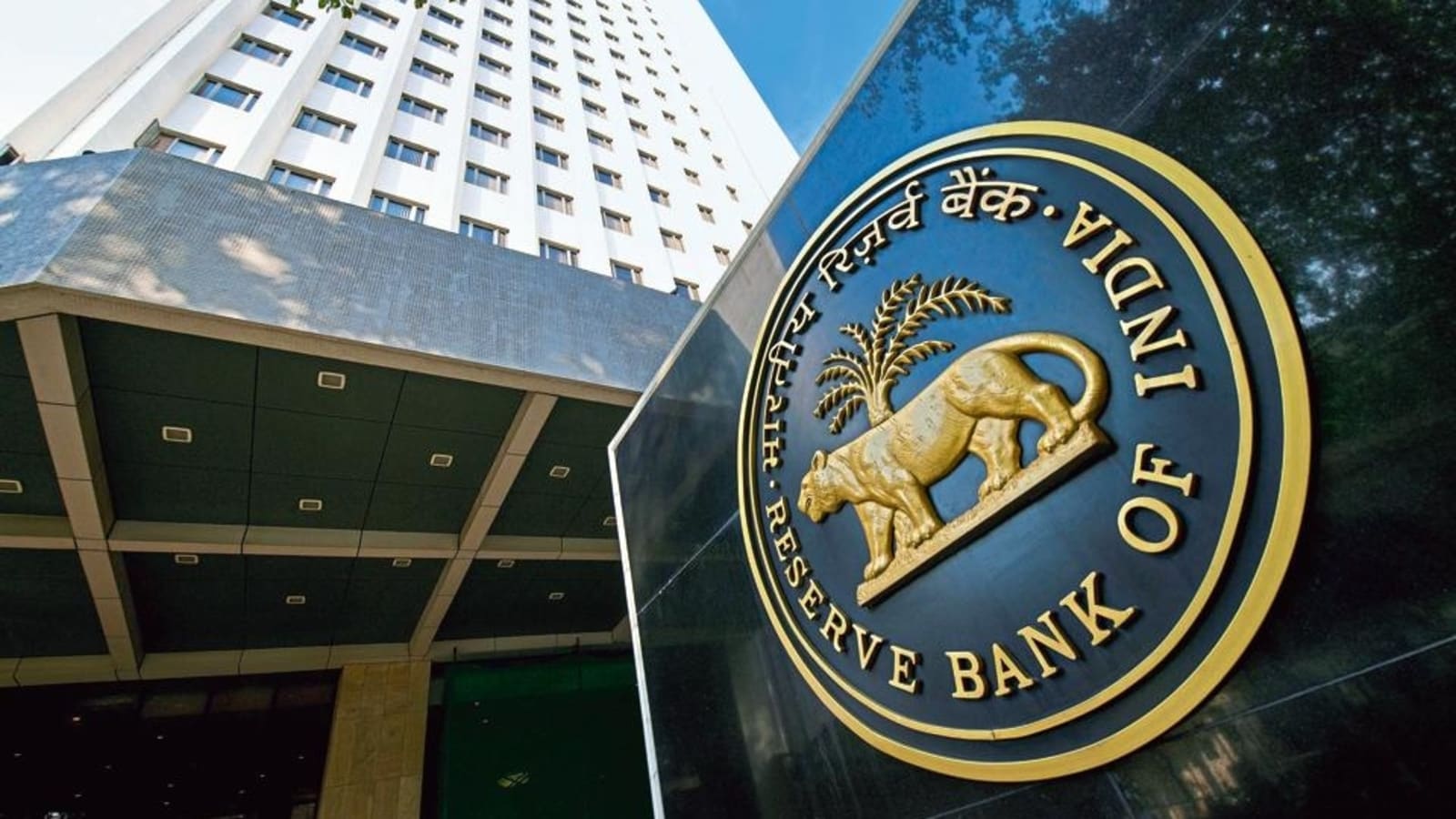
India‘s central bank has raised concerns over the increasing fraud in digital payments and announced new measures to improve security. Reserve Bank of India (RBI) Governor Sanjay Malhotra warned that cyber fraud and data breaches are becoming more frequent as banks and consumers adopt new technology. To counter this, the RBI will introduce exclusive website domain names to reduce the risk of deceptive online practices.
Fraudsters often use misleading domain names to trick users into revealing sensitive information or making fraudulent transactions. To enhance online security and credibility, the RBI will launch dedicated domains for financial institutions. Banks will use ‘bank.in’ while non-bank financial entities will operate under ‘fin.in’. These exclusive domains will provide a unique digital identity, making it easier for users to recognise legitimate platforms.
The Institute for Development and Research in Banking Technology (IDRBT) will oversee the registration process for these domains, with actual registrations set to begin in April 2025. The initiative is part of the RBI’s broader effort to strengthen cybersecurity and protect consumers in the rapidly growing digital payments sector.
Oracle has introduced new AI features to its NetSuite corporate finance software, aiming to streamline common business tasks. Unlike competitors focused on developing general-purpose AI assistants, Oracle is integrating targeted tools to automate tedious processes. One of the latest additions helps generate price quotes for complex purchases through chatbot-driven interactions, making it easier for businesses and consumers to configure products like customised bicycles.
The AI-powered quoting tool allows sales professionals to quickly compile prices based on customer requirements, reducing time spent on manual calculations. Oracle‘s approach focuses on enhancing efficiency rather than competing in the race to build massive AI models. Instead, the company partners with firms like Canadian startup Cohere to power its AI tools.
Oracle’s recent collaboration with OpenAI to build large data centres has raised speculation about further AI partnerships. While no formal announcements have been made, Oracle executives have indicated a willingness to work with OpenAI in the future. The company’s AI strategy prioritises practical applications that help businesses close deals faster and lower operational costs.
French startup Mistral AI has launched a new app for its generative AI assistant, Le Chat, as it seeks to compete with American and Chinese tech giants. The Paris-based company, backed by Nvidia, claims its AI model responds at speeds of up to 1,000 words per second. The release comes just before an AI summit in Paris, highlighting growing European interest in homegrown alternatives to dominant players like OpenAI’s ChatGPT.
CEO Arthur Mensch emphasised the importance of European AI development, stating that Mistral aims to make AI more open and widely accessible. The company has secured major partnerships with firms such as Veolia and European government agencies, though it remains smaller than its US competitors. Mensch also acknowledged that DeepSeek, a rising Chinese AI firm, had benefited from Mistral’s open-source technology.
Despite its rapid growth and a valuation of €5.8 billion, Mistral AI is not planning an initial public offering in the near future. The company has raised over €1 billion and remains financially strong. Mensch believes European AI firms have a cultural role to play in shaping the industry and positioning themselves as credible alternatives to US and Chinese models.