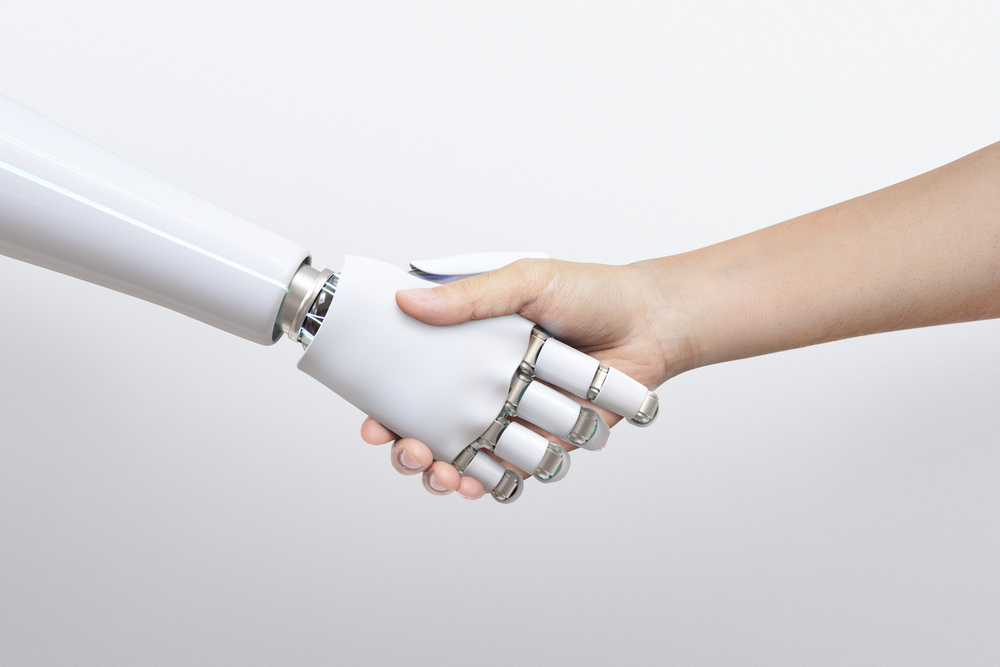
Study finds generative AI has not boosted worker earnings

Generative AI tools like ChatGPT, Claude, and Gemini have had little impact on wages or job losses, according to a new study.

Research by economists Anders Humlum and Emilie Vestergaard found no significant changes in earnings or working hours across 11 occupations often considered vulnerable to AI disruption, such as accountants, teachers, and journalists.

Despite rapid adoption of chatbots in workplaces, the promised economic benefits have yet to materialise.

Company investment has boosted chatbot adoption, helping most users save time; however, average time savings remain small, at just 2.8 percent of working hours. New tasks created by AI, such as reviewing chatbot outputs or monitoring student cheating, often cancel out the potential time saved.

Researchers argue that automation tools historically generate new demands for workers, but so far, AI has not significantly altered productivity or earnings.

The tech industry’s enormous spending on AI infrastructure may face greater scrutiny, as companies like Microsoft and Amazon already scale back investments due to slower-than-expected business adoption.

While there are modest gains, Humlum concludes that transformative effects predicted for AI tools have not yet appeared in real-world economic data, and any future impact will require better integration and a shift in workplace processes.

Would you like to learn more about AI, tech and digital diplomacy? If so, ask our Diplo chatbot!

Apple to shift US iPhone assembly to India by 2025

Apple is preparing to assemble all iPhones sold inside the US in India by next year, aiming to produce over 60 million units annually in the country by 2026.

The move comes in response to mounting geopolitical tensions and renewed tariff threats under former President Donald Trump’s trade agenda, which once imposed duties as high as 145% on Chinese imports.

The decision marks a major shift in Apple’s supply chain strategy, which has long depended on China. By doubling production in India, Apple hopes to reduce its exposure to trade-related risks instead of relying on short-term tariff exemptions.

Foxconn’s plant in Tamil Nadu and Tata Electronics are leading the effort, with support from India’s government through manufacturing incentives and subsidies.

While Apple remains dependent on Chinese suppliers for many components, shifting final assembly to India reflects growing urgency. Trump-era tariffs triggered a $700 billion market loss for the company in early 2024, prompting Apple to act swiftly instead of waiting for further shocks.

Around 20% of all iPhones are now made in India, a figure expected to rise sharply in the coming years.

Although challenges remain, such as the complexity of relocating the broader supply chain, analysts believe the shift is crucial for Apple’s long-term growth.

With US production capacity lacking the scale and workforce needed, India presents a more viable solution to ensure continued momentum and price stability in Apple’s most important market.

Would you like to learn more about AI, tech and digital diplomacy? If so, ask our Diplo chatbot!

TikTok moves into Japanese E-commerce

Chinese social media giant TikTok is preparing to launch its online shopping service in Japan within the coming months, according to a report by the Nikkei newspaper.

The company plans to begin recruiting sellers soon for TikTok Shop, its e-commerce arm that has already made waves in other regions through livestream-based sales of a wide range of products, from footwear to cosmetics.

The move is part of TikTok’s broader strategy to grow internationally, especially while its future in the US remains uncertain. The platform recently expanded into France, Germany and Italy, pushing further into the European market instead of relying solely on existing user bases.

TikTok Shop is known for offering attractive discounts and allowing users to earn commissions by promoting items in live broadcasts.

In contrast, TikTok’s operations in the US continue to face political and regulatory hurdles. A law passed in 2024 requires ByteDance, TikTok’s China-based parent company, to sell off its US assets by January 19.

Although President Donald Trump indicated a deal might still happen, he also suggested any agreement could be delayed due to shifting dynamics in US-China trade relations.

Despite not immediately responding to media requests for comment, TikTok seems determined to strengthen its foothold in international markets.

By entering Japan’s e-commerce space, the company signals it intends to expand through business innovation and regional diversification instead of waiting for political clarity in the United States.

Would you like to learn more about AI, tech and digital diplomacy? If so, ask our Diplo chatbot!

UN prepares for possible shifts in US financial contributions

The United Nations faces renewed financial uncertainty as Donald Trump’s administration reviews all US support for international organisations. Trump has already slashed voluntary funding across multiple UN agencies and withdrawn from bodies like the World Health Organization and the Human Rights Council.

A leaked White House memo even suggests that cuts to assessed contributions—mandatory payments that keep core UN operations running—are on the table, sparking fears of a major financial crisis. While a complete US withdrawal from the UN is seen as unlikely, experts warn that the US could cripple the organisation by indefinitely halting payments, creating a gaping hole in its budget.

In 2023, the US contributed around $13 billion to the UN, covering about a quarter of its budget. The potential for missed payments raises concerns not just about immediate financial collapse, but about the future of multilateralism itself, drawing parallels to the League of Nations’ demise in the early 20th century.

The situation is complicated by internal divisions within the Republican Party, with some favouring a transactional approach to UN reform while others push a hardline, anti-multilateralist agenda. With peacekeeping budget negotiations looming and no US ambassador to the UN yet appointed, uncertainty dominates.

Meanwhile, UN Secretary-General António Guterres has launched the UN80 initiative, aiming to streamline operations and reassure sceptical donors, but it remains unclear if these reforms will be enough to placate Washington.

Would you like to learn more about AI, tech and digital diplomacy? If so, ask our Diplo chatbot!

WTO faces crucial test amid Trump’s tariff gambit

The World Trade Organization (WTO) recently marked its 30th anniversary in a subdued ceremony, overshadowed by a growing threat to the global trade system – Donald Trump’s tariff policies. The US president’s plan to impose ‘reciprocal’ tariffs has unsettled global markets, causing the WTO to warn that international trade could shrink significantly.

Economists fear that Trump’s preference for bilateral deals over multilateral cooperation risks dismantling the rules-based system the WTO was designed to protect. WTO Director General Ngozi Okonjo-Iweala has called the situation an opportunity to reform and modernise the organisation, emphasising the urgent need to strengthen global trade rules.

While some countries are tempted to negotiate directly with Trump to shield their economies, experts like Dartmouth’s Robert Staiger stress that coordinated, multilateral action is the only way to preserve the integrity of the global trading framework. Past failures like the Doha Round haunt such efforts, but today’s crisis might spur the collective will needed for serious reform.

Inside the WTO, countries are exploring responses, from informal consultations to calls for emergency meetings. Meanwhile, China has seized the moment to bolster its standing as a defender of multilateralism, rallying other nations and filing formal complaints against US tariffs.

However, divisions persist, with some countries already negotiating separately with the US, undermining hopes for a unified front. The uncertainty surrounding America’s future in the WTO continues to loom large.

Though US funding is frozen and debates about membership persist, the appointment of a new US representative suggests Washington isn’t abandoning the body just yet. As Trump’s tactics force tough choices on the global community, experts warn that capitulating to bilateralism could permanently wreck the multilateral system – a risk the world can scarcely afford to take.

Would you like to learn more about AI, tech and digital diplomacy? If so, ask our Diplo chatbot!

WHO battles funding shortfall with new restructure plan

Just weeks before the World Health Assembly, the World Health Organization (WHO) unveiled a major restructuring plan in response to severe financial challenges. WHO Director-General Tedros Adhanom Ghebreyesus announced the streamlining of the agency’s Geneva headquarters, reducing its divisions from ten to four and departments from sixty to thirty-four.

With funding slashed by donor cuts, including the United States’ withdrawal that alone cost WHO $1.2 billion, the agency faces a staggering $600 million deficit this year and anticipates a 45% shortfall in its upcoming $4.2 billion budget. The internal response to the restructuring has been tense.

Staff members expressed frustration at the top-down decision-making process and criticised past spending on what they saw as unnecessary management layers. Although no specific job cut numbers were provided, Tedros confirmed that executive management would bear the initial brunt of the downsizing.

A consulting group, funded by the Bill and Melinda Gates Foundation, has been advising on the changes behind closed doors, further fueling concerns about transparency. Outside experts view the overhaul as a return to a more focused, ‘normative’ WHO, echoing the approach under former Director-General Margaret Chan.

Yet key questions remain unanswered, such as whether costly country offices will be closed or WHO’s activities will shift back to its original mission of setting international health standards. European Union representatives and other member states have also voiced scepticism, demanding a detailed roadmap to sustainability before approving the new budget.

As the World Health Assembly approaches, debates are intensifying. While some see the crisis as a rare opportunity to realign the WHO with its foundational goals, political sensitivities around funding, office closures, and expanding member contributions suggest that achieving consensus will be anything but easy.

Would you like to learn more about AI, tech and digital diplomacy? If so, ask our Diplo chatbot!

Musk’s XAI eyes record-breaking $20 billion in funding

Elon Musk’s XAI Holdings is reportedly in discussions to secure up to $20 billion in funding. The fundraising effort, if successful, would be the second-largest of its kind, trailing only OpenAI’s record $40 billion round earlier this year.

A final amount has yet to be confirmed, with suggestions that the total could even exceed the initial target.

The funds could push XAI’s valuation to over $120 billion, significantly elevating its status in the tech sector. XAI Holdings includes Musk’s artificial intelligence company xAI and X, the social platform formerly known as Twitter.

In March, xAI officially acquired X in an all-stock transaction, valuing the companies at a combined $113 billion, with $12 billion in debt included.

Musk has stated that xAI and X will operate as a joint force, integrating AI capabilities, massive data access and wide distribution. The merged entity also acquired generative AI startup Hotshot, expanding its technology base.

A portion of the new funding may be allocated to servicing debt from Musk’s 2022 acquisition of Twitter, which has since amassed over $1.3 billion in annual interest payments.

Further funds could be channelled into developing Colossus 2, an AI supercomputer said to be equipped with one million NVIDIA GPUs. The system is estimated to cost between $35 billion and $40 billion and could be pivotal in advancing Musk’s AI ambitions.

Would you like to learn more about AI, tech and digital diplomacy? If so, ask our Diplo chatbot!

Trump’s first 100 days show steady tech policy

In his blog post ‘Tech continuity in President Trump’s first 100 days,’ Jovan Kurbalija highlights that Trump’s approach to technology remained remarkably stable despite political turbulence in trade and environmental policy. Out of 139 executive orders, only nine directly addressed tech issues, focusing mainly on digital finance, AI leadership, and cybersecurity, reflecting a longstanding US tradition of business-centric tech governance.

Trump’s administration reinforced the idea of letting the tech sector evolve without heavy regulatory interference, even as international players like the EU pushed for stronger digital sovereignty measures. Content moderation policies saw a significant shift, notably with an executive order to curb federal involvement in online censorship, aligning with moves by platforms like Meta and X (formerly Twitter) toward deregulation.

Meanwhile, the prolonged TikTok saga underlined the growing intersection of tech and geopolitics, with ByteDance receiving a deadline extension to sell its US operations amid rising tensions with China. In AI policy, Trump steered away from Biden-era safety concerns, favouring economic competitiveness and educational reforms to strengthen American AI leadership, while public consultations revealed a broad range of industry perspectives.

Kurbalija also noted the administration’s steady hand in cybersecurity, focusing on technical infrastructure while minimising concern over misinformation, and in digital economy matters, where new tariffs and the removal of the de minimis import exemption pointed toward a potentially fragmented global internet. In the cryptocurrency sector, Trump adopted a crypto-friendly stance by creating a Strategic Bitcoin Reserve and easing previous regulatory constraints, though these bold moves sparked fears of financial volatility.

Despite these tactical shifts, Kurbalija concludes that Trump’s overarching tech policy remains one of continuity, firmly rooted in supporting private innovation while navigating increasingly strained global digital relations.

Would you like to learn more about AI, tech and digital diplomacy? If so, ask our Diplo chatbot!

Alibaba launches Qwen3 AI model

As the AI race intensifies in China, Alibaba has unveiled Qwen3, the latest version of its open-source large language model, aiming to compete with top-tier rivals like DeepSeek.

The company claims Qwen3 significantly improves reasoning, instruction following, tool use, and multilingual abilities compared to earlier versions.

Trained on 36 trillion tokens—double that of Qwen2.5—Qwen3 is available for free download on platforms like Hugging Face, GitHub, and Modelscope, instead of being limited to Alibaba’s own channels.

The model also powers Alibaba’s AI assistant, Quark, and will soon be accessible via API through its Model Studio platform.

Alibaba says the Qwen model family has already been downloaded over 300 million times, with developers creating more than 100,000 derivatives based on it.

With Qwen3, the company hopes to cement its place among the world’s AI leaders instead of trailing behind American and Chinese rivals.

Although the US still leads the AI field—according to Stanford’s AI Index 2025, it produced 40 major models last year versus China’s 15— Chinese firms like DeepSeek, Butterfly Effect, and now Alibaba are pushing to close the quality gap.

The global competition, it seems, is far from settled.

Would you like to learn more about AI, tech and digital diplomacy? If so, ask our Diplo chatbot!

Cybercriminals target Gmail accounts in sophisticated new attack

Gmail users are facing a serious new threat that could lead to their accounts being hijacked by cybercriminals.

Experts at Malwarebytes have issued an urgent warning about a sophisticated scam that is bypassing Gmail’s usually reliable spam filters, putting billions of accounts at risk.

The scam was first noticed by Nick Johnson, a developer with the Ethereum Name Service, who received an official-looking email supposedly from Google.

Although it appeared genuine and even passed all verification checks, the link inside redirected users to a fraudulent site hosted via Google’s own website creation platform. Cybercriminals exploited the fact that anyone can create pages on sites.google.com to make the scam look credible.

Google has acknowledged the attack, linked to the Rockfoils threat group, and confirmed that new protections are being rolled out.

While measures are underway to address the vulnerability, security experts strongly advise Gmail users to remain cautious and follow essential safety practices to avoid falling victim.

Simple actions, such as avoiding links in unsolicited emails, double-checking email headers, and refusing to use Google credentials to sign into other services, can significantly reduce the risk. Staying vigilant is now more important than ever to protect personal data and online security.

Would you like to learn more about AI, tech and digital diplomacy? If so, ask our Diplo chatbot!