
Inside Visa’s war room: How AI battles $15 trillion in threats

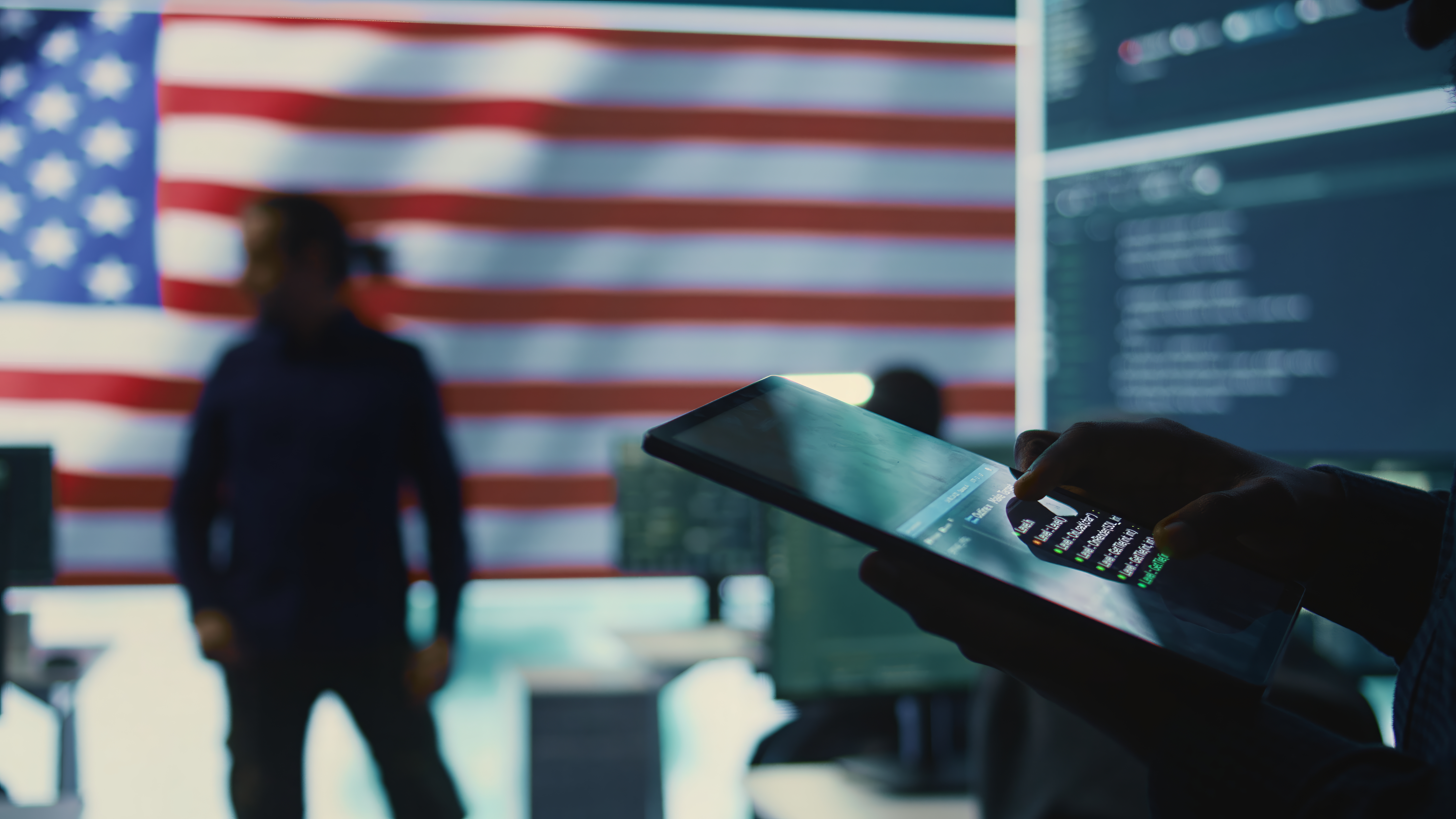
In Virginia’s Data Centre Alley, Visa operates a high-security fraud command centre to protect $15 trillion in annual transactions — nearly 15% of the global economy. With cybercrime growing more sophisticated, the company has spent $12 billion in five years to bolster its AI-powered defences.

‘From lone hackers to criminal syndicates generating hundreds of millions, fraud today is highly structured,’ said Michael Jabbara, Visa’s global head of fraud solutions. Some groups now operate like corporations, with risk managers and customer support.

Much of today’s fraud preys on emotions. Scammers trick people into making payments by posing as romantic interests or sellers. Victims are often lured into schemes run by trafficked workers in scam centres in Myanmar.

Once card details are stolen, criminals test them across websites using recurring micro-charges. These fly under the radar for months, draining money slowly but steadily. Some operations mimic tech firms, offering fraud-as-a-service tools on the dark web.

‘You can buy a full toolkit — the software, instructions, bot access and even a mule network,’ Jabbara said. Brute-force payment attacks are now industrial in scale, enabled by the same cloud infrastructure that powers startups.

Visa’s defence includes round-the-clock global monitoring centres in Virginia, London and Singapore. Inside its Cyber Fusion Centre, teams handle millions of threats daily, mostly stopped automatically. But it’s an arms race — one that never sleeps.

Would you like to learn more about AI, tech and digital diplomacy? If so, ask our Diplo chatbot!

TON falls as UAE shuts down visa rumour

TON coin dropped 6% after the United Arab Emirates dismissed claims about a new visa scheme. The authorities denied that staking $100,000 worth of TON for three years could qualify applicants for a 10-year golden visa.

The cryptocurrency briefly surged 10% after The Open Network announced the visa pathway, only to retreat following regulatory clarification.

Several UAE authorities jointly denied that golden visas are granted based on digital asset holdings. They emphasised that investments in cryptocurrencies fall under specific regulations and do not influence visa eligibility.

Investors were urged to rely on official sources to avoid misinformation.

Introduced in 2019, the UAE’s golden visa offers long-term residency to skilled professionals, investors with public investments exceeding 2 million dirhams ($544,000), and recognised tech entrepreneurs.

The programme enables foreign nationals to live, work, and study in the UAE without a national sponsor.

Would you like to learn more about AI, tech and digital diplomacy? If so, ask our Diplo chatbot!
Court ruling raises alarm over saved ChatGPT chats

A US federal court has ordered OpenAI to preserve nearly all user chats with ChatGPT, including those that users had deleted. The decision comes as part of The New York Times’s ongoing copyright lawsuit, triggering widespread privacy concerns.

The ruling means that millions of personal conversations, previously thought erased, will remain accessible during litigation. These exchanges may include medical queries, relationship issues, and other private matters shared in confidence.

Privacy advocates argue that users were not notified or allowed to object. Critics warn the US ruling sets a dangerous precedent, enabling mass data preservation in lawsuits unrelated to most users.

The Times claims users may have deleted chats to hide copyright infringement. Lawyers and privacy experts counter that people delete chats for legitimate, non-infringing reasons and should retain control over their data.

Legal experts call the preservation order excessive, noting it undermines trust in AI tools and could lead to a chilling effect on their use. The decision could reshape how user privacy is treated in tech litigation for years.

Would you like to learn more about AI, tech and digital diplomacy? If so, ask our Diplo chatbot!

East Meets West: Reimagining education in the age of AI

At the WSIS+20 High-Level Event in Geneva, the session ‘AI (and) education: Convergences between Chinese and European pedagogical practices’ brought together educators, students, and industry experts to examine how AI reshapes global education.

Led by Jovan Kurbalija of Diplo and Professor Hao Liu of Beijing Institute of Technology (BIT), with industry insights from Deloitte’s Norman Sze, the discussion focused on the future of universities and the evolving role of professors amid rapid AI developments.

Drawing on philosophical traditions from Confucius to Plato, the session emphasised the need for a hybrid approach that preserves the human essence of learning while embracing technological transformation.

Professor Liu showcased BIT’s ‘intelligent education’ model, a human-centred system integrating time, space, knowledge, teachers, and students. Moving beyond rigid, exam-focused instruction, BIT promotes creativity and interdisciplinary learning, empowering students with flexible academic paths and digital tools.

Jovan Kurbalija at WSIS+20 High-Level Event 2025
Jovan Kurbalija, Executive Director of Diplo

Meanwhile, Norman Sze highlighted how AI has accelerated industry workflows and called for educational alignment with real-world demands. He argued for reorienting learning around critical thinking, ethical literacy, and collaboration—skills that AI cannot replicate and remain central to personal and professional growth.

A key theme was whether teachers and universities remain relevant in an AI-driven future. Students from around the world contributed compelling reflections: AI may offer efficiency, but it cannot replace the emotional intelligence, mentorship, and meaning-making that only human educators provide.

As one student said, ‘I don’t care about ChatGPT—it’s not human.’ The group reached a consensus: professors must shift from ‘sages on the stage’ to ‘guides on the side,’ coaching students through complexity rather than merely transmitting knowledge.

The session closed on an optimistic note, asserting that while AI is a powerful catalyst for change, the heart of education lies in human connection, dialogue, and the ability to ask the right questions. Participants agreed that a truly forward-looking educational model will emerge not from choosing between East and West or human and machine, but from integrating the best of all to build a more inclusive and insightful future of learning.

Track all key events from the WSIS+20 High-Level Event 2025 on our dedicated page.

Google hit with EU complaint over AI Overviews

After a formal filing by the Independent Publishers Alliance, Google has faced an antitrust complaint in the European Union over its AI Overviews feature.

The group alleges that Google has been using web content without proper consent to power its AI-generated summaries, causing considerable harm to online publishers.

The complaint claims that publishers have lost traffic, readers and advertising revenue due to these summaries. It also argues that opting out of AI Overviews is not a real choice unless publishers are prepared to vanish entirely from Google’s search results.

AI Overviews were launched over a year ago and now appear at the top of many search queries, summarising information using AI. Although the tool has expanded rapidly, critics argue it drives users away from original publisher websites, especially news outlets.

Google has responded by stating its AI search tools allow users to ask more complex questions and help businesses and creators get discovered. The tech giant also insisted that web traffic patterns are influenced by many factors and warned against conclusions based on limited data.

Would you like to learn more about AI, tech and digital diplomacy? If so, ask our Diplo chatbot!

EU rejects delay for AI Act rollout

The EU has confirmed it will enforce its originally scheduled AI Act, despite growing calls from American and European tech firms to delay the rollout.

Major companies, including Alphabet, Meta, ASML and Mistral, have urged the European Commission to push back the timeline by several years, citing concerns over compliance costs.

Rejecting the pressure, a Commission spokesperson clarified there would be no pause or grace period. The legislation’s deadlines remain, with general-purpose AI rules taking effect this August and stricter requirements for high-risk systems following August 2026.

The AI Act represents the EU’s effort to regulate AI across various sectors, aiming to balance innovation and public safety. While tech giants argue that the rules are too demanding, the EU insists legal certainty is vital and the framework must move forward as planned.

The Commission intends to simplify the process later in the year, such as easing reporting demands for smaller businesses. Yet the core structure and deadlines of the AI Act will not be altered.

Would you like to learn more about AI, tech and digital diplomacy? If so, ask our Diplo chatbot!

BRICS calls for AI data regulations amid challenges with de-dollarisation

BRICS leaders in Rio de Janeiro have called for stricter global rules on how AI uses data, demanding fair compensation for content used without permission.

The group’s draft statement highlights growing frustration with tech giants using vast amounts of unlicensed content to train AI models.

Despite making progress on digital policy, BRICS once again stalled on a long-standing ambition to reduce reliance on the US dollar.

After a decade of talks, the bloc’s cross-border payments system remains in limbo. Member nations continue to debate infrastructure, governance and how to work around non-convertible currencies and sanctions.

China is moving independently, expanding the yuan’s international use and launching domestic currency futures.

Meanwhile, the rest of the bloc struggles with legal, financial and technical hurdles, leaving the dream of a unified alternative to the dollar on hold. Even a proposed New Investment Platform remains mired in internal disagreements.

In response to rising global debt concerns, BRICS introduced a Multilateral Guarantees Initiative within the New Development Bank. It aims to improve credit access across the Global South without needing new capital, especially for countries struggling to borrow in dollar-dominated markets.

Would you like to learn more about AI, tech and digital diplomacy? If so, ask our Diplo chatbot!

Global instability fuels surge in cyberattacks

A surge in cyberattacks is fuelled by global instability, with businesses worldwide now facing heightened risks. A new report by GlobalData warns that rising geopolitical tensions are giving state actors, terrorists, hacktivists and cybercriminals more opportunities to strike.

Conflicts in Ukraine and the Middle East have created a volatile digital landscape. Cyberattackers are exploiting weakened defences, targeting both national infrastructure and private enterprises.

‘Those not after money are often motivated by revenge,’ the report states. The key perpetrators are disgruntled employees, unhappy customers, and ideologically driven hackers. While some attackers aim to cause reputational harm or attract attention, others seek to turn off critical systems.

Nation states, in particular, use cyberwarfare as a strategic tool against rival governments. Businesses are warned to prepare for disruption as cyber threats become more frequent and sophisticated. The report concludes that no organisation is immune in today’s digital and geopolitical uncertainty climate.

Would you like to learn more about AI, tech and digital diplomacy? If so, ask our Diplo chatbot!

Regions seek role in EU hospital cyber strategy

The European Commission’s latest plan to strengthen hospital cybersecurity has drawn attention from regional authorities across the EU, who say they were excluded from key decisions.

Their absence, they argue, could weaken the strategy’s overall effectiveness.

With cyberattacks on healthcare systems growing, regional representatives insist they should have a seat at the table.

As those directly managing hospitals and public health, they warn that top-down decisions may overlook urgent local challenges and lead to poorly matched policies.

The Commission’s plan includes creating a dedicated health cybersecurity centre under the EU Agency for Cybersecurity (ENISA) and setting up an EU-wide threat alert system.

Yet doubts remain over how these goals will be met without extra funding or clear guidance on regional involvement.

The concerns point to the need for a more collaborative approach that values regional knowledge.

Without it, the EU risks designing cybersecurity protections that fail to reflect the realities inside Europe’s hospitals.

Would you like to learn more about AI, tech and digital diplomacy? If so, ask our Diplo chatbot!

Major DeFi sites lose access in Turkey’s new crypto rules

Turkey’s Capital Markets Board blocked access to 46 crypto platforms, including PancakeSwap. The move aims to control the rapidly growing digital asset market and enforce new regulations.

Since gaining expanded authority in March 2025, the CMB requires all crypto providers in Turkey to register locally and follow strict anti-money laundering and consumer protection rules.

Key rules include ID checks for transactions above 15,000 lira, stablecoin transfer limits, and withdrawal delays for some activities.

Turkey’s approach mirrors moves by other nations such as Kazakhstan and Russia, which have taken firm steps to regulate crypto markets. While trading and holding cryptocurrencies remain legal, payment use has been banned since 2021.

The latest crackdown signals Turkey’s intent to control and formalise crypto operations, steering away from the open nature of decentralised finance towards a more regulated environment.

Would you like to learn more about AI, tech and digital diplomacy? If so, ask our Diplo chatbot!