
Gamescom showcases EU support for cultural and digital innovation

The European Commission will convene video game professionals in Cologne for the third consecutive year on August 20 and 21. The visit aims to follow developments in the industry, present the future EU budget, and outline opportunities under the upcoming AgoraEU programme.

EU Officials will also discuss AI adoption, new investment opportunities, and ways to protect minors in gaming. Renate Nikolay, Deputy Director-General of DG CONNECT, will deliver a keynote speech and join a panel titled ‘Investment in games – is it finally happening?’.

The European Commission highlights the role of gaming in Europe’s cultural diversity and innovation. Creative Europe MEDIA has already supported nearly 180 projects since 2021. At Gamescom, its booth will feature 79 companies from 24 countries, offering fresh networking opportunities to video game professionals.

The engagement comes just before the release of the second edition of the ‘European Media Industry Outlook’ report. The updated study will provide deeper insights into consumer behaviour and market trends, with a dedicated focus on the video games sector.

Gamescom remains the world’s largest gaming event, with 1,500 exhibitors from 72 nations in 2025. The event celebrates creative and technological achievements, highlighting the industry’s growing importance for Europe’s competitiveness and digital economy.

Would you like to learn more about AI, tech, and digital diplomacy? If so, ask our Diplo chatbot!

Anthropic introduces a safety feature allowing Claude AI to terminate harmful conversations

Anthropic has announced that its Claude Opus 4 and 4.1 models can now end conversations in extreme cases of harmful or abusive user interactions.

The company said the change was introduced after the AI models showed signs of ‘apparent distress’ during pre-deployment testing when repeatedly pushed to continue rejected requests.

According to Anthropic, the feature will be used only in rare situations, such as attempts to solicit information that could enable large-scale violence or requests for sexual content involving minors.

Once activated, Claude AI will be closed, preventing the user from sending new messages in that thread, though they can still access past conversations and begin new ones.

The company emphasised that the models will not use the ability when users are at imminent risk of self-harm or harming others, ensuring support channels remain open in sensitive situations.

Anthropic added that the feature is experimental and may be adjusted based on user feedback.

The move highlights the firm’s growing focus on safeguarding both AI models and human users, balancing safety with accessibility as generative AI continues to expand.

Would you like to learn more about AI, tech and digital diplomacy? If so, ask our Diplo chatbot!

AI robot concepts may arrive from Apple by 2027

Apple is again exploring AI-powered robotics, reportedly working on prototypes including a tabletop assistant and lifelike upgrades to Siri. A home display may launch in 2026, with a robot device expected in 2027, though neither is confirmed for release.

One concept, codenamed J595 and the ‘Pixar Lamp,’ features a swivelling screen on a robotic arm that tracks user movement. The robot is a personal assistant that responds to conversations using facial recognition and motorised movement.

Other prototypes under evaluation include mobile bots and humanoid robots for industrial use.

The devices would run Apple’s new internal software platform, ‘Charismatic,’ designed for voice commands, personalised content, and smart home automation. Apple has not confirmed robotics, but CEO Tim Cook highlighted the company’s AI focus, hinting at upcoming innovations.

Experts note that domestic humanoid robots are still far from mainstream adoption. Gary Marcus, an AI expert and NYU professor, said Apple’s focus on privacy, security, and design suggests that future humanoid robots could benefit from its integrated hardware and software.

Would you like to learn more about AI, tech and digital diplomacy? If so, ask our Diplo chatbot

OpenAI softens GPT-5 tone after users complain it felt cold

OpenAI has updated GPT-5 to make its tone noticeably warmer and more engaging, without reverting to the overly flattering style some users criticised in GPT-4o. The change is rolling out, aiming to balance emotional resonance with substance.

CEO Sam Altman stated the adjustment directly responds to users finding GPT-5 too formal or robotic. The update is subtle yet visible, enhancing conversational warmth while avoiding sycophantic tendencies.

OpenAI also expands user control by offering three interaction modes, Auto, Fast, and Thinking, which adapt response style to user preference. These changes empower users to shape the tone and depth of their AI interactions.

Reacting to public frustration, OpenAI has reinstated GPT-4o (along with GPT-4.1, o3, and GPT-5 Thinking mini) for paid subscribers, while promising more customisation options in future updates.

Would you like to learn more about AI, tech and digital diplomacy? If so, ask our Diplo chatbot!

Nvidia prepares new AI chip for China amid Washington’s hesitation

As if Trump’s recent shifts in chip export policy regarding the scaled-down chip models were not enough to reopen supply to the Chinese market, after all the earlier tariffs and bans, Nvidia is now quietly developing a new AI chip for China, even as Washington continues to debate how much cutting-edge US technology Beijing should be allowed to access.

According to Nvidia’s latest statements, the chip, codenamed B30A, will be based on Nvidia’s latest Blackwell architecture and is expected to outperform the company’s current China-approved model, the H20.

Namely, the novelty comes just days after President Donald Trump weighed permitting scaled-down versions of Nvidia’s most advanced chips to be sold in China. His comments marked a potential shift in US policy, but the approval remains uncertain, with lawmakers in both parties warning that even weaker versions of top-end chips could still give Beijing an edge in the global AI race.

Technically, the B30A will be less potent than Nvidia’s flagship B300, but it retains advanced features such as high-bandwidth memory and NVLink connectivity, which are crucial for fast data processing.

Nvidia hopes to send early samples to Chinese customers next month, though final specifications have yet to be confirmed.

‘Everything we offer is with full government approval and designed for commercial use,’ the company said in a statement.

The stakes are high, as China accounted for 13% of Nvidia’s revenue last year, and losing that market could push customers toward domestic rivals like Huawei.

Analysts note that Huawei’s chips are improving, particularly in raw computing power, though they still lag in software support and memory performance, areas where Nvidia remains dominant.

At the same time, Beijing has been pushing back. Chinese experts recently raised concerns that Nvidia’s chips could pose security risks, and regulators have reportedly warned Chinese tech firms about buying the H20.

Nvidia denies any such vulnerabilities, but the warnings illustrate how political friction is weighing on commercial strategy.

Alongside the B30A, Nvidia is also preparing another chip, the RTX6000D, built for AI inference rather than training. That model has weaker specifications designed to comply with strict US export thresholds.

Nvidia plans to start shipping small batches of the RTX6000D to Chinese clients as early as September, which seems to indicate that the company is trying to balance Washington’s restrictions with the need to preserve its foothold in one of the world’s most lucrative AI markets.

Would you like to learn more about AI, tech and digital diplomacyIf so, ask our Diplo chatbot!

India moves closer to crypto tax reform

India’s tax authority has formally engaged cryptocurrency platforms to gather feedback on how the country should regulate virtual digital assets (VDAs). The Central Board of Direct Taxes (CBDT) has issued a questionnaire, signalling plans to review current rules and explore a new law.

The consultation focuses on contentious issues such as the flat 30% tax on crypto gains, the 1% tax deducted at source (TDS) on every transaction, and the inability to offset losses. Industry players say the measures have drained liquidity and driven traders to more favourable markets like Dubai.

Banks’ reluctance to support crypto-linked accounts has further complicated matters.

Platforms have been asked to suggest whether a dedicated VDA law should be established, and which regulator-SEBI, the RBI, MeitY, or the FIU-IND-should oversee it. The CBDT seeks feedback on the OECD’s Crypto-Asset Reporting Framework, supported by India for coordinated global regulation.

Legal experts believe India is preparing for a comprehensive framework in the coming year, following its G20 advocacy for global cooperation on digital asset regulation. Industry voices suggest the government is moving towards regulatory clarity rather than continued uncertainty.

Would you like to learn more about AI, tech and digital diplomacy? If so, ask our Diplo chatbot!

SoftBank invests $2 billion in Intel to boost US semiconductor industry

Japanese technology giant SoftBank has announced plans to buy a $2 billion stake in Intel, signalling a stronger push into the American semiconductor industry.

The investment comes as Washington debates greater government involvement in the sector, with reports suggesting President Donald Trump is weighing a US government stake in the chipmaker.

SoftBank will purchase Intel’s common stock at $23 per share. Its chairman, Masayoshi Son, said semiconductors remain the backbone of every industry and expressed confidence that advanced chip manufacturing will expand in the US, with Intel playing a central role.

The move follows SoftBank’s increasing investments in the US, including its role in the $500 billion ‘Stargate’ AI project announced earlier this year.

Once a dominant force in Silicon Valley, Intel has struggled against rivals such as Nvidia and AMD. Under new CEO Lip-Bu Tan, the company is cutting 15% of its workforce and reducing costs to stabilise operations.

After a private meeting, Trump recently criticised Tan’s leadership but later softened his stance.

Shares in both companies slipped following the announcement, with SoftBank down 2.2% in Tokyo and Intel falling 3.7% in New York.

Would you like to learn more about AI, tech and digital diplomacy? If so, ask our Diplo chatbot!

AfDB backs AI training to drive Africa’s Agenda 2063

The African Development Bank has strengthened Africa’s digital journey by backing a landmark AI training initiative linked to Agenda 2063. The effort aims to accelerate the continent’s long-term strategy, ‘The Africa We Want,’ by equipping states with practical expertise.

Through its Joint Secretariat Support Office, the Bank gave both technical and financial backing to the 5th Annual Training Workshop. The event focused on applying AI to monitoring, evaluation, and reporting under the Second Ten-Year Plan of Agenda 2063.

The Lusaka workshop, co-hosted by the African Union Commission and the African Capacity Building Foundation, featured sessions with Ailyse, ChatGPT, Google AI Studio, Google Gemini, and Perplexity. Delegates explored embedding AI insights into analytics for stronger policymaking and accountability.

By investing in institutional capacity, the AfDB and partners aim to advance AI-enabled solutions that improve policy interventions, resource allocation, and national priorities. The initiative reflects a broader effort to integrate digital tools into Africa’s governance structures.

The workshop also fostered peer learning, allowing delegates to share best practices in digital monitoring frameworks. By driving AI adoption in planning and results delivery, the AfDB underlines its role as a partner in Africa’s transformation.

Would you like to learn more about AI, tech, and digital diplomacy? If so, ask our Diplo chatbot!
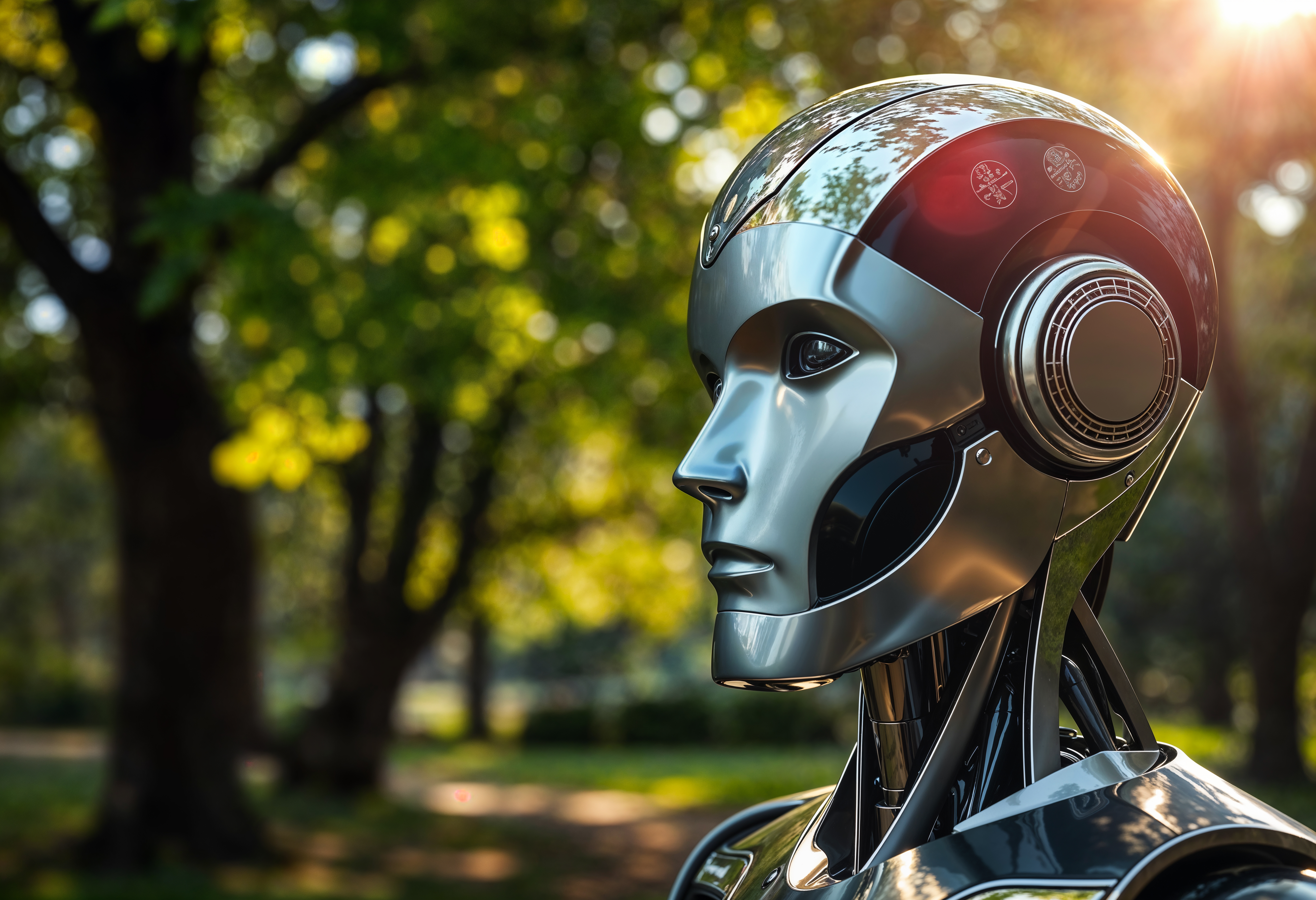
The First Descendant faces backlash over AI-generated streamer ads

Nexon’s new promotional ads for their looter-shooter The First Descendant have ignited controversy after featuring AI-generated avatars that closely mimic real content creators, one resembling streamer DanieltheDemon.

The ads, circulating primarily on TikTok, combine unnatural expressions with awkward speech patterns, triggering community outrage.

Fans on Reddit slammed the ads as ’embarrassing’ and akin to ‘cheap, lazy marketing,’ arguing that Nexon had bypassed genuine collaborators for synthetic substitutes, even though those weren’t subtle attempts.

Critics warned that these deepfake-like promotions undermine the trust and credibility of creators and raise ethical questions over likeness rights and authenticity in AI usage.

Would you like to learn more about AI, tech and digital diplomacy? If so, ask our Diplo chatbot!

Milky Way platform showcases Tredence’s vision for autonomous AI in business

Tredence has launched Milky Way, a multi-agent, multi-turn system that uses autonomous AI agents to accelerate enterprise decision-making. The platform introduces specialised agents that collaborate like digital co-workers, combining reasoning and execution to deliver outcomes at scale.

The system addresses a common challenge: converting enterprise data into timely and actionable insights. The Milky Way incorporates over 15 prebuilt agents across key business roles and more than 50 specialised agents trained on real-world enterprise scenarios.

Agents span critical functions, from marketing analysts optimising campaigns to supply chain analysts anticipating disruptions. Technical agents, such as anomaly detection and Text-to-SQL, complement them by handling operational complexity with accuracy and transparency.

Early trials have shown striking results, with companies reporting up to five times faster insights and 50% lower analytics costs. Global retailers cut manual effort by 60%, while healthcare providers streamlined patient data aggregation and triage, supporting speedier diagnosis.

Designed for enterprise-grade use, Milky Way integrates seamlessly with existing data systems, offering role-based access, full audit trails, and domain expertise. Tredence positions it as a step towards AI agents that deliver context-aware, scalable business outcomes.

Would you like to learn more about AI, tech, and digital diplomacy? If so, ask our Diplo chatbot!