
EU and Bangladesh strengthen cooperation on cybersecurity and digital economy

The EU has engaged in talks with the Bangladesh Telecommunication Regulatory Commission to strengthen cooperation on data protection, cybersecurity, and the country’s digital economy.

The meeting was led by EU Ambassador Michael Miller and BTRC Chairman Major General (retd) Md Emdad ul Bari.

The EU emphasised safeguarding fundamental rights while encouraging innovation and investment. With opportunities in broadband expansion, 5G deployment, and last-mile connectivity, the EU reaffirmed its commitment to supporting Bangladesh’s vision for a secure and inclusive digital future.

Both parties agreed to deepen collaboration, with the EU offering technical expertise under its Global Gateway strategy to help Bangladesh build a safer and more connected digital landscape.

Would you like to learn more about AI, tech and digital diplomacy? If so, ask our Diplo chatbot!
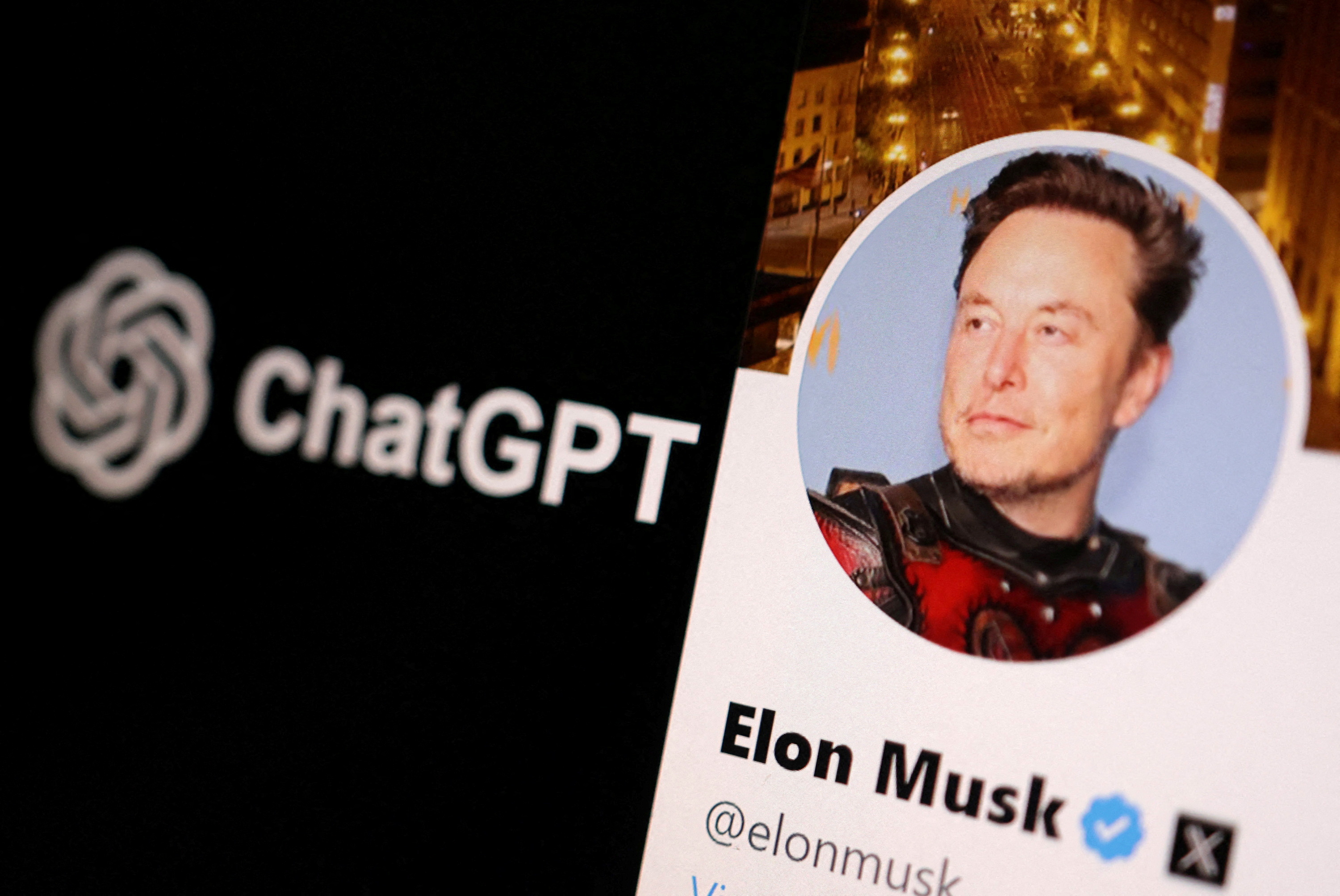
Musk acknowledges value in ChatGPT-5’s modesty after public spat

Elon Musk has taken an unexpected conciliatory turn in his feud with Sam Altman by praising a ChatGPT-5 response, ‘I don’t know’, as more valuable than overconfident answers. Musk described it as ‘a great answer’ from the AI chatbot.

Initially sparked by Musk accusing Apple of favouring ChatGPT in App Store rankings and Altman firing back with claims of manipulation on X, the feud has taken on new dimensions as AI itself seems to weigh in.

At one point, xAI’s Grok chat assistant sided with Altman, while ChatGPT offered a supportive nod to Musk. These chatbot alignments have introduced confusion and irony into a clash already rich with irony.

Musk’s praise of a modest AI response contrasts sharply with the often intense claims of supremacy. It signals a rare acknowledgement of restraint and clarity, even from an avowed critic of OpenAI.

Would you like to learn more about AI, tech and digital diplomacy? If so, ask our Diplo chatbot!

Sam Altman urges rethink of US–China AI strategy

OpenAI CEO Sam Altman has warned that the United States may be underestimating China’s rapid advances in AI. He argued that export controls on semiconductors are unlikely to be a reliable long-term solution to the global AI race.

At a press briefing in San Francisco, Altman said the competition cannot be reduced to a simple scoreboard. China can expand inference capacity more quickly, even as Washington tightens restrictions on advanced semiconductor exports.

He expressed doubts about the effectiveness of purely policy-driven approaches. ‘You can export-control one thing, but maybe not the right thing… workarounds exist,’ Altman said. He stressed that chip controls may not keep pace with technological realities.

His comments come as US policy becomes increasingly complex. President Trump halted advanced chip supplies in April, while the Biden administration recently allowed ‘China-safe’ chips, requiring Nvidia and AMD to share revenue. Critics call the rules contradictory and difficult to enforce.

Meanwhile, Chinese firms are accelerating efforts to replace US suppliers, with Huawei and others building domestic alternatives. Altman suggested this push for self-sufficiency could undermine Washington’s goals, raising questions about America’s strategy in the AI race.

Would you like to learn more about AI, tech, and digital diplomacy? If so, ask our Diplo chatbot!

South Korea moves forward with won-denominated stablecoin

South Korea is advancing plans for a won-denominated stablecoin as the Financial Services Commission (FSC) drafts a regulatory framework. The proposal will set rules for issuance, collateral, and controls, marking South Korea’s first unified approach to stablecoins.

Political and industry momentum has been growing under pro-crypto President Lee Jae-myung. Surveys show strong public interest, while USD-backed stablecoins dominate local trading and remittances.

Eight major banks are collaborating on a joint won-based token, seeking regulatory approval to maintain competitiveness and reduce reliance on foreign-issued coins.

The private sector has already launched South Korea’s first won-pegged stablecoin. On 5 August, entertainment platform fanC and software firm Initech unveiled KRWIN, pegged 1:1 to the Korean won.

The pilot tests transferability and real-world use in payments, remittances, and tourism, with plans for a broader rollout hinted at by a trademark application.

Regional interest in stablecoins is rising across Asia, with Japan and Hong Kong also exploring initiatives. Dollar-backed stablecoins like USDT and USDC still dominate, keeping competition and adoption timelines uncertain despite won-pegged token launches.

Would you like to learn more about AI, tech and digital diplomacy? If so, ask our Diplo chatbot!

Zimbabwe to launch national AI policy by October to boost digital sovereignty

Zimbabwe’s Information and Communication Technology Minister, Tendai Mavetera, revealed the second draft of the National AI Policy during the AI Summit for Africa 2025 in Victoria Falls, hosted by Alpha Media Holdings and AIIA.

Though the policy was not formalised during the summit, Mavetera stated it is expected to be launched by 1 October 2025 at the new Parliament building, with presidential presence anticipated.

The strategy is designed to foster an Africa where AI serves humanity, ensuring connectivity in every village, education access for every child, and opportunity for every young person.

Core features include data sovereignty and secure data storage, with institutions like TelOne expected to host localised solutions, moving away from past practices of storing data abroad.

Speakers at the summit underscored AI’s role in economic and social transformation rather than job displacement; Africa’s investment in AI surpassed US$200 billion in 2024.

Would you like to learn more about AI, tech and digital diplomacy? If so, ask our Diplo chatbot!

Zoom launches AI Virtual Agent to replace human receptionists

Zoom has unveiled its Virtual Agent for Zoom Phone, a 24/7 AI concierge designed to replace or support human receptionists. The tool can greet callers naturally, process requests, and initiate next steps without human intervention, aiming to reduce missed calls and waiting times.

The AI agent is initially available in English, Spanish, French, German, Portuguese, and Japanese, with more languages planned.

Companies can set up the system without coding expertise by training it with existing documents or company websites, allowing for a faster, personalised, and scalable customer experience.

Zoom highlighted use cases across sectors, including booking appointments in healthcare, checking stock and answering retail product queries, and providing financial service updates. The Virtual Agent promises to handle these tasks autonomously, giving businesses greater efficiency and flexibility.

In addition, Zoom has enhanced its AI Companion tool to manage meeting scheduling. The agent can coordinate invites, track responses, and suggest alternatives, freeing teams to focus on discussions rather than logistics.

Would you like to learn more about AI, tech and digital diplomacy? If so, ask our Diplo chatbot!

Applied Digital unveils $3 billion AI factory in North Dakota

Applied Digital is expanding in North Dakota with Polaris Forge 2, a $3 billion AI factory breaking ground in September 2025. The Harwood site will add 280 megawatts of capacity by 2027, cementing the state’s role in US AI infrastructure.

The project reflects demand and Applied Digital’s push to deliver high-performance compute power at scale. CEO Wes Cummins confirmed strong partner interest, including discussions with a US hyperscaler, and stated that the development will enhance growth and community value.

North Dakota has become a key destination for data centres, with abundant power, land, and a business-friendly climate. Polaris Forge 2 builds on the success of the Ellendale campus, with over 900 acres contracted and energy secured from Cass County Electric Cooperative.

The campus will employ more than 200 staff and contractors upon completion of operations. Governor Kelly Armstrong welcomed the investment, praising Applied Digital’s housing and workforce initiatives in Ellendale as a model for rural innovation and economic resilience.

Commerce Commissioner Chris Schilken said the Harwood site extends that success, reinforcing North Dakota as a hub for sustainable AI infrastructure. Applied Digital sees Polaris Forge 2 as advancing its mission to deliver innovation while driving local development and long-term growth.

Would you like to learn more about AI, tech, and digital diplomacy? If so, ask our Diplo chatbot!

Study finds AI-generated responses flooding research platforms

Online questionnaires are being increasingly swamped by AI-generated responses, raising concerns that a vital data source for researchers is becoming polluted. Platforms like Prolific, which pay participants to answer questions, are widely used in behavioural studies.

Researchers at the Max Planck Institute noticed suspicious patterns in their work and began investigating. They found that nearly half of the respondents copied and pasted answers, strongly suggesting that many were outsourcing tasks to AI chatbots.

Analysis showed clear giveaways, including overly verbose and distinctly non-human language. The researchers concluded that a substantial proportion of behavioural studies may already be compromised by chatbot-generated content.

In follow-up tests, they set traps to detect AI use, including invisible text instructions and restrictions on copy-paste. The measures caught a further share of participants, highlighting the scale of the challenge facing online research platforms.

Experts say the responsibility lies with both researchers and platforms. Stronger verification methods and tighter controls are needed for online behavioural research to remain credible.

Would you like to learn more about AI, tech, and digital diplomacy? If so, ask our Diplo chatbot!

Nexon investigates AI-generated TikTok ads for The First Descendant

Nexon launched an investigation after players spotted several suspicious adverts for The First Descendant on TikTok that appeared to have been generated by AI.

One advertisement allegedly used a content creator’s likeness without permission, sparking concerns about the misuse of digital identities.

The company issued a statement acknowledging ‘irregularities’ in its TikTok Creative Challenge, a campaign that lets creators voluntarily submit content for advertising.

While Nexon confirmed that all videos had been verified through TikTok’s system, it admitted that some submissions may have been produced in inappropriate circumstances.

Nexon apologised for the delay in informing players, saying the review took longer than expected. It confirmed that a joint investigation with TikTok is underway to determine what happened, and it was promised that updates would be provided once the process is complete.

The developer has not yet addressed the allegation from creator DanieltheDemon, who claims his likeness was used without consent.

The controversy has added to ongoing debates about AI’s role in advertising and protecting creators’ rights.

Would you like to learn more about AI, tech and digital diplomacy? If so, ask our Diplo chatbot!

Pakistan launches national AI innovation competition

Pakistan’s Ministry of Planning, Development, and Special Initiatives has launched a national innovation competition to drive the development of AI solutions in priority sectors. The initiative aims to attract top talent to develop impactful health, education, agriculture, industry, and governance projects.

Minister Ahsan Iqbal said AI is no longer a distant prospect but a present reality that is already transforming economies. He described the competition as a milestone in Pakistan’s digital history and urged the nation to embrace AI’s global momentum.

Iqbal stressed that algorithms now shape decisions more than traditional markets, warning that technological dependence must be avoided. Pakistan, he argued, must actively participate in the AI revolution or risk being left behind by more advanced economies.

He highlighted AI’s potential to predict crop diseases, aid doctors in diagnosis, and deliver quality education to every child nationwide. He said Pakistan will not be a bystander but an emerging leader in shaping the digital future.

The government has begun integrating AI into curricula and expanding capacity-building initiatives. Officials expect the competition to unlock new opportunities for innovation, empowering youth and driving sustainable development across the country.

Would you like to learn more about AI, tech, and digital diplomacy? If so, ask our Diplo chatbot!