Children will no longer be able to chat with adult strangers on Roblox after new global age checks are introduced. The platform will begin mandatory facial estimation in selected countries in December before expanding worldwide in January.
Roblox players will be placed into strict age groups and prevented from messaging older users unless they are verified as trusted contacts. Under-13s will remain barred from private messages unless parents actively approve access within account controls.
The company faces rising scrutiny following lawsuits in several US states, where officials argue Roblox failed to protect young users from harmful contact. Safety groups welcome the tighter rules but warn that monitoring must match the platform’s rapid growth.
Roblox says the technology is accurate and helps deliver safer digital spaces for younger players. Campaigners continue to call for broader protections as millions of children interact across games, chats and AI-enhanced features each day.
Would you like to learn more about AI, tech and digital diplomacy? If so, ask our Diplo chatbot!
A rising number of young, high-earning Americans are moving away from wealth advisers who fail to offer crypto access, signalling a sharp generational divide in portfolio expectations.
New survey results from Zerohash show that 35 percent of affluent investors aged 18 to 40 have already redirected funds to advisers who support digital-asset allocations, often shifting between $250,000 and $1 million.
Confidence in crypto has strengthened as major financial institutions accelerate adoption. Zerohash reported that more than four-fifths of surveyed investors feel more assured in the asset class thanks to involvement from BlackRock, Fidelity and Morgan Stanley.
Wealthier respondents proved the least patient. Half of those earning above $500,000 said they had already replaced advisers who lack crypto exposure, and 84 percent plan to expand their holdings over the coming year.
Demand now extends well beyond Bitcoin and Ethereum. Ninety-two percent want access to a wider range of digital assets, mirroring expanding interest in altcoin-based ETFs and staking products.
Asset managers are responding quickly, with 21Shares launching its Solana ETF in the US and BlackRock preparing a staked Ether product. The Solana category alone has attracted more than $420 million in inflows, underscoring the rising appetite for institutional-grade exposure.
Would you like to learn more about AI, tech and digital diplomacy? If so, ask our Diplo chatbot!
The Digital Omnibus has been released by the European Commission, prompting strong criticism from privacy advocates. Campaigners argue the reforms would weaken long-standing data protection standards and introduce sweeping changes without proper consultation.
Noyb founder Max Schrems claims the plan favours large technology firms by creating loopholes around personal data and lowering user safeguards. Critics say the proposals emerge despite limited political support from EU governments, civil society groups and several parliamentary factions.
The Omnibus is welcomed by industry which have called for simplification and changes to be made for quite a number of years. These changes should make carrying out business activities simpler for entities which do process vast amounts of data.
The Commission is also accused of rushing (errors can be found in the draft, including references to the GDPR) the process under political pressure, abandoning impact assessments and shifting priorities away from widely supported protections. View our analysis on the matter for a deep dive on the matter.
Would you like to learn more about AI, tech and digital diplomacy? If so, ask our Diplo chatbot!
Over 40 million people worldwide are living with HIV, a chronic infection that remains a leading cause of death. Developing an effective vaccine has proven difficult due to the virus’s rapid mutations and the vast volume of clinical data produced during trials.
Scripps Research has received $1.1 million from CHAVD to purchase high-performance computing and AI technology. The investment lets researchers analyse millions of vaccine candidates faster, speeding antibody identification and refining experimental vaccines.
StepwiseDesign enables the AI system to evaluate vaccine-induced antibodies and identify the most promising candidates for development. The system has found rare antibodies that neutralise HIV in uninfected individuals, showing its ability to detect extremely rare precursors.
Researchers hope the computational framework will not only fast-track HIV vaccine development but also be applied to other complex pathogens, including influenza and malaria. The project highlights collaboration and innovation, with potential to improve global health outcomes for millions at risk.
Would you like to learn more about AI, tech and digital diplomacy? If so, ask our Diplo chatbot!
Google CEO Sundar Pichai advises people not to unquestioningly trust AI tools, warning that current models remain prone to errors. He told the BBC that users should rely on a broader information ecosystem rather than treat AI as a single source of truth.
Pichai said generative systems can produce inaccuracies and stressed that people must learn what the tools are good at. The remarks follow criticism of Google’s own AI Overviews feature, which attracted attention for erratic and misleading responses during its rollout.
Experts say the risk grows when users depend on chatbots for health, science, or news. BBC research found major AI assistants misrepresented news stories in nearly half of the tests this year, underscoring concerns about factual reliability and the limits of current models.
Google is launching Gemini 3.0, which it claims offers stronger multimodal understanding and reasoning. The company says its new AI Mode in search marks a shift in how users interact with online information, as it seeks to defend market share against ChatGPT and other rivals.
Pichai says Google is increasing its investment in AI security and releasing tools to detect AI-generated images. He maintains that no single company should control such powerful technology and argues that the industry remains far from a scenario in which one firm dominates AI development.
Would you like to learn more about AI, tech, and digital diplomacy? If so, ask our Diplo chatbot!
SAP has announced new partnerships with Bleu, Capgemini, and Mistral AI to advance Europe’s digital sovereignty. The collaboration combines SAP’s expertise in enterprise software with France’s AI ecosystem to develop secure, scalable, and sovereign cloud solutions for governments and regulated sectors.
Bleu and Delos Cloud have established a Franco-German alliance focused on crisis resilience, creating joint capabilities for early detection, analysis, and remediation of cyber incidents. Their cooperation supports rapid response in extreme scenarios and reinforces control over critical infrastructure.
SAP and Capgemini are expanding their partnership to advance sovereign agentic AI and strengthen cybersecurity across Europe. Their new Sovereign Technology Partnership will deliver data management, cloud services, and automation tools for public and regulated sectors.
SAP and Mistral AI are also deepening their collaboration to create Europe’s first full sovereign AI stack. SAP will offer Mistral’s frontier models through its sovereign AI foundation on SAP BTP, while both companies co-develop industry-specific AI applications designed for engineering and R&D workloads.
These partnerships form part of SAP’s broader sovereign cloud strategy, backed by more than €20bn in investment. SAP states that its aim is to provide a secure, compliant, and locally controlled infrastructure that enables innovation while safeguarding European data, assets, and long-term technological independence.
Would you like to learn more about AI, tech, and digital diplomacy? If so, ask our Diplo chatbot!
Alphabet CEO Sundar Pichai recently warned people against having total confidence in artificial intelligence tools. Speaking to the BBC, the head of Google’s parent company stressed that current state-of-the-art AI technology remains ‘prone to errors’ and must be used judiciously alongside other resources.
The executive also addressed wider concerns about a potential ‘AI bubble’ following increased tech valuations and spending across the sector. Pichai stated he believes no corporation, including Google, would be completely safe if such an investment surge were to collapse. He compared the current environment to the early internet boom, suggesting the profound impact of AI will nonetheless remain.
Simultaneously, the largest bank in the US, JPMorgan Chase, is sounding an alarm over market instability. Jamie Dimon, the bank’s chair and chief executive, expressed significant worry over a severe US stock market correction, predicting it could materialise within the next six months to two years. Concerns over the geopolitical climate, expansive fiscal spending, and worldwide remilitarisation are adding to this atmosphere of economic uncertainty.
Would you like to learn more about AI, tech and digital diplomacy? If so, ask our Diplo chatbot!
A growing debate over AI dominated COP30 in Brazil, as delegates weighed its capacity to support climate solutions against its rapidly rising environmental costs.
Technology leaders argued that AI can strengthen energy management, refine climate research and enhance conservation programmes.
Participants highlighted an expanding number of AI-driven tools showcased at the summit, reflecting both enthusiasm and caution about their long-term influence.
Several countries noted that AI systems could help smaller delegations review complex negotiation documents and take part more effectively.
Environmental advocates warned that ballooning electricity use and water demand from data centres risk undermining climate targets.
Campaigners pressed for tighter rules, including mandatory public-interest testing for new facilities and reliance on on-site renewable energy.
Would you like to learn more about AI, tech, and digital diplomacy? If so, ask our Diplo chatbot!
Meta has defeated a major antitrust challenge after a US federal judge ruled it does not currently hold monopoly power in social networking. The decision spares the company from being forced to separate Instagram and WhatsApp, which regulators had argued were acquired to suppress competition.
The judge found the Federal Trade Commission failed to prove Meta maintains present-day dominance, noting that the market has been reshaped by rivals such as TikTok. Meta argued it now faces intense competition across mobile platforms as user behaviour shifts rapidly.
FTC lawyers revisited internal emails linked to Meta’s past acquisitions, but the ruling emphasised that the case required proof of ongoing violations.
Analysts say the outcome contrasts sharply with recent decisions against Google in search and advertising, signalling mixed fortunes for large tech firms.
Industry observers note that Meta still faces substantial regulatory pressure, including upcoming US trials regarding children’s mental health and questions about its heavyinvestment in AI.
The company welcomed the ruling and stated that it intends to continue developing products within a competitive market framework.
Would you like to learn more about AI, tech and digital diplomacy? If so, ask our Diplo chatbot!
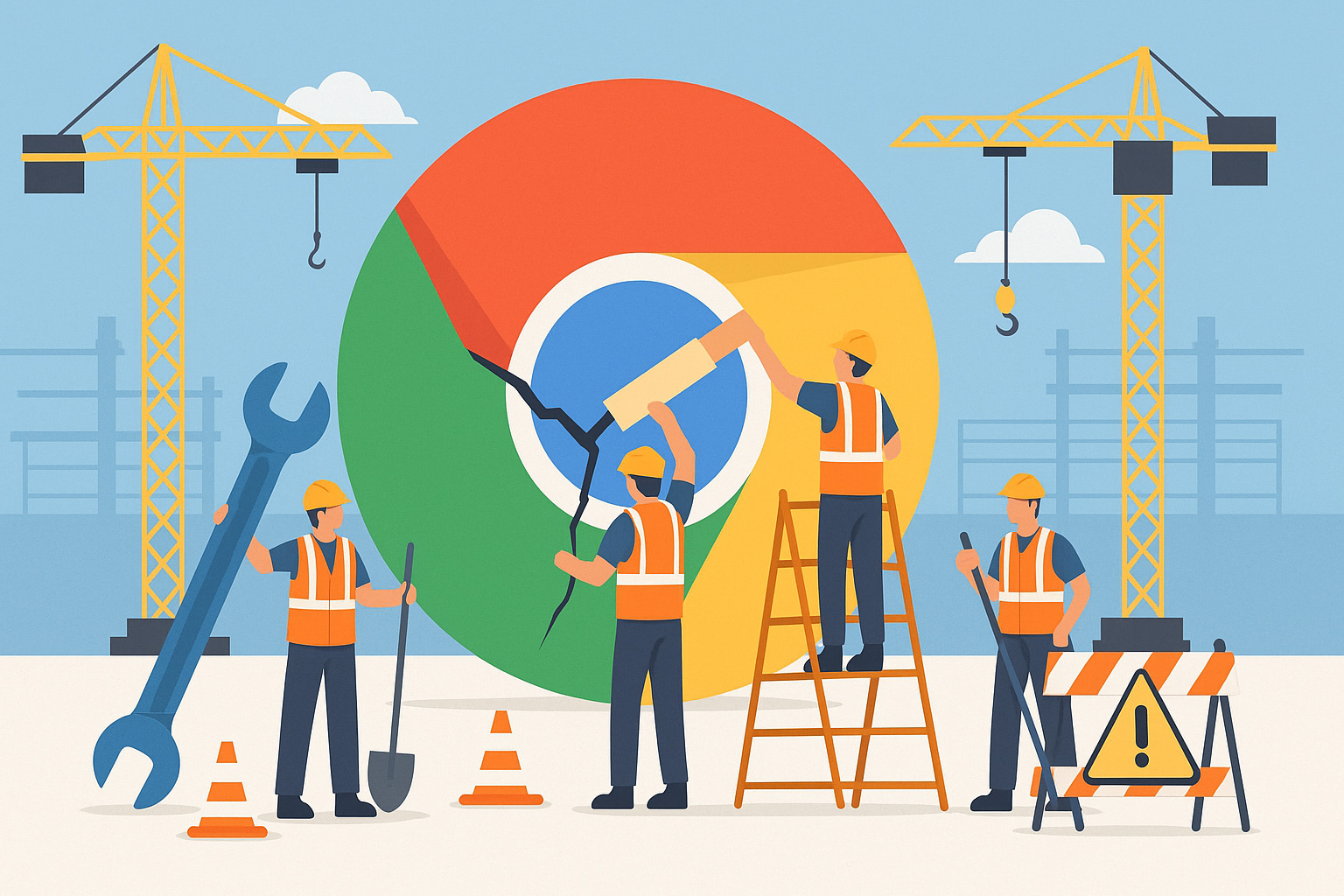
Google has issued an emergency update to fix the seventh Chrome zero-day exploited in attacks this year. The flaw, tracked as CVE-2025-13223, is caused by a type confusion bug in the browser’s V8 JavaScript engine and was used in the wild before the patch was released.
The company says updates will roll out across the Stable Desktop channel in the coming weeks, though users can install the fix immediately by checking for updates in Chrome’s settings. Google is withholding technical details until most users have upgraded to avoid encouraging further exploitation.
The vulnerability was reported by a member of Google’s Threat Analysis Group and allowed attackers to trigger code execution or browser crashes through malicious HTML pages. It continues a pattern of high-severity zero-days discovered and patched throughout 2025.
Google stresses that prompt updates remain essential, as attackers often target unpatched systems. Automatic updates can help ensure that newly released fixes reach users quickly and reduce exposure to emerging threats.
Security experts also recommend enabling scheduled antivirus scans and using protective features, such as hardened browsers or VPNs. With multiple zero-days already patched this year, analysts say more are likely, and users should keep Chrome’s update settings enabled.
Would you like to learn more about AI, tech, and digital diplomacy? If so, ask our Diplo chatbot!