Halliday’s glasses aim to redefine wearable tech

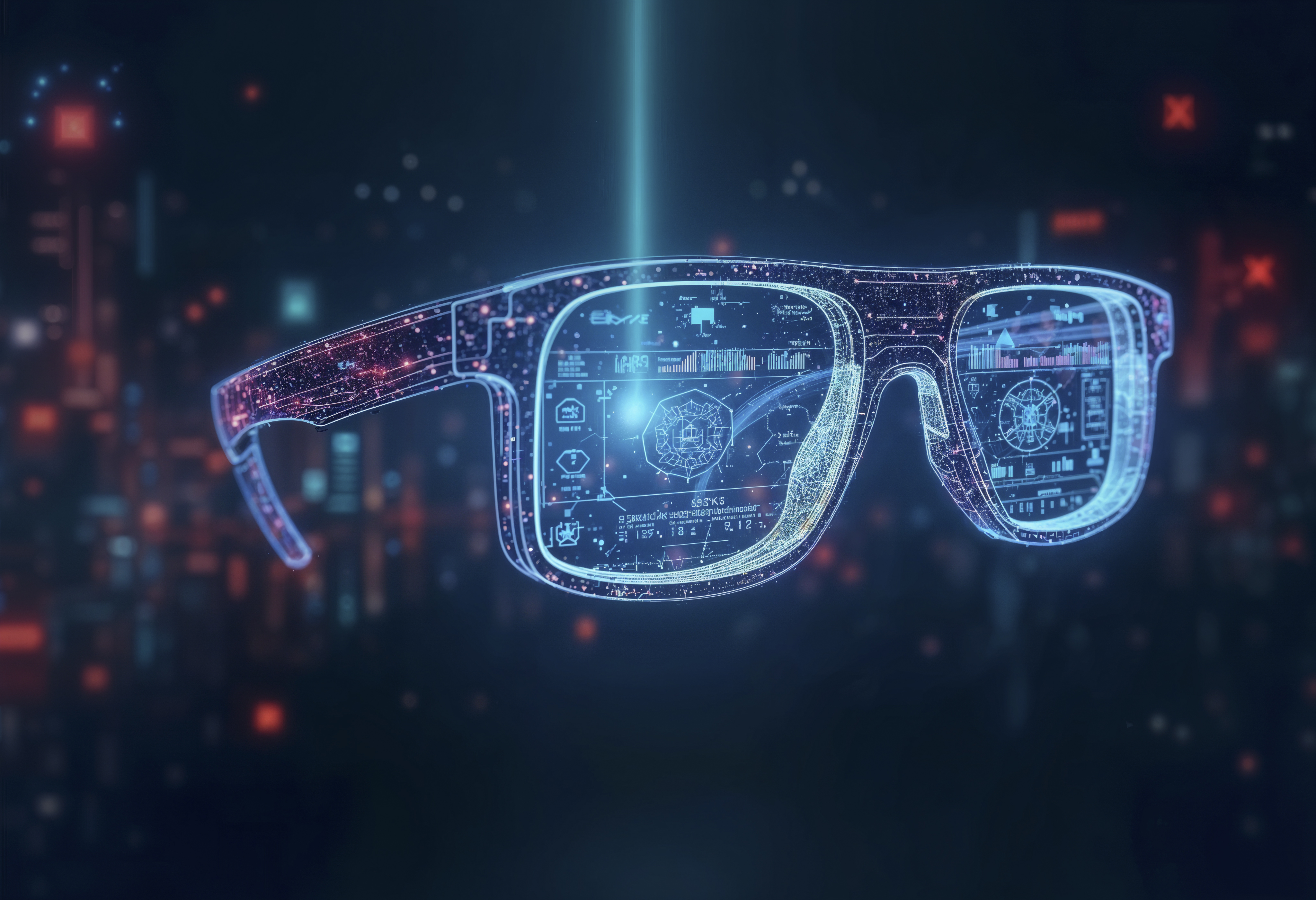
Halliday, a wearables startup, has launched a pair of smart glasses at CES 2025 that project a tiny digital screen directly into the wearer’s eye. Using a device called the DigiWindow, the glasses display notifications, language translations, and navigation directions in real time without the need for bulky AR lenses.

Priced at $489, the glasses use a small green light to beam an almost 9cm round display into the user’s line of sight. The innovative approach makes US based Halliday’s glasses slimmer, lighter, and more affordable than many augmented reality prototypes. Users can even fit prescription lenses into the frames without affecting the display.

Key features include real-time translation for 40 languages and a proactive AI assistant that offers helpful information during conversations. The device is controlled via a ring worn on the finger, allowing users to navigate its features with thumb gestures. While the AI assistant wasn’t available for testing, the display technology impressed with its functionality.

Halliday’s smart glasses are already available for preorder at a discounted price of $369 via Kickstarter. Shipping is expected to begin in March 2025. The company hopes its sleek design and practical applications will set the glasses apart from other wearables still stuck in prototype stages.

Startup launches AI assistant to simplify daily tasks

San Francisco-based startup Based Hardware has unveiled Omi, a wearable AI assistant designed to improve productivity. Launched at the Consumer Electronic Show, the device responds to voice commands when worn as a necklace or can attach to the side of the head using medical tape, activating through a unique “brain interface.”

Unlike other AI gadgets that aim to replace smartphones, Omi is meant to complement existing devices. It can answer questions, summarise conversations, and manage tasks like to-do lists and meeting schedules. The startup’s founder, Nik Shevchenko, claims that Omi’s brain interface allows users to interact without saying a wake word by recognising mental focus. However, this feature has yet to be widely tested.

Based Hardware built Omi on an open-source platform to address privacy concerns. Users can store data locally and even develop their own apps for the device. Priced at $89, the consumer version will ship later in 2025, while a developer version is already available.

Omi enters a growing market of AI gadgets that have struggled to meet expectations. Shevchenko hopes Omi’s focus on practical productivity tools will set it apart, but the device’s success will likely depend on whether users embrace its experimental brain interface feature.

Judge allows Google privacy case to proceed to trial

Google will face a class action trial in August after failing to dismiss claims it collected personal data from mobile devices despite users disabling tracking settings. A federal judge rejected the argument that the company clearly disclosed how its Web & App Activity settings worked.

Chief Judge Richard Seeborg ruled that reasonable users could find Google’s data collection practices ‘highly offensive’ since data was collected even after concerns were raised internally about unclear disclosures. He noted internal communications indicating Google deliberately kept details vague to avoid alarming users.

Google denied wrongdoing, stating its privacy controls were long established and accusing the plaintiffs of deliberately misrepresenting its products. The plaintiffs’ lawyers, also involved in a $5 billion privacy settlement against Google last year, did not comment.

The trial, scheduled for 18 August, stems from a July 2020 lawsuit. Google previously faced similar claims when accused of tracking users in Chrome’s ‘Incognito’ mode, leading to a substantial data deletion settlement.

EU denies censorship claims made by Meta

The European Commission has rejected accusations from Meta CEO Mark Zuckerberg that European Union laws censor social media, saying regulations only target illegal content. Officials clarified that platforms are required to remove posts deemed harmful to children or democracy, not lawful content.

Zuckerberg recently criticised EU regulations, claiming they stifle innovation and institutionalise censorship. In response, the Commission strongly denied the claims, emphasising its Digital Services Act does not impose censorship but ensures public safety through content regulation.

Meta has decided to end fact-checking in the US for Facebook, Instagram and Threads, opting for a ‘community notes’ system. The system allows users to highlight misleading posts, with notes published if diverse contributors agree they are helpful.

The EU confirmed that such a system could be acceptable in Europe if platforms submit risk assessments and demonstrate effectiveness in content moderation. Independent fact-checking for European users will remain available for US-based content.

Hacker claims breach at Gravy Analytics data firm

A hacker claims to have breached US location tracking company Gravy Analytics, leaking around 1.4 gigabytes of data. The allegation, shared on a Russian-language cybercriminal forum, included screenshots suggesting a data theft. Verification attempts were complicated as Gravy’s website remained offline and the company did not respond to messages.

Cybersecurity experts reviewing the leaked data found the breach credible. Marley Smith from RedSense and John Hammond from Huntress both confirmed the data appeared legitimate, though the hacker’s identity remains unclear.

Gravy was previously involved in a crackdown by President Biden’s administration targeting data brokers collecting sensitive location data without proper consent. The Federal Trade Commission (FTC) settled with Gravy and Mobilewalla in December over allegations of deceptive data practices.

The FTC expressed concerns that such data could be misused for stalking, blackmail, and espionage but declined to comment on the breach. FTC Chair Lina Khan recently warned that targeted advertising practices leave sensitive data highly vulnerable.

EU Court orders damages for data breach by Commission

In a landmark decision, the EU General Court ruled on Wednesday that the European Commission must pay €400 ($412) in damages to a German citizen for violating data protection laws. The case marks the first time the Commission has been held liable for failing to comply with its data regulations.

The court found that the Commission improperly transferred the citizen’s personal data, including an IP address, to Meta Platforms in the United States without adequate safeguards. The breach occurred when the individual used the ‘Sign in with Facebook’ option on the EU login webpage to register for a conference.

The Commission acknowledged the ruling, stating it would review the judgment and its implications. The decision underscores the robust enforcement of the EU’s General Data Protection Regulation (GDPR), which has led to significant penalties against major firms like Meta, LinkedIn, and Klarna for non-compliance.

Apple denies misusing Siri data following $95 million settlement

Apple has clarified that it has never sold data collected by its Siri voice assistant or used it to create marketing profiles. The statement, issued Wednesday, follows a $95 million settlement last week to resolve a class action lawsuit alleging that Siri had inadvertently recorded private conversations and shared them with third parties, including advertisers. Apple denied the claims and admitted no wrongdoing as part of the settlement, which could result in payouts of up to $20 per Siri-enabled device for millions of affected customers.

The controversy stemmed from claims that Siri sometimes activated unintentionally, recording sensitive interactions. Apple emphasised in its statement that Siri data is used minimally and only for real-time server input when necessary, with no retention of audio recordings unless users explicitly opt-in. Even in such cases, the recordings are solely used to improve Siri’s functionality. Apple reaffirmed its commitment to privacy, stating, ‘Apple has never used Siri data to build marketing profiles, never made it available for advertising, and never sold it to anyone.’

This case has drawn attention alongside a similar lawsuit targeting Google’s Voice Assistant, currently pending in federal court in San Jose, California. Both lawsuits are spearheaded by the same legal teams, highlighting growing scrutiny over how tech companies handle voice assistant data.

Brazil warns tech firms to follow laws or face expulsion

Brazilian Supreme Court Judge Alexandre de Moraes reiterated on Wednesday that technology companies must comply with national laws to continue operating in the country. His statement followed Meta’s recent announcement to scale back its US fact-checking program, raising concerns about its impact on Brazil.

Speaking at an event marking the anniversary of anti-institution riots, Moraes emphasised that the court would not tolerate the use of hate speech for profit. Last year, he ordered the suspension of social media platform X for over a month due to its failure to moderate hate speech, a decision later upheld by the court. X owner Elon Musk criticised the move as censorship but ultimately complied with court demands to restore the platform’s services in Brazil.

Brazilian prosecutors have also asked Meta to clarify whether its US fact-checking changes will apply in Brazil, citing an ongoing investigation into social media platforms’ efforts to combat misinformation and violence. Meta has been given 30 days to respond but declined to comment through its local office.

Gaming app offers mental health support for kids

A new app designed to help children aged seven to twelve manage anxiety through gaming is being launched in Lincolnshire, UK. The app, called Lumi Nova, combines cognitive behavioural therapy (CBT) techniques with personalised quests to gently expose children to their fears in a safe and interactive way.

The digital game has been created by BFB Labs, a social enterprise focused on digital therapy, in collaboration with children, parents, and mental health experts. The app aims to make mental health support more accessible, particularly in rural areas, where traditional services may be harder to reach.

Families in Lincolnshire can download the app for free without needing a prescription or referral. Councillor Patricia Bradwell from Lincolnshire County Council highlighted the importance of flexible mental health services, saying: ‘We want to ensure children and young people have easy access to support that suits their needs.’

By using immersive videos and creative tasks, Lumi Nova allows children to confront their worries at their own pace from the comfort of home, making mental health care more engaging and approachable. The year-long pilot aims to assess the app’s impact on childhood anxiety in the region.

Tesla’s driverless tech under investigation

US safety regulators are investigating Tesla’s ‘Actually Smart Summon’ feature, which allows drivers to move their cars remotely without being inside the vehicle. The probe follows reports of crashes involving the technology, including at least four confirmed incidents.

The US National Highway Traffic Safety Administration (NHTSA) is examining nearly 2.6 million Tesla cars equipped with the feature since 2016. The agency noted issues with the cars failing to detect obstacles, such as posts and parked vehicles, while using the technology.

Tesla has not commented on the investigation. Company founder Elon Musk has been a vocal supporter of self-driving innovations, insisting they are safer than human drivers. However, this probe, along with other ongoing investigations into Tesla’s autopilot features, could result in recalls and increased scrutiny of the firm’s driverless systems.

The NHTSA will assess how fast cars can move in Smart Summon mode and the safeguards in place to prevent use on public roads. Tesla’s manual advises drivers to operate the feature only in private areas with a clear line of sight, but concerns remain over its real-world safety applications.