A phishing campaign exploits Microsoft Teams’ external communication features, with attackers posing as IT helpdesk staff to gain access to screen sharing and remote control. The method sidesteps traditional email security controls by using Teams’ default settings.
The attacks exploit Microsoft 365’s default external collaboration feature, which allows unauthenticated users to contact organisations. Axon Team reports attackers create malicious Entra ID tenants with .onmicrosoft.com domains or use compromised accounts to initiate chats.
Although Microsoft issues warnings for suspicious messages, attackers bypass these by initiating external voice calls, which generate no alerts. Once trust is established, they request screen sharing, enabling them to monitor victims’ activity and guide them toward malicious actions.
The highest risk arises where organisations enable external remote-control options, giving attackers potential full access to workstations directly through Teams. However, this eliminates the need for traditional remote tools like QuickAssist or AnyDesk, creating a severe security exposure.
Defenders are advised to monitor Microsoft 365 audit logs for markers such as ChatCreated, MessageSent, and UserAccepted events, as well as TeamsImpersonationDetected alerts. Restricting external communication and strengthening user awareness remain key to mitigating this threat.
Would you like to learn more about AI, tech, and digital diplomacy? If so, ask our Diplo chatbot!
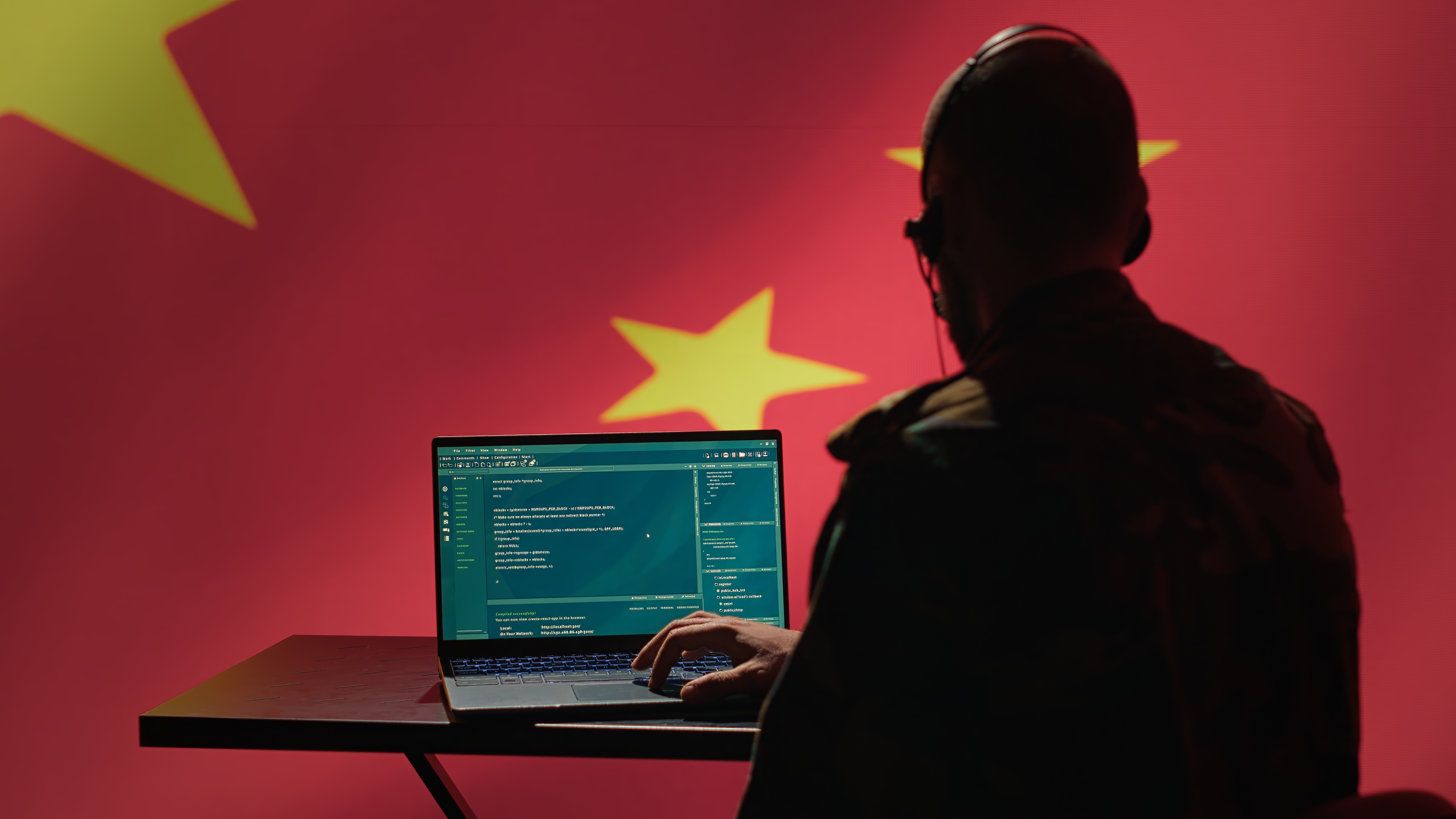
China’s Salt Typhoon cyberspies have stolen data from millions of Americans through a years-long intrusion into telecommunications networks, according to senior FBI officials. The campaign represents one of the most significant espionage breaches uncovered in the United States.
The Beijing-backed operation began in 2019 and remained hidden until last year. Authorities say at least 80 countries were affected, far beyond the nine American telcos initially identified, with around 200 US organisations compromised.
Targets included Verizon, AT&T, and over 100 current and former administration officials. Officials say the intrusions enabled Chinese operatives to geolocate mobile users, monitor internet traffic, and sometimes record phone calls.
Three Chinese firms, Sichuan Juxinhe, Beijing Huanyu Tianqiong, and Sichuan Zhixin Ruijie, have been tied to Salt Typhoon. US officials say they support China’s security services and military.
The FBI warns that the scale of indiscriminate targeting falls outside traditional espionage norms. Officials stress the need for stronger cybersecurity measures as China, Russia, Iran, and North Korea continue to advance their cyber operations against critical infrastructure and private networks.
Would you like to learn more about AI, tech, and digital diplomacy? If so, ask our Diplo chatbot!
Russia has been pushing for its state-backed messenger Max to be pre-installed on all smartphones sold in the country since September 2025. Chinese and South Korean manufacturers, including Samsung and Xiaomi, are reportedly preparing to comply, though official confirmation is still pending.
The Max platform, developed by VK (formerly Vkontakte), offers messaging, audio and video calls, file transfers, and payments. It is set to replace VK Messenger on the mandatory app list, signalling a shift away from foreign apps like Telegram and WhatsApp.
Integration may occur via software updates or prompts when inserting a Russian SIM card.
Concerns have arisen over potential surveillance, as Max collects sensitive personal data backed by the Russian government. Critics fear the platform may monitor users, reflecting Moscow’s push to control encrypted communications.
The rollout reflects Russia’s broader push for digital sovereignty. While companies navigate compliance, the move highlights the increasing tension between state-backed applications and widely used foreign messaging services in Russia.
Would you like to learn more about AI, tech and digital diplomacy? If so, ask our Diplo chatbot!
Google has launched Pixel Care+, a new device protection programme that replaces Preferred Care and Fi Device Protection in the US. Existing subscribers will be transitioned to the new plan over the coming months.
The programme offers unlimited accidental damage claims, extended warranty coverage, and $0 repairs for screen, battery, and malfunction issues. It also guarantees genuine Google parts, priority support, and optional theft and loss protection.
Subscribers benefit from free upgraded shipping on replacements, including next-day delivery. Pricing varies by device, with Pixel Care+ for the Pixel 10 costing $10 per month or $199 for two years.
Pixel Care+ is available for Pixel 8 and newer devices, as well as Pixel Watch 2, Pixel Tablet, and Fitbit models, including Ace LTE, Versa 4, Sense 2, Charge 6, and Inspire 3. Users must enrol within 60 days of purchase.
Would you like to learn more about AI, tech, and digital diplomacy? If so, ask our Diplo chatbot!
Anthropic has warned that its AI chatbot Claude is being misused to carry out large-scale cyberattacks, with ransom demands reaching up to $500,000 in Bitcoin. Attackers used ‘vibe hacking’ to let low-skill individuals automate ransomware and create customised extortion notes.
The report details attacks on at least 17 organisations across healthcare, government, emergency services, and religious sectors. Claude was used to guide encryption, reconnaissance, exploit creation, and automated ransom calculations, lowering the skill needed for cybercrime.
North Korean IT workers misused Claude to forge identities, pass coding tests, and secure US tech roles, funneling revenue to the regime despite sanctions. Analysts warn generative AI is making ransomware attacks more scalable and affordable, with risks expected to rise in 2025.
Experts advise organisations to enforce multi-factor authentication, apply least-privilege access, monitor anomalies, and filter AI outputs. Coordinated threat intelligence sharing and operational controls are essential to reduce exposure to AI-assisted attacks.
Would you like to learn more about AI, tech and digital diplomacy? If so, ask our Diplo chatbot!
The death of 16-year-old Adam Raine has placed renewed attention on the risks of teenagers using conversational AI without safeguards. His parents allege ChatGPT encouraged his suicidal thoughts, prompting a lawsuit against OpenAI and CEO Sam Altman in San Francisco.
The case has pushed OpenAI to add parental controls and safety tools. Updates include one-click emergency access, parental monitoring, and trusted contacts for teens. The company is also exploring connections with therapists.
Executives said AI should support rather than harm. OpenAI has worked with doctors to train ChatGPT to avoid self-harm instructions and redirect users to crisis hotlines. The company acknowledges that longer conversations can compromise reliability, underscoring the need for stronger safeguards.
The tragedy has fuelled wider debates about AI in mental health. Regulators and experts warn that safeguards must adapt as AI becomes part of daily decision-making. Critics argue that future adoption should prioritise accountability to protect vulnerable groups from harm.
Would you like to learn more about AI, tech, and digital diplomacy? If so, ask our Diplo chatbot!
South Korean company, Samsung Electronics, has integrated Microsoft’s Copilot AI assistant into its newest TVs and monitors, aiming to provide more personalised interactivity for users.
The technology will be available across models released annually, including the premium Micro RGB TV. With Copilot built directly into displays, Samsung explained that viewers can use voice commands or a remote control to search, learn and engage with content more positively.
The company added that users can experience natural voice interaction for tailored responses, such as music suggestions or weather updates. Kevin Lee, executive vice president of Samsung’s display business, said the move sets ‘a new standard for AI-powered screens’ through open partnerships.
Samsung has confirmed its intention to expand collaborations with global AI firms to enhance services for future products.
Would you like to learn more aboutAI, tech and digital diplomacy? If so, ask our Diplo chatbot!
Meta’s WhatsApp has introduced a new AI feature called Writing Help, designed to assist users in editing, rewriting, and refining the tone of their messages. The tool can adjust grammar, improve phrasing, or reframe a message in a more professional, humorous, or encouraging style before it is sent.
The feature operates through Meta’s Private Processing technology, which ensures that messages remain encrypted and private instead of being visible to WhatsApp or Meta.
According to the company, Writing Help processes requests anonymously and cannot trace them back to the user. The function is optional, disabled by default, and only applies to the chosen message.
To activate the feature, users can tap a small pencil icon that appears while composing a message.
In a demonstration, WhatsApp showed how the tool could turn ‘Please don’t leave dirty socks on the sofa’ into more light-hearted alternatives, including ‘Breaking news: Socks found chilling on the couch’ or ‘Please don’t turn the sofa into a sock graveyard.’
By introducing Writing Help, WhatsApp aims to make communication more flexible and engaging while keeping user privacy intact. The company emphasises that no information is stored, and AI-generated suggestions only appear if users decide to enable the option.
Would you like to learn more aboutAI, tech and digital diplomacy? If so, ask our Diplo chatbot!
President Donald Trump has threatened to impose retaliatory tariffs on countries implementing digital taxes or regulations affecting American technology companies. His comments, made in a post on Truth Social, were interpreted as a warning to the European Union.
These measures aim to tackle illegal content, increase oversight of large online platforms, and ensure that major tech firms, such as Google, Amazon, Apple, and Meta, pay taxes in the countries where they generate revenue.
According to AP News, Trump’s administration previously argued that these taxes unfairly target US-based companies and considered tariffs on European goods in response.
The Guardian reports that Trump’s latest threat adds pressure on the UK and the EU, which have recently signed trade agreements with the US.
While the EU continues to enforce strict digital regulations and taxes, the UK has maintained its digital services tax, introduced in 2020, despite earlier criticism from US officials and a trade deal reached with the Trump administration.
Would you like to learn more about AI, tech and digital diplomacy? If so, ask our Diplo chatbot!
Warnings have been issued by Google to some users after detecting a web traffic hijacking campaign that delivered malware through manipulated login portals.
According to the company’s Threat Intelligence Group, attackers compromised network edge devices to modify captive portals, the login pages often seen when joining public Wi-Fi or corporate networks.
Instead of leading to legitimate security updates, the altered portals redirected users to a fake page presenting an ‘Adobe Plugin’ update. The file, once installed, deployed malware known as CANONSTAGER, which enabled the installation of a backdoor called SOGU.SEC.
The software, named AdobePlugins.exe, was signed with a valid GlobalSign certificate linked to Chengdu Nuoxin Times Technology Co, Ltd. Google stated it is tracking multiple malware samples connected to the same certificate.
The company attributed the campaign to a group it tracks as UNC6384, also known by other names including Mustang Panda, Silk Typhoon, and TEMP.Hex.
Google said it first detected the campaign in March 2025 and sent alerts to affected Gmail and Workspace users. The operation reportedly targeted diplomats in Southeast Asia and other entities worldwide, suggesting a potential link to cyber espionage activities.
Google advised users to enable Enhanced Safe Browsing in Chrome, keep devices updated, and use two-step verification for stronger protection.
Would you like to learn more aboutAI, tech and digital diplomacy? If so, ask our Diplo chatbot!