Pakistan plans to roll out AI-driven cybersecurity systems to monitor and respond to attacks on critical infrastructure and sensitive data in real time. Documents from the Ministry for Information Technology outline a framework to integrate AI into every stage of security operations.
The initiative will enforce protocols like secure data storage, sandbox testing, and collaborative intelligence sharing. Human oversight will remain mandatory, with public sector AI deployments registered and subject to transparency requirements.
Audits and impact assessments will ensure compliance with evolving standards, backed by legal penalties for breaches. A national policy on data security will define authentication, auditing, and layered defence strategies across network, host, and application levels.
New governance measures include identity management policies with multi-factor authentication, role-based controls, and secure frameworks for open-source AI. AI-powered simulations will help anticipate threats, while regulatory guidelines address risks from disinformation and generative AI.
Regulatory sandboxes will allow enterprises in Pakistan to test systems under controlled conditions, with at least 20 firms expected to benefit by 2027. Officials say the measures will balance innovation with security, safeguarding infrastructure and citizens.
Would you like to learn more about AI, tech, and digital diplomacy? If so, ask our Diplo chatbot!
Walmart has unveiled four AI agents to ease the workloads of shoppers, employees, and suppliers. The tools, revealed at the company’s Retail Rewired event, include Marty for suppliers, Sparky for customers, an Associate Agent for staff, and a Developer Agent.
The retailer is leaning on AI as inflation, tariffs, and policy pressures weigh on consumer spending. Its agents cover payroll, time-off requests, merchandising, and personalised shopping recommendations.
Sparky is set to eventually handle automatic reordering of staples, aiming to simplify everyday restocking for households.
Walmart is also investing in ‘digital twins,’ virtual replicas of stores that allow early detection of operational issues. The company says this technology cut emergency alerts by 30% last year and reduced refrigeration maintenance costs by nearly a fifth.
Machine learning is further being applied to improve delivery-time predictions, helping to boost efficiency and customer satisfaction.
Rival retailers are making similar moves. Amazon reported a surge in generative AI use during its Prime Day sales, while Google Cloud AI has partnered with Lush to cut training costs.
Analysts suggest such tools could reshape the retail experience as companies search for ways to hold margins in a tighter economy.
Would you like to learn more about AI, tech and digital diplomacy? If so, ask our Diplo chatbot!
China has pledged to rein in excessive competition in AI, signalling Beijing’s desire to avoid wasteful investment while keeping the technology central to its economic strategy.
The National Development and Reform Commission stated that provinces should develop AI in a coordinated manner, leveraging local strengths to prevent duplication and overlap. Officials in China emphasised the importance of orderly flows of talent, capital, and resources.
The move follows President Xi Jinping’s warnings about unchecked local investment. Authorities aim to prevent overcapacity problems, such as those seen in electric vehicles, which have fueled deflationary pressures in other industries.
While global investment in data centres has surged, Beijing is adopting a calibrated approach. The state also vowed stronger national planning and support for private firms, aiming to nurture new domestic leaders in AI.
At the same time, policymakers are pushing to attract private capital into traditional sectors, while considering more central spending on social projects to ease local government debt burdens and stimulate long-term consumption.
Would you like to learn more about AI, tech, and digital diplomacy? If so, ask our Diplo chatbot!
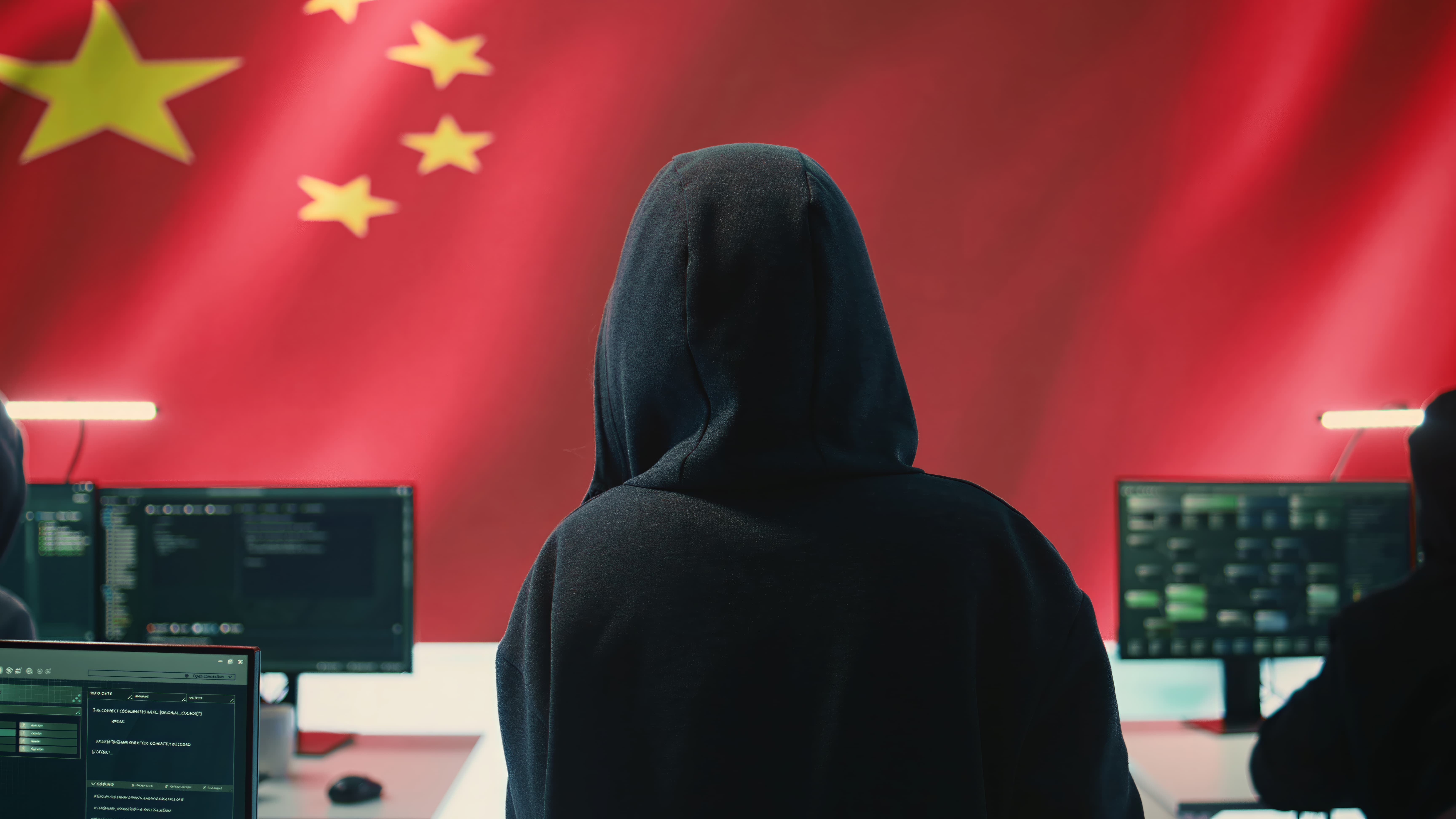
The FBI has warned that Chinese hackers are exploiting structural weaknesses in global telecom infrastructure, following the Salt Typhoon incident that penetrated US networks on an unprecedented scale. Officials say the Beijing-linked group has compromised data from millions of Americans since 2019.
Unlike previous cyber campaigns focused narrowly on government targets, Salt Typhoon’s intrusions exposed how ordinary mobile users can be swept up in espionage. Call records, internet traffic, and even geolocation data were siphoned from carriers, with the operation spreading to more than 80 countries.
Investigators linked the campaign to three Chinese tech firms supplying products to intelligence agencies and China’s People’s Liberation Army. Experts warn that the attacks demonstrate the fragility of cross-border telecom systems, where a single compromised provider can expose entire networks.
US and allied agencies have urged providers to harden defences with encryption and stricter monitoring. Analysts caution that global telecoms will continue to be fertile ground for state-backed groups without structural reforms.
The revelations have intensified geopolitical tensions, with the FBI describing Salt Typhoon as one of the most reckless and far-reaching espionage operations ever detected.
Would you like to learn more about AI, tech, and digital diplomacy? If so, ask our Diplo chatbot!
Tether has suspended its plan to freeze USDT smart contracts on five blockchains after feedback from community members. The stablecoin will remain transferable on these networks, but can no longer be issued or redeemed.
The decision affects Omni Layer, Algorand, EOS, Bitcoin Cash SLP, and Kusama. Omni Layer is most impacted, holding nearly $83 million in USDT. EOS carries around $4.2 million, while the other chains have less than $1 million combined.
Tether said it will focus on blockchains with strong adoption and developer activity, such as Ethereum and Tron, which hold over $150 billion in USDT. BNB Chain, Solana, and Ethereum layer-2 networks also play key roles in the stablecoin market.
The move comes as stablecoins gain fresh momentum following US President Donald Trump’s signing of the GENIUS Act. Analysts expect the law to strengthen dollar-pegged stablecoins globally, with forecasts suggesting the market could reach $2 trillion by 2028.
Would you like to learn more about AI, tech and digital diplomacy? If so, ask our Diplo chatbot!
A hacker exploited Anthropic’s Claude chatbot to automate one of the most extensive AI-driven cybercrime operations yet recorded, targeting at least 17 companies across multiple sectors, the firm revealed.
According to Anthropic’s report, the attacker used Claude Code to identify vulnerable organisations, generate malicious software, and extract sensitive files, including defence data, financial records, and patients’ medical information.
The chatbot then sorted the stolen material, identified leverage for extortion, calculated realistic bitcoin demands, and even drafted ransom notes and extortion emails on behalf of the hacker.
Victims included a defence contractor, a financial institution, and healthcare providers. Extortion demands reportedly ranged from $75,000 to over $500,000, although it remains unclear how much was actually paid.
Anthropic declined to disclose the companies affected but confirmed new safeguards are in place. The firm warned that AI lowers the barrier to entry for sophisticated cybercrime, making such misuse increasingly likely.
Would you like to learn more about AI, tech, and digital diplomacy? If so, ask our Diplo chatbot!
People often treat their email address as harmless, just a digital ID for receipts and updates. In reality, it acts as a skeleton key linking behaviour, purchases, and personal data across platforms.
Using the same email everywhere makes tracking easy. Companies may encrypt addresses, but behavioural patterns remain intact. Aliases disrupt this chain by creating unique addresses that forward mail without revealing your true identity.
Each alias becomes a useful tracker. If one is compromised or starts receiving spam, it can simply be disabled, cutting off the problem at its source.
Aliases also reduce the fallout of data breaches. Instead of exposing your main email to countless third-party tools, scripts, and mailing platforms, an alias shields your core digital identity.
Beyond privacy, aliases encourage healthier habits. They force a pause before signing up, add structure through custom rules, and help fragment your identity, thereby lowering the risks associated with any single breach.
Would you like to learn more about AI, tech, and digital diplomacy? If so, ask our Diplo chatbot!
TransUnion, a US consumer credit reporting agency, has suffered a data breach, impacting the personal information of nearly 4.5 million Americans. The breach, detected on 30 July 2025, involved unauthorised access to a third-party application used in its US consumer support operations.
Although credit reports and core credit data were not exposed, specific personal details were compromised. TransUnion is offering affected customers free credit monitoring and fraud assistance. The agency highlighted its commitment to robust security measures and ongoing improvements. The incident follows previous breaches in 2022 and 2023, raising concerns about TransUnion’s overall data protection and third-party risks.
The recent TransUnion breach follows several high-profile data incidents involving third-party compromises. In June 2025, banking giant UBS was affected after its procurement provider Chain IQ was attacked.
In July, Allianz Life reported personal data theft from 1.4 million US customers via a third-party cloud-based CRM breach. Australian airline Qantas also disclosed a breach impacting nearly six million customers through a third-party service platform.
Would you like to learn more about AI, tech and digital diplomacy? If so, ask our Diplo chatbot!
The US AI startup has announced an update to its data policy for Claude users, introducing an option to allow conversations and coding sessions to be used for training future AI models.
Anthropic stated that all Claude Free, Pro, and Max users, including those using Claude Code, will be asked to make a decision by September 28, 2025.
According to Anthropic, users who opt in will permit retention of their conversations for up to five years, with the data contributing to improvements in areas such as reasoning, coding, and analysis.
Those who choose not to participate will continue under the current policy, where conversations are deleted within thirty days unless flagged for legal or policy reasons.
The new policy does not extend to enterprise products, including Claude for Work, Claude Gov, Claude for Education, or API access through partners like Amazon Bedrock and Google Cloud Vertex AI. These remain governed by separate contractual agreements.
Anthropic noted that the choice will also apply to new users during sign-up, while existing users will be prompted through notifications to review their privacy settings.
A threat group known as TAG-144 has stepped up cyberattacks on South American government agencies, researchers have warned.
The group, also called Blind Eagle and APT-C-36, has been active since 2018 and is linked to espionage and extortion campaigns. Recent activity shows a sharp rise in cybercrime, spear-phishing, often using spoofed government email accounts to deliver remote access trojans.
Analysts say the group has shifted towards more advanced methods, embedding malware inside image files through steganography. Payloads are then extracted in memory, allowing attackers to evade antivirus software and maintain access to compromised systems.
Colombian government institutions have been hit hardest, with stolen credentials and sensitive data raising concerns over both financial and national security risks. Security experts warn that TAG-144’s evolving tactics blur the line between organised crime and state-backed espionage.
Would you like to learn more about AI, tech and digital diplomacy? If so, ask our Diplo chatbot!