Generative AI is increasingly being weaponised to harass women in public roles, according to a new report commissioned by UN Women. Journalists, activists, and human rights defenders face AI-assisted abuse that endangers personal safety and democratic freedoms.
The study surveyed 641 women from 119 countries and found that nearly one in four of those experiencing online violence reported AI-generated or amplified abuse.
Writers, communicators, and influencers reported the highest exposure, with human rights defenders and journalists also at significant risk. Rapidly developing AI tools, including deepfakes, facilitate the creation to harmful content that spreads quickly on social media.
Online attacks often escalate into offline harm, with 41% of women linking online abuse to physical harassment, stalking, or intimidation. Female journalists are particularly affected, with offline attacks more than doubling over five years.
Experts warn that such violence threatens freedom of expression and democratic processes, particularly in authoritarian contexts.
Researchers call for urgent legal frameworks, platform accountability, and technological safeguards to prevent AI-assisted attacks on women. They advocate for human rights-focused AI design and stronger support systems to protect women in public life.
Would you like to learn more about AI, tech and digital diplomacy? If so, ask our Diplo chatbot!
Google Cloud’s 2026 AI Agent Trends Report shows AI agents are moving from experimental tools to central business systems. Employees are shifting from routine execution to oversight and strategic decision-making.
The report highlights agents managing end-to-end workflows across teams, thereby improving efficiency and streamlining complex processes. Personalised customer service is becoming faster and more accurate thanks to these systems.
Security operations are seeing benefits as AI agents handle alerts, investigations and fraud detection more effectively. Human analysts can now focus on higher-value tasks while routine work is automated.
Companies are investing in continuous training to build an AI-ready workforce. The report emphasises that people, not just technology, will determine the success of AI adoption.
Would you like to learn more about AI, tech, and digital diplomacy? If so, ask our Diplo chatbot!
A drone school in northeastern Japan is developing AI drones to detect bears. The system will send real-time locations to authorities via a smartphone app.
The drones have night-vision and infrared cameras and follow bears automatically once detected. Each drone flies for one hour before handing off surveillance and returning to base.
AI was trained using photos of black and brown bears from a local zoo. Officials hope it will reduce dangerous encounters and offer non-lethal ways to manage bears.
Other companies are testing similar systems in Fukushima and selling AI-equipped drones commercially. The academy aims to prevent human-bear conflicts and keep people and wildlife separate.
Would you like to learn more about AI, tech, and digital diplomacy? If so, ask our Diplo chatbot!
Microsoft’s first New Zealand hyperscale cloud region has celebrated one year, providing local businesses and services with AI-powered tools and secure data storage. Organisations are using these capabilities to innovate, improve operations and enhance customer experiences.
Collaborations with Spark and Whakarongorau Aotearoa show AI can reduce administrative workloads and strengthen service delivery. Initiatives also support skills development, helping students, teachers and job seekers gain technology-focused credentials.
The datacentre operates sustainably, using renewable energy and waterless cooling systems to lower carbon emissions. These technologies help public services and businesses become more efficient while reducing environmental impact.
Looking ahead, Microsoft plans to expand AI adoption across New Zealand, supporting productivity, community services and responsible innovation for the next phase of digital growth.
Would you like to learn more about AI, tech, and digital diplomacy? If so, ask our Diplo chatbot!
Ghana has formally legalised Bitcoin and cryptocurrency trading after parliament approved the Virtual Asset Service Providers Bill, 2025, closing a long-standing regulatory gap in the country’s digital asset market.
The legislation establishes a licensing and supervisory regime for crypto businesses under the Bank of Ghana. The central bank will oversee the sector, prioritising consumer protection and financial stability, while unlicensed operators may face sanctions or closure.
Under the new framework, individuals can trade crypto legally, while companies must meet reporting and compliance requirements. Officials say the law responds to fraud and money laundering risks while acknowledging the scale of crypto adoption nationwide.
Around 3 million Ghanaians have used cryptocurrency, with transactions totalling roughly $3 billion by June 2024. Licensing rules will be introduced gradually in 2026, as Ghana aligns with a broader African shift toward formal crypto regulation.
Would you like to learn more about AI, tech and digital diplomacy? If so, ask our Diplo chatbot!
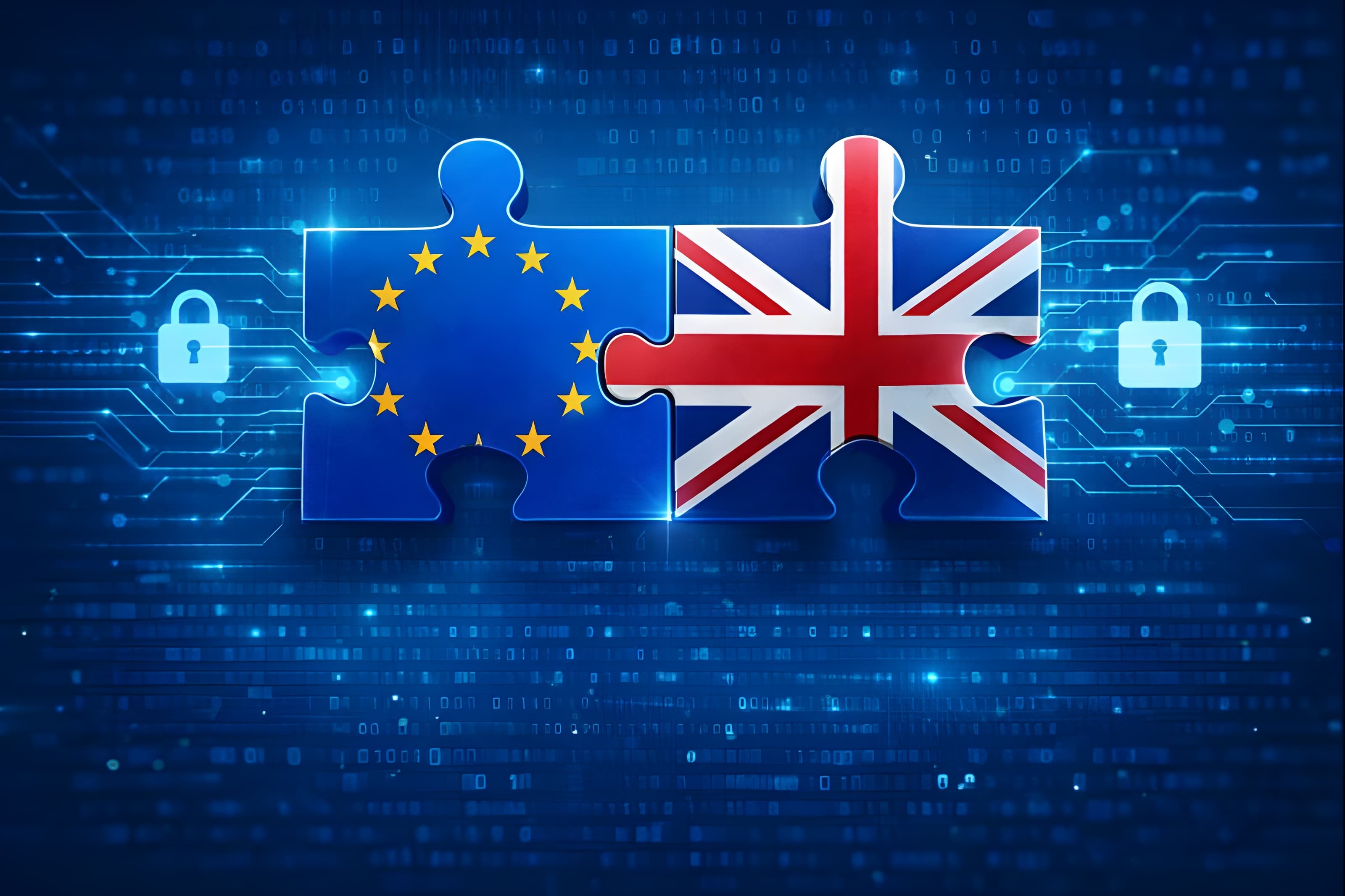
The European Commission has renewed its two adequacy decisions allowing the continued free flow of personal data between the European Union and the United Kingdom. The decision confirms that UK data protection rules remain essentially equivalent to EU standards.
The adequacy findings cover both the General Data Protection Regulation and the Law Enforcement Directive, enabling personal data to move freely between the European Economic Area and the UK without additional safeguards.
In June 2025, the Commission adopted a temporary six-month extension after the original decisions were due to expire, allowing time to assess changes introduced by the UK’s Data (Use and Access) Act.
The renewal follows a positive opinion from the European Data Protection Board and approval from EU member states through the comitology procedure, completing the formal adoption process.
The renewed decisions include a six-year sunset clause, running until December 2031. A joint review by the Commission and the European Data Protection Board is scheduled after four years.
Would you like to learn more about AI, tech, and digital diplomacy? If so, ask our Diplo chatbot!
The US Department of Energy has confirmed NVIDIA will join its Genesis Mission as a private-sector partner, strengthening collaboration between government, industry, and academia on advanced AI.
Launched under a recent executive order, the Genesis Mission aims to reinforce US leadership across energy, scientific research, and national security. Officials say the initiative is designed to significantly increase the productivity and impact of American science and engineering.
NVIDIA will support the Genesis Mission by providing AI and high-performance computing tools for climate modelling, manufacturing, robotics, nuclear energy, and quantum research. A memorandum of understanding sets priorities covering fission, fusion, digital twins, and autonomous laboratories.
The company is already working with the US Department of Energy on open AI models for scientific simulation. Projects also include AI-driven research in materials science, biology, and supply chains, with further collaboration planned.
The partnership builds on announcements made at NVIDIA’s GTC event in Washington. The announcements include work with Oracle on the Department’s largest scientific supercomputer at Argonne National Laboratory.
Would you like to learn more about AI, tech, and digital diplomacy? If so, ask our Diplo chatbot!
Cybersecurity researchers have identified a large Android-based botnet capable of more than distributed denial-of-service attacks, highlighting growing risks from compromised consumer devices. The botnet, dubbed Kimwolf, is estimated to control close to two million infected systems worldwide.
The findings come from QiAnXin XLab, which said Kimwolf has infected around 1.8 million devices, mainly smart TVs, set-top boxes and tablets. Most infections were observed in Brazil, India, the US, Argentina, South Africa and the Philippines.
XLab said the infection vector remains unclear, but affected devices were linked to low-cost Android-based brands used for media streaming. Researchers noted repeated attempts to disrupt the Kimwolf, with its command-and-control infrastructure taken down several times before re-emerging.
According to the report, Kimwolf has adapted by shifting to decentralised infrastructure, including the use of Ethereum Name Service domains. Analysts also identified overlaps in code and infrastructure with AISURU, a botnet linked to record-scale DDoS attacks.
Cloudflare recently described AISURU as one of the largest robot networks observed, capable of attacks exceeding 29 terabits per second. XLab said shared infrastructure suggests both botnets are operated by the same threat group.
Would you like to learn more about AI, tech, and digital diplomacy? If so, ask our Diplo chatbot!
Medicine still relies largely on population averages, even though genetic and cellular differences shape how diseases develop and respond to treatment.
Researchers at Microsoft argue that AI could transform healthcare by learning the language of biology and enabling truly personalised medicine instead of one-size-fits-all therapies.
Ava Amini, principal researcher at Microsoft Research, explains that AI can detect biological patterns at a scale impossible for human analysis.
Single cancer biopsies can generate tens of millions of data points, allowing AI models to identify meaningful signals and support precision treatment strategies tailored to individual patients.
Building on decades of biological coding systems, Microsoft has developed generative models such as EvoDiff and the Dayhoff Atlas to design new proteins using biological language.
Lab testing has shown a marked improvement in functional success, demonstrating that AI-driven protein design is moving beyond theory into real-world application.
Challenges remain in modelling entire human cells, where current AI systems still predict averages rather than biological diversity. Microsoft researchers continue to pursue integrated experimental and computational approaches, aiming to bring precision oncology closer to everyday clinical practice.
Would you like to learn more aboutAI, tech and digital diplomacy? If so, ask our Diplo chatbot!
Investment in data centres worldwide reached a record $61bn in 2025, according to a new report from S&P Global. The surge is being driven by growing demand for AI workloads, with construction and expansion showing little sign of slowing.
Analysts describe the market as a ‘global construction frenzy’ as companies race to meet rising hardware and energy requirements.
The report highlights that investors, unable to buy existing facilities, are increasingly turning to new builds. The sector, with 500 data centres in the UK and 4,000 in the US, is projected to expand faster over the next five years than the previous five.
The AI boom is pushing energy- and computer-intensive workloads to new extremes.
Concerns are emerging about potential overspending in the AI sector. Analysts note that companies like OpenAI, Oracle, and Nvidia are investing heavily despite uncertain returns.
OpenAI is expected to spend $143bn from 2024 to 2029, prompting concerns over profitability while still holding potential for major innovations. The rapid expansion of data centres also carries significant energy implications.
The International Energy Agency forecasts data centre electricity demand could more than double by 2030, matching Japan’s current total consumption and underscoring the scale needed for AI growth.
Would you like to learn more about AI, tech and digital diplomacy? If so, ask our Diplo chatbot!