Burkina Faso has launched work on a Digital Infrastructure Supervision Centre as part of a broader effort to strengthen national oversight of digital public infrastructure and reduce exposure to external digital risks.
The project forms a core pillar of the government’s digital sovereignty strategy amid rising cybersecurity threats across public systems.
Authorities state that the centre will centralise oversight of the national backbone network, secure cyberspace operations and supervise the functioning of domestic data centres instead of relying on external monitoring mechanisms.
Government officials argue that the supervision centre will enable resilient and sovereign management of critical digital systems while supporting a policy requiring sensitive national data to remain within domestic infrastructure.
The initiative also complements recent investments in biometric identity systems and regional digital identity frameworks.
Beyond infrastructure security, the project is positioned as groundwork for future AI adoption by strengthening sovereign data and connectivity systems.
The leadership of Burkina Faso continues to emphasise digital autonomy as a strategic priority across governance, identity management and emerging technologies.
Would you like to learn more about AI, tech and digital diplomacy? If so, ask our Diplo chatbot!
TikTok has finalised a deal allowing the app to continue operating in America by separating its US business from its global operations. The agreement follows years of political pressure in the US over national security concerns.
Under the arrangement, a new entity will manage TikTok’s US operations, with user data and algorithms handled inside the US. The recommendation algorithm has been licensed and will now be trained only on US user data to meet American regulatory requirements.
Ownership of TikTok’s US business is shared among American and international investors, while China-based ByteDance retains a minority stake. Oracle will oversee data security and cloud infrastructure for users in the US.
Analysts say the changes could alter how the app functions for the roughly 200 million users in the US. Questions remain over whether a US-trained algorithm will perform as effectively as the global version.
Would you like to learn more about AI, tech and digital diplomacy? If so, ask our Diplo chatbot!
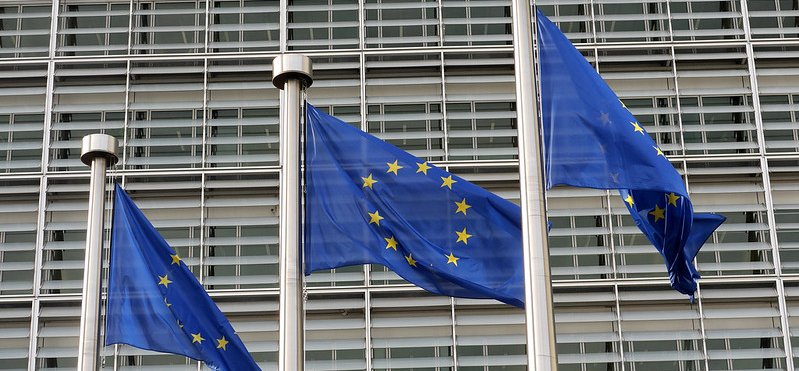
The European Union has proposed new cybersecurity rules aimed at reducing reliance on high-risk technology suppliers, particularly from China. In the European Union, policymakers argue existing voluntary measures failed to curb dependence on vendors such as Huawei and ZTE.
The proposal would introduce binding obligations for telecom operators across the European Union to phase out Chinese equipment. At the same time, officials have warned that reliance on US cloud and satellite services also poses security risks for Europe.
Despite increased funding and expanded certification plans, divisions remain within the European Union. Countries including Germany and France support stricter sovereignty rules, while others favour continued partnerships with US technology firms.
Analysts say the lack of consensus in the European Union could weaken the impact of the reforms. Without clear enforcement and investment in European alternatives, Europe may struggle to reduce dependence on both China and the US.
Would you like to learn more about AI, tech and digital diplomacy? If so, ask our Diplo chatbot!
The European AI Regulation reinforces training and awareness as core compliance requirements, even as the EU considers simplifications through the proposed Digital Omnibus. Regulation (EU) 2024/1689 sets a risk-based framework for AI systems under the AI Act.
AI literacy is promoted through a multi-level approach. The EU institutions focus on public awareness, national authorities support voluntary codes of conduct, and organisations are currently required under the AI Act to ensure adequate AI competence among staff and third parties involved in system use.
A proposed amendment to Article 4, submitted in November 2025 under the Digital Omnibus, would replace mandatory internal competence requirements with encouragement-based measures. The change seeks to reduce administrative burden without removing AI Act risk management duties.
Even if adopted, the amendment would not eliminate the practical need for AI training. Competence in AI systems remains essential for governance, transparency, monitoring, and incident handling, particularly for high-risk use cases regulated by the AI Act.
Companies are therefore expected to continue investing in tailored AI training across management, technical, legal, and operational roles. Embedding awareness and competence into risk management frameworks remains critical to compliance and risk mitigation.
Would you like to learn more about AI, tech, and digital diplomacy? If so, ask our Diplo chatbot!
Elon Musk made his first appearance at the World Economic Forum in Davos despite years of public criticism towards the gathering, arguing that AI and robotics represent the only realistic route to global abundance.
Speaking alongside BlackRock chief executive Larry Fink, Musk framed robotics as a civilisational shift rather than a niche innovation, claiming widespread automation will raise living standards and reshape economic growth.
Musk predicted a future where robots outnumber humans, with humanoid systems embedded across industry, healthcare and domestic life.
He highlighted elder care as a key use case in ageing societies facing labour shortages, suggesting that robotics could compensate for demographic decline rather than relying solely on migration or extended working lives.
Tesla’s Optimus humanoid robots are already performing simple factory tasks, with more complex functions expected within a year.
Musk indicated public sales could begin by 2027 once reliability thresholds are met. He also argued autonomous driving is largely resolved, pointing to expanding robotaxi deployments in the US and imminent regulatory decisions in Europe and China.
The global market for humanoid robotics remains relatively small, but analysts expect rapid expansion as AI capabilities improve and costs fall.
Musk at Davos 2026 presented robotics as an engine for economic acceleration, suggesting ubiquitous automation could unlock productivity gains on a scale comparable to past industrial revolutions.
Would you like to learn more about AI, tech and digital diplomacy? If so, ask our Diplo chatbot!
The AI firm, OpenAI, plans to introduce advertising within ChatGPT for logged-in adult users, marking a structural shift in how brands engage audiences through conversational interfaces.
Ads would be clearly labelled and positioned alongside responses, aiming to replace interruption-driven formats with context-aware brand suggestions delivered during moments of active user intent.
Industry executives describe conversational AI advertising as a shift from exposure to earned presence, in which brands must provide clarity or utility to justify inclusion.
Experts warn that trust remains fragile, as AI recommendations carry the weight of personal consultation, and undisclosed commercial influence could prompt rapid user disengagement instead of passive ad avoidance.
Regulators and marketers alike highlight risks linked to dark patterns, algorithmic framing and subtle manipulation within AI-mediated conversations.
As conversational systems begin to shape discovery and decision-making, media planning is expected to shift toward intent-led engagement, authority-building, and transparency, reshaping digital advertising economics beyond search rankings and impression-based buying.
Would you like to learn more about AI, tech and digital diplomacy? If so, ask our Diplo chatbot!
The upper house of the Parliament of the United Kingdom,, the House of Lords has voted in favour of banning under-16s from social media platforms, backing an amendment to the government’s schools bill by 261 votes to 150. The proposal would require ministers to define restricted platforms and enforce robust age verification within a year.
Political momentum for tighter youth protections has grown after Australia’s similar move, with cross-party support emerging at Westminster. More than 60 Labour MPs have joined Conservatives in urging a UK ban, increasing pressure ahead of a Commons vote.
Supporters argue that excessive social media use contributes to declining mental health, online radicalisation, and classroom disruption. Critics warn that a blanket ban could push teenagers toward less regulated platforms and limit positive benefits, urging more vigorous enforcement of existing safety rules.
The government has rejected the amendment and launched a three-month consultation on age checks, curfews, and curbing compulsive online behaviour. Ministers maintain that further evidence is needed before introducing new legal restrictions.
Would you like to learn more about AI, tech and digital diplomacy? If so, ask our Diplo chatbot!
Binance has applied for a pan-European MiCA licence in Greece, positioning the country as a key regulatory gateway into the EU. The MiCA framework harmonises oversight across member states, enabling licensed firms to operate EU-wide under a single approval.
Contrary to expectations that Malta or Latvia would host the filing, the exchange selected Athens, where it has already established a holding company. The Hellenic Capital Market Commission is reportedly fast-tracking the review with support from leading accounting firms.
Company representatives said the MiCA regime offers legal clarity, regulatory certainty, and a framework that supports responsible innovation. Approval could lead to Binance expanding its corporate presence in Greece, including the opening of new offices and local staffing.
Regulatory urgency is intensifying as the July deadline approaches, particularly for firms operating across multiple EU jurisdictions. A successful application would strengthen Binance’s European strategy, expanding market access and reinforcing regulatory compliance.
Would you like to learn more about AI, tech and digital diplomacy? If so, ask our Diplo chatbot!
Under Armour is facing growing scrutiny following the publication of customer data linked to a ransomware attack disclosed in late 2025.
According to breach verification platform Have I Been Pwned, a dataset associated with the incident appeared on a hacking forum in January, exposing information tied to tens of millions of customers.
The leaked material reportedly includes 72 million email addresses alongside names, dates of birth, location details and purchase histories. Security analysts warn that such datasets pose risks that extend far beyond immediate exposure, particularly when personal identifiers and behavioural data are combined.
Experts note that verified customer information linked to a recognised brand can enable compelling phishing and fraud campaigns powered by AI tools.
Messages referencing real transactions or purchase behaviour can blur the boundary between legitimate communication and malicious activity, increasing the likelihood of delayed victimisation.
The incident has also led to legal action against Under Armour, with plaintiffs alleging failures in safeguarding sensitive customer information. The case highlights how modern data breaches increasingly generate long-term consequences rather than immediate technical disruption.
Would you like to learn more about AI, tech and digital diplomacy? If so, ask our Diplo chatbot!
Meta has launched a new AI Glasses Impact Grants programme to support US-based organisations using its AI-powered glasses for social and economic benefit. The initiative aims to scale existing projects and encourage new applications through financial support and technical access.
Grant recipients will be selected under two tracks. Accelerator Grants target organisations already using Meta’s AI glasses to expand their impact, while Catalyst Grants support new use cases developed with the Wearables Device Access Toolkit.
More than 30 organisations will receive funding, with awards ranging from $25,000 to $200,000 depending on project scope. Successful applicants will also join the Meta Wearables Community, a network of developers, researchers, and innovators focused on advancing wearable technology.
Practical use cases already include agricultural monitoring, sports injury documentation, and film education. Farmers use the glasses for real-time crop diagnostics, athletic trainers capture injury data hands-free, and film students record footage and pre-visualise shoots more easily.
Meta says the grants are designed to help organisations turn experimental ideas into scalable solutions. The company aims to expand the real-world impact of its AI glasses across education, accessibility, and community development.
Would you like to learn more about AI, tech, and digital diplomacy? If so, ask our Diplo chatbot!