The UAE unveiled a scholarship programme to nurture future leaders in AI at MBZUAI. The initiative, guided by Sheikh Tahnoon bin Zayed, targets outstanding undergraduates beginning in the 2025 academic year.
Approximately 350 students will be supported over six years following a rigorous selection process. Applicants will be assessed for mathematical strength, leadership potential and entrepreneurial drive in line with national technological ambitions.
Scholars will gain financial backing alongside opportunities to represent the UAE internationally and develop innovative ventures. Senior officials said the programme strengthens the nation’s aim to build a world-class cohort of AI specialists.
MBZUAI highlighted its interdisciplinary approach that blends technical study with ethics, leadership and business education. Students will have access to advanced facilities, industry placements, and mentorships designed to prepare them for global technology roles.
Would you like to learn more about AI, tech and digital diplomacy? If so, ask our Diplo chatbot!
Pope Leo XIV urged global institutions to guide younger generations as they navigate the expanding influence of AI. He warned that rapid access to information cannot replace the deeper search for meaning and purpose.
Previously, the Pope had warned students not to rely solely on AI for educational support. He encouraged educators and leaders to help young people develop discernment and confidence when encountering digital systems.
Additionally, he called for coordinated action across politics, business, academia and faith communities to steer technological progress toward the common good. He argued that AI development should not be treated as an inevitable pathway shaped by narrow interests.
He noted that AI reshapes human relationships and cognition, raising concerns about its effects on freedom, creativity and contemplation. He insisted that safeguarding human dignity is essential to managing AI’s wide-ranging consequences.
Would you like to learn more about AI, tech and digital diplomacy? If so, ask our Diplo chatbot!
Ireland’s online safety regulator has agreed a new partnership with Australia’s eSafety Commissioner to strengthen global approaches to digital harm. The Memorandum of Understanding (MoU) reinforces shared ambitions to improve online protection for children and adults.
The Irish and Australian plan to exchange data, expertise and methodological insights to advance safer digital platforms. Officials describe the arrangement as a way to enhance oversight of systems used to minimise harmful content and promote responsible design.
Leaders from both organisations emphasised the need for accountability across the tech sector. Their comments highlighted efforts to ensure that platforms embed user protection into their product architecture, rather than relying solely on reactive enforcement.
The MoU also opens avenues for collaborative policy development and joint work on education programs. Officials expect a deeper alignment around age assurance technologies and emerging regulatory challenges as online risks continue to evolve.
Would you like to learn more about AI, tech and digital diplomacy? If so, ask our Diplo chatbot!
At the European Health Summit in Brussels, Google presented new research suggesting that AI could help Europe overcome rising healthcare pressures.
The report, prepared by Implement Consulting Group for Google, argues that scientific productivity is improving again, rather than continuing a long period of stagnation. Early results already show shorter waiting times in emergency departments, offering practitioners more space to focus on patient needs.
Five million dollars from Google.org will fund Bayes Impact to launch an EU-wide initiative known as ‘Impulse Healthcare’. The programme will allow nurses, doctors and administrators to design and test their own AI tools through an open-source platform.
By placing development in the hands of practitioners, the project aims to expand ideas that help staff reclaim valuable time during periods of growing demand.
Successful tools developed at a local level will be scaled across the EU, providing a path to more efficient workflows and enhanced patient care.
Google views these efforts as part of a broader push to rebuild capacity in Europe’s health systems.
AI-assisted solutions may reduce administrative burdens, support strained workforces and guide decisions through faster, data-driven insights, strengthening everyday clinical practice.
Would you like to learn more aboutAI, tech and digital diplomacy? If so, ask our Diplo chatbot!
Russia’s state communications watchdog has intensified its campaign against major foreign platforms by blocking Snapchat and restricting FaceTime calls.
The move follows earlier reports of disrupted Apple services inside the country, while users could still connect through VPNs instead of relying on direct access. Roskomnadzor accused Snapchat of enabling criminal activity and repeated earlier claims targeting Apple’s service.
A decision that marks the authorities’ first formal confirmation of limits on both platforms. It arrives as pressure increases on WhatsApp, which remains Russia’s most popular messenger, with officials warning that a whole block is possible.
Meta is accused of failing to meet data-localisation rules and of what the authorities describe as repeated violations linked to terrorism and fraud.
Digital rights groups argue that technical restrictions are designed to push citizens toward Max, a government-backed messenger that activists say grants officials sweeping access to private conversations, rather than protecting user privacy.
These measures coincide with wider crackdowns, including the recent blocking of the Roblox gaming platform over allegations of extremist content and harmful influence on children.
The tightening of controls reflects a broader effort to regulate online communication as Russia seeks stronger oversight of digital platforms. The latest blocks add further uncertainty for millions of users who depend on familiar services instead of switching to state-supported alternatives.
Would you like to learn more aboutAI, tech and digital diplomacy? If so, ask our Diplo chatbot!
Google has made Workspace Studio generally available, allowing employees to design, manage, and share AI agents directly within Workspace. Powered by Gemini 3, these agents automate tasks ranging from simple routines to complex business workflows, all without coding.
The platform aims to save time on repetitive work, freeing employees to focus on higher-value activities.
Agents can understand context, reason through problems, and integrate with core Workspace apps such as Gmail, Drive, and Chat, as well as enterprise platforms like Asana, Jira, Mailchimp, and Salesforce.
Early adopters, including cleaning solutions leader Kärcher, have utilised Workspace Studio to streamline workflows, reducing planning time by up to 90% and consolidating multiple tasks into a single minute.
Workspace Studio allows users to build agents using templates or natural language prompts, making automation accessible to non-specialists. Agents can manage status reports, reminders, email triage, and critical tasks, such as legal notices or travel requests.
Teams can also easily share agents, ensuring collaboration and consistency across workflows.
The rollout to business customers will continue over the coming weeks. Users can start creating agents immediately, explore templates, use prompts for automations, and join the Gemini Alpha program to test early features and controls.
Would you like to learn more about AI, tech and digital diplomacy? If so, ask our Diplo chatbot!
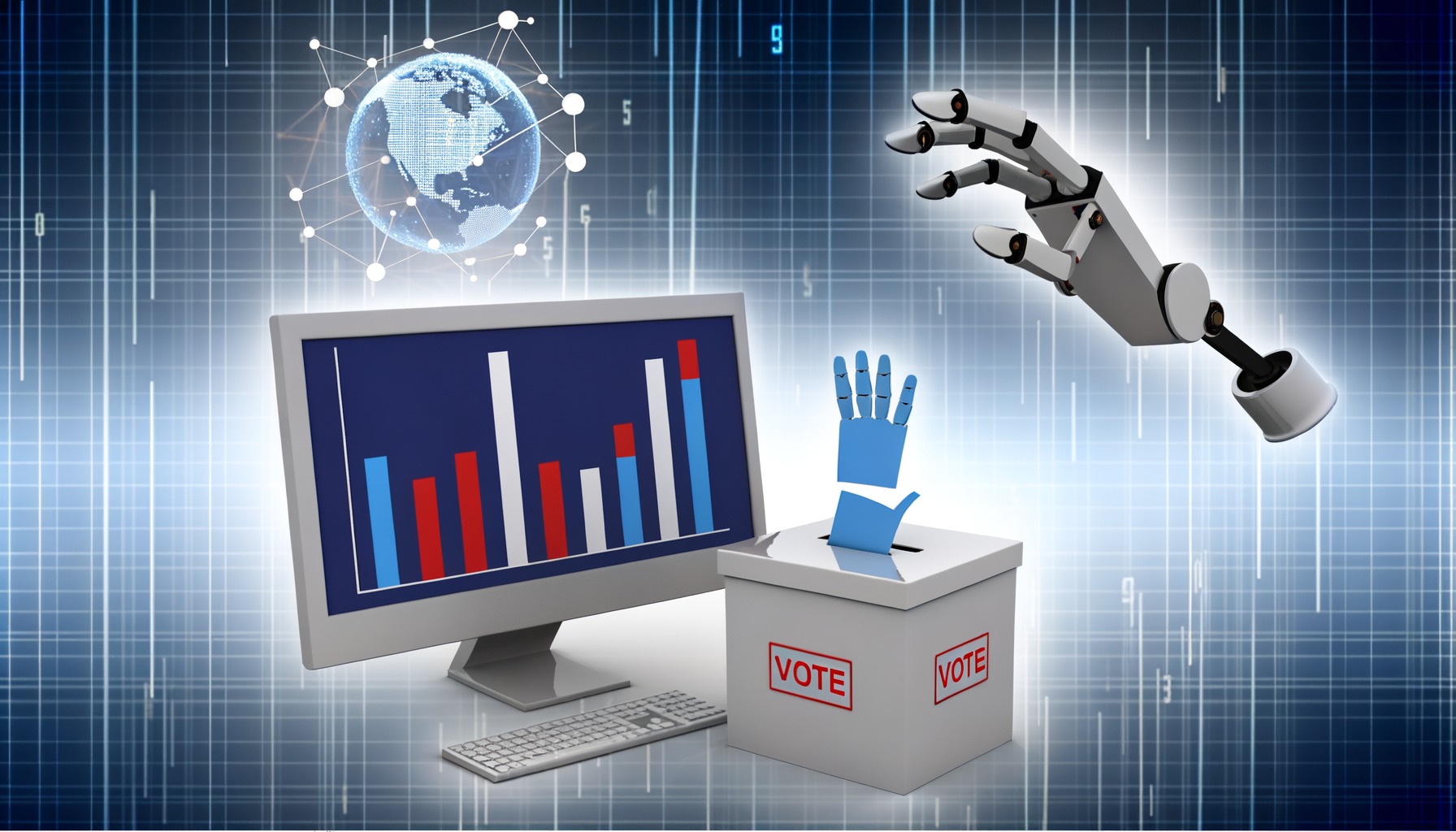
Generative AI is rapidly altering the political campaign landscape, argues the ORF article, which outlines how election teams worldwide are adopting AI tools for persuasion, outreach and content creation.
Campaigns can now generate customised messages for different voter groups, produce multilingual content at scale, and automate much of the traditional grunt work of campaigning.
On one hand, proponents say the technology makes campaigning more efficient and accessible, particularly in multilingual or resource-constrained settings. But the ease and speed with which content can be generated also lowers the barrier for misuse: AI-driven deepfakes, synthetic voices and disinformation campaigns can be deployed to mislead voters or distort public discourse.
Recent research supports these worries. For example, a large-scale study published in Science and Nature demonstrated that AI chatbots can influence voter opinions, swaying a non-trivial share of undecided voters toward a target candidate simply by presenting persuasive content.
Meanwhile, independent analyses show that during the 2024 US election campaign, a noticeable fraction of content on social media was AI-generated, sometimes used to spread misleading narratives or exaggerate support for certain candidates.
For democracy and governance, the shift poses thorny challenges. AI-driven campaigns risk eroding public trust, exacerbating polarisation and undermining electoral legitimacy. Regulators and policymakers now face pressure to devise new safeguards, such as transparency requirements around AI usage in political advertising, stronger fact-checking, and clearer accountability for misuse.
The ORF article argues these debates should start now, before AI becomes so entrenched that rollback is impossible.
Would you like to learn more about AI, tech and digital diplomacy? If so, ask our Diplo chatbot!
Authorities in Tokyo have issued an arrest warrant for a 17-year-old boy from Osaka on suspicion of orchestrating a large-scale cyberattack using artificial intelligence. The alleged target was the operator of the Kaikatsu Club internet-café chain (along with related fitness-gym business), which may have exposed the personal data of about 7.3 million customers.
According to investigators, the suspect used a computer programme, reportedly built with help from an AI chatbot, to send unauthorised commands around 7.24 million times to the company’s servers in order to extract membership information. The teenager was previously arrested in November in connection with a separate fraud case involving credit-card misuse.
Police have charged him under Japan’s law against unauthorised computer access and for obstructing business, though so far no evidence has emerged of misuse (for example, resale or public leaks) of the stolen data.
In his statement to investigators, the suspect reportedly said he carried out the hack simply because he found it fun to probe system vulnerabilities.
This case is the latest in a growing pattern of so-called AI-enabled cyber crimes in Japan, from fraudulent subscription schemes to ransomware generation. Experts warn that generative AI is lowering the barrier to entry for complex attacks, enabling individuals with limited technical training to carry out large-scale hacking or fraud.
Would you like to learn more about AI, tech and digital diplomacy? If so, ask our Diplo chatbot!
AI has pushed customer support into a new era, where anticipation replaces reaction. SAP has built a proactive model that predicts issues, prevents failures and keeps critical systems running smoothly instead of relying on queues and manual intervention.
Major sales events, such as Cyber Week and Singles Day, demonstrated the impact of this shift, with uninterrupted service and significant growth in transaction volumes and order numbers.
Self-service now resolves most issues before they reach an engineer, as structured knowledge supports AI agents that respond instantly with a confidence level that matches human performance.
Tools such as the Auto Response Agent and Incident Solution Matching enable customers to retrieve solutions without having to search through lengthy documentation.
SAP has also prepared organisations scaling AI by offering support systems tailored for early deployment.
Engineers have benefited from AI as much as customers. Routine tasks are handled automatically, allowing experts to focus on problems that demand insight instead of administration.
Language optimisation, routing suggestions, and automatic error categorisation support faster and more accurate resolutions. SAP validates every AI tool internally before release, which it views as a safeguard for responsible adoption.
The company maintains that AI will augment staff rather than replace them. Creative and analytical work becomes increasingly important as automation handles repetitive tasks, and new roles emerge in areas such as AI training and data stewardship.
SAP argues that progress relies on a balanced relationship between human judgement and machine intelligence, strengthened by partnerships that turn enterprise data into measurable outcomes.
Would you like to learn more aboutAI, tech and digital diplomacy? If so, ask our Diplo chatbot!
Video games have long since outgrown their roots as niche entertainment. What used to be arcades and casual play is now a global cultural phenomenon.
A recent systematic review of research argues that video games play a powerful role in cultural transmission. They allow players worldwide, regardless of language or origin, to absorb cultural, social, and historical references embedded in game narratives.
Importantly, games are not passive media. Their interactivity gives them unique persuasive power. As one academic work on ‘gaming in diplomacy’ puts it, video games stand out among cultural media because they allow for procedural rhetoric, meaning that players learn values, norms, and worldviews not just by watching or hearing, but by actively engaging with them.
As such, gaming has the capacity to transcend borders, languages and traditional media’s constraints. For many young players around the world, including those in developing regions, gaming has become a shared language, a means to connecting across cultures, geographies, and generations.
Esports as soft power and public diplomacy
Nation branding, cultural export and global influence
Several countries have recognised the diplomatic potential of esports and gaming. Waseda University researchers emphasise that esports can be systematically used to project soft power, engaging foreign publics, shaping favourable perceptions, and building cultural influence, rather than being mere entertainment or economic ventures.
A 2025 study shows that the use of ‘game-based cultural diplomacy’ is increasingly common. Countries such as Japan, Poland, and China are utilising video games and associated media to promote their national identity, cultural narratives, and values.
An article about the games Honor of Kings and Black Myth: Wukong describes how the state-backed Chinese gaming industry incorporates traditional Chinese cultural elements (myth, history, aesthetics) into globally consumed games, thereby reaching millions internationally and strengthening China’s soft-power footprint.
For governments seeking to diversify their diplomatic tools beyond traditional media (film, music, diplomatic campaigns), esports offers persistent, globally accessible, and youth-oriented engagement, particularly as global demographics shift toward younger, digital-native generations.
Esports diplomacy in practice: People-to-people exchange
Cross-cultural understanding, community, identity
In bilateral diplomacy, esports has already been proposed as a vehicle for ‘people-to-people exchange.’ For example, a commentary on US–South Korea relations argues that annual esports competitions between the two countries’ top players could serve as a modern, interactive form of public diplomacy, fostering mutual cultural exchange beyond the formalities of traditional diplomacy.
On the grassroots level, esports communities, being global, multilingual and cross-cultural, foster friendships, shared experiences, and identities that transcend geography. That moment democratises participation, because you don’t need diplomatic credentials or state backing. All you need is access and engagement.
Some analyses emphasise how digital competition and community-building in esports ‘bridge cultural differences, foster international collaboration and cultural diversity through shared language and competition.’
From a theoretical perspective, applying frameworks from sports diplomacy to esports, supported by academic proposals, offers a path to sustainable and legitimate global engagement through gaming, if regulatory, equality and governance challenges are addressed.
Tensions & challenges: Not just a soft-power fairy tale
Risk of ‘techno-nationalism’ and propaganda
The use of video games in diplomacy is not purely benign. Some scholars warn of ‘digital nationalism’ or ‘techno-nationalism,’ where games become tools for propagating state narratives, shaping collective memory, and exporting political or ideological agendas.
The embedding of cultural or historical motifs in games (mythology, national heritage, symbols) can blur the line between cultural exchange and political messaging. While this can foster appreciation for a culture, it may also serve more strategic geopolitical or soft-power aims.
From a governance perspective, the rapid growth of esports raises legitimate concerns about inequality (access, digital divide), regulation, legitimacy of representation (who speaks for ‘a nation’), and possible exploitation of youth. Some academic literature argues that without proper regulation and institutionalisation, the ‘esports diplomacy gold rush’ risks being unsustainable.
Why this matters and what it means for Africa and the Global South
For regions such as Africa, gaming and esports represent not only recreation but potential platforms for youth empowerment, cultural expression, and international engagement. Even where traditional media or sports infrastructure may be limited, digital games can provide global reach and visibility. That aligns with the idea of ‘future pathways’ for youth, which includes creativity, community-building and cross-cultural exchange.
Because games can transcend language and geography, they offer a unique medium for diaspora communities, marginalised youth, and underrepresented cultures to project identity, share stories, and engage with global audiences. In that sense, gaming democratises cultural participation and soft-power capabilities.
On a geopolitical level, as game-based diplomacy becomes more recognised, Global South countries may leverage it to assert soft power, attract investment, and promote tourism or cultural heritage, provided they build local capacity (developers, esports infrastructure, regulation) and ensure inclusive access.
Gaming & esports as emerging diplomatic infrastructure
The trend suggests that video games and esports are steadily being institutionalised as instruments of digital diplomacy, soft power, and cultural diplomacy, not only by private companies, but increasingly by states and policymakers. Academic bibliometric analysis shows a growing number of studies (2015–2024) dedicated to ‘game-based cultural diplomacy.’
As esports ecosystems grow, with tournaments, global fans and the cultural export, we may see a shift from occasional ‘cultural-diplomacy events’ to sustained, long-term strategies employing gaming to shape international perceptions, build transnational communities, and influence foreign publics.
However, for this potential to be realised responsibly, key challenges must be addressed. Those challenges include inequality of access (digital divide), transparency over cultural or political messaging, fair regulation, and safeguarding inclusivity.
Would you like to learn more aboutAI, tech and digital diplomacy? If so, ask our Diplo chatbot!