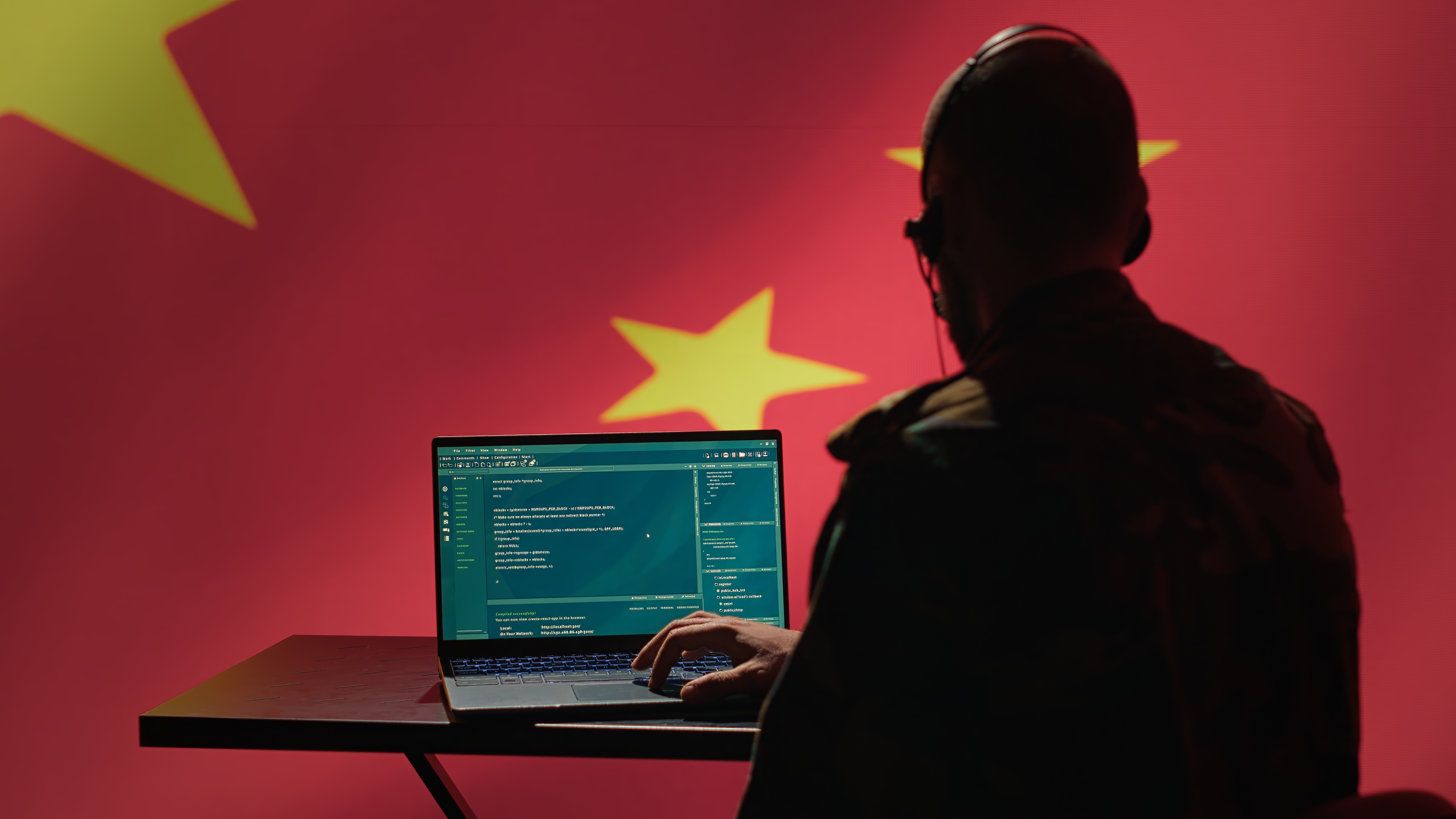
A threat group known as TAG-144 has stepped up cyberattacks on South American government agencies, researchers have warned.
The group, also called Blind Eagle and APT-C-36, has been active since 2018 and is linked to espionage and extortion campaigns. Recent activity shows a sharp rise in cybercrime, spear-phishing, often using spoofed government email accounts to deliver remote access trojans.
Analysts say the group has shifted towards more advanced methods, embedding malware inside image files through steganography. Payloads are then extracted in memory, allowing attackers to evade antivirus software and maintain access to compromised systems.
Colombian government institutions have been hit hardest, with stolen credentials and sensitive data raising concerns over both financial and national security risks. Security experts warn that TAG-144’s evolving tactics blur the line between organised crime and state-backed espionage.
Would you like to learn more about AI, tech and digital diplomacy? If so, ask our Diplo chatbot!
OpenAI’s ChatGPT continues to dominate the consumer AI space, but rivals are beginning to catch up. Andreessen Horowitz’s latest Top 100 AI Apps report shows Google’s Gemini and Elon Musk’s Grok rapidly climbing the ranks across web and mobile platforms.
The report highlights a stabilising AI market, with fewer new entrants on the web but more originality emerging on mobile. Gemini has secured the number two position on web and mobile, while Grok has surged to fourth place on web following the release of Grok 4.
Meanwhile, Meta AI’s growth remains modest, and platforms like Claude and DeepSeek show slowing momentum.
China’s AI sector is also strengthening its presence. Apps such as Quark, Doubao, and Kimi are breaking into the global top 20, aided by China’s large domestic market and growing export of AI tools.
Additionally, many of the leading mobile apps in photo and video editing now come from Chinese developers, underscoring their increasing global influence.
The report also tracks consistent leaders, naming ‘All-Stars’ like ChatGPT, Midjourney, Perplexity, and Eleven Labs, while spotlighting emerging contenders on the ‘Brink List’.
The findings suggest that although ChatGPT retains its lead, the competitive landscape is shifting, with challengers closing the gap and new platforms poised to break through.
Would you like to learn more about AI, tech and digital diplomacy? If so, ask our Diplo chatbot!
A phishing campaign exploits Microsoft Teams’ external communication features, with attackers posing as IT helpdesk staff to gain access to screen sharing and remote control. The method sidesteps traditional email security controls by using Teams’ default settings.
The attacks exploit Microsoft 365’s default external collaboration feature, which allows unauthenticated users to contact organisations. Axon Team reports attackers create malicious Entra ID tenants with .onmicrosoft.com domains or use compromised accounts to initiate chats.
Although Microsoft issues warnings for suspicious messages, attackers bypass these by initiating external voice calls, which generate no alerts. Once trust is established, they request screen sharing, enabling them to monitor victims’ activity and guide them toward malicious actions.
The highest risk arises where organisations enable external remote-control options, giving attackers potential full access to workstations directly through Teams. However, this eliminates the need for traditional remote tools like QuickAssist or AnyDesk, creating a severe security exposure.
Defenders are advised to monitor Microsoft 365 audit logs for markers such as ChatCreated, MessageSent, and UserAccepted events, as well as TeamsImpersonationDetected alerts. Restricting external communication and strengthening user awareness remain key to mitigating this threat.
Would you like to learn more about AI, tech, and digital diplomacy? If so, ask our Diplo chatbot!
The European Commission has signed a contribution agreement with the European Union Agency for Cybersecurity (ENISA), assigning the agency responsibility for operating and administering the EU Cybersecurity Reserve.
The arrangement includes a €36 million allocation over three years, complementing ENISA’s existing budget.
The EU Cybersecurity Reserve, established under the EU Cyber Solidarity Act, will provide incident response services through trusted managed security providers.
The services are designed to support EU Member States, institutions, and critical sectors in responding to large-scale cybersecurity incidents, with access also available to third countries associated with the Digital Europe Programme.
ENISA will oversee the procurement of these services and assess requests from national authorities and EU bodies, while also working with the Commission and EU-CyCLONe to coordinate crisis response.
If not activated for incident response, the pre-committed services may be redirected towards prevention and preparedness measures.
The reserve is expected to become fully operational by the end of 2025, aligning with the planned conclusion of ENISA’s existing Cybersecurity Support Action in 2026.
ENISA is also preparing a candidate certification scheme for Managed Security Services, with a focus on incident response, in line with the Cyber Solidarity Act.
Would you like to learn more aboutAI, tech and digital diplomacy? If so, ask our Diplo chatbot!
AI data centres face growing pressure as computing demands exceed the capacity of single facilities. Traditional Ethernet networks face high latency and inconsistent transfers, forcing companies to build larger centres or risk performance issues.
NVIDIA aims to tackle these challenges with its new Spectrum-XGS Ethernet technology, introducing ‘scale-across’ capabilities. The system links multiple AI data centres using distance-adaptive algorithms, congestion control, latency management, and end-to-end telemetry.
NVIDIA claims the improvements can nearly double GPU communication performance, supporting what it calls ‘giga-scale AI super-factories.’
CoreWeave plans to be among the first adopters, connecting its facilities into a single distributed supercomputer. The deployment will test if Spectrum-XGS can deliver fast, reliable AI across multiple sites without needing massive single-location centres.
While the technology promises greater efficiency and distributed computing power, its effectiveness depends on real-world infrastructure, regulatory compliance, and data synchronisation.
If successful, it could reshape AI data centre design, enabling faster services and potentially lower operational costs across industries.
Would you like to learn more about AI, tech and digital diplomacy? If so, ask our Diplo chatbot!
Indonesia will deploy an AI-driven maritime surveillance network to combat piracy and other illegal activities across its vast waters.
The Indonesian Sea and Coast Guard Unit has signed a 10-year agreement with UK-based SRT Marine Systems for its SRT-MDA platform. The system, to be known locally as the National Maritime Security System, will integrate terrestrial, mobile and satellite surveillance with AI-powered analytics.
Fifty command posts will be digitised under the plan, enabling authorities to detect, track and predict activities from piracy to environmental violations. The deal, valued at €157.9m and backed by UK Export Finance, has been strongly supported by both governments.
Piracy remains a pressing issue in Indonesian waters, particularly in the Singapore Strait, where opportunistic thefts against slow-moving ships quadrupled in the first half of 2025 compared with last year. Analysts warn that weak deterrence and economic hardship are fuelling the rise in incidents.
Would you like to learn more about AI, tech and digital diplomacy? If so, ask our Diplo chatbot!
China has begun construction on its first facility dedicated to the production of photonic quantum computers in Shenzhen, Guangdong Province. The project marks a step toward the development of large-scale quantum computing capabilities in the country.
The factory, led by Beijing-based quantum computing company QBoson, is expected to manufacture several dozen photonic quantum computers each year once operations begin.
QBoson’s founder, Wen Kai, explained that photonic quantum computing uses the quantum properties of light and is viewed as a promising path in the field.
Compared with other approaches, it does not require extremely low temperatures to function and offers advantages such as stable operation at room temperature, a higher number of qubits, and longer coherence times.
The upcoming facility will be divided into three core areas: module development, full-system production, and quality testing. Construction is already underway, and equipment installation is scheduled to begin by the end of October.
Would you like to learn more aboutAI, tech and digital diplomacy? If so, ask our Diplo chatbot!
According to the IT regulator, Nigeria is preparing a national framework to guide responsible use of AI in governance, healthcare, education and agriculture.
NITDA Director General Kashifu Abdullahi told a policy lecture in Abuja that AI could accelerate economic transformation if properly harnessed. He emphasised that Nigeria’s youthful population should move from being consumers to becoming innovators and creators.
He urged stakeholders to view automation as an opportunity to generate jobs, highlighting that over 60% of Nigerians are under 25. Abdullahi described this demographic as a key asset in positioning the nation for global competitiveness.
Meanwhile, a joint report from the Digital Education Council and the Global Finance & Technology Network found that AI boosts productivity, though adoption remains uneven. It warned of a growing divide between organisations that use AI effectively and those falling behind.
Would you like to learn more about AI, tech, and digital diplomacy? If so, ask our Diplo chatbot!
China’s Salt Typhoon cyberspies have stolen data from millions of Americans through a years-long intrusion into telecommunications networks, according to senior FBI officials. The campaign represents one of the most significant espionage breaches uncovered in the United States.
The Beijing-backed operation began in 2019 and remained hidden until last year. Authorities say at least 80 countries were affected, far beyond the nine American telcos initially identified, with around 200 US organisations compromised.
Targets included Verizon, AT&T, and over 100 current and former administration officials. Officials say the intrusions enabled Chinese operatives to geolocate mobile users, monitor internet traffic, and sometimes record phone calls.
Three Chinese firms, Sichuan Juxinhe, Beijing Huanyu Tianqiong, and Sichuan Zhixin Ruijie, have been tied to Salt Typhoon. US officials say they support China’s security services and military.
The FBI warns that the scale of indiscriminate targeting falls outside traditional espionage norms. Officials stress the need for stronger cybersecurity measures as China, Russia, Iran, and North Korea continue to advance their cyber operations against critical infrastructure and private networks.
Would you like to learn more about AI, tech, and digital diplomacy? If so, ask our Diplo chatbot!
AI company Anthropic has reported that its chatbot Claude was misused in cyber incidents, including attempts to carry out hacking operations and employment-related fraud.
The firm said its technology had been used to help write malicious code and assist threat actors in planning attacks. However, it also stated that it could disrupt the activity and notify authorities. Anthropic said it is continuing to improve its monitoring and detection systems.
In one case, the company reported that AI-supported attacks targeted at least 17 organisations, including government entities. The attackers allegedly relied on the tool to support decision-making, from choosing which data to target to drafting ransom demands.
Experts note that the rise of so-called agentic AI, which can operate with greater autonomy, has increased concerns about potential misuse.
Anthropic also identified attempts to use AI models to support fraudulent applications for remote jobs at major companies. The AI was reportedly used to create convincing profiles, generate applications, and assist in work-related tasks once jobs had been secured.
Analysts suggest that AI can strengthen such schemes, but most cyber incidents still involve long-established techniques like phishing and exploiting software vulnerabilities.
Cybersecurity specialists emphasise the importance of proactive defence as AI tools evolve. They caution that organisations should treat AI platforms as sensitive systems requiring strong safeguards to prevent their exploitation.
Would you like to learn more aboutAI, tech and digital diplomacy? If so, ask our Diplo chatbot!