Celebrity Instagram hack fuels Solana meme coin scam

The Instagram accounts of Adele, Future, Tyla, and Michael Jackson were hacked late Thursday to promote an unauthorised meme coin. Posts showed an AI image of the Future with a ‘FREEBANDZ’ coin, falsely suggesting ties to the rapper.

The token, launched on the Solana platform Pump.fun, surged briefly to nearly $900,000 in market value before collapsing by 98% after its creator dumped 700 million tokens. The scheme netted more than $49,000 in Solana for the perpetrator, suspected of being behind the account hijackings.

None of the affected celebrities has issued a statement, while Future’s Instagram account remains deactivated. The hack continues a trend of using celebrity accounts for crypto pump-and-dump schemes. Previous cases involved the UFC, Barack Obama, and Elon Musk.

Such scams are becoming increasingly common, with attackers exploiting the visibility of major social media accounts to drive short-lived token gains before leaving investors with losses.

Would you like to learn more about AI, tech and digital diplomacy? If so, ask our Diplo chatbot

Dell expands AI innovation hub in Singapore to drive regional growth

Dell Technologies has launched a new Asia Pacific and Japan AI Innovation Hub in Singapore, strengthening its role in advancing AI across the region.

The hub extends the company’s Global Innovation Hub, which has already received more than US$50 million in investment since 2019. Its focus is on driving AI transformation, enablement and leadership, in line with Singapore’s National AI Strategy 2.0.

Instead of offering only infrastructure, the hub delivers end-to-end support, from strategy to deployment, helping enterprises bridge the gap between ambition and practical results. Research shows 62% of Singaporean businesses prefer such holistic partnerships.

Since 2024, the hub has developed about 50 AI prototypes and carried out more than 100 proof-of-concepts, workshops and demonstrations across areas such as generative and predictive AI.

The projects have already influenced multiple sectors. In energy, AI solutions are strengthening infrastructure resilience and enhancing customer engagement with digital humans and chatbots.

In telecommunications, AI is supporting agility and operational efficiency, while in education, cloud-based technologies are empowering research and innovation.

Dell’s AI Centre of Excellence Lab further supports these initiatives by testing solutions for AI PCs and edge computing in collaboration with academic and hardware partners.

A strong emphasis is also placed on skills development. By the end of 2025, the hub aims to train around 10,000 students and mid-career professionals in AI engineering, platform engineering and related fields.

Working with 10 local institutes, Dell is addressing the talent shortage reported by nearly half of Singaporean organisations. Events such as the Dell InnovateFest and the Dell Innovation Challenge provide platforms for students and partners to showcase ideas and create solutions for social good.

Would you like to learn more about AI, tech and digital diplomacy? If so, ask our Diplo chatbot!

OpenAI to open office in New Delhi

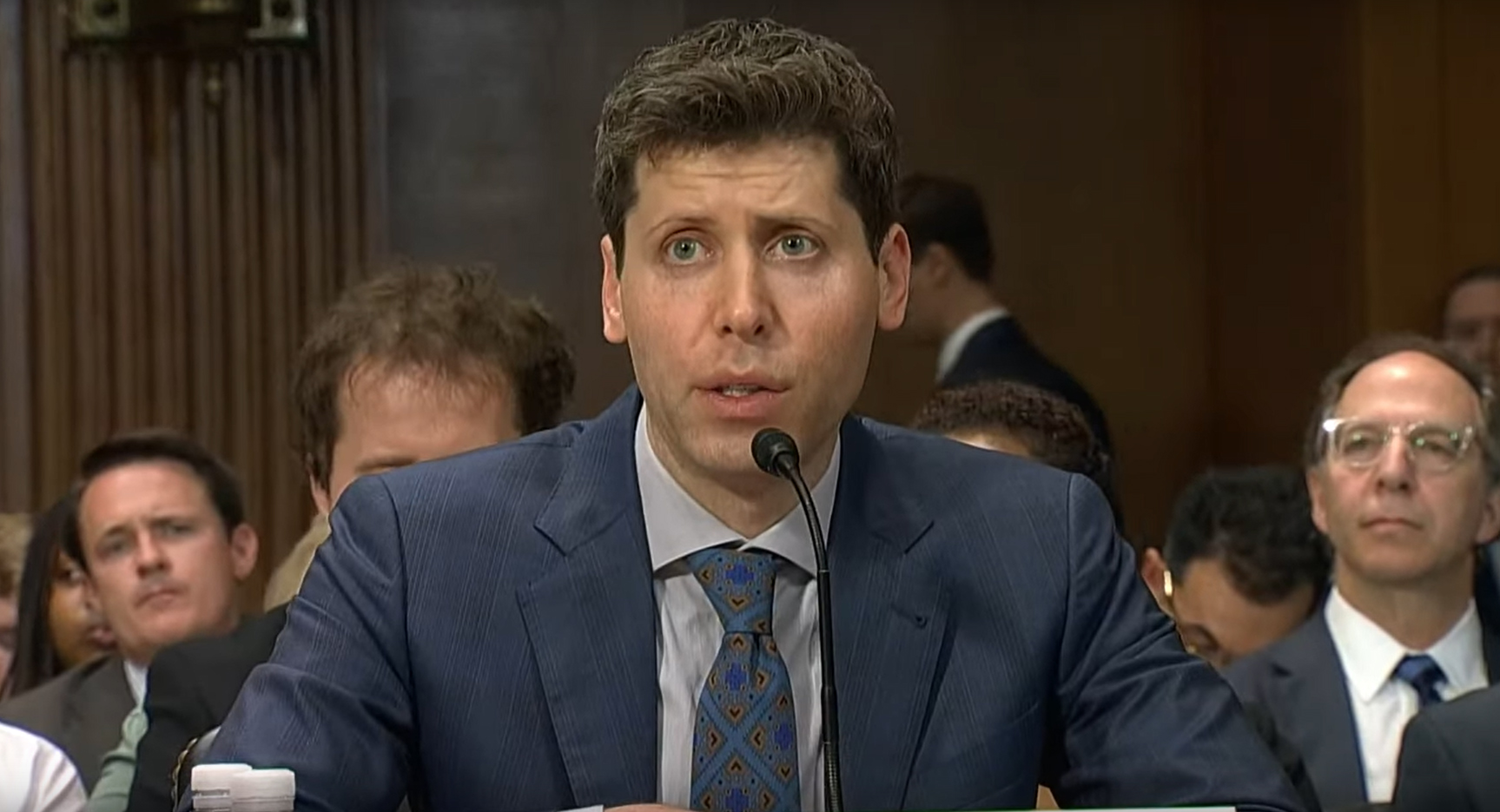
OpenAI has announced plans to open its first office in India later this year, selecting New Delhi as the location. India is now ChatGPT’s second-largest market after the US and continues to experience rapid growth in user activity.

Weekly active users of ChatGPT in India have increased over fourfold over the past year, with students making up the largest global user segment. CEO Sam Altman praised India’s talent pool and government support, stating the new office is key to building AI with and for India.

Union IT Minister Ashwini Vaishnaw welcomed the move, citing India’s AI mission and expanding digital infrastructure as a natural foundation for the partnership. OpenAI will also hold its first Education Summit in India later this month, aiming to further engage with students and educators nationwide.

Would you like to learn more about AI, tech and digital diplomacy? If so, ask our Diplo chatbot!

Google launches standalone Password Manager app for Android

Google has released its Password Manager as a standalone app for Android, separating the service from Chrome for easier access. The new app allows users to quickly view and manage saved passwords, passkeys and login details directly from their phone.

The app itself does not introduce new features. It functions mainly as a shortcut to the existing Password Manager already built into Android and Chrome.

For users, there is little practical difference between the app and the integrated option, although some may prefer the clarity of having a dedicated tool instead of navigating through browser settings.

For Google, however, the move brings advantages. By listing Password Manager in the Play Store, the company can compete more visibly with rivals like LastPass and 1Password.

Previously, many users were unaware of the built-in feature since it was hidden within Chrome. The Play Store presence also gives Google a direct way to push updates and raise awareness of the service.

The app arrives with Google’s Material 3 design refresh, giving it a cleaner look that aligns with the rest of Android. Functionality remains unchanged for now, but the shift suggests Google may expand the app in the future.

Would you like to learn more about AI, tech and digital diplomacy? If so, ask our Diplo chatbot!

Senior OpenAI executive Julia Villagra departs amid talent war

OpenAI’s chief people officer, Julia Villagra, has left the company, marking the latest leadership change at the AI pioneer. Villagra, who joined the San Francisco firm in early 2024 and was promoted in March, previously led its human resources operations.

Her responsibilities will temporarily be overseen by chief strategy officer Jason Kwon, while chief applications officer Fidji Simo will lead the search for her successor.

OpenAI said Villagra is stepping away to pursue her personal interest in art, music and storytelling as tools to help people understand the shift towards artificial general intelligence, a stage when machines surpass human performance in most forms of work.

The departure comes as OpenAI navigates a period of intense competition for AI expertise. Microsoft-backed OpenAI is valued at about $300 billion, with a potential share sale set to raise that figure to $500 billion.

The company faces growing rivalry from Meta, where Mark Zuckerberg has reportedly offered $100 million signing bonuses to attract OpenAI talent.

While OpenAI expands, public concerns over the impact of AI on employment continue. A Reuters/Ipsos poll found 71% of Americans fear AI could permanently displace too many workers, despite the unemployment rate standing at 4.2% in July.

Would you like to learn more about AI, tech and digital diplomacy? If so, ask our Diplo chatbot!

Google claims Gemini uses less water and energy per text prompt

Google has published new estimates on the environmental footprint of Gemini, claiming a single text prompt uses about five drops of water and 0.24 watt-hours of electricity. The company says this equates to 0.03 grams of carbon dioxide emissions.

According to Google, efficiencies have reduced Gemini’s energy consumption and carbon footprint per text prompt by factors of 33 and 44 over the past year. Chief technologist Ben Gomes said the model now delivers higher-quality responses with a significantly lower footprint.

The company argued that these figures are significantly lower than those suggested in earlier research. However, Shaolei Ren, the author of one of the cited papers, said Google’s comparisons were misleading and incomplete.

Ren noted that Google compared its latest onsite-only water figures against his study’s highest total figures, creating the impression that Gemini was far more efficient. He also said Google omitted indirect water use, such as electricity-related consumption, from its estimates.

Would you like to learn more about AI, tech, and digital diplomacy? If so, ask our Diplo chatbot!

Google launches Gemini AI for government

Google has introduced a new version of its Gemini AI platform tailored specifically for US government use, called Gemini for Government. The platform combines features such as image generation, enterprise search, and AI agent development, with compliance to standards like Sec4 and FedRAMP.

Gemini includes pre-built AI agents for research and idea generation, while also offering tools to create custom agents. US government customers will pay $0.50 per year for basic access, undercutting rivals OpenAI and Anthropic, who each launched $1 government-focused AI packages earlier this year.

Google emphasised security, privacy, and automation in its pitch, positioning the product as an all-in-one solution for public sector institutions. The launch follows the Trump administration’s AI Action Plan, which seeks to promote AI growth.

Would you like to learn more about AI, tech and digital diplomacy? If so, ask our Diplo chatbot!

South Korea unveils five-year AI blueprint for ‘super-innovation economy’

South Korea’s new administration has unveiled a five-year economic plan to build what it calls a ‘super-innovation economy’ by integrating AI across all sectors of society.

The strategy, led by President Lee Jae-myung, commits 100 trillion won (approximately US$71.5 billion) to position the country among the world’s top three AI powerhouses. Private firms will drive development, with government support for nationwide adoption.

Plans include a sovereign Korean-language AI model, humanoid robots for logistics and industry, and commercialising autonomous vehicles by 2027. Unmanned ships are targeted for completion by 2030, alongside widespread use of drones in firefighting and aviation.

AI will also be introduced into drug approvals, smart factories, welfare services, and tax administration, with AI-based tax consultations expected by 2026. Education initiatives and a national AI training data cluster will nurture talent and accelerate innovation.

Five domestic firms, including Naver Cloud, SK Telecom, and LG AI Research, will receive state support to build homegrown AI foundation models. Industry reports currently rank South Korea between sixth and 10th in global AI competitiveness.

Would you like to learn more about AI, tech and digital diplomacy? If so, ask our Diplo chatbot!

Luxembourg tightens crypto reporting rules for CASPs

Luxembourg introduced draft Law 8592 outlining registration, due diligence, and reporting duties for crypto-asset service providers. Mandatory reporting starts on 1 January 2026, covering crypto-assets, life insurance income, cross-border rulings, and expanded automatic tax data exchange.

The law applies to a broad range of crypto-asset activities, including portfolio management, custody, and exchange platforms. It also covers crypto-to-fund or crypto-to-crypto transactions and client order execution.

Luxembourg’s definition of crypto-assets aligns with EU MiCAR rules but includes all assets used for payment or investment purposes. Tax authorities will share reported data with the user’s country of residence by 30 September of the following year, starting with 2026.

CASPs must register with Luxembourg tax authorities by 30 June each year for reporting the previous year’s data. MiCAR-authorised operators are exempt from active registration. Penalties range from €5,000 for missed registrations to €250,000 for failing due diligence or reporting obligations.

The law also requires CASPs to verify user information through reasonable due-diligence procedures.

Law 8592 further updates rules on cross-border arrangements, online platform reporting, the Common Reporting Standard, and country-by-country reporting. DAC6 amendments now follow EU Court rulings, keeping lawyers’ client notifications while removing wider intermediary duties.

Would you like to learn more about AI, tech and digital diplomacy? If so, ask our Diplo chatbot

Orange suffers major data breach

Orange Belgium has confirmed a data breach affecting 850,000 customers, after a cyberattack targeted one of its internal IT systems. The attack, discovered in late July, exposed names, phone numbers, SIM card details, tariff plans and PUK codes. No financial or password data was compromised.

The telecoms provider blocked access to the affected system and notified authorities. A formal complaint has also been filed with the judiciary. All affected users are being informed via email or SMS and are urged to stay alert for phishing and identity fraud attempts.

Orange Belgium has advised users to strengthen account security with strong, unique passwords and to be cautious of suspicious links and messages. This marks the third cyber incident involving Orange in 2025, following earlier attacks, though those breaches varied in impact.

Would you like to learn more about AI, tech and digital diplomacy? If so, ask our Diplo chatbot!