Toronto’s notoriously congested traffic, among the worst in North America, with drivers spending an average of about 100 hours in traffic annually, continues to frustrate commuters.
Experts and city officials are now considering artificial intelligence-driven traffic signal optimisation as a key tool to improve traffic flows by dynamically adjusting signal timing across the city’s roughly 2,500 intersections.
AI systems could analyse real-time traffic patterns faster and more efficiently than manual control, helping reduce idle time, clear bottlenecks and support transit modes like the Finch West LRT by prioritising movement where needed.
While details of Toronto’s broader congestion management plan are still being finalised, this high-tech approach is being positioned as one of the most promising ways to address chronic gridlock and improve overall mobility.
Would you like to learn more about AI, tech and digital diplomacy? If so, ask our Diplo chatbot!
Bitcoin traded sideways on Tuesday after a short-lived rebound from a 10-month low, as caution continued to dominate derivatives markets. Early Asian trading saw limited movement, with prices hovering below $78,500 following a sharp sell-off the previous day.
Options positioning suggests nerves have yet to ease fully. Data from Deribit showed heavy put option concentrations around $75,000, marking a key support level, while the next downside area is seen closer to $70,000.
Although downside protection demand has softened, positioning indicates traders remain defensive.
Signals from perpetual futures markets reinforced the cautious tone. According to CryptoQuant, funding rates turned negative, their weakest since mid-2024, pointing to a market dominated by short sellers.
Implied volatility stayed elevated near 48.8, based on data from TradingView.
Some traders highlighted early signs of stabilisation after aggressive selling. Analysts at FalconX and STS Digital noted that a weekly close below $75,000 could reignite downside pressure, while holding above that level may support a near-term recovery.
Would you like to learn more about AI, tech and digital diplomacy? If so, ask our Diplo chatbot!
Scientists are increasingly applying generative AI models to address complex problems in materials science, such as predicting structures, simulating properties, and guiding the discovery of advanced materials with novel functions.
Traditional computational methods, such as density functional theory, can be slow and resource-intensive, whereas AI-based tools can learn from existing data and propose candidate materials more efficiently.
Early applications of these generative approaches include designing materials for energy storage, catalysis, and electronic applications, speeding up workflows that previously involved large amounts of trial and error.
Researchers emphasise that while AI does not yet replace physics-based modelling, it can complement it by narrowing the search space and suggesting promising leads for experimental validation.
The work reflects a broader trend of AI-augmented science, where machine learning and generative models act as accelerators for discovery across disciplines such as chemistry, physics and bioengineering.
Would you like to learn more about AI, tech and digital diplomacy? If so, ask our Diplo chatbot!
India has unveiled a plan to offer foreign cloud providers zero taxes on revenues from services sold abroad if workloads are run from Indian data centres until 2047. The move aims to attract AI investment despite power and water shortages.
Major US tech companies, including Google, Microsoft and Amazon, have pledged billions of dollars to expand AI-focused data centres in India. Domestic operators are also increasing capacity, with large projects announced in Andhra Pradesh and other states.
The government has boosted incentives for electronics and semiconductor manufacturing, critical minerals, and cross-border e-commerce. These measures aim to integrate India more deeply into global technology supply chains.
Analysts warn that execution risks remain, including energy shortages, land access and regulatory hurdles. Observers say the tax holiday and incentives reflect a strategic bet on establishing India as a global hub for AI and cloud computing.
Would you like to learn more about AI, tech and digital diplomacy? If so, ask our Diplo chatbot!
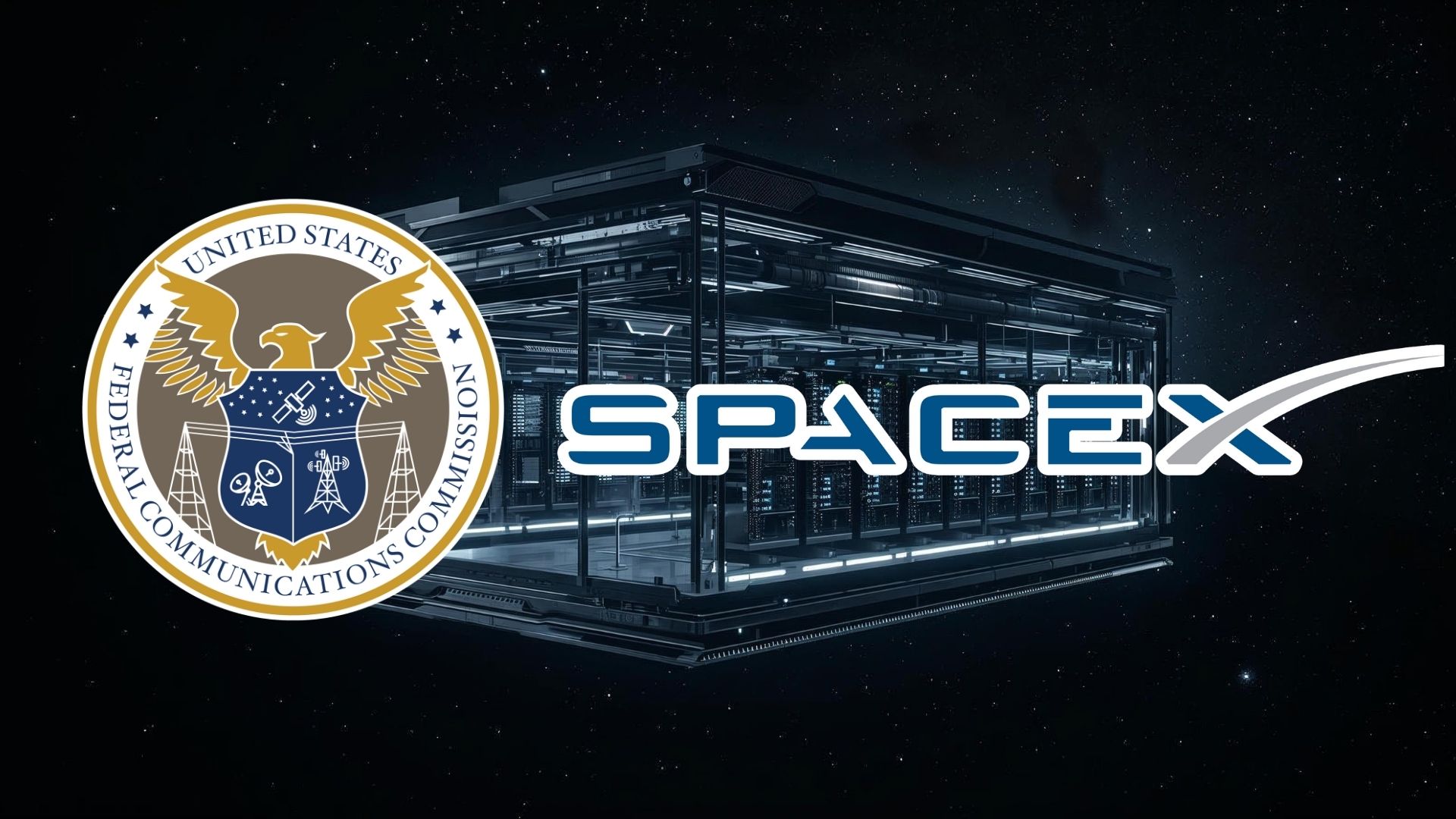
A proposal filed with the US Federal Communications Commission seeks approval for a constellation of up to one million solar-powered satellites designed to function as orbiting data centres for artificial intelligence computing, according to documents submitted by SpaceX.
The company described the network as an efficient response to growing global demand for AI processing power, positioning space-based infrastructure as a new frontier for large-scale computation.
In its filing, SpaceX framed the project in broader civilisational terms, suggesting the constellation could support humanity’s transition towards harnessing the Sun’s full energy output and enable long-term multi-planetary development.
Regulators are unlikely to approve the full scale immediately, with analysts viewing the figure as a negotiating position. The USFCC recently authorised thousands of additional Starlink satellites while delaying approval for a larger proposed expansion.
Concerns continue to grow over orbital congestion, space debris, and environmental impacts, as satellite numbers rise sharply and rival companies seek similar regulatory extensions.
Would you like to learn more about AI, tech, and digital diplomacy? If so, ask our Diplo chatbot!
Bison Bank plans to integrate Bison Digital Assets into its core operations, moving closer to becoming Portugal’s first cryptobank. The investment bank plans to support client-led asset tokenisation projects, signalling a wider move into regulated digital finance.
The strategy is backed by the EU’s MiCA framework, which provides legal clarity and regulatory certainty for cryptoasset firms. Regulatory approval under MiCA allows the bank to operate in Portugal while dealing in and investing in cryptoassets on behalf of clients.
Alongside the structural integration, the bank outlined three initiatives: issuing the first stablecoin by a Portuguese bank, advancing tokenised asset offerings, and completing its transition into a cryptobank.
Tokenisation is designed to enable fractional ownership, continuous trading, improved liquidity, and transparent settlement for assets ranging from real estate to bonds.
Although no official launch date has been confirmed, chief executive António Henriques indicated that the new services are expected to become available in the first half of the year, subject to final regulatory and operational steps.
Would you like to learn more about AI, tech and digital diplomacy? If so, ask our Diplo chatbot!
Social media platforms are increasingly filled with AI-generated slop created to maximise engagement. The rapid spread has been fuelled by easy access to generative tools and algorithm-driven promotion.
Users across major platforms are pushing back, frequently calling out fake or misleading posts in comment sections. In many cases, criticism of AI slop draws more attention than the original content.
Technology companies acknowledge concerns about low-quality AI media but remain reluctant to impose strict limits. Platform leaders argue that new formats are often criticised before gaining wider acceptance.
Researchers warn that repeated exposure to AI slop may contribute to what they describe as ‘brain rot’, reducing attention and discouraging content verification. The risk becomes more serious when fabricated visuals shape public opinion or circulate as news.
Would you like to learn more about AI, tech, and digital diplomacy? If so, ask our Diplo chatbot!
The UK and Bulgaria are expanding cooperation on semiconductor technology to strengthen supply chains and support Europe’s growing need for advanced materials.
A partnership that links British expertise with the ambitions of Bulgaria under the EU Chips Act 2023, creating opportunities for investment, innovation and skills development.
The Science and Technology Network has acted as a bridge between both countries by bringing together government, industry and academia. A high-level roundtable in Sofia, a study visit to Scotland and a trade mission to Bulgaria encouraged firms and institutions to explore new partnerships.
These exchanges helped shape joint projects and paved the way for shared training programmes.
Several concrete outcomes have followed. A €350 million Green Silicon Carbide wafer factory is moving ahead, supported by significant UK export wins.
Universities in Glasgow and Sofia have signed a research memorandum, while TechWorks UK and Bulgaria’s BASEL have agreed on an industry partnership. The next phase is expected to focus on launching the new factory, deepening research cooperation and expanding skills initiatives.
Bulgaria’s fast-growing electronics and automotive sectors have strengthened its position as a key European manufacturing hub. The country produces most sensors used in European cars and hosts modern research centres and smart factories.
The combined effect of the EU funding, national investment and international collaboration is helping Bulgaria secure a prominent role in Europe’s semiconductor supply chain.
Would you like to learn more about AI, tech and digital diplomacy? If so, ask our Diplo chatbot!
Doha Debates, an initiative of Qatar Foundation, hosted a town hall examining the ethical, political, and social implications of rapidly advancing AI. The discussion reflected growing concern that AI capabilities could outpace human control and existing governance frameworks.
Held at Multaqa in Education City, the forum gathered students, researchers, and international experts to assess readiness for rapid technological change. Speakers offered contrasting views, highlighting both opportunity and risk as AI systems grow more powerful.
Philosopher and transhumanist thinker Max More argued for continued innovation guided by reason and proportionate safeguards, warning against fear-driven stagnation.
By contrast, computer scientist Roman Yampolskiy questioned whether meaningful control over superintelligent systems is realistic, cautioning that widening intelligence gaps could undermine governance entirely.
Nabiha Syed, executive director of the Mozilla Foundation, focused on accountability and social impact. She urged broader public participation and transparency, particularly as AI deployment risks reinforcing existing inequalities across societies.
Would you like to learn more about AI, tech and digital diplomacy? If so, ask our Diplo chatbot!
OpenAI has confirmed that several legacy AI models will be removed from ChatGPT, with GPT-4o scheduled for retirement on 13 February. The decision follows months of debate after the company reinstated the model amid strong user backlash.
Alongside GPT-4o, the models being withdrawn include GPT-5 Instant, GPT-5 Thinking, GPT-4.1, GPT-4.1 mini, and o4-mini. The changes apply only to ChatGPT, while developers will continue to access the models through OpenAI’s API.
GPT-4o had built a loyal following for its natural writing style and emotional awareness, with many users arguing newer models felt less expressive. When OpenAI first attempted to phase it out in 2025, widespread criticism prompted a temporary reversal.
Company data now suggests active use of GPT-4o has dropped to around 0.1% of daily users. OpenAI says features associated with the model have since been integrated into GPT-5.2, including personality tuning and creative response controls.
Despite this, criticism has resurfaced across social platforms, with users questioning usage metrics and highlighting that GPT-4o was no longer prominently accessible. Comments from OpenAI leadership acknowledging recent declines in writing quality have further fuelled concerns about the model’s removal.
Would you like to learn more about AI, tech, and digital diplomacy? If so, ask our Diplo chatbot!