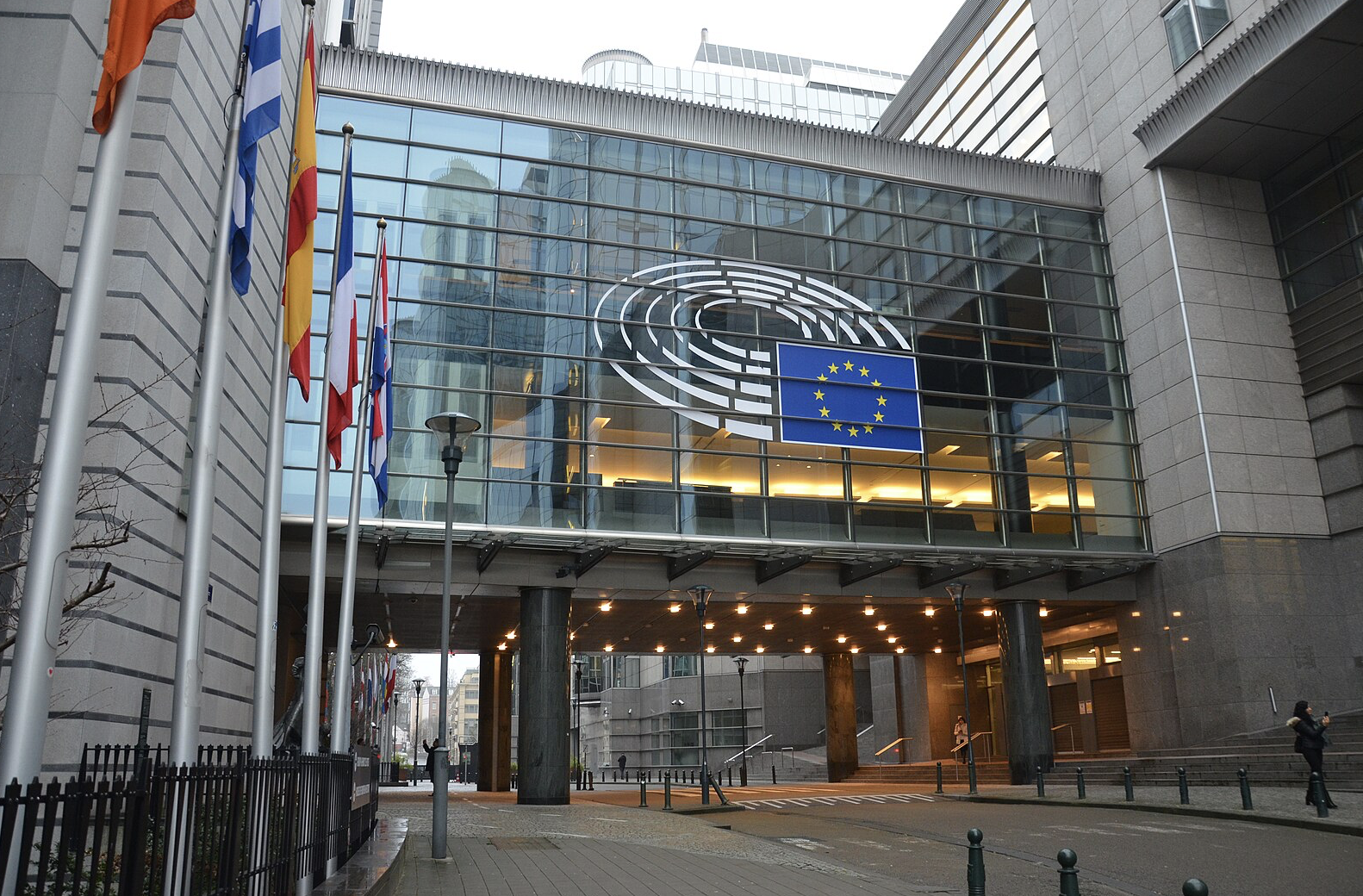
The civil liberties committee failed to secure majority backing for its amended report on extending the EU’s temporary chat-scanning rules instead of giving a clear negotiating position.
Members of Parliament reviewed the amendments on Monday, but the final text did not garner sufficient support, leaving the proposal without endorsement as the adoption deadline approaches.
A proposal to extend the current derogation that allows tech companies to voluntarily scan their services for Child Sexual Abuse Material (CSAM).
The existing regime expires in April 2026 and was intended only as a stopgap while a permanent Child Sexual Abuse Regulation was developed. Years of stalled negotiations have led to the temporary rules being extended twice since 2021.
Council has already approved its position without changes to the Commission proposal, creating a tight timeline for Parliament.
With trilogue talks finally underway, institutions would need to conclude discussions unusually quickly to prevent the legal basis from expiring. If no agreement is reached by April, companies would lose their ability to scan services under the EU law.
The committee confirmed that the file will now move to plenary in the week of 9–12 March, where political groups may table new amendments. An outcome that will determine whether the temporary regime remains in place while negotiations on the permanent system continue.
Would you like to learn more about AI, tech and digital diplomacy? If so, ask our Diplo chatbot!
Deutsche Telekom is turning to satellite connectivity to address Europe’s persistent mobile coverage gaps, rather than relying solely on terrestrial networks.
The company announced a partnership with Starlink during the Mobile World Congress in Barcelona, arguing that non-terrestrial networks can help reach remote forests, mountains and islands that remain underserved despite broad coverage elsewhere.
A collaboration that aims to support direct-to-device satellite links by 2028, enabling future smartphones to connect to Starlink’s MSS spectrum without additional hardware.
Telecommunications leaders describe the plan as a step toward an ‘everywhere network’, extending reliable service to areas long constrained by topographical and conservation barriers. The partnership follows earlier joint work with SpaceX to eliminate dead zones.
Deutsche Telekom is also increasing its use of agentic AI, integrating autonomous network-enhancing systems intended to improve translation, search and service features across devices.
Executives say these capabilities work even on older phones, reducing dependence on apps and creating a more inclusive digital environment.
Although committed to European digital sovereignty, the company insists that global collaboration remains necessary for long-term competitiveness.
Leadership argues that precise regulation and controlled data environments aligned with European standards can balance international cooperation with privacy protection. They remain confident that European technology firms and start-ups will continue driving meaningful innovation across the sector.
Would you like to learn more about AI, tech and digital diplomacy? If so, ask our Diplo chatbot!
Social platform X has released a standalone version of its private messaging service, X Chat, via Apple’s TestFlight. The initial beta reached capacity within two hours, reflecting strong early demand among iOS users eager to trial the new app.
Michael Boswell confirmed that the first 1,000 places were quickly expanded to 5,000, with further growth expected. Development has been ongoing for several months, and testers have been urged to stress-test the product and submit detailed feedback.
Early screenshots suggest a cleaner interface and possible rebranding to ‘xChat’.
Security claims remain under scrutiny, as experts question whether X Chat’s encryption matches established platforms such as Signal. Clear evidence addressing those concerns in the standalone build has yet to emerge.
Launch of the separate app marks a notable shift from Elon Musk’s earlier ambition to integrate messaging, payments, and content into a single ‘everything app’.
Chats will synchronise across X, its web platform chat.x.com, and the new iOS app, while an Android version is expected soon.
Would you like to learn more about AI, tech and digital diplomacy? If so, ask our Diplo chatbot!
More users are exploring how to switch from ChatGPT to Claude while preserving their existing chat history and preferences. Rather than starting over with a new AI assistant, many want to migrate context and maintain continuity.
The first step is gathering your data from ChatGPT. In Settings, open Personalisation, then review the Memory section to copy any stored preferences you want to retain. You can also export your full chat history through Data Controls by selecting ‘Export Data’.
ChatGPT will generate downloadable files containing your conversations. If you prefer a lighter approach, manually copy key discussions or ask ChatGPT to summarise your main preferences, frequently discussed topics, and custom instructions.
Once your information is ready, open Claude and enable Memory under Settings and Capabilities. Start a new conversation and paste your summaries using a prompt such as ‘Here is important context about me. Please update your memory accordingly.’
After transferring the data, verify that Claude has stored the information accurately. If you plan to leave ChatGPT entirely, review and delete saved memory entries before removing your account to ensure your data is cleared.
Would you like to learn more about AI, tech, and digital diplomacy? If so, ask our Diplo chatbot!
More than 40 million people use ChatGPT alone for health information every day, and both ChatGPT and Claude have recently launched services specifically designed to give consumers health advice.
Yale School of Medicine clinician-educator Shaili Gupta warns that whilst chatbots can democratise access to health information, the risks of overtrust are significant.
Gupta notes that AI chatbots are deliberately designed to feel personal, trained to use pronouns like ‘you’ and ‘I’, which makes users more likely to treat them as authoritative voices rather than information tools.
She cautions against the ‘three C’s’: chatbots that are too competent, too cogent, or too concrete, as these are the most likely to lead patients into harmful health decisions.
Human clinicians, Gupta argues, remain challenging to replace not only because they conduct physical examinations, but also because they bring instinct, experience, and genuine relatability to patient care. She recommends using chatbots for efficiency and general information, whilst leaving diagnosis firmly in the hands of medical professionals.
Would you like to learn more about AI, tech and digital diplomacy? If so, ask our Diplo chatbot!
Qualcomm expects robotics to become a significant business opportunity within two years, according to chief executive Cristiano Amon. The company is increasingly expanding beyond smartphones as it searches for new long-term growth markets.
Earlier this year, Qualcomm introduced its Dragonwing processor designed specifically for robotics applications. The chipset aims to operate across multiple robotic platforms using a scalable approach similar to its successful mobile processor strategy.
Industry enthusiasm for robotics has grown alongside rapid advances in AI technologies. Often described as ‘physical AI’, these systems allow robots to interpret surroundings and perform complex tasks more effectively.
Market forecasts suggest strong future demand, with analysts predicting robotics could develop into a multi-trillion-dollar global industry. Technology leaders across the semiconductor sector increasingly view intelligent machines as a major next computing platform.
Robotics innovation featured prominently at Mobile World Congress in Barcelona, where companies showcased emerging autonomous machines. Growing investment highlights intensifying competition to shape the future of AI-powered automation worldwide.
Would you like to learn more about AI, tech and digital diplomacy? If so, ask our Diplo chatbot!
Samsung has secured an agreement with Rakuten Mobile to deliver Open RAN-compliant 5G radios supporting a nationwide mobile network upgrade across Japan. Commercial deployment is expected to begin in 2026 following extensive testing of the cloud-native infrastructure.
Rakuten Mobile continues to expand its fully virtualised network architecture, designed to improve flexibility, performance, and vendor interoperability. The integration of Samsung equipment demonstrates growing industry confidence in Open RAN technology at large-scale commercial deployments.
Equipment supplied includes low-band and mid-band radios, alongside energy-efficient Massive MIMO systems operating in the 3.8 GHz spectrum. Compact hardware enables easier installation on buildings and street infrastructure while improving capacity in dense urban areas.
Executives from both companies highlighted ambitions to accelerate AI-enabled networks and global Open RAN adoption. Samsung also positioned the partnership as a step toward future 6G innovation and broader next-generation connectivity services.
Would you like to learn more about AI, tech and digital diplomacy? If so, ask our Diplo chatbot!
Anthropic has enhanced its Claude AI chatbot to make switching from other platforms easier. Users on the free plan can now activate Claude’s memory feature, which allows them to import data from other AI platforms using a new dedicated tool.
The update ensures that users don’t have to start over when transferring context and history from competitors like OpenAI’s ChatGPT or Google’s Gemini.
The memory import option, first introduced in October for paid subscribers, now appears under ‘settings’ → ‘capabilities’ for all users. The tool lets users copy a prompt from their previous AI and paste the output into Claude, seamlessly transferring past interactions.
The recent popularity of Claude has been driven by tools such as Claude Code and Claude Cowork, as well as the launch of the Opus 4.6 and Sonnet 4.6 models. Upgrades enhance Claude’s coding, spreadsheet, and complex task capabilities, boosting its appeal to new users.
Anthropic’s visibility has also increased amid debates with the Pentagon, as the company refuses to loosen AI safeguards for military use, drawing ‘red lines’ around mass surveillance and autonomous weapons.
Would you like to learn more about AI, tech and digital diplomacy? If so, ask our Diplo chatbot!
Google has outlined a plan to strengthen Chrome’s HTTPS security against future quantum-computing threats. Rather than expanding traditional X.509 certificate chains in Chrome with post-quantum cryptography, the company is developing a new model based on Merkle Tree Certificates (MTCs).
The proposal from the PLANTS working group seeks to modernise the web public key infrastructure. Under the MTC model, a Certification Authority signs a single ‘Tree Head’ covering many certificates. Browsers receive a lightweight proof instead of a full certificate chain.
Google said this structure reduces authentication data exchanged during TLS handshakes while supporting post-quantum algorithms. By decoupling cryptographic strength from certificate size, the approach seeks to preserve performance as stronger security standards are adopted.
The company is already testing MTCs with real internet traffic. Phase one involves feasibility studies with Cloudflare, while phase two, in early 2027, will invite selected Certificate Transparency log operators to support initial public deployment.
By the third quarter of 2027, Google plans to establish requirements for onboarding certificate authorities to the quantum-resistant Chrome Root Store, which exclusively supports MTCs. The company described the initiative as foundational to maintaining long-term web security resilience.
Would you like to learn more about AI, tech, and digital diplomacy? If so, ask our Diplo chatbot!
Vietnam’s Law on Artificial Intelligence has entered into force, establishing the first dedicated AI legal framework in Southeast Asia. The law centralises oversight and replaces earlier AI provisions in the 2025 Law on Digital Technology Industry.
The framework closely mirrors the AI Act adopted by the European Union. It promotes accountability, transparency, and safety in response to risks such as misinformation, copyright infringement, and deepfakes.
At the same time, Vietnam places a stronger emphasis on digital sovereignty and domestic AI capacity. While remaining open to international integration, the law prioritises national strategic interests.
The legislation introduces a tiered risk classification system. AI systems considered to pose unacceptable risks, including threats to national security or human dignity, are banned, while low-risk applications such as spam filters face lighter obligations.
The Vietnam Ministry of Science and Technology will lead implementation. A national AI database will support monitoring and registration, and a dedicated AI development fund will invest in data centres and research capacity as part of Vietnam’s broader technology strategy.
Would you like to learn more about AI, tech and digital diplomacy? If so, ask our Diplo chatbot!