Data centre growth in Europe set to break records

Europe is on track for an unprecedented expansion in data centre capacity this year, according to new research from CBRE. The commercial real estate firm projects that 937 megawatts of new capacity will come online in 2025, a 43% increase from 2024. This surge is being fuelled by growing demand for artificial intelligence and cloud computing, despite challenges in securing power and land.

Over half of this new capacity is expected in key markets such as Frankfurt, London, Amsterdam, Paris, and Dublin. Secondary markets, including Milan and Madrid, are also experiencing rapid growth, with seven locations forecast to surpass 100MW of supply by the end of the year.

The ongoing boom is driven by several factors, including government incentives, land availability, and the ambitions of major cloud providers. ‘The data centre construction boom will continue unabated,’ said Kevin Restivo, CBRE’s head of European data centre research, highlighting the sector’s resilience despite infrastructure challenges.

For more information on these topics, visit diplomacy.edu.

Mexico challenges Google over Gulf of Mexico name change

Mexico has strongly opposed Google’s decision to rename the Gulf of Mexico as the ‘Gulf of America’ for US users of Google Maps. President Claudia Sheinbaum has urged the tech giant to reverse the change, which follows a decree by the US government under President Donald Trump. She argues that the long-established name is internationally recognised and should not be altered unilaterally.

Sheinbaum reiterated Mexico’s stance on Thursday, stressing that Google has yet to address the country’s concerns. She pointed out that the US government’s authority extends only to its territorial waters and does not justify a broader renaming of the Gulf. While the name remains unchanged for users in Mexico, Google Maps outside the two countries now displays both names.

If Google refuses to restore the original name, Mexico is prepared to take legal action, Sheinbaum warned. ‘If necessary, we will file a civil suit,’ she stated, adding that the government’s legal team is already exploring its options. Google has not yet responded to the controversy.

For more information on these topics, visit diplomacy.edu.

Ray-Ban Meta sales drive smart glasses growth

EssilorLuxottica is set to ramp up production of its smart glasses, driven by the success of its Ray-Ban Meta range developed in partnership with Meta. Since their launch in September 2023, over two million units have been sold, with growing user engagement indicating a shift towards mainstream adoption.

The eyewear giant, which has collaborated with Meta since 2019, aims to expand its smart glasses portfolio with new brands and features. The company is also considering subscription-based services and additional functionalities to enhance user experience.

To meet rising demand, EssilorLuxottica plans to increase production capacity to 10 million units annually by the end of next year. Manufacturing will be expanded across China and Southeast Asia, enabling the company to support future product releases, including the development of Nuance Audio glasses with integrated hearing solutions.

For more information on these topics, visit diplomacy.edu.

Indian music industry joins lawsuit against OpenAI

Several of India’s leading Bollywood music labels, including T-Series, Saregama, and Sony, seek to join a lawsuit against OpenAI in New Delhi. They are concerned that the company’s AI models may have used their sound recordings without permission, potentially violating copyright laws. The legal action follows a previous lawsuit filed by Indian news agency ANI, which accused OpenAI’s ChatGPT of using content without authorisation to train its models. The music labels argue that this issue has significant implications for the global music industry.

The music companies, which represent major Indian and international music acts, claim that OpenAI’s AI systems could extract lyrics, compositions, and sound recordings from the internet without consent. T-Series, known for releasing thousands of songs annually, and Saregama, which holds a vast catalogue of iconic Indian music, are leading the charge. The Indian Music Industry (IMI), which also represents global labels like Sony Music and Warner Music, is pushing for the case to be heard in court, as the outcome could impact the future use of copyrighted content in AI training.

OpenAI, backed by Microsoft, argues that it adheres to fair-use principles by using publicly available data to build its AI models. However, the company is facing increasing legal pressure from multiple sectors worldwide, including recent lawsuits in Germany, where GEMA accused OpenAI of unlicensed use of song lyrics. OpenAI has opposed the Indian lawsuit, claiming that Indian courts do not have jurisdiction over the matter, given the company’s US base.

The next court hearing, which could shape the future of AI and copyright law in India, is scheduled for 21 February. This legal battle is gaining attention, particularly as OpenAI’s chief, Sam Altman, recently visited India to discuss the country’s plans for developing low-cost AI technology.

For more information on these topics, visit diplomacy.edu.

Study warns of AI’s role in fueling bank runs

A new study from the UK has raised concerns about the risks of bank runs fueled by AI-generated fake news spread on social media. The research, published by Say No to Disinfo and Fenimore Harper, highlights how generative AI can create false stories or memes suggesting that bank deposits are at risk, leading to panic withdrawals. The study found that a significant portion of UK bank customers would consider moving their money after seeing such disinformation, especially with the speed at which funds can be transferred through online banking.

The issue is gaining traction globally, with regulators and banks worried about the growing role of AI in spreading malicious content. Following the collapse of Silicon Valley Bank in 2023, which saw $42 billion in withdrawals within a day, financial institutions are increasingly focused on detecting disinformation that could trigger similar crises. The study estimates that a small investment in social media ads promoting fake content could cause millions in deposit withdrawals.

The report calls for banks to enhance their monitoring systems, integrating social media tracking with withdrawal monitoring to better identify when disinformation is impacting customer behaviour. Revolut, a UK fintech, has already implemented real-time monitoring for emerging threats, urging financial institutions to be prepared for potential risks. While banks remain optimistic about AI’s potential, the financial stability challenges it poses are still a growing concern for regulators.

As financial institutions work to mitigate AI-related risks, the broader industry is also grappling with how to balance the benefits of AI with the threats it may pose. UK Finance, the industry body, emphasised that banks are making efforts to manage these risks, while regulators continue to monitor the situation closely.

For more information on these topics, visit diplomacy.edu.

GlobalWafers confirms US investments are on track

Taiwan’s GlobalWafers confirmed on Friday that its investments in the US are proceeding as planned, despite potential changes under the US CHIPS Act. The company has been awarded $406 million in government grants to expand its silicon wafer production in Texas and Missouri. However, the Biden administration is considering changes to some CHIPS Act funding, which has raised concerns for GlobalWafers, as sources indicated there could be delays or renegotiations of some semiconductor-related disbursements.

GlobalWafers CEO Doris Hsu stated that the company has not yet received any notifications regarding changes to its subsidy terms. She emphasised that, if adjustments to the CHIPS Act do occur, the company would need to reassess its investment strategy in the US. Hsu added that the decision would depend on factors such as US demand, pricing conditions, and potential tariffs, though she noted that these scenarios are still hypothetical at this stage.

The company is moving forward with its expansion plans across three US plants, with funding tied to specific milestones. Hsu reassured that the planned investments are continuing according to schedule, with no immediate changes to the company’s strategy. GlobalWafers remains optimistic about its US operations, bolstered by its existing factories in the country and its strong global presence.

For more information on these topics, visit diplomacy.edu.

Modi and Musk discuss technology, space, and Starlink’s India plans

Indian Prime Minister Narendra Modi met with Tesla and SpaceX CEO Elon Musk in Washington to discuss space, mobility, technology, and innovation.

The meeting also explored ways to strengthen cooperation in emerging technologies, entrepreneurship, and governance, according to India‘s foreign ministry. Modi’s visit to the United States has brought key discussions on commercial space activities and technological collaboration between the two countries.

Starlink’s potential entry into the Indian market was reportedly a key topic of discussion. The satellite internet provider has long sought to operate in India but has faced regulatory challenges and opposition from local competitors, including billionaire Mukesh Ambani’s company.

The Indian government has supported Musk’s stance that satellite spectrum should be assigned rather than auctioned, but Starlink’s licence application remains under review.

India’s decision on Starlink could reshape the country’s satellite internet sector and influence its position in the global space race.

SpaceX‘s dominance in satellite launches and internet services has already impacted global markets, and its expansion into India would be a significant step in its international growth. Musk continues to act as a crucial link between world leaders and SpaceX, which plays a key role in the Western space industry.

For more information on these topics, visit diplomacy.edu.
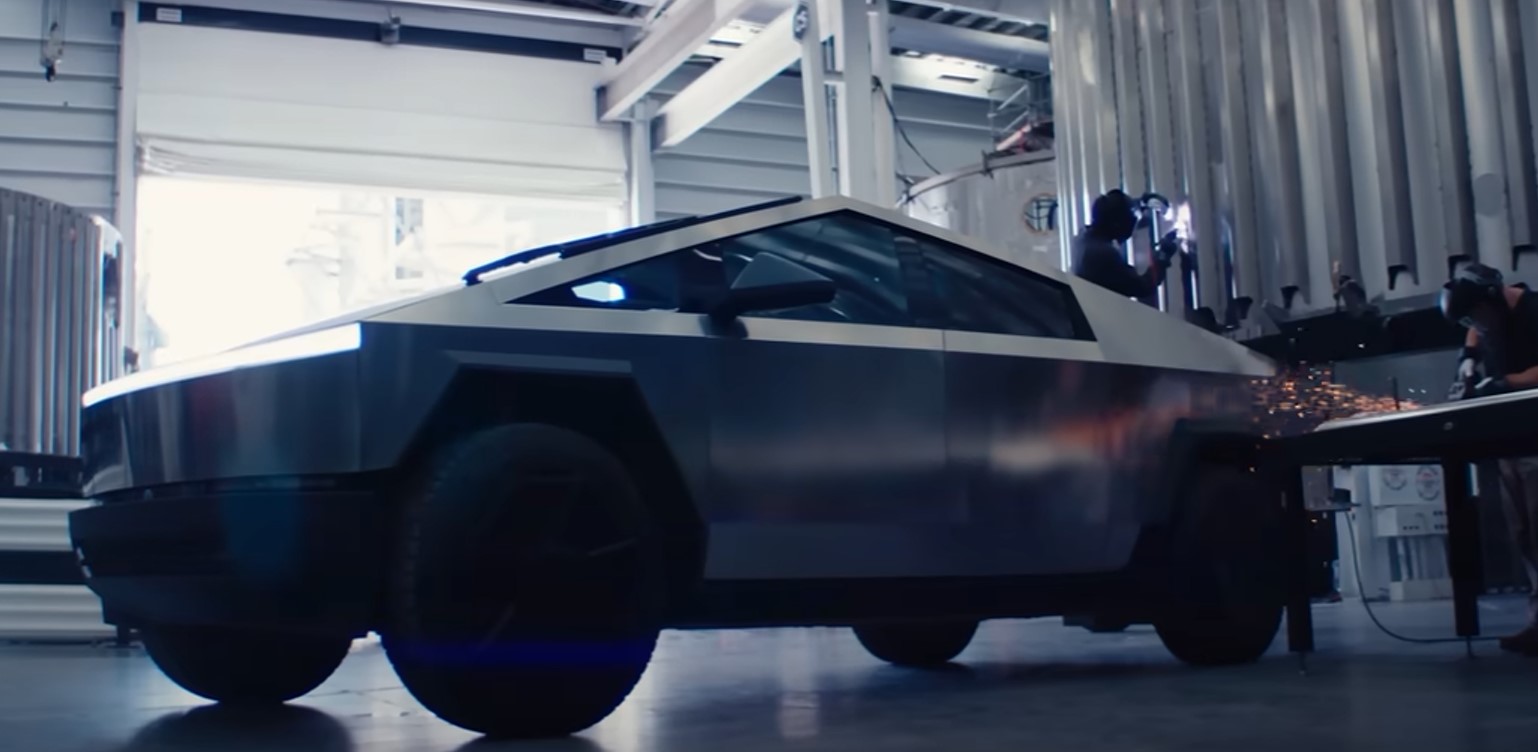
Safety concerns mount as experts question Tesla Cybertruck self-driving readiness

A Tesla Cybertruck in self-driving mode collided with a pole in Reno, Nevada, after failing to merge out of an ending lane. The crash occurred while using Tesla’s Full Self-Driving (FSD) software, which still requires human oversight.

The driver, Jonathan Challinger, reported potential mechanical issues and urged caution to others, warning about complacency when using the feature.

The incident has reignited debate over the safety of Tesla’s self-driving technology. Experts pointed to lane merging and sudden road changes as persistent challenges for AI-driven systems.

Tesla’s reliance on cameras alone, rather than redundant systems used by other automakers, has raised additional concerns about its ability to handle poor visibility or complex conditions.

CEO Elon Musk recently promoted the improved safety of the technology, dubbed Version 13, and announced plans to launch a paid robotaxi service later this year. The rollout will begin in Texas, where regulations on autonomous vehicles are minimal, followed by California and other regions in the US.

Experts argue that the crash highlights unresolved issues with the software, casting doubt on Tesla’s readiness for driverless operation.

A successful robotaxi programme is critical for Tesla’s growth amid slowing demand for its existing electric vehicle lineup. However, the Cybertruck crash has raised fresh questions about whether the company is pushing its self-driving technology too far, too soon.

For more information on these topics, visit diplomacy.edu.

US utilities boost spending to meet surging AI energy demand

US electric utilities are significantly increasing their capital investment plans to expand power generation and strengthen the grid as AI and cloud computing drive up electricity consumption.

Companies such as PPL Corp, Dominion, and Exelon have revised their spending plans upward, with PPL announcing a nearly 40% increase to $20 billion through 2028.

The surge in demand is largely fuelled by data centres, which are now being built at an unprecedented scale, reaching capacities of up to 1 gigawatt per site.

Utility executives have dismissed concerns that market disruptions, such as Chinese AI startup DeepSeek’s recent emergence, would weaken demand from major tech firms.

Instead, companies including American Electric Power (AEP) and Duke Energy have received assurances from technology customers that their expansion plans remain unchanged. AEP is considering adding $10 billion to its existing $54 billion capital plan, while Duke is increasing its five-year spending by $10 billion.

Rising demand for electricity is expected to reach record levels in the US by 2026, driven not only by data centres but also by manufacturing and electrification in sectors like transportation.

While utilities race to expand power supplies, regulatory approval remains a challenge, and increased investment could lead to higher electricity costs for households and businesses.

Some utilities are also exploring whether data centres should bear a greater share of the costs associated with grid expansion.

For more information on these topics, visit diplomacy.edu.

Taiwan President vows to address US semiconductor concerns

Taiwan‘s President Lai Ching-te has pledged to address concerns raised by former US President Donald Trump regarding Taiwan’s semiconductor industry. Speaking after a National Security Council meeting, Lai acknowledged the importance of global semiconductor supply chains and vowed to work with Taiwan’s semiconductor sector to develop strategies to address US concerns. He emphasised the need for democratic nations, including the US, to collaborate on creating a “democratic supply chain” for advanced chips, particularly in the growing AI sector.

Lai also reassured the US of Taiwan’s commitment to contributing to the international economy, noting that Taiwan, home to the world’s largest contract chipmaker, TSMC, plays a vital role in the semiconductor market. TSMC is heavily invested in the US, including a $65 billion investment in new factories in Arizona. Despite these efforts, Taiwan’s defence spending remains a topic of criticism, particularly from Trump, who has repeatedly highlighted Taiwan’s insufficient military expenditure amid increasing threats from China.

In response to US concerns, Lai revealed plans to propose a special budget to raise Taiwan’s defence spending from 2.5% of GDP to 3%. This proposal is currently being debated in parliament, where opposition parties hold a majority. Lai stressed that Taiwan’s determination to defend itself must be clear, as international allies continue to voice concerns over its defence readiness.

Finally, Lai reiterated Taiwan’s key role as a reliable trading partner to the US, especially in high-tech exports such as semiconductors. Taiwan’s trade surplus with the US surged by 83% last year, with exports reaching a record $111.4 billion.

For more information on these topics, visit diplomacy.edu.