Hackers have stolen $1.5 billion from Dubai-based cryptocurrency exchange Bybit in what is believed to be the largest digital heist in history. The attacker gained access to an Ethereum wallet during a routine transfer and moved the funds to an unknown address, sparking concerns across the cryptocurrency sector.
Bybit quickly reassured users that their funds remained secure, with chief executive Ben Zhou pledging to fully compensate affected customers. Despite this, the platform saw a surge of over 350,000 withdrawal requests, leading to potential delays. The company remains solvent, holding $20 billion in customer assets and is prepared to cover losses if necessary.
The price of Ethereum briefly dipped by nearly 4% following the breach but has since stabilised. Bybit has called upon leading cybersecurity experts to assist in recovering the stolen assets, offering a reward of up to $140 million. Speculation has emerged regarding the hackers’ identity, with reports suggesting possible links to the North Korean state-sponsored Lazarus group known for previous large-scale cryptocurrency thefts.
For more information on these topics, visit diplomacy.edu.
Elon Musk’s Starlink network is facing increasing competition in the satellite internet market, particularly from SpaceSail, a Shanghai-based company backed by the Chinese government, and Amazon’s Project Kuiper. SpaceSail is expanding rapidly, having entered Brazil in November and begun operations in Kazakhstan by January. Meanwhile, Brazil is also in talks with Project Kuiper and Canada’s Telesat to diversify its options for providing high-speed internet to remote areas.
SpaceSail plans to launch 648 low Earth orbit (LEO) satellites this year, with the ambition of deploying up to 15,000 by 2030. This move aims to compete directly with Starlink, which currently operates around 7,000 satellites but plans to increase its constellation to 42,000 by the end of the decade. China’s push into satellite internet is part of its broader strategy to dominate space and digital technologies, which has raised concerns among Western governments, particularly regarding Beijing’s potential to extend its censorship and surveillance reach globally.
China’s rapid expansion in satellite technology, supported by state funding and military research, has intensified. It has launched 263 LEO satellites in the past year alone, and researchers are focusing on low-latency systems to compete with Starlink’s capabilities. The Chinese government is also exploring ways to track and monitor satellite constellations, potentially targeting Starlink as a strategic competitor.
As competition in the satellite internet sector intensifies, particularly between the US, China, and other players like Brazil, the geopolitical and military implications of these space technologies are becoming clearer. With nations striving to secure positions in space, experts warn of an increasingly complex and competitive environment.
For more information on these topics, visit diplomacy.edu.
Apple has withdrawn its Advanced Data Protection (ADP) feature for cloud backups in Britain, citing government requirements.
Users attempting to enable the encryption service now receive an error message, while existing users will eventually have to deactivate it. The move weakens iCloud security in the country, allowing authorities access to data that would otherwise be encrypted.
Experts warn that the change compromises user privacy and exposes data to potential cyber threats. Apple has insisted it will not create a backdoor for encrypted services, as doing so would increase security risks.
The UK government has not confirmed whether it issued a Technical Capability Notice, which could mandate such access.
Apple’s decision highlights ongoing tensions between tech companies and governments over encryption policies. Similar legal frameworks exist in countries like Australia, raising concerns that other nations could follow suit.
Security advocates argue that strong encryption is essential for protecting user privacy and safeguarding sensitive information from cybercriminals.
For more information on these topics, visit diplomacy.edu.
Alibaba has announced plans to invest at least 380 billion yuan ($52.44 billion) in cloud computing and AI infrastructure over the next three years. This significant investment, revealed on Monday, follows the company’s earnings announcement on Friday, where it reported revenue of 280.15 billion yuan for the quarter ending December 31, slightly surpassing analysts’ expectations. The investment in AI and cloud computing will exceed the company’s total spending in these areas over the past decade.
The announcement marks a strategic push for Alibaba in the rapidly growing AI sector, positioning the company as a key player in China’s AI race. This has already paid off in the stock market, with Alibaba’s shares climbing over 68% so far this year, reflecting strong investor confidence. The move also comes as other Chinese tech giants, such as ByteDance, are making similar investments, with ByteDance reportedly allocating over 150 billion yuan this year to enhance its AI capabilities.
This wave of investment underscores the growing importance of AI and cloud computing to China’s tech landscape. It also highlights the competitive race between Chinese firms to dominate these sectors and secure their positions in the global technology arena.
For more information on these topics, visit diplomacy.edu.
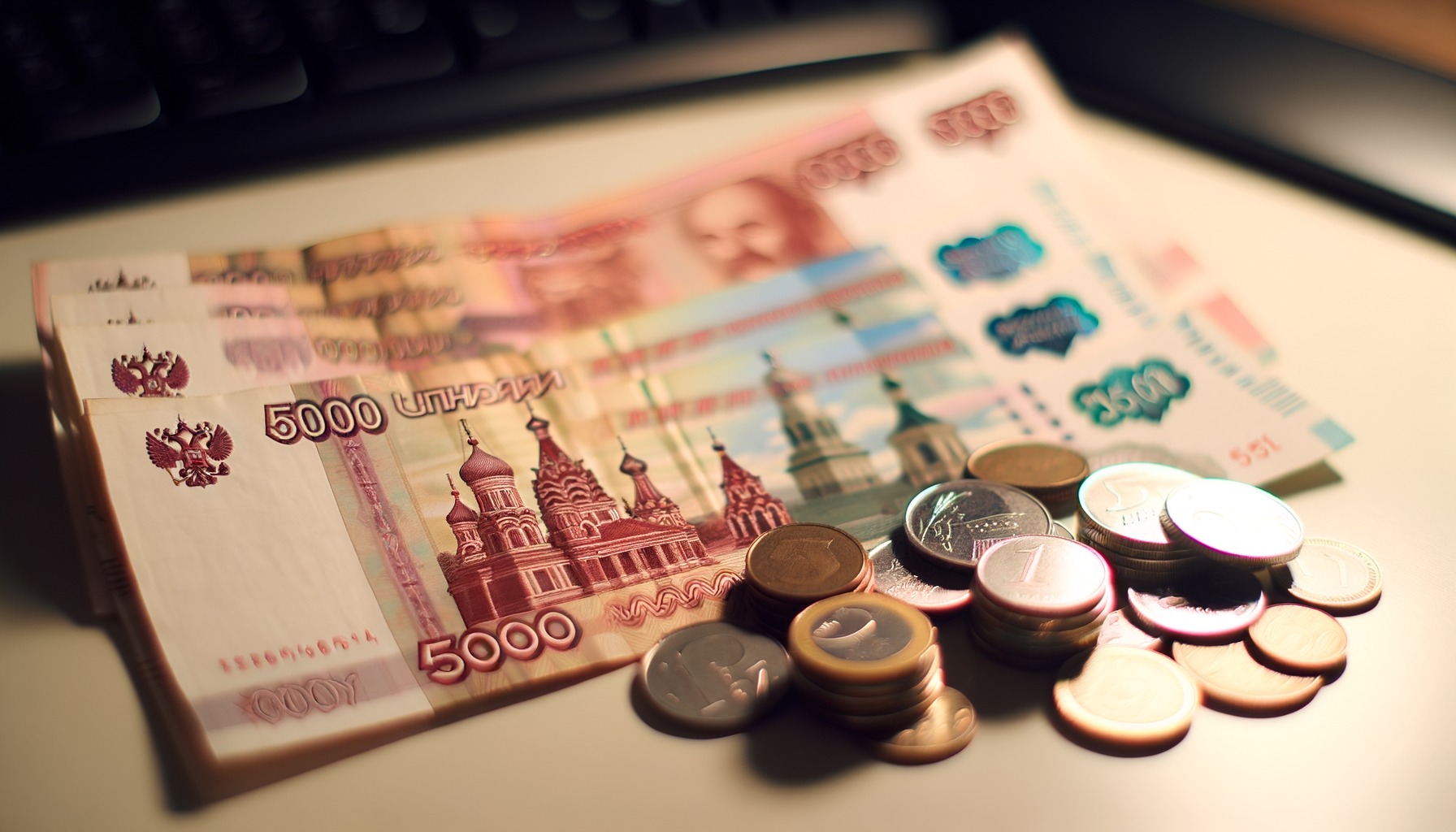
Russia’s Central Bank has launched an anti-fraud protection system for banks ahead of the planned rollout of its digital ruble (CBDC). The new measures, which came into effect on 23 February, aim to protect transactions involving the digital currency. Under the system, if a bank detects potential fraud, it can suspend a transaction for up to two days, allowing time for verification. Customers will be notified and asked to confirm the transaction before it proceeds.
The measures are primarily targeted at commercial and B2B users and are designed to reduce the risk of fraudulent activities. This builds on similar protections introduced last year for peer-to-peer transactions. The system includes a ‘cooling-off period’ to help users avoid hasty decisions that could lead to financial losses due to fraud.
Despite these efforts, concerns remain about the digital ruble’s impact on the banking sector. Some fear the CBDC could reduce liquidity for commercial banks, while others worry about its mandatory use for certain groups, such as pensioners. The Central Bank has denied these claims, asserting that the digital ruble will be voluntary for citizens.
As Russia prepares for a full digital ruble launch later this year, experts continue to question the technical and organisational challenges of mass adoption, especially for businesses and banks.
For more information on these topics, visit diplomacy.edu.
OpenAI has removed accounts linked to users in China and North Korea over concerns they were using ChatGPT for malicious activities.
The company cited cases of AI-generated content being used for surveillance, influence campaigns, and fraudulent schemes. AI tools were employed to detect the operations.
Some accounts produced news articles in Spanish that criticised the US and were later published under a Chinese company’s byline. Others, potentially connected to North Korea, created fake resumes and online profiles in an attempt to secure jobs at Western firms.
A separate operation, believed to be tied to financial fraud in Cambodia, used ChatGPT to generate and translate comments on social media.
The US government has raised concerns over China’s use of AI to spread misinformation and suppress its population. Security risks associated with AI-driven disinformation and fraudulent activities have led to increased scrutiny of how such tools are being used globally.
OpenAI’s ChatGPT remains the most widely used AI chatbot, with over 400 million weekly active users. The company is also in discussions to secure up to $40 billion in funding, which could set a record for a private firm.
For more information on these topics, visit diplomacy.edu.
US drugmaker Amgen has announced a $200 million investment in a new technology centre in southern India, which will focus on using AI and data science to support the development of new medicines. The centre, located in Hyderabad, is expected to have a workforce of around 2,000 by the end of the year, with 300 employees already on-site. Amgen plans to make additional investments in the coming years as part of its ongoing expansion in India.
Amgen’s decision to invest in India reflects the growing importance of the country in the global pharmaceutical industry, often referred to as the ‘pharmacy of the world.’ The company’s new centre aligns with broader efforts by global pharmaceutical companies to increase their presence in India. The BioAsia conference in Hyderabad will feature executives from major drugmakers, including Amgen, Eli Lilly, and Novartis.
Amgen’s move comes amid heightened cooperation between India and the US, which recently launched discussions for an early trade deal. A key focus of these talks is to promote collaboration in critical and emerging technologies, which includes areas like pharmaceuticals. US officials have praised Amgen’s expansion as a model for how both countries can work together to harness innovation and technology.
For more information on these topics, visit diplomacy.edu.
Australia’s eSafety Commission has fined messaging platform Telegram A$1 million ($640,000) for failing to respond promptly to questions regarding measures it took to prevent child abuse and extremist content. The Commission had asked social media platforms, including Telegram, to provide details on their efforts to combat harmful content. Telegram missed the May 2024 deadline, submitting its response in October, which led to the fine.
eSafety Commissioner Julie Inman Grant emphasised the importance of timely transparency and adherence to Australian law. Telegram, however, disagreed with the penalty, stating that it had fully responded to the questions, and plans to appeal the fine, which it claims was solely due to the delay in response time.
The fine comes amid increasing global scrutiny of Telegram, with growing concerns over its use by extremists. Australia’s spy agency recently noted that a significant portion of counter-terrorism cases involved youth, highlighting the increasing risk posed by online extremist content. If Telegram does not comply with the penalty, the eSafety Commission could pursue further legal action.
For more information on these topics, visit diplomacy.edu.
Huawei’s founder Ren Zhengfei told President Xi Jinping that China’s concerns about a lack of domestically developed chips and operating systems have eased, following a meeting with key entrepreneurs. According to Chinese state media, Ren expressed confidence that China would rise faster, thanks to its advancements in technology, particularly in semiconductors and software. The phrase ‘lack of core and soul,’ which refers to the absence of critical technology like chips and operating systems, was first used in 1999 to highlight challenges in China’s information industry.
The meeting, which included prominent founders such as BYD’s Wang Chuanfu and Xiaomi’s Lei Jun, discussed the achievements and growth in sectors like electric vehicles and electronics. Ren’s comments reflected the progress made despite challenges like US sanctions, with Huawei playing a key role in pushing for China’s self-sufficiency. Wang shared how China’s EV industry had grown significantly, while Lei praised Xi’s leadership, stating that under his guidance, any challenges could be overcome.
Other entrepreneurs, including representatives from Will Semiconductor, Unitree Robotics, and New Hope Group, also spoke at the meeting, although details about their comments were not widely disclosed. The meeting was part of a broader push for China to strengthen its technological independence.
For more information on these topics, visit diplomacy.edu.
The rise of quantum computing poses a serious threat to modern encryption systems, with experts warning that critical digital infrastructure could become vulnerable once quantum devices reach sufficient power.
Unlike classical computers that process binary bits, quantum computers use qubits, allowing them to perform vast numbers of calculations simultaneously.
This capability could make breaking widely used encryption methods, like RSA, possible in minutes—something that would take today’s computers thousands of years.
Although quantum systems powerful enough to crack encryption may still be years away, there is growing concern that hackers could already be collecting encrypted data to decode it once the technology catches up.
Sensitive information—such as national security data, intellectual property, and personal records—could be at risk. In response, the US National Institute of Standards and Technology has introduced new post-quantum encryption standards and is encouraging organisations to transition swiftly, though the scale of the upgrade needed across global infrastructure remains immense.
Updating web browsers and modern devices may be straightforward, but older systems, critical infrastructure, and the growing number of Internet of Things (IoT) devices pose significant challenges.
Satellites, for instance, vary in how easily they can be upgraded, with remote sensing satellites often requiring full replacements. Cybersecurity experts stress the need for ‘crypto agility’ to make the transition manageable, aiming to avoid a chaotic scramble once quantum threats materialise.
For more information on these topics, visit diplomacy.edu.