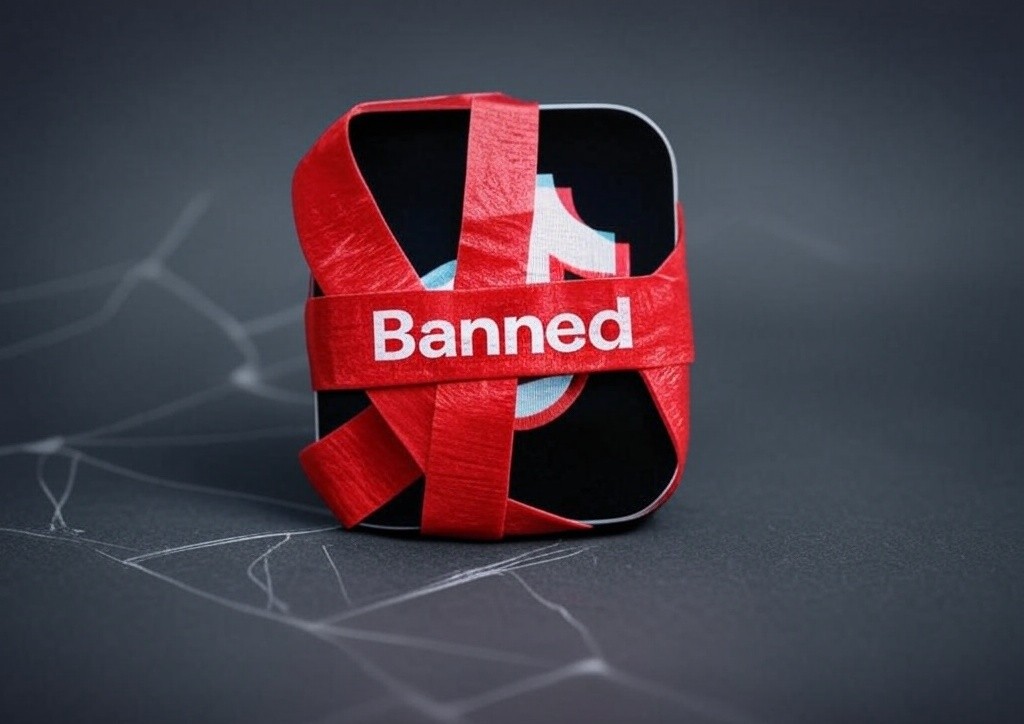
For many creators, TikTok has become more than just a platform for viral trends—it’s their livelihood. Beauty content creator Leila Nikea left her job as a make-up artist three years ago to focus solely on TikTok, tripling her income and even buying her first home.
Yet, uncertainty surrounding TikTok’s future has left her anxious, especially after the recent threat of a US ban over national security concerns. Although the ban was briefly implemented and then postponed, ongoing scrutiny has made creators like Leila fear for their financial stability.
Musicians Howard and George, known as The Whiskey Brothers, share similar concerns. After nearly two decades performing as a wedding band, TikTok finally gave them a platform to reach new audiences with their original music.
Their growing following led to their first official gig under their new name. However, the prospect of future bans has cast a shadow over their plans, making them question the long-term sustainability of their careers on TikTok.
Veteran tech influencer Safwan Ahmedmia, better known as SuperSaf, has already faced the consequences of a TikTok ban when India blocked the app in 2020, costing him thousands of followers. Now, he spreads his content across multiple platforms, advising fellow creators to do the same.
As debates over TikTok’s data privacy and security continue worldwide, creators are increasingly aware of the fragility of their digital careers. While many remain committed to their passions, the platform’s instability serves as a stark reminder of the risks tied to relying on a single app for income.
For more information on these topics, visit diplomacy.edu.
Estonia, a small Baltic nation with a population of 1.4 million, has emerged as a leader in the rush to fund defence projects in response to Russia’s 2022 invasion of Ukraine. With heightened security concerns in the region, particularly among the Baltic states that share a border with Russia, Estonia has leveraged its thriving tech sector to fuel investment in defence technologies. The war has created an urgent need for innovation, prompting tech entrepreneurs such as Sten Tamkivi, a former Skype executive, to direct investment towards defence, European sovereignty, and security solutions.
Estonia’s role in supporting emerging defence companies is made possible by the country’s strong network of tech unicorns and wealthy entrepreneurs. With companies like Skype, TransferWise, and Bolt originating from Estonia, local tech executives have the financial resources to invest in critical military technologies. Moreover, Estonia’s proximity to Ukraine allows for rapid collaboration on the frontlines, testing new technologies such as AI-driven defence tools and drones. This has positioned the country as a central player in Europe’s defence tech landscape, with the number of defence-focused funding rounds in Eastern Europe growing sharply since the war began.
Across Central and Eastern Europe, the growing interest in defence tech is evident, with funds like Presto Ventures in Prague also tapping into the sector. The Czech Republic has launched initiatives to support small enterprises in defence, while Estonia has introduced a 100 million euro fund to support the development of its own defence tech ecosystem. Estonia’s longer-term goal is to reach 2 billion euros in defence tech revenue by 2030, focusing on disruptive, offensive technologies.
The region’s defence tech startups are benefiting from a shift in investor sentiment, with venture capital pouring into areas like AI, quantum computing, and cybersecurity. Despite initial doubts about the sector’s growth, the continuing conflict in Ukraine has ensured that defence technology remains a critical priority.
For more information on these topics, visit diplomacy.edu.
According to Bitcoin exchange River, Microsoft’s latest quantum computing chip, Majorana 1, could accelerate the timeline for making Bitcoin resistant to quantum threats. While the risk of a quantum attack remains distant, experts warn that preparations must begin now. The chip, launched on 19 February, is part of a growing race in quantum technology, with Google’s Willow chip also making headlines in December.
River suggests that if quantum computers reach one million qubits by 2027-2029, they could crack Bitcoin addresses in long-range attacks. Though some argue such a scenario is still decades away, River insists early action is key. The potential threat has reignited discussions on BIP-360, a proposed upgrade to strengthen Bitcoin’s defences against future quantum advancements.
Critics remain sceptical, arguing that quantum computing is still in its infancy, with major technical challenges to overcome. Some believe traditional banking systems, which hold far greater assets than Bitcoin, would be targeted first. Others see quantum developments as an opportunity, suggesting they could help fortify Bitcoin’s security rather than weaken it.
For more information on these topics, visit diplomacy.edu.
Reddit users worldwide experienced disruptions on Thursday, with thousands reporting difficulties accessing the platform. According to NetBlocks, a global internet watchdog, the outage was not linked to any government-level restrictions. Reports on Downdetector spiked to around 56,000 at their peak, with many users taking to social media to express frustration.
Despite widespread complaints, Reddit’s official status page showed no recorded incidents, and the company has yet to provide an explanation. Some users reported that the platform worked fine for them, particularly those using older versions or alternative browsing methods.
By Thursday evening, reports of issues had significantly dropped, and services seemed to return to normal. While the outage was brief, it highlights the growing reliance on online platforms and the disruptions that even short technical failures can cause.
For more information on these topics, visit diplomacy.edu.
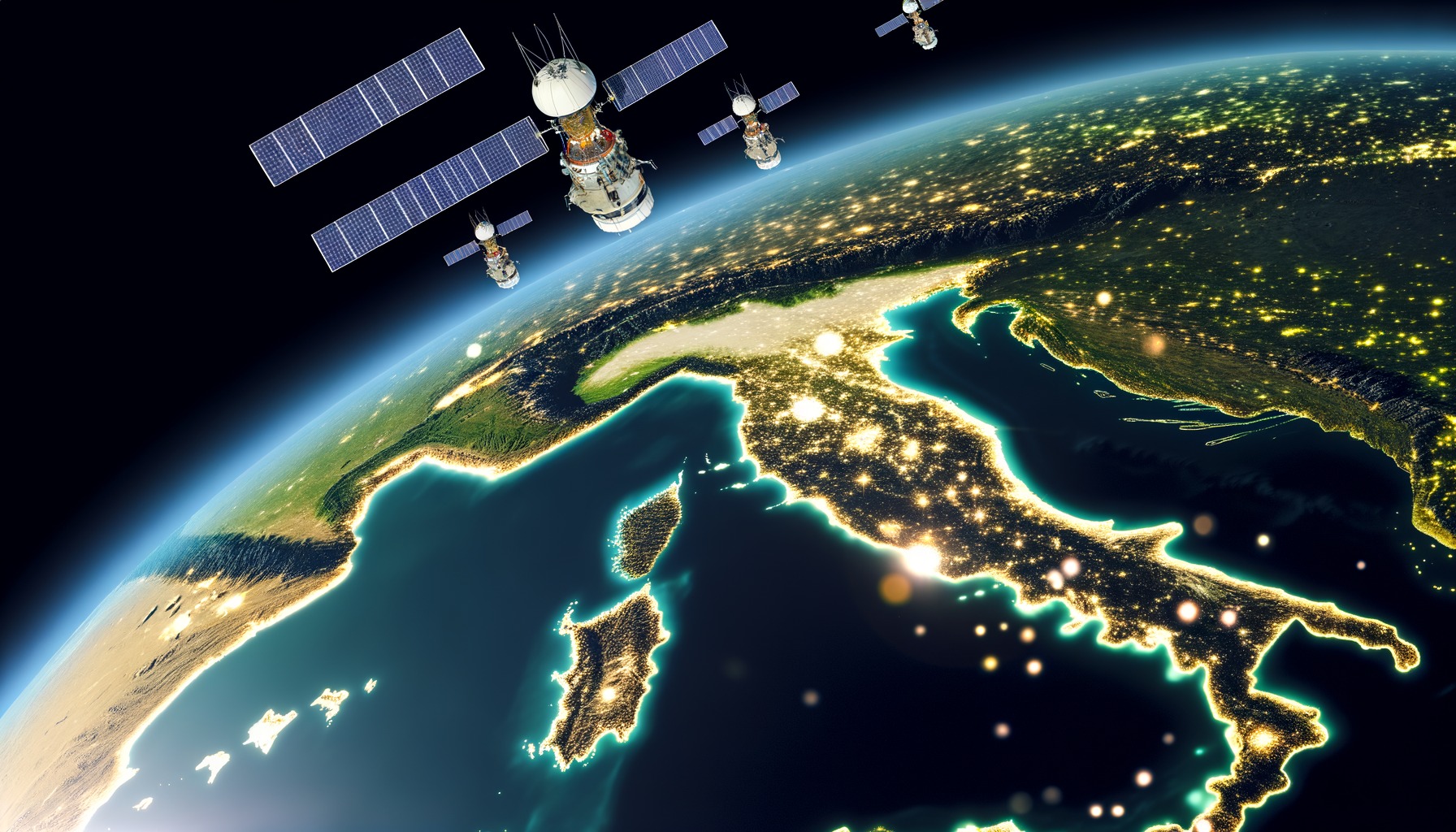
Italy is planning to develop its own low-orbit satellite system to secure government communications, aiming to reduce reliance on foreign providers like Elon Musk’s Starlink. Industry Minister Adolfo Urso announced the initiative, positioning it as a competitive alternative to global networks and a step towards greater national security.
The project will involve leading Italian companies, with the national space agency conducting a feasibility study to guide development.
The move comes after the government previously considered using Starlink for encrypted communications in high-risk zones. However, the idea sparked criticism from opposition figures who raised concerns about national security and questioned the wisdom of involving a foreign entrepreneur closely tied to US interests.
Though Musk expressed willingness to collaborate with Italy, Defence Minister Guido Crosetto confirmed that no formal agreement had been made.
While Starlink currently operates around 6,700 satellites in low Earth orbit and reportedly discussed a potential €1.5 billion five-year deal with Italy, the government appears determined to pursue a homegrown solution.
By building its own satellite network, Italy hopes to safeguard sensitive communications and strengthen its technological independence in the long term.
For more information on these topics, visit diplomacy.edu.
The European Commission has approved a €920 million German state aid package for Infineon to build a new semiconductor manufacturing plant in Dresden. This funding will support the company’s MEGAFAB-DD project, which aims to produce a wide variety of chips. The new facility, expected to reach full capacity by 2031, will play a key role in strengthening Europe’s technological autonomy and security of supply in semiconductor technologies, aligning with the European Chips Act’s goals.
This move is part of a global trend where chipmakers are investing heavily in new plants, taking advantage of subsidies from the US and the EU to maintain the West’s edge in semiconductor technology over China. The European Commission has allocated €15 billion for public and private semiconductor projects by 2030, further reinforcing the region’s commitment to securing its position in the industry.
Infineon’s €3.5 billion investment, the largest in its history, will help address the growing demand for semiconductors used in industrial, automotive, and consumer applications. The company has committed to ensuring the plant benefits the wider EU semiconductor value chain, including research and development for the next generation of chips. The plant will also contribute to crisis preparedness by prioritising orders in case of supply shortages.
For more information on these topics, visit diplomacy.edu.
Apple has introduced its first custom-designed modem chip, marking a significant step towards reducing reliance on Qualcomm. The new chip, a part of Apple’s C1 subsystem, debuts in the $599 iPhone 16e and will eventually be integrated across other products.
The C1 subsystem includes advanced components like processors and memory, offering better battery life and enhanced artificial intelligence features.
Apple has ensured the modem is globally compatible, testing it with 180 carriers in 55 countries. Executives highlight its ability to prioritise network traffic for smoother performance, setting it apart from competitors.
Modem development is highly complex, with few companies achieving global compatibility. Apple previously relied on Qualcomm but resolved to design its own platform after legal disputes and challenges with alternative suppliers.
The C1 subsystem represents Apple’s strategy to tightly integrate modem technology with its processors for long-term product differentiation.
Apple’s senior hardware executives described the C1 as their most complex creation, combining cutting-edge chipmaking techniques. The new platform underscores Apple’s focus on control and innovation in core technologies.
For more information on these topics, visit diplomacy.edu.
Microsoft has announced a groundbreaking quantum computing chip, Majorana 1, which it claims could make useful quantum computers a reality within years. The company believes this innovation puts it ahead in the race to unlock quantum computing’s vast potential.
Unlike classical computers, quantum systems could perform calculations in fields like medicine and chemistry that would otherwise take millions of years, although they also pose risks to current encryption standards.
The Majorana 1 chip relies on a particle called the Majorana fermion, theorised in the 1930s. Microsoft says its unique design makes the chip less error-prone than its competitors.
Despite having fewer qubits than chips from Google and IBM, the company argues that the lower error rates mean fewer qubits are needed for practical applications.
Microsoft’s development of Majorana 1 combines advanced materials like indium arsenide and aluminium, using a superconducting nanowire to observe and control the Majorana particles.
Fabricated at its labs in Washington and Denmark, the chip was described as a ‘high risk, high reward’ endeavour by Jason Zander, a senior Microsoft executive.
Quantum physicist Philip Kim from Harvard University praised the innovation, calling it an exciting step forward. While scaling up the technology remains a challenge, experts suggest Microsoft’s approach could lead to significant advancements in quantum computing.
For more information on these topics, visit diplomacy.edu.
President Donald Trump confirmed on Wednesday that he was in active discussions with China over the future of TikTok, as the US seeks to broker a sale of the popular app. Speaking to reporters aboard Air Force One, Trump revealed that talks were ongoing, underscoring the US government’s desire to address national security concerns tied to the app’s ownership by the Chinese company ByteDance. The move comes amid growing scrutiny over TikTok’s data security practices and potential links to the Chinese government.
The Trump administration has expressed concerns that TikTok could be used to collect sensitive data on US users, raising fears about national security risks. As a result, the US has been pushing for ByteDance to sell TikTok’s US operations to an American company. This would be part of an effort to reduce any potential influence from the Chinese government over the app’s data and operations. However, the process has faced complexities, with discussions involving multiple stakeholders, including potential buyers.
While the negotiations continue, the future of TikTok remains uncertain. If a sale is not agreed upon, the US has indicated that it could pursue further actions, including a potential ban of the app. As these talks unfold, the outcome could have significant implications for TikTok’s millions of American users and its business operations in the US, with both sides working to find a solution that addresses the security concerns while allowing the app to continue its success.
For more information on these topics, visit diplomacy.edu.
Resonac Holdings, a leading chip materials maker in Japan, is positioning itself to make strategic acquisitions after reducing its borrowing, according to CEO Hidehito Takahashi. Speaking to Reuters, Takahashi expressed the company’s intention to take an aggressive approach this year, particularly eyeing opportunities when a state-backed fund exits its competitor JSR, a photoresist maker recently taken private.
Resonac, formed by Showa Denko’s acquisition of Hitachi Chemical, has been divesting assets, including a planned partial spin-off of its petrochemical business. Takahashi sees JSR’s potential exit as a key opportunity for Resonac to expand its footprint in the semiconductor materials sector. Japan’s semiconductor market remains competitive, despite the country’s reduced role in chip manufacturing, and companies like Resonac must scale up to remain viable.
In addition to its expansion efforts, Resonac is establishing an R&D centre in Silicon Valley to strengthen its ties with firms in the region. However, Takahashi made it clear that the company is not currently considering manufacturing materials in the US, though future demand could prompt a reassessment of such plans.
For more information on these topics, visit diplomacy.edu.