Superhuman, formerly known as Grammarly, is bundling its writing tools, workspace platform, and email client with a new AI assistant suite. The company says the rebrand reflects a push to unify generative AI features that streamline workplace tasks and online communication for subscribers.
Grammarly acquired Coda and Superhuman Mail earlier this year and added Superhuman Go. The bundle arrives as a single plan. Go’s agents brainstorm, gather information, send emails, and schedule meetings to reduce app switching.
Superhuman Mail organises inboxes and drafts replies in your voice. Coda pulls data from other apps into documents, tables, and dashboards. An upcoming update lets Coda act on that data to automate plans and tasks.
CEO Shishir Mehrotra says the aim is ambient, integrated AI. Built on Grammarly’s infrastructure, the tools work in place without prompting or pasting. The bundle targets teams seeking consistent AI across writing, email, and knowledge work.
Analysts will watch brand overlap with the existing Superhuman email app and enterprise pricing. Success depends on trust, data controls, and measurable time savings versus point tools. Rollout specifics, including regions, will follow.
Would you like to learn more about AI, tech, and digital diplomacy? If so, ask our Diplo chatbot!
The US tech giant, Microsoft, has resolved a global outage affecting its Azure cloud services, which disrupted access to Office 365, Minecraft, and numerous other websites.
The company attributed the incident to a configuration change that triggered DNS issues, impacting businesses and consumers worldwide.
An outage that affected high-profile services, including Heathrow Airport, NatWest, Starbucks, and New Zealand’s police and parliament websites.
Microsoft restored access after several hours, but the event highlighted the fragility of the internet due to the concentration of cloud services among a few major providers.
Experts noted that reliance on platforms such as Azure, Amazon Web Services, and Google Cloud creates systemic risks. Even minor configuration errors can ripple across thousands of interconnected systems, affecting payment processing, government operations, and online services.
Despite the disruption, Microsoft’s swift fix mitigated long-term impact. The company reiterated the importance of robust infrastructure and contingency planning as the global economy increasingly depends on cloud computing.
Would you like to learn more aboutAI, tech and digital diplomacy? If so, ask our Diplo chatbot!
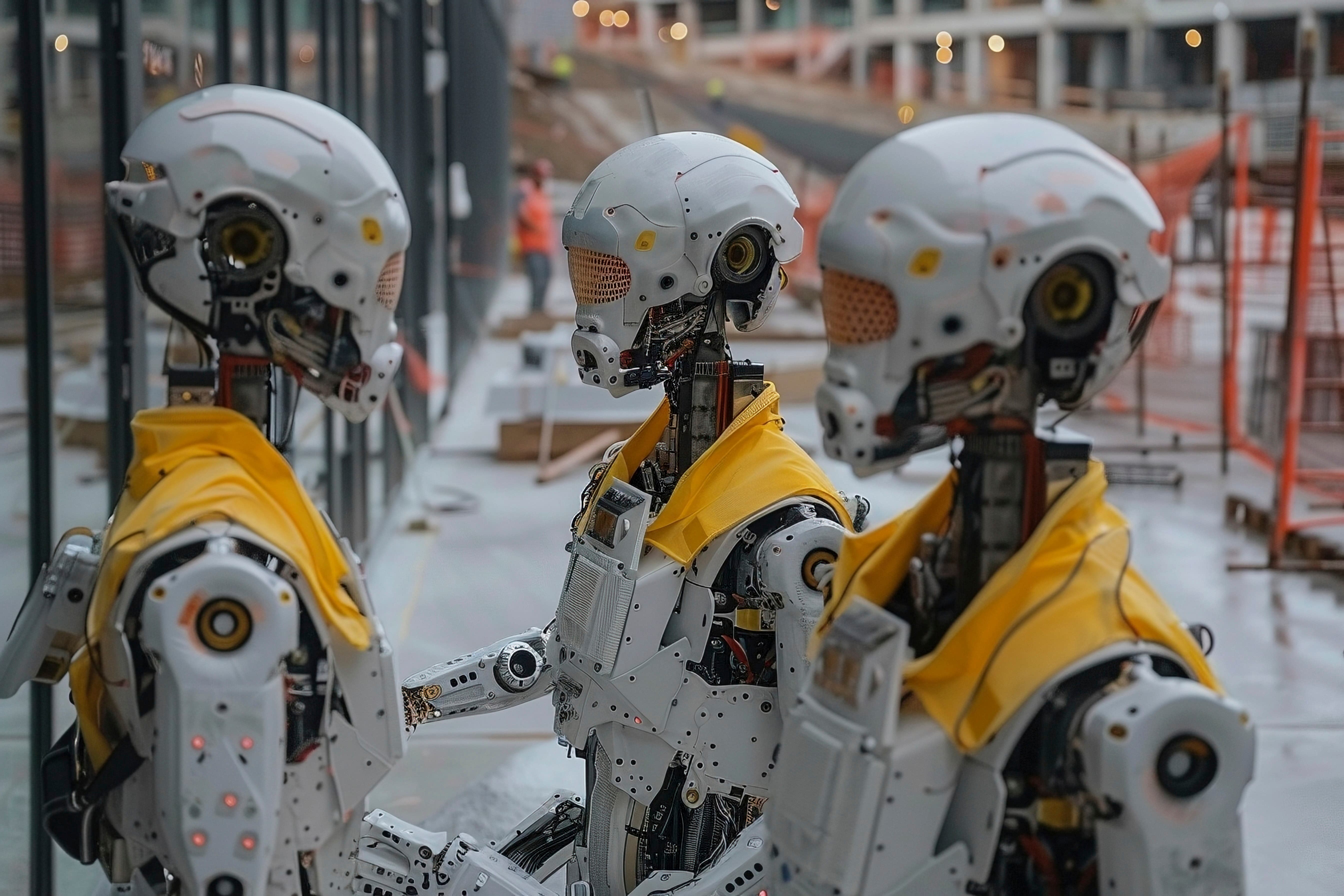
Foxconn will add humanoid robots to a new Houston plant building Nvidia AI servers from early 2026. Announced at Nvidia’s developer conference, the move deepens their partnership and positions the site as a US showcase for AI-driven manufacturing.
Humanoid systems based on Nvidia’s Isaac GR00T N are built to perceive parts, adapt on the line, and work with people. Unlike fixed industrial arms, they handle delicate assembly and switch tasks via software updates. Goals include flexible throughput, faster retooling, and fewer stoppages.
AI models are trained in simulation using digital twins and reinforcement learning to improve accuracy and safety. On the line, robots self-tune as analytics predict maintenance and balance workloads, unlocking gains across logistics, assembly, testing, and quality control.
Texas, US, offers proximity to a growing semiconductor and AI cluster, as well as policy support for domestic capacity. Foxconn also plans expansions in Wisconsin and California to meet global demand for AI servers. Scaling output should ease supply pressures around Nvidia-class compute in data centres.
Job roles will shift as routine tasks automate and oversight becomes data-driven. Human workers focus on design, line configuration, and AI supervision, with safety gates for collaboration. Analysts see a template for Industry 4.0 factories running near-continuously with rapid changeovers.
Would you like to learn more about AI, tech, and digital diplomacy? If so, ask our Diplo chatbot!
Luke Temple woke to messages about a new Here We Go Magic track he never made. An AI-generated song appeared on the band’s Spotify, Tidal, and YouTube pages, triggering fresh worries about impersonation as cheap tools flood platforms.
Platforms say defences are improving. Spotify confirmed the removal of the fake track and highlighted new safeguards against impersonation, plus a tool to flag mismatched releases pre-launch. Tidal said it removed the song and is upgrading AI detection. YouTube did not comment.
Industry teams describe a cat-and-mouse race. Bad actors exploit third-party distributors with light verification, slipping AI pastiches into official pages. Tools like Suno and Udio enable rapid cloning, encouraging volume spam that targets dormant and lesser-known acts.
Per-track revenue losses are tiny, reputational damage is not. Artists warn that identity theft and fan confusion erode trust, especially when fakes sit beside legitimate catalogues or mimic deceased performers. Labels caution that volume is outpacing takedowns across major services.
Proposed fixes include stricter distributor onboarding, verified artist controls, watermark detection, and clear AI labels for listeners. Rights holders want faster escalation and penalties for repeat offenders. Musicians monitor profiles and report issues, yet argue platforms must shoulder the heavier lift.
Would you like to learn more about AI, tech, and digital diplomacy? If so, ask our Diplo chatbot!
Pinterest is giving boards an AI upgrade, adding smarter recommendations, fresher layouts, and built-in shopping to help users move from ideas to action worldwide over the coming months.
New tabs tailor each board: Make it yours for fashion and some home decor, More ideas for categories like beauty or recipes, and All saves as a single place to find everything previously pinned.
In the US and Canada, Styled for you creates dynamic AI collages from saved fashion Pins, letting people mix and match apparel and accessories, preview outfits, and shop items that fit their taste.
Pinterest is also testing Boards made for you, personalised boards curated with editorial input and AI picks, delivered to home feeds and inboxes, featuring trending styles, weekly outfit ideas, and shoppable looks.
Executives say boards remain central to Pinterest’s experience; the new AI features aim to act like a personal shopping assistant while keeping curation simple and privacy-respecting by design.
Would you like to learn more about AI, tech, and digital diplomacy? If so, ask our Diplo chatbot!
AI could shorten the workweek, says Zoom’s Eric Yuan. At TechCrunch Disrupt, he pitched AI ‘digital twins’ that attend meetings, negotiate drafts, and triage email, arguing assistants will shoulder routine tasks so humans focus on judgement.
Yuan has already used an AI avatar on an investor call to show how a stand-in can speak on your behalf. He said Zoom will keep investing heavily in assistants that understand context, prioritise messages, and draft responses.
Use cases extend beyond meetings. Yuan described counterparts sending their digital twins to hash out deal terms before principals join to resolve open issues, saving hours of live negotiation and accelerating consensus across teams and time zones.
Zoom plans to infuse AI across its suite, including whiteboards and collaborative docs, so work moves even when people are offline. Yuan said assistants will surface what matters, propose actions, and help execute routine workflows securely.
If adoption scales, Yuan sees schedules changing. He floated a five-year goal where many knowledge workers shift to three or four days a week, with AI increasing throughput, reducing meeting load, and improving focus time across organisations.
Would you like to learn more about AI, tech and digital diplomacy? If so, ask our Diplo chatbot!
NextEra Energy and Google have launched a major collaboration to accelerate nuclear energy deployment in the United States, anchored by the planned restart of the Duane Arnold Energy Centre in Iowa. The plant has been offline since 2020 and is slated to be back online by early 2029.
Under their agreement, Google will purchase the plant’s energy output through a 25-year power purchase agreement (PPA). Additionally, NextEra plans to acquire the remaining minority stakes in Duane Arnold to gain full ownership.
Central Iowa Power Cooperative, which currently holds part of the facility, will secure the output under the same terms.
As the energy needs of AI and cloud computing infrastructure surge, the Duane Arnold partnership positions nuclear power as a reliable, carbon-free baseload resource.
The revival is expected to bring substantial economic benefits: thousands of direct and indirect jobs during construction and operation, and over US$9 billion in regional economic impact.
Beyond Iowa, Google and NextEra will explore broader nuclear development opportunities across the US, including next-generation technologies to meet long-term demand.
Would you like to learn more about AI, tech and digital diplomacy? If so, ask our Diplo chatbot!
Plans are being rolled out for a €1 billion data centre in Germany to bolster Europe’s AI infrastructure, with Nvidia and Deutsche Telekom set to co-fund the project.
The facility is expected to serve enterprise customers, including SAP SE, Europe’s largest software company, and to deploy around 10,000 advanced chips known as graphics processing units (GPUs).
While significant for Europe, the build is modest compared with gigawatt-scale sites elsewhere, highlighting the region’s push to catch up with US and Chinese capacity.
An announcement is anticipated next month in Berlin alongside senior industry and government figures, with Munich identified as the planned location.
The move aligns with the EU efforts to expand AI compute, including the €200 billion initiative announced in February to grow capacity over the next five to seven years.
Would you like to learn more about AI, tech and digital diplomacy? If so, ask our Diplo chatbot!
Qualcomm unveiled AI200 and AI250 data-centre accelerators aimed at high-throughput, low-TCO generative AI inference. AI200 targets rack-level deployment with high performance per pound per watt and 768 GB LPDDR per card for large models.
AI250 introduces a near-memory architecture that boosts adequate memory bandwidth by over tenfold while lowering power draw. Qualcomm pitches the design for disaggregated serving, improving hardware utilisation across large fleets.
Both arrive as full racks with direct liquid cooling, PCIe for scale-up, Ethernet for scale-out, and confidential computing. Qualcomm quotes around 160 kW per rack for thermally efficient, dense inference.
A hyperscaler-grade software stack spans apps to system software with one-click onboarding of Hugging Face models. Support covers leading frameworks, inference engines, and optimisation techniques to simplify secure, scalable deployments.
Commercial timing splits the roadmap: AI200 in 2026 and AI250 in 2027. Qualcomm commits to an annual cadence for data-centre inference, aiming to lead in performance, energy efficiency, and total cost of ownership.
Would you like to learn more about AI, tech and digital diplomacy? If so, ask our Diplo chatbot!
HUMAIN and Qualcomm Technologies have launched a collaboration to deploy advanced AI infrastructure in Saudi Arabia, aiming to position the Kingdom as a global hub for AI.
Announced ahead of the Future Investment Initiative conference, the project will deliver the world’s first fully optimised edge-to-cloud AI system, expanding Saudi Arabia’s regional and global inferencing services capabilities.
In 2026, HUMAIN plans to deploy 200 megawatts of Qualcomm’s AI200 and AI250 rack solutions to power large-scale AI inference services.
The partnership combines HUMAIN’s regional infrastructure and full AI stack with Qualcomm’s semiconductor expertise, creating a model for nations seeking to develop sovereign AI ecosystems.
However, the initiative will also integrate HUMAIN’s Saudi-developed ALLaM models with Qualcomm’s AI platforms, offering enterprise and government customers tailor-made solutions for industry-specific needs.
The collaboration supports Saudi Arabia’s strategy to drive economic growth through AI and semiconductor innovation, reinforcing its ambition to lead the next wave of global intelligent computing.
Qualcomm’s CEO Cristiano Amon said the partnership would help the Kingdom build a technology ecosystem to accelerate its AI ambitions.
HUMAIN CEO Tareq Amin added that combining local insight with Qualcomm’s product leadership will establish Saudi Arabia as a key player in global AI and semiconductor development.
Would you like to learn more aboutAI, tech and digital diplomacy? If so, ask our Diplo chatbot!