Coinbase Ventures has shared the ideas its team is most excited about for 2026, highlighting areas with high potential for innovation in crypto and blockchain. Key sectors include asset tokenisation, specialised exchanges, next-generation DeFi, and AI-driven robotics.
The firm is actively seeking teams to invest in these emerging opportunities.
Perpetual contracts on real-world assets are set to expand, enabling synthetic exposure to private companies, commodities, and macroeconomic data. Specialised exchanges and trading terminals aim to consolidate liquidity, protect market makers, and improve the prediction market user experience.
Next-gen DeFi will expand with composable perpetual markets, unsecured lending, and privacy-focused applications. These developments could redefine capital efficiency, financial infrastructure, and user confidentiality across the ecosystem.
AI and robotics are also a focus, with projects targeting advanced robotic data collection, proof-of-humanity solutions, and AI-driven innovative contract development. Coinbase Ventures emphasises the potential for these technologies to accelerate on-chain adoption and innovation.
Would you like to learn more about AI, tech and digital diplomacy? If so, ask our Diplo chatbot!
EU regulators are preparing for a significant shift in crypto oversight as new rules take effect on 1 January 2026. Crypto providers must report all customer transactions and holdings in a uniform digital format, giving tax authorities broader visibility across the bloc.
The DAC8 framework brings mandatory cross-border data sharing, a centralised operator register and unique ID numbers for each reporting entity. These measures aim to streamline supervision and enhance transparency, even though data on delisted firms must be preserved for up to twelve months.
Privacy concerns are rising as the new rules expand the travel rule for transfers above €1,000 and introduce possible ownership checks on private wallets. Combined with MiCA and upcoming AML rules, regulators gain deeper insight into user behaviour, wallet flows and platform operations.
Plans for ESMA to oversee major exchanges are facing pushback from smaller financial hubs, which are concerned about higher compliance costs and reduced competitiveness. Supporters argue that unified supervision is necessary to prevent regulatory gaps and reinforce market integrity across the EU.
Would you like to learn more about AI, tech and digital diplomacy? If so, ask our Diplo chatbot!
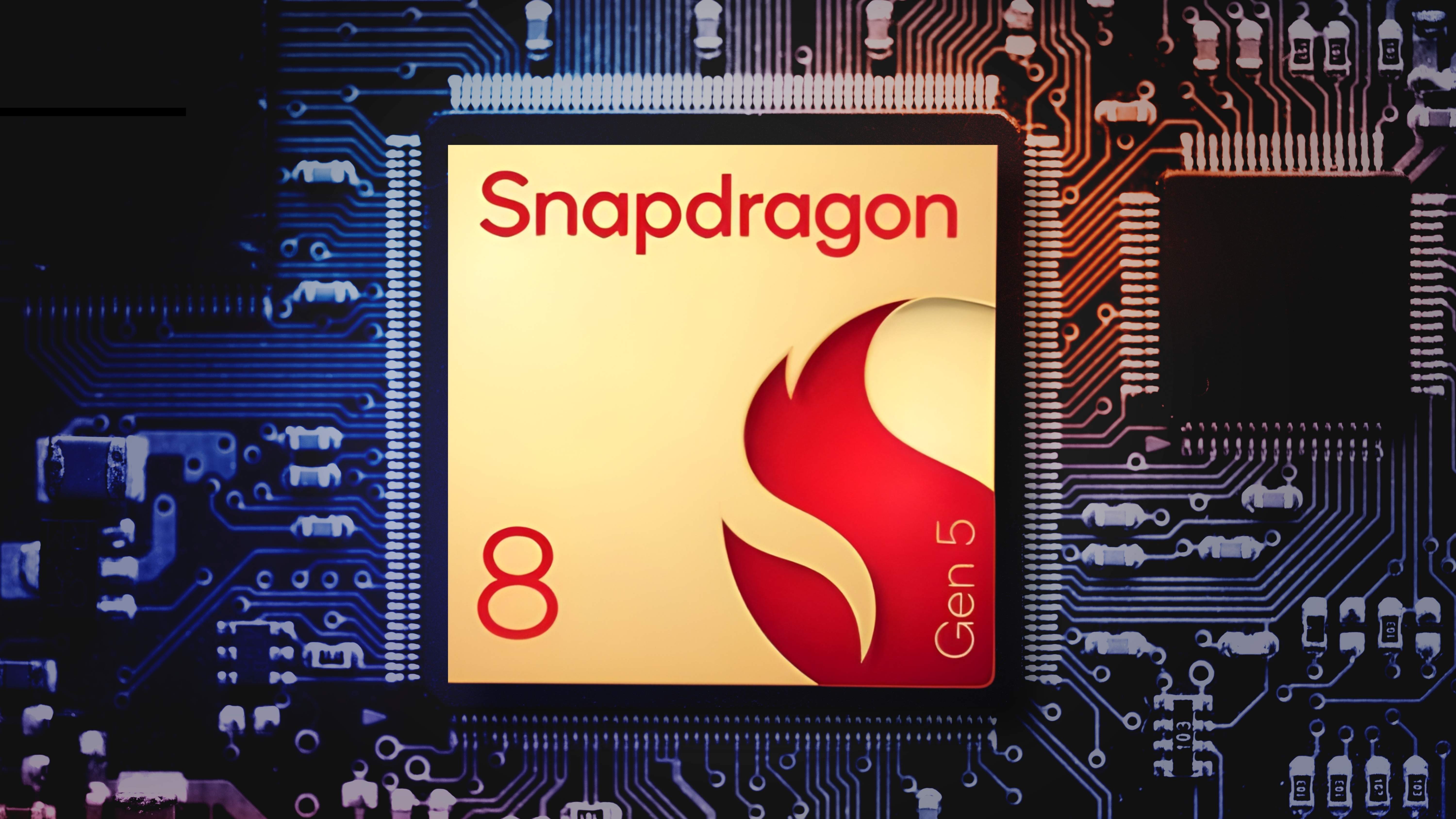
Qualcomm has introduced the Snapdragon 8 Gen 5 Mobile Platform, positioning it as a premium upgrade that elevates performance, AI capability, and gaming. The company says the new chipset responds to growing demand for more advanced features in flagship smartphones.
Snapdragon 8 Gen 5 includes an enhanced sensing hub that wakes an AI assistant when a user picks up their device. Qualcomm says the platform supports agentic AI functions through the updated AI Engine, enabling more context-aware interactions and personalised assistance directly on the device.
The system is powered by the custom Oryon CPU, reaching speeds up to 3.8 GHz and delivering notable improvements in responsiveness and web performance. Qualcomm reports a 36% increase in overall processing power and an 11% boost to graphics output through its updated Adreno GPU architecture.
Qualcomm executives say the refreshed platform will bring high-end performance to more markets. Chris Patrick, senior vice-president for mobile handsets, says Snapdragon 8 Gen 5 is built to meet rising demands for speed, efficiency, and intelligent features.
Qualcomm confirmed that the chipset will appear in upcoming flagship devices from manufacturers including iQOO, Honor, Meizu, Motorola, OnePlus, and vivo. The company expects the platform to anchor next-generation models entering global markets in the months ahead.
Would you like to learn more about AI, tech, and digital diplomacy? If so, ask our Diplo chatbot!
World leaders gathered in Johannesburg have endorsed a landmark declaration under the 2025 G20 presidency of Cyril Ramaphosa, the first time the summit was held on African soil. The agreement, adopted at the very start of the meeting rather than at its usual conclusion, reflects a sharp pivot toward issues facing the developing world, which include climate resilience, debt relief, global inequality, inclusive development, and sustainable energy.
The 122-point statement, built around the summit’s motto ‘Solidarity, Equality, Sustainability,’ calls for increased international cooperation to ensure that ‘no one is left behind.’ It places strong emphasis on supporting low-income and middle-income countries battered by climate disasters, championing debt restructuring, reforming global financial systems, and scaling up investment in clean energy and critical mineral value chains, a priority especially for resource-rich regions in Africa and the Global South.
Support was also voiced for a more inclusive global governance architecture. The declaration calls for reforms to international financial institutions, enhanced representation for emerging economies, and more equitable global supply chains. It underlines that sustainable growth and prosperity cannot come without greater economic equality, technology transfer, and fairer development partnerships.
Addressing geopolitically sensitive issues, the summit called for just, lasting peace in several conflict zones, including Ukraine, Sudan, the Democratic Republic of the Congo, and the Palestinian territory, highlighting a collective interest in global stability.
The decision to adopt the declaration immediately was a bold diplomatic move. The president of South Africa, Cyril Ramaphosa, speaking in his opening address, said the G20 ‘has a responsibility not to allow the integrity and credibility of the G20 to be undermined,’ stressing that ‘multilateralism can and does deliver concrete results.’
Presidential spokesperson Vincent Magwenya announced the agreement had been reached by consensus among attending nations, framing the document as a ‘revolutionary’ step for Africa and the Global South.
The adoption of the declaration occurred despite a boycott by the United States, which declined to participate in the summit due to diplomatic tensions with the host country.
Observers note that the show of unity among nearly all other G20 members signals rising frustration with unilateralism and a willingness to reassert multilateral cooperation, especially on issues where developing countries have long been sidelined.
Whether the commitments enshrined in the Johannesburg Declaration will translate into concrete action remains uncertain. Still, by elevating the concerns of poorer and climate-vulnerable nations onto the global agenda, this summit may mark a turning point for the G20’s role in shaping a fairer, more sustainable world order.
Would you like to learn more about AI, tech and digital diplomacy? If so, ask our Diplo chatbot!
UNESCO is strengthening capacities in AI ethics and regulation across Ecuador and Latin America through two newly launched courses. The initiatives aim to enhance digital governance and ensure the ethical use of AI in the region.
The first course, ‘Regulation of Artificial Intelligence: A View from and towards Latin America,’ is taking place virtually from 19 to 28 November 2025.
Organised by UNESCO’s Social and Human Sciences Sector in coordination with UNESCO-Chile and CTS Lab at FLACSO Ecuador, the programme involves 30 senior officials from key institutions, including the Ombudsman’s Office and the Superintendency for Personal Data Protection.
Participants are trained on AI ethical principles, risks, and opportunities, guided by UNESCO’s 2021 Recommendation on the Ethics of AI.
The ‘Ethical Use of AI’ course starts next week for telecom and electoral officials. The 20-hour hybrid programme teaches officials to use UNESCO’s RAM to assess readiness and plan ethical AI strategies.
UNESCO aims to train 60 officials and strengthen AI ethics and regulatory frameworks in Ecuador and Chile. The programmes reflect a broader commitment to building inclusive, human-rights-oriented digital governance in Latin America.
Would you like to learn more about AI, tech and digital diplomacy? If so, ask our Diplo chatbot!
Sharjah is advancing its digital transformation efforts following the issuance of a new decree that established the Higher Committee for Digital Integration. The Crown Prince formed the body to strengthen oversight and guide government entities as the emirate seeks more coordinated progress.
The committee will report directly to the Executive Council and will be led by Sheikh Saud bin Sultan Al Qasimi from the Sharjah Digital Department.
Senior officials from several departments in the UAE will join him to enhance cooperation across the government, rather than leaving agencies to pursue separate digital plans.
Their combined expertise is expected to support stronger governance and reduce risks linked to large-scale transformation.
Its mandate covers strategic oversight, approval of key policies, alignment with national objectives and careful monitoring of digital projects.
The members will intervene when challenges arise, oversee investments and help resolve disputes so the emirate can maintain momentum instead of facing delays caused by fragmented decision-making.
Membership runs for two years, with the option of extension. The committee will continue its work until a successor group is formed and will provide regular reports on progress, challenges and proposed solutions to the Executive Council.
Would you like to learn more aboutAI, tech and digital diplomacy? If so, ask our Diplo chatbot!
AI is playing an increasingly vital role in supporting the transition to clean energy. AI helps optimise power grid operations, plan infrastructure investments, and accelerate the discovery of novel materials for energy generation, storage, and conversion.
While energy-hungry data centres can increase electricity demand, AI applications are helping reduce energy consumption across buildings, transport, and industry.
On electric grids, AI algorithms enhance efficiency, integrate renewable energy sources, and predict maintenance needs to prevent power outages. Grid operators can utilise AI to forecast supply and demand, optimise energy storage, and manage resources in real-time.
Technologies such as smart thermostats, electric vehicle batteries, and AI-managed data centres provide additional flexibility to balance peak demand and supply.
AI also aids long-term planning by helping utilities forecast future infrastructure needs amid growing renewable deployment and climate-related risks. Additionally, AI accelerates the discovery of materials for energy technologies.
At MIT, researchers use AI-guided experiments and robotics to design and test new materials, significantly shortening development times from decades to years.
Through research, modelling, and collaboration, AI is being applied to fusion reactor management, solar cell optimisation, and energy-efficient data centre design. MIT Energy Initiative programmes unite academics, industry, and policymakers to harness AI for a resilient and sustainable energy future.
Would you like to learn more about AI, tech and digital diplomacy? If so, ask our Diplo chatbot!
Samsung Electronics and SK Telecom have taken a significant step toward shaping next-generation connectivity after signing an agreement to develop essential 6G technologies.
Their partnership centres on AI-based radio access networks, with both companies aiming to secure an early lead as global competition intensifies.
Research teams from Samsung and SK Telecom will build and test key components, including AI-based channel estimation, distributed MIMO and AI-driven schedulers.
AI models will refine signals in real-time to improve accuracy, rather than relying on conventional estimation methods. Meanwhile, distributed MIMO will enable multiple antennas to cooperate for reliable, high-speed communication across diverse environments.
The companies believe that AI-enabled schedulers and core networks will manage data flows more efficiently as the number of devices continues to rise.
Their collaboration also extends into the AI-RAN Alliance, where a jointly proposed channel estimation technology has already been accepted as a formal work item, strengthening their shared role in shaping industry standards.
Samsung continues to promote 6G research through its Advanced Communications Research Centre, and recent demonstrations at major industry events highlight the growing momentum behind AI-RAN technology.
Both organisations expect their work to accelerate the transition toward a hyperconnected 6G future, rather than allowing competing ecosystems to dominate early development.
Would you like to learn more aboutAI, tech and digital diplomacy? If so, ask our Diplo chatbot!
The Swiss Federal Council has approved significant updates to the Ordinance on the International Automatic Exchange of Information in Tax Matters. The new rules are set to take effect across Switzerland on 1 January 2026, assuming no referendum intervenes.
The revisions expand Switzerland’s international exchange of financial account information, updating the Common Reporting Standard (CRS) and introducing the new Crypto-Asset Reporting Framework (CARF).
Crypto service providers in Switzerland will now have reporting, due diligence, and registration obligations under the AEOI Ordinance, although these provisions will not apply until at least 2027.
The updated Ordinance also extends CRS rules to Swiss associations and foundations while excluding certain accounts if specific conditions are met. Transitional measures aim to facilitate the implementation of the amended CRS and CARF by affected parties more smoothly.
Deliberations on partner states for Switzerland’s crypto data exchange have been paused by the National Council’s Economic Affairs and Taxation Committee. The CARF will become law in Switzerland in 2026, but full implementation is delayed, keeping crypto-asset rules inactive for the first year.
Would you like to learn more about AI, tech and digital diplomacy? If so, ask our Diplo chatbot!
A new UCLA Health study finds that AI-powered scribe tools can reduce physicians’ documentation time and may improve work satisfaction. Conducted across 14 specialities and 72,000 patient visits, the trial tested Microsoft DAX and Nabla in real-world clinical settings.
Physicians using Nabla reduced the time spent writing each note by almost 10% compared with usual care, saving around 41 seconds per note. Both AI tools modestly improved burnout, cognitive workload, and work exhaustion, but physician oversight remains essential.
The trial highlighted several limitations, including occasional inaccuracies in AI-generated notes and a single instance of mild patient safety concern. Physicians found the tools easy to use and noted an improvement in patient engagement, with most patients being receptive.
The findings provide timely evidence as healthcare systems increasingly adopt AI scribes. Researchers emphasise that rigorous evaluation is necessary to ensure patient safety and effectiveness, and that further long-term studies across multiple institutions are recommended.
Would you like to learn more about AI, tech and digital diplomacy? If so, ask our Diplo chatbot!