Amazon introduces AI-generated recaps for Kindle book series

Amazon has introduced a new Recaps feature for Kindle users, designed to help readers recall key plot points and character developments before starting the next book in a series.

The feature, now available to Kindle users in the United States, provides AI-generated summaries for thousands of best-selling English-language e-books.

While Amazon did not initially mention AI in its announcement, the company later confirmed that Recaps are created using generative AI, with human moderators ensuring accuracy.

Concerns about the reliability of AI-generated summaries have surfaced among Kindle users, with some questioning whether they will accurately reflect book content. Amazon maintains that its process ensures accuracy, though further details have not been provided.

Recaps can be accessed through the Kindle Library or within a book series page, and users must acknowledge a spoiler warning before viewing the summary.

The feature aims to improve the reading experience by helping readers stay immersed in complex stories without having to re-read previous books.

Amazon plans to expand Recaps to the Kindle app for iOS soon, covering a variety of genres, including fantasy, mystery, and thriller series.

For more information on these topics, visit diplomacy.edu.

Midjourney’s V7 debuts with personalization and improved image quality

Midjourney has launched V7, its first new AI image model in nearly a year, introducing major improvements in image quality and text prompt accuracy.

The model, which rolled out in alpha on Thursday, features enhanced textures, better coherence in generating bodies and objects, and a new personalization system that tailors results to individual users.

To access V7, users must first rate around 200 images to create a personalised profile, a feature enabled by default for the first time.

The new model is available in two versions: Turbo, which generates images at a higher cost, and Relax, a more budget-friendly option. A new Draft Mode also allows users to create lower-quality images at ten times the speed and half the cost of standard mode, with the option to enhance them later.

Some existing Midjourney features, such as image upscaling and retexturing, are not yet available in V7 but are expected within two months.

Midjourney remains an independent company, having raised no external funding since its launch in 2022. The San Francisco-based firm is reportedly generating around $200 million in revenue and is expanding into hardware, video, and 3D object generation.

However, the company faces ongoing legal challenges, with multiple lawsuits accusing it of using copyrighted images without permission to train its AI models.

For more information on these topics, visit diplomacy.edu.

OpenAI backs Adaptive Security in the battle against AI threats

AI-driven cyber threats are on the rise, making it easier than ever for hackers to deceive employees through deepfake scams and phishing attacks.

OpenAI, a leader in generative AI, has recognised the growing risk and made its first cybersecurity investment in New York-based startup Adaptive Security. The company has secured $43 million in Series A funding, co-led by OpenAI’s startup fund and Andreessen Horowitz.

Adaptive Security helps companies prepare for AI-driven cyberattacks by simulating deepfake calls, texts, and emails. Employees may receive a phone call that sounds like their CTO, asking for sensitive information, but in reality, it is an AI-generated test.

The platform identifies weak points in a company’s security and trains staff to recognise potential threats. Social engineering scams, which trick employees into revealing sensitive data, have already led to massive financial losses, such as the $600 million Axie Infinity hack in 2022.

CEO Brian Long, a seasoned entrepreneur, says the funding will go towards hiring engineers and improving the platform to keep pace with evolving AI threats.

The investment comes amid a surge in cybersecurity funding, with companies like Cyberhaven, Snyk, and GetReal also securing major investments.

As cyber risks become more advanced, Long advises employees to take simple precautions, including deleting voicemails to prevent hackers from cloning their voices.

For more information on these topics, visit diplomacy.edu.

Deutsche Telekom expands partnership with Google Cloud

Deutsche Telekom has strengthened its collaboration with Google, moving more of its services to the Google Cloud platform as part of its transformation into an ‘AI-first company.’ The expanded partnership aims to improve the agility and efficiency of Deutsche Telekom’s operations through AI-driven solutions.

Stefan Schloter, Chief Infrastructure Officer for Europe at Deutsche Telekom, highlighted how leveraging data and AI will enhance digital solutions across business entities, software engineering, and customer interfaces.

The MyMagenta app, for example, will integrate Google’s AI-powered Gemini assistant, further improving customer experience.

Google Cloud will also serve as the technical foundation of Deutsche Telekom’s new AI platform, the ‘One Data Ecosystem.’ However, this platform consolidates data systems and enhances data processing speed while ensuring compliance with privacy and data-sharing regulations.

Marianne Janik, Vice President of Google Cloud for Northern Europe, expressed excitement about the partnership, noting how cloud technology is pivotal for communications providers in driving innovation, flexibility, and growth for enhanced user experiences.

For more information on these topics, visit diplomacy.edu.

National Crime Agency responds to AI crime warning

The National Crime Agency (NCA) has pledged to ‘closely examine’ recommendations from the Alan Turing Institute after a recent report highlighted the UK’s insufficient preparedness for AI-enabled crime.

The report, from the Centre for Emerging Technology and Security (CETaS), urges the NCA to create a task force to address AI crime within the next five years.

Despite AI-enabled crime being in its early stages, the report warns that criminals are rapidly advancing their use of AI, outpacing law enforcement’s ability to respond.

CETaS claims that UK police forces have been slow to adopt AI themselves, which could leave them vulnerable to increasingly sophisticated crimes, such as child sexual abuse, cybercrime, and fraud.

The Alan Turing Institute emphasises that although AI-specific legislation may be needed eventually, the immediate priority is for law enforcement to integrate AI into their crime-fighting efforts.

An initiative like this would involve using AI tools to combat AI-enabled crimes effectively, as fraudsters and criminals exploit AI’s potential to deceive.

While AI crime remains a relatively new phenomenon, recent examples such as the $25 million Deepfake CFO fraud show the growing threat.

The report also highlights the role of AI in phishing scams, romance fraud, and other deceptive practices, warning that future AI-driven crimes may become harder to detect as technology evolves.

For more information on these topics, visit diplomacy.edu.

New Jersey criminalises the harmful use of AI deepfakes

New Jersey has become one of several US states to criminalise the creation and distribution of deceptive AI-generated media, commonly known as deepfakes. Governor Phil Murphy signed the legislation on Wednesday, introducing civil and criminal penalties for those who produce or share such media.

If deepfakes are used to commit further crimes like harassment, they may now be treated as a third-degree offence, punishable by fines up to $30,000 or up to five years in prison.

The bill was inspired by a disturbing incident at a New Jersey school where students shared explicit AI-generated images of a classmate.

Governor Murphy had initially vetoed the legislation in March, calling for changes to reduce the risk of constitutional challenges. Lawmakers later amended the bill, which passed with overwhelming support in both chambers.

Instead of ignoring the threat posed by deepfakes, the law aims to deter their misuse while preserving legitimate applications of AI.

‘This legislation takes a proactive approach,’ said Representative Lou Greenwald, one of the bill’s sponsors. ‘We are safeguarding New Jersey residents and offering justice to victims of digital abuse.’

A growing number of US states are taking similar action, particularly around election integrity and online harassment. While 27 states now target AI-generated sexual content, others have introduced measures to limit political deepfakes.

States like Texas and Minnesota have banned deceptive political media outright, while Florida and Wisconsin require clear disclosures. New Jersey’s move reflects a broader push to keep pace with rapidly evolving technology and its impact on public trust and safety.

For more information on these topics, visit diplomacy.edu.

Microsoft rethinks AI data centre strategy amid market shifts

Microsoft has reportedly scaled back or delayed several major data centre projects, just three months after announcing plans to invest $80 billion in AI infrastructure through the current fiscal year.

According to Bloomberg, the company has paused developments in multiple locations, including Australia, Indonesia, the United Kingdom, and US states such as Illinois, North Dakota, and Wisconsin.

Instead of denying the report, Microsoft confirmed adjustments to its plans, citing the need for long-term flexibility. A spokesperson said the company continuously reviews future infrastructure needs to ensure alignment with growing AI demand, adding that the changes reflect Microsoft’s adaptable strategy.

The halted projects include negotiations for high-performance AI chip facilities in the UK and a site near Chicago, along with construction delays in Jakarta and Wisconsin.

These moves come amid growing scrutiny over whether the AI sector is entering a bubble, especially as emerging models challenge the assumption that vast computing power is always necessary for innovation.

Instead of sticking to high-cost development, Microsoft may be responding to a new trend: efficient, lower-cost AI models from Chinese firms that rival those of Western tech giants.

With AI development costs dropping and access expanding, Microsoft’s strategic pause could reflect a shift towards a more sustainable and agile future in AI infrastructure.

For more information on these topics, visit diplomacy.edu.

Meta and UFC to transform fight experience

UFC President Dana White has announced a groundbreaking partnership with Meta, following his recent appointment to the tech giant’s board.

The collaboration marks a significant moment for both organisations, with Meta CEO Mark Zuckerberg, a well-known MMA enthusiast and practitioner, praising White’s ability to elevate global sports brands.

The deal aims to revolutionise fan engagement through cutting-edge technologies. According to White, plans are already underway to redesign the UFC’s ranking system, with hopes of delivering more compelling matchups.

While details remain under wraps, he hinted that AI could be central to the project, potentially transforming how fights are scored and analysed in real time.

Zuckerberg expressed excitement about the future of UFC fan experiences, suggesting Meta’s tech resources could introduce innovative ways for audiences to connect with the sport.

Enhanced data analysis may also support fighters in training and strategy, leading to higher-quality contests and fewer controversial decisions.

The full impact of the partnership will unfold in the coming years, with fans and athletes alike anticipating significant change.

For more information on these topics, visit diplomacy.edu.

India among few developing nations with strong AI investment

India and China were the only developing nations to attract notable private investment in AI in 2023, according to the UN’s Technology and Innovation Report 2025. Instead of the US simply leading the field, it dominated with $67 billion in AI investment, accounting for 70 per cent of the global total.

China followed with $7.8 billion, while India ranked tenth worldwide with $1.4 billion. Instead of being evenly distributed, access to AI infrastructure and research remains heavily concentrated in a handful of countries, mainly the US and China.

India’s rise in the AI space stems from policy-driven innovation and education rather than organic growth alone. It climbed to 36th place out of 170 on the UNCTAD Frontier Technologies Readiness Index in 2024, improving from 48th in 2022.

Instead of only focusing on economic size, the index measures readiness through ICT availability, skills, R&D, industrial capacity, and financing. India performed well in R&D and industrial capacity but fell behind in ICT access and skill development.

India has supported its AI ecosystem through collaboration between the government, academia, and the private sector. The country hosts a large developer base, around 13 million, and contributes actively to generative AI projects on platforms like GitHub.

Programmes such as the India AI Mission aim to boost AI education and innovation in smaller cities, instead of keeping progress limited to major urban centres. Institutes like IIT Hyderabad and IIT Kharagpur were named among the country’s key centres of AI excellence.

Still, India faces challenges in expanding its AI capabilities across all sectors. Instead of allowing AI to widen inequalities, the report urges investment in workforce reskilling and inclusion. While AI can boost productivity, it may also displace jobs unless paired with supportive policies.

The technology, if harnessed wisely, could create new industries and strengthen employment rather than replace it.

For more information on these topics, visit diplomacy.edu.
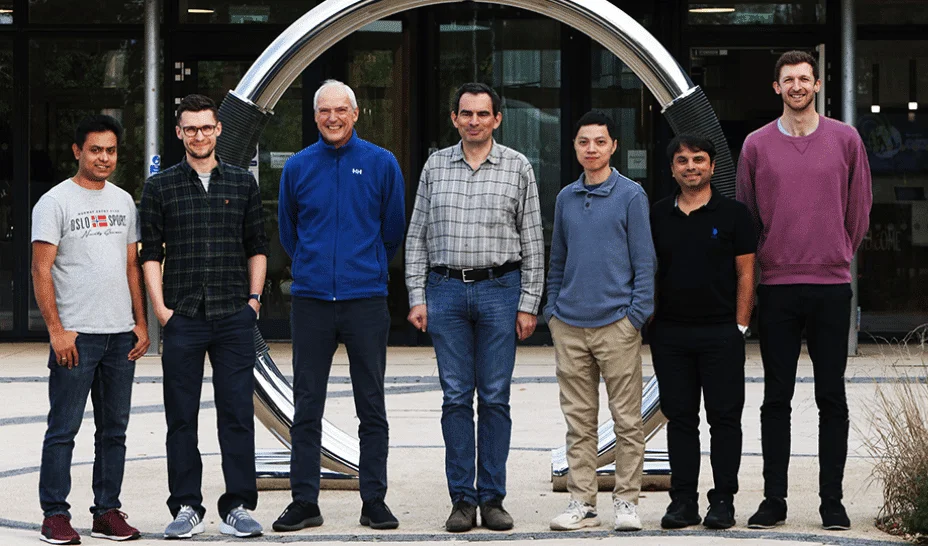
Lumai raises $10 million to revolutionise AI with optical technology

AI accelerator startup Lumai has secured over $10 million in funding to advance its optical computing technology.

The investment round was led by Constructor Capital, with support from IP Group and new investors including PhotonVentures, Journey Ventures, and State Farm Ventures. The funding will be used to expand Lumai’s workforce, develop new products, and establish a stronger presence in the United States market.

Spun out of the University of Oxford, Lumai aims to tackle the growing energy demands of AI by replacing traditional silicon-based computing with optical processing.

Its technology processes AI’s core arithmetic operations using beams of light in 3D space, bypassing the limitations of conventional GPUs.

By using low-cost optical components, Lumai claims its accelerators can cut AI inference costs to a tenth of current solutions while delivering 50 times the performance and consuming just 10% of the power.

The demand for AI computing power is increasing rapidly, with US data centres expected to triple their energy consumption by 2028.

Lumai’s CEO, Tim Weil, believes optical computing is the key to unlocking the future of AI, enabling more sustainable and cost-effective advancements in large language models and next-generation AI.

For more information on these topics, visit diplomacy.edu.