Meta CEO unveils plan to spend hundreds of billions on AI data centres

Mark Zuckerberg has pledged to invest hundreds of billions of dollars to build a network of massive data centres focused on superintelligent AI. The initiative forms part of Meta’s wider push to lead the race in developing machines capable of outperforming humans in complex tasks.

The first of these centres, called Prometheus, is set to launch in 2026. Another facility, Hyperion, is expected to scale up to 5 gigawatts. Zuckerberg said the company is building several more AI ‘titan clusters’, each one covering an area comparable to a significant part of Manhattan.

He also cited Meta’s strong advertising revenue as the reason it can afford such bold spending despite investor concerns.

Meta recently regrouped its AI projects under a new division, Superintelligence Labs, following internal setbacks and high-profile staff departures.

The company hopes the division will generate fresh revenue streams through Meta AI tools, video ad generators, and wearable smart devices. It is reportedly considering dropping its most powerful open-source model, Behemoth, in favour of a closed alternative.

The firm has increased its 2025 capital expenditure to up to $72 billion and is actively hiring top talent, including former Scale AI CEO Alexandr Wang and ex-GitHub chief Nat Friedman.

Analysts say Meta’s AI investments are paying off in advertising but warn that the real return on long-term AI dominance will take time to emerge.

Would you like to learn more about AI, tech and digital diplomacy? If so, ask our Diplo chatbot!

DuckDuckGo adds new tool to block AI-generated images from search results

Privacy-focused search engine DuckDuckGo has launched a new feature that allows users to filter out AI-generated images from search results.

Although the company admits the tool is not perfect and may miss some content, it claims it will significantly reduce the number of synthetic images users encounter.

The new filter uses open-source blocklists, including a more aggressive ‘nuclear’ option, sourced from tools like uBlock Origin and uBlacklist.

Users can access the setting via the Images tab after performing a search or use a dedicated link — noai.duckduckgo.com — which keeps the filter always on and also disables AI summaries and the browser’s chatbot.

The update responds to growing frustration among internet users. Platforms like X and Reddit have seen complaints about AI content flooding search results.

In one example, users searching for ‘baby peacock’ reported seeing just as many or more AI images than real ones, making it harder to distinguish between fake and authentic content.

DuckDuckGo isn’t alone in trying to tackle unwanted AI material. In 2024, Hiya launched a Chrome extension aimed at spotting deepfake audio across major platforms.

Microsoft’s Bing has also partnered with groups like StopNCII to remove explicit synthetic media from its results, showing that the fight against AI content saturation is becoming a broader industry trend.

Would you like to learn more about AI, tech and digital diplomacy? If so, ask our Diplo chatbot!
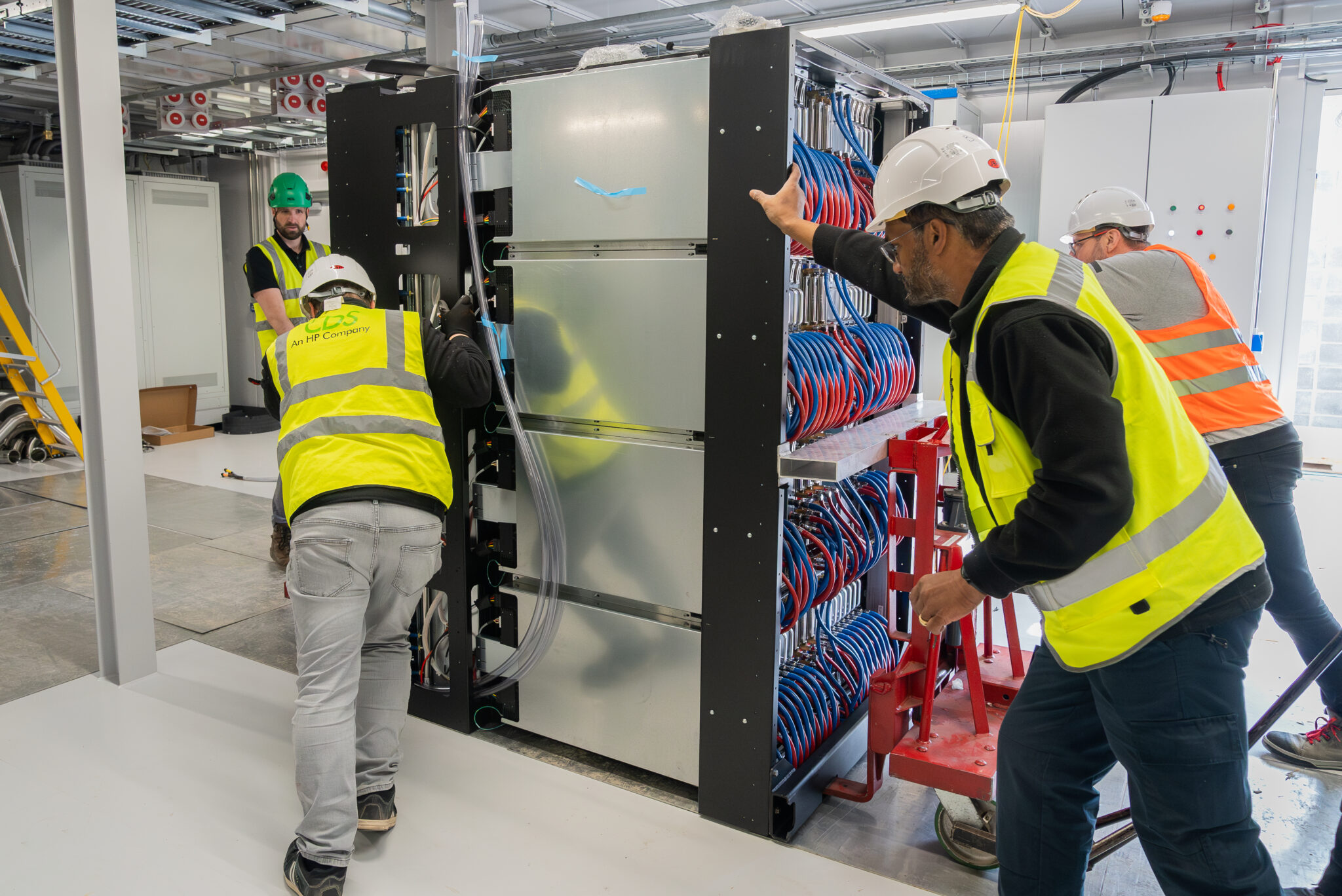
Isambard-AI launch brings Britain closer to AI breakthroughs

The UK’s most powerful AI supercomputer, Isambard-AI, has officially launched in Bristol. Developed with HPE and NVIDIA, the £225 million system marks a major step in national research capability.

It can compute in one second what the global population would take 80 years to process. Housed at the National Composites Centre, it aims to drive breakthroughs in healthcare, robotics, climate science and more.

Built by the University of Bristol’s Centre for Supercomputing, the machine is part of the UK Government’s AI Research Resource (AIRR) and was launched by Science Secretary Peter Kyle.

Alongside the Dawn supercomputer in Cambridge, Isambard-AI will deliver 23 AI ExaFLOPs — equal to the UK population working non-stop for 85,000 years. It is 100,000 times faster than an average laptop and supports drug discovery, personalised medicine and advanced data analysis.

Powered by 5,400 Nvidia GH200 Grace Hopper Superchips and HPE’s Cray EX platform, it is among the greenest supercomputers globally, running on zero-carbon electricity and using direct liquid cooling to cut energy use by up to 90%.

Plans are underway to reuse its waste heat for nearby homes and businesses. Its sustainable design cuts emissions by 72% versus traditional builds.

The University of Bristol, chosen for its AI and HPC expertise, also offers a government-backed master’s through the Sparck AI scholarship. Vice-Chancellor Professor Evelyn Welch called the launch a milestone for British AI.

Researchers are already using Isambard-AI to analyse data from wearable cameras for assisted living support, and to scan MRI data to speed up cancer detection and treatment planning.

Other teams are modelling disease-related proteins and using AI to detect illness in dairy cattle by monitoring herd behaviour — showing the system’s broad real-world impact.

Would you like to learn more about AI, tech and digital diplomacy? If so, ask our Diplo chatbot!
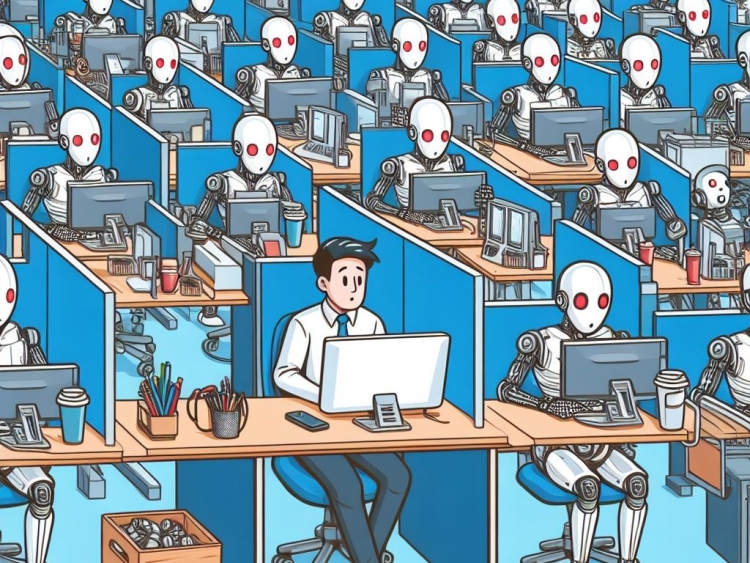
Ten jobs likely to be replaced by AI — here’s how workers can pivot

AI is poised to disrupt the job market, with routine roles such as data entry clerks, telemarketers, customer service agents, cashiers, proofreaders, legal assistants, bookkeepers, front-desk staff, warehouse operatives, and entry-level market researchers most at risk.

Workers in these roles are encouraged to reskill strategically, as automation and shifting market demands reshape the employment landscape.

Promising transition options include data analytics, digital marketing, technical support, logistics technology, financial advising, retail management, culinary operations, and business intelligence — careers that harness creativity, empathy, and critical thinking.

This risk also presents an opportunity. The Civil Aviation Authority of Singapore has launched a S$200 million fund to retrain aviation professionals as AI reshapes the industry, a model that other sectors can follow.

Research indicates that AI predominantly complements tasks rather than replaces them entirely. Roles demanding human-centred reasoning, teamwork and digital literacy are growing, emphasising the importance of lifelong learning and adaptability.

Would you like to learn more about AI, tech and digital diplomacy? If so, ask our Diplo chatbot!

GPT-5 to launch soon as OpenAI showcases major AI milestone

OpenAI’s experimental language model has reached a noteworthy milestone in AI by performing at a gold medal level in the 2025 International Math Olympiad (IMO), one of the world’s most challenging competitions.

The model solved five out of six problems under the same timed and tool-free conditions as human participants, earning 35 out of 42 possible points. Three former IMO medalists evaluated each solution to ensure fairness and accuracy.

The achievement marks a leap in AI’s reasoning capabilities, with the model demonstrating the ability to tackle complex problems requiring hours of sustained creative thinking.

Researcher Alexander Wei noted the significance of this progress, tracing the model’s development through reasoning benchmarks from fundamental arithmetic problems to Olympiad-level tasks demanding far deeper cognitive effort.

Despite the breakthrough, the model is not expected to be released to the public anytime soon. OpenAI clarified that the IMO-capable model is part of an internal research track, distinct from its upcoming release of GPT-5.

According to Wei, GPT-5 will arrive soon but will not yet contain the same advanced mathematics capabilities.

In parallel, Hyperbolic Labs co-founder Yuchen Jin hinted that GPT-5 will operate as a multi-model system with dynamic routing, automatically selecting the most appropriate sub-model based on user input. Jin also noted that GPT-6 is already in training, suggesting rapid, continued progress in AI development.

Would you like to learn more about AI, tech and digital diplomacy? If so, ask our Diplo chatbot

Nvidia’s container toolkit patched after critical bug

Cloud security researchers at Wiz have uncovered a critical misconfiguration in Nvidia’s Container Toolkit, used widely across managed AI services, that could allow a malicious container to break out and gain full root privileges on the host system.

The vulnerability, tracked as CVE‑2025‑23266 and nicknamed ‘NVIDIAScape’, arises from unsafe handling of OCI hooks. Exploiters can bypass container boundaries by using a simple three‑line Dockerfile, granting them access to server files, memory and GPU resources.

With Nvidia’s toolkit integral to GPU‑accelerated cloud offerings, the risk is systemic. A single compromised container could steal or corrupt sensitive data and AI models belonging to other tenants on the same infrastructure.

Nvidia has released a security advisory alongside updated toolkit versions. Users are strongly advised to apply patches immediately. Experts also recommend deploying additional isolation measures, such as virtual machines, to protect against container escape threats in multi-tenant AI environments.

Would you like to learn more about AI, tech and digital diplomacy? If so, ask our Diplo chatbot!

5G Advanced lays the groundwork for 6G, says 5G Americas

5G Americas has released a new white paper outlining how 5G Advanced features in 3GPP Releases 18 to 20 are shaping the path to 6G.

The report highlights how 5G Advanced is evolving mobile networks through embedded AI, scaled IoT, improved energy efficiency, and broader service capabilities. Viet Nguyen, President of 5G Americas, called it a turning point for wireless systems, offering more intelligent, resilient, and sustainable connectivity.

AI-native networking is a key innovation which brings machine learning into the radio and core network. The innovation enables zero-touch automation, predictive maintenance, and self-organising systems, cutting fault detection by 90% and reducing false alarms by 70%.

Energy efficiency is another core benefit. Features like cell sleep modes and antenna switching can reduce energy use by up to 56%. Ambient IoT also advances, enabling battery-less devices for industrial and consumer use in energy-constrained environments.

Latency improvements like L4S and enhanced QoS allow scalable support for immersive XR and real-time automation. Advances in spectral efficiency and satellite support are boosting uplink speeds above 500 Mbps and expanding coverage to remote areas.

Andrea Brambilla of Nokia noted that 5G Advanced supports digital twins, private networks, and AI-driven transformation. Pei Hou of T-Mobile said it builds on 5G Standalone to prepare for a sustainable shift to 6G.

The paper urges updated policies on AI governance, spectrum sharing, and IoT standards to ensure global interoperability. Strategic takeaways include AI, automation, and energy savings as key to long-term innovation and monetisation across the public and private sectors.

Would you like to learn more about AI, tech and digital diplomacy? If so, ask our Diplo chatbot!

Meta lures AI leaders as Apple faces instability

Meta has hired two senior AI researchers from Apple, Mark Lee and Tom Gunter, as part of its ongoing effort to attract top talent in AI, according to Bloomberg.

Instead of staying within Apple’s ranks, both experts have joined Meta’s Superintelligence Labs, following Ruoming Pang, Apple’s former head of large language model development, whom Meta recently secured with a reported compensation package worth over $200 million.

Gunter, once a distinguished engineer at Apple, briefly worked for another AI firm before accepting Meta’s offer.

The moves reflect increasing instability inside Apple’s AI division, where leadership is reportedly exploring partnerships with external providers like OpenAI to power future Siri features rather than relying solely on in-house solutions.

Meta’s aggressive hiring strategy comes as CEO Mark Zuckerberg prioritises AI development, pledging substantial investment in talent and computing power to rival companies such as OpenAI and Google.

Some Apple employees have been presented with counteroffers, but these reportedly fail to match the scale of Meta’s packages.

Instead of slowing down, Meta appears determined to solidify its position as a leader in AI research, continuing to lure key experts away from competitors while Apple faces challenges retaining its top engineers.

Would you like to learn more about AI, tech and digital diplomacy? If so, ask our Diplo chatbot!

Power demands reshape future of data centres

As AI and cloud computing demand surges, Siemens is tackling critical energy and sustainability challenges facing the data centre industry. With power densities surpassing 100kW per rack, traditional infrastructure is being pushed beyond its limits.

Siemens highlighted the urgent need for integrated digital solutions to address growing pressures such as delayed grid connections, rising costs, and speed of deployment. Operators are increasingly adopting microgrids and forming utility partnerships to ensure resilience and control over power access.

Siemens views data centres not just as energy consumers but as contributors to the grid, using stored energy to balance supply. The shift is pushing the industry to become more involved in grid stability and renewable integration.

While achieving net zero remains challenging, data centres are adopting on-site renewables, advanced cooling systems, and AI-driven management tools to boost efficiency.

Siemens’ own software, such as the Building X Suite, is helping reduce energy waste and predict maintenance needs, aligning operational effectiveness with sustainability goals.

Would you like to learn more about AI, tech and digital diplomacy? If so, ask our Diplo chatbot!

Perplexity AI valued at $18 billion after new $100 million raise

AI startup Perplexity AI has raised $100 million in new funding, pushing its valuation to $18 billion, Bloomberg has reported. The deal reflects growing investor interest in AI tools amid the continued rise of chatbots and AI-powered search agents.

The funding follows a previous round from earlier in the year, which valued the company at $14 billion. Perplexity’s rapid valuation growth highlights the pace at which leading AI startups are expanding in the current market climate.

According to The Wall Street Journal, Perplexity was previously in advanced talks to raise $500 million at the earlier valuation. Venture capital firm Accel had been expected to lead that round. Other reports in March suggested that Perplexity aimed to raise as much as $1 billion.

The company has been making moves to challenge major tech incumbents. Just last week, it launched a new AI-powered web browser called ‘Comet’. The tool is designed to compete with Google Chrome by integrating advanced AI search functionality directly into browsing.

Perplexity is backed by Nvidia and is positioning itself at the intersection of search, generative AI, and user experience. Industry observers view its fast-growing valuation as a sign of heightened investor confidence in AI-native platforms.

Would you like to learn more about AI, tech and digital diplomacy? If so, ask our Diplo chatbot!