The German competition authority has fined Amazon €59 million for abusing its dominant position by influencing the pricing behaviour of third-party sellers.
Regulators concluded that Amazon’s pricing algorithms and Fair Pricing Policy breached national digital dominance rules and the EU competition law, rather than aligning with fair marketplace standards.
The authority argued that Amazon competes directly with merchants on its platform while shaping their prices through restrictions such as caps that penalise sellers who exceed certain limits.
Officials described that approach as incompatible with healthy competition since a platform should not influence rivals’ commercial strategies while participating in the same market.
Amazon strongly disputed the ruling and claimed the conclusion conflicts with the EU consumer standards. The company argued that the decision forces the platform to promote prices that fail to reflect competitive market conditions and announced it will challenge the findings.
The case follows a 2025 preliminary assessment and builds on Amazon’s earlier designation in 2022 as a company of paramount significance for competition, a judgement upheld by the Federal Court of Justice in Germany in 2024.
A ruling that marks another step in Europe’s efforts to rein in digital platforms that wield extensive influence across multiple markets.
Would you like to learn more about AI, tech and digital diplomacy? If so, ask our Diplo chatbot!
The confrontation between Spain and Telegram founder Pavel Durov has intensified after he claimed that Pedro Sánchez endangered online freedoms.
Government officials responded that the tech executive spread lies rather than engage with the proposed rules in good faith. Sánchez argued that democracy would not be silenced by what he called the techno-oligarchs of the algorithm.
The dispute followed the unveiling of new measures aimed at major technology companies. The plan introduces a ban on social media use for under-16s and holds corporate leaders legally responsible when unlawful or hateful content remains online rather than being removed.
Platforms would also need to adopt age-verification tools such as ID checks or biometric systems, which Durov argued could turn Spain into a surveillance state by allowing large-scale data collection.
Tensions widened as Sánchez clashed with prominent US tech figures. Sumar urged all bodies linked to the central administration to leave X, a move that followed Elon Musk’s accusation that the Spanish leader was acting like a tyrant.
The row highlighted how Spain’s attempt to regulate digital platforms has placed its government in open conflict with influential technology executives.
Would you like to learn more about AI, tech and digital diplomacy? If so, ask our Diplo chatbot!
Albania has lifted its temporary ban on TikTok after nearly a year, the government announced, saying that concerns about public, social and digital safety have now been addressed and that access will resume nationwide.
The restriction was introduced in March 2025 following a fatal stabbing linked to a social media dispute and aimed to protect younger users instead of exposing them to harmful online content.
Under the new arrangement, authorities are partnering with TikTok to introduce protective filters based on keywords and content controls and to strengthen reporting mechanisms for harmful material.
The government described the decision as a shift from restrictive measures to a phase of active monitoring, inter-institutional cooperation, and shared responsibility with digital platforms.
Although the ban has now been lifted, a court challenge contends that the earlier suspension violated the constitutional right to freedom of expression, and a ruling is expected later in February. Opposition figures also criticised the original ban when it was applied ahead of parliamentary elections.
Despite the formal ban, TikTok remained accessible to many users in Albania through virtual private networks during the year it was in force, highlighting the challenge of enforcing such blocks in practice.
Critics have also noted that addressing the impact on youth may require broader digital education and safety measures.
Would you like to learn more about AI, tech and digital diplomacy? If so, ask our Diplo chatbot!
Pusan National University is piloting AI-powered translation glasses that display real-time subtitles of Korean-language lectures, aiming to reduce language barriers for international students. As a result, students can follow classes more easily, grasp specialised terminology, and engage more fully without the constant risk of missing key points.
In addition to academic settings, the technology is improving communication across campus life. For example, university staff, including counsellors, report that the glasses enable more natural, face-to-face conversations with foreign students, rather than relying on phones or other intermediary devices for translation.
Moreover, the pilot supports a broader push to internationalise the campus through AI-based multilingual services, including translated course syllabi and websites, with wider rollout to follow pending evaluation.
At the same time, the company behind the glasses is looking to expand adoption beyond Busan. If deployed more widely, the technology could influence higher education policies by easing language requirements and helping universities attract more international students, particularly as domestic enrolment declines.
However, several practical challenges remain. While translation accuracy is already high, issues such as device weight and battery life have prompted the development of lighter models. As the system continues to be refined and trained on academic vocabulary, its reliability and usability are expected to improve further.
Would you like to learn more about AI, tech and digital diplomacy? If so, ask our Diplo chatbot!
Microsoft has warned that info stealing malware is increasingly targeting macOS alongside Windows, using cross platform tools and social engineering. The company said the trend accelerated from late 2025.
Attackers are luring macOS users to fake websites and malicious installers, often promoted through online ads. Microsoft said these campaigns steal credentials, crypto wallets and browser sessions on macOS and Windows.
Python based malware is also playing a larger role, enabling attackers to target macOS and Windows with the same code. Microsoft reported growing abuse of trusted platforms such as WhatsApp to spread infostealers.
Microsoft urged organisations and individuals to strengthen layered cybersecurity on macOS and Windows. The company said better user awareness and monitoring could reduce the risk of data theft and account compromise.
Would you like to learn more about AI, tech and digital diplomacy? If so, ask our Diplo chatbot!
Anthropic has expanded its AI assistant Claude with Cowork, an agent-based workspace for everyday office tasks. Users can grant controlled folder access so Claude can create, edit, and organise files within workflows. Cowork is available in research preview for Claude Max subscribers on macOS.
Claude Cowork breaks work into step-by-step plans and carries out tasks independently. Multiple jobs can run at once, from sorting documents to producing reports from notes or screenshots. The system is positioned as a digital colleague rather than a chatbot.
Anthropic has introduced 11 plug-ins that extend Claude Cowork across legal, sales, marketing, support, and data analysis. Organisations can define workflows, apply brand rules, and integrate business data into task execution. The tools are designed to be customisable without technical complexity.
The company has open-sourced its initial plug-ins and expects enterprises to build tailored versions. Previously part of Claude Code, the tools are now integrated into Claude Cowork through a simplified interface. Anthropic frames the update as embedding AI directly into operations.
Market reaction has highlighted fears that agent-based AI could disrupt software services. Major IT stocks in India reportedly fell following the launch. The term ‘SaaSpocalypse’ reflects unease about AI becoming core infrastructure.
Would you like to learn more about AI, tech, and digital diplomacy? If so, ask our Diplo chatbot!
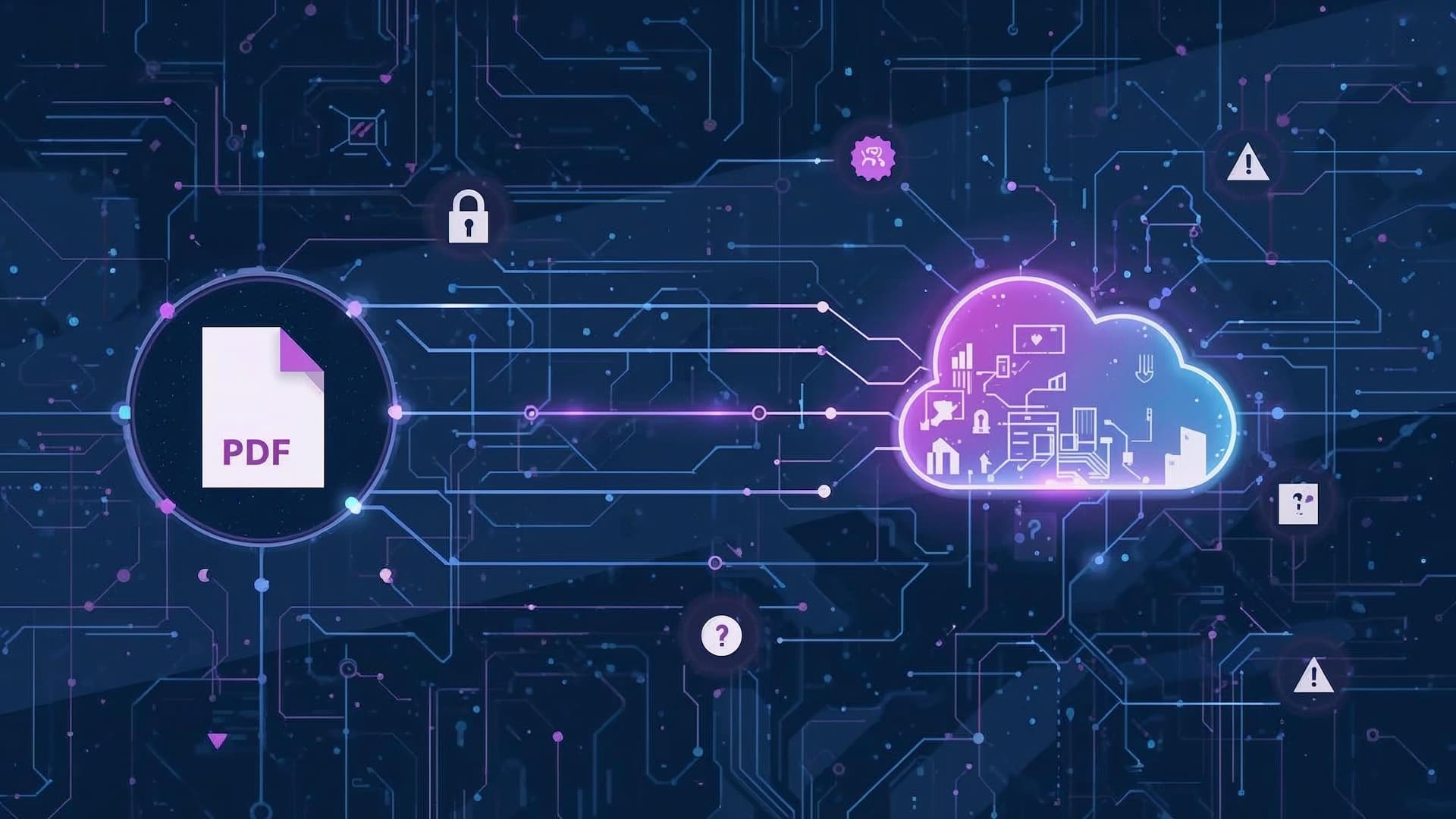
Phishing continues to succeed despite increasingly sophisticated AI-driven threats, with attackers relying on familiar tools such as PDFs and cloud services. Researchers have identified a new campaign using legitimate-looking documents to redirect victims to credential-harvesting pages impersonating Dropbox.
The attack starts with professional emails framed as procurement or tender requests. When recipients open the attached PDF, they are quietly redirected through trusted cloud infrastructure before reaching a fake Dropbox login page designed to steal corporate credentials.
Each stage appears legitimate in isolation, allowing the campaign to bypass standard filters and authentication checks. Business-style language, reputable hosting platforms, and realistic branding reduce suspicion while exploiting everyday workplace routines.
Security specialists warn that long-standing trust in PDFs and mainstream cloud services has lowered user vigilance. Employees have been conditioned to view these formats as safe, creating opportunities for attackers to weaponise familiar business tools.
Experts say phishing awareness must evolve beyond basic link warnings to reflect modern multi-stage attacks. Alongside training, layered defences such as multi-factor authentication and anomaly detection remain essential for limiting damage.
Would you like to learn more about AI, tech, and digital diplomacy? If so, ask our Diplo chatbot!
The US tech giant, Amazon, is preparing a new phase for its proprietary production tools as the company opens a closed beta that will give selected studios early access to its AI systems.
Developers created the technology inside Amazon MGM Studios to improve character consistency across scenes and speed up work in pre and post-production instead of relying on fragmented processes.
The programme begins in March and is expected to deliver initial outcomes by May. Amazon is working with recognised industry figures such as Robert Stromberg, Kunal Nayyar and former Pixar animator Colin Brady to refine the methods.
The company is also drawing on Amazon Web Services and several external language model providers to strengthen performance.
Executives insist the aim is to assist creative teams rather than remove them from the process. The second season of the series ‘House of David’ already used more than 300 AI-generated shots, showing how the technology can support large-scale productions instead of replacing artistic decision-making.
Industry debate continues to intensify as studios explore new automation methods. Netflix also used generative tools for major scenes in ‘The Eternaut’.
Amazon has repeatedly cited AI progress when announcing staff reductions, which added further concern over the long-term effects on employment and creative roles.
Would you like to learn more about AI, tech and digital diplomacy? If so, ask our Diplo chatbot!
UN Secretary-General António Guterres has formally submitted, for consideration and appointment by the United Nations General Assembly, the proposed composition of a new Independent International Scientific Panel on AI, marking a step towards evidence-based global AI governance.
The panel brings together 40 experts from across regions and disciplines, selected through an open global call that attracted more than 2,600 applications, and members serve in a personal and independent capacity.
In his submission to the General Assembly, Guterres said the body would act as the first fully independent global scientific authority focused on closing the AI knowledge gap and assessing real-world impacts across economies and societies.
According to the UN chief, a reliable and unbiased understanding of AI has become essential as technologies reshape governance, labour markets, and social systems at an accelerating speed.
The panel will operate for an initial three-year term, aiming to provide a shared scientific foundation for international cooperation amid rising geopolitical tension and technological competition.
Would you like to learn more about AI, tech, and digital diplomacy? If so, ask our Diplo chatbot!
The dating platform is expanding its reliance on AI, with Tinder experimenting with a feature designed to ease swipe fatigue among users.
A tool, known as Chemistry, that builds a picture of each person through optional questions and by reviewing their Camera Roll with permission, offering a more personalised route toward potential matches instead of repetitive browsing.
Match is currently testing the feature only in Australia. Executives say the system allows people to receive a small set of tailored profiles rather than navigating large volumes of candidates.
Tinder hopes the approach will strengthen engagement during a period when registrations and monthly activity remain lower than last year, despite minor improvements driven by AI-based recommendations.
Developers are also refocusing the broader discovery experience to reflect concerns raised by Gen Z around authenticity, trust and relevance.
The platform now relies on verification tools such as Face Check, which Match says cut harmful interactions by more than half instead of leaving users exposed to impersonators.
These moves indicate a shift away from the swipe mechanic that once defined the app, offering more direct suggestions that may improve outcomes.
Marketing investment is set to rise as part of the strategy. Match plans to allocate $50 million to new campaigns that will position Tinder as appealing again, using creators on TikTok and Instagram to reframe the brand.
Strong quarterly revenue failed to offset weaker guidance, yet the company argues that AI features will help shape a more reliable and engaging service for users seeking consistent matches.
Would you like to learn more about AI, tech and digital diplomacy? If so, ask our Diplo chatbot!