Through their collaborative CAMARA project, GSMA and the Linux Foundation have launched the first official release of a series of open-source network APIs called ‘Meta-Release Fall24’.
The initial release contains 25 APIs across 13 subprojects designed to simplify and standardise access to essential telecom network functions. Among the APIs are stable versions like Location Verification, One-time Password SMS, and Number Verification, which have been thoroughly vetted for quality and consistency.
Additionally, the release introduces new APIs such as Call Forwarding Signal, Carrier Billing Refund, and Connectivity Insights, signalling CAMARA’s commitment to continuous innovation and expansion of its API offerings. Security and interoperability have been prioritised in this release, including a profile based on OAuth 2.0 and OpenID standards.
By ensuring that the APIs are secure and compatible across different systems, CAMARA sets a robust foundation for operators to deploy these solutions confidently in their networks. Furthermore, the CAMARA community is dedicated to providing twice-yearly updates to maintain the relevance and stability of these APIs, ensuring that telecom operators can seamlessly plan and manage the deployment of new capabilities.
GSMA and the Linux Foundation have rallied over 1,100 contributors and nearly 400 organisations, including major telecom players like Deutsche Telekom, Ericsson, and Vodafone, behind CAMARA. Selected as the API specification hub for a new global telecom venture launching in 2025, CAMARA promotes a unified approach to API development.
Taiwan’s government is taking decisive action to combat telecom fraud through new regulations proposed by the Ministry of Digital Affairs. These regulations focus on the stringent management of four-digit telephone numbers beginning with ’19,’ typically allocated to government agencies and charitable organisations.
The primary goal is to safeguard these critical numbers from misuse. To this end, the government plans to impose penalties on telecom operators who breach the Fraud Hazard Prevention Act, including limiting the number of phone numbers they can receive. This measure aims to deter fraudulent activities effectively. Furthermore, organisations in Taiwan will need to obtain government approval before making any changes to the use of these numbers and must return them if their usage changes. To ensure compliance, the Ministry will conduct random inspections to monitor the proper use of these numbers.
Taiwan’s government is also enhancing its anti-fraud efforts by proposing amendments to the Subsidy, Reward, and Assistance Regulations for Promoting Industry Innovation. These changes will allow the Ministry to offer financial support, including subsidies and rewards, to digital industries developing technologies to prevent fraud. By encouraging technological innovation in this field, the government aims to strengthen fraud prevention measures and protect individuals and organisations against telecom-related fraud.
Google has announced it will redesign its plans for a $200 million data centre in Santiago, Chile, after concerns were raised about its environmental impact. The company will start the project from scratch following a ruling by a local environmental court, which partially reversed a 2020 permit and called for a reassessment in light of climate change.
Originally approved in 2020, the project faced backlash from residents and officials due to fears over its effects on Santiago’s drought-stricken aquifer. Data centres require significant amounts of water for cooling, an issue of concern given Chile’s ongoing drought for over a decade.
Google has informed Chile‘s environmental regulator that it will not proceed with its original plans for the Cerrillos neighbourhood. Instead, the tech giant plans to introduce a new proposal that incorporates air-cooling technology to mitigate environmental concerns.
The company is expected to submit a fresh application, addressing local concerns and aiming to reduce the project’s environmental footprint, as it continues to work on its data centre plans in Santiago.
BlackDice and Bin Omran Trading and Telecommunication have launched a strategic partnership to enhance Qatar’s cybersecurity infrastructure significantly. Combining their expertise will deliver state-of-the-art cybersecurity solutions, with BlackDice leveraging its AI-powered security and data intelligence to safeguard critical infrastructure and sensitive information.
Additionally, their collaboration will focus on strengthening the cybersecurity capabilities of major telecom operators in the region, thereby boosting network resilience and protecting extensive personal and financial data. Consequently, this comprehensive approach supports DA2030’s goal of creating a secure and resilient digital environment essential for Qatar’s economic diversification and social development.
By addressing the evolving needs of the digital landscape in Qatar, BlackDice and Bin Omran Trading and Telecommunication contribute to the nation’s ambition of becoming a global leader in technology and connectivity and ensuring robust protection against emerging cyber threats.
SoftBank and Intelsat have announced a groundbreaking collaboration to establish a ‘Ubiquitous Network’ that integrates terrestrial and satellite communications seamlessly. That innovative partnership aims to develop a hybrid communication solution combining these two network types, providing users with uninterrupted connectivity regardless of location.
The key focus is creating a universal device that ensures continuous connectivity by automatically switching between terrestrial mobile networks and satellite communications. That solution is expected to be especially beneficial for applications in land mobile, maritime, and disaster response scenarios, where reliable communication is essential.
SoftBank and Intelsat will advance this hybrid network solution through a phased approach, aligning with developing new 3GPP 5G standards for non-terrestrial networks. The methodical development process will support both existing satellite terminals and future 5G-based terminals. By aligning with industry standards, the collaboration aims to accelerate the adoption of these advanced connectivity solutions, enhancing global network coverage and ensuring that users can remain connected anytime and anywhere.
Sparkle, the University of Genoa, and the SubOptic Foundation have forged a landmark partnership to advance education and innovation in the field of submarine communications. Their collaboration will introduce the world’s first post-graduate degree focused on submarine fibre optic cables, a pioneering program that the University of Genoa will coordinate.
That initiative aims to draw upon the expertise of industry professionals from Sparkle and other leading companies, creating a comprehensive educational experience with a significant global impact. In addition to the educational program, the partnership is committed to enhancing scientific and technological advancements through joint efforts to foster education, research, and innovation in submarine communications.
The collaboration includes plans to organise institutional events and initiatives that promote technological and entrepreneurial culture, and it extends to working with other organisations focused on underwater technology, such as the Polo Nazionale della dimensione Subacquea (PNS), to ensure a broad and impactful approach to advancing the field.
That partnership underscores their dedication to advancing education and promoting technological and economic development in the submarine cable industry. The strategic importance of this initiative is further highlighted by the enthusiastic support from key figures, including Federico Delfino, Jayne Stowell, and Enrico Bagnasco, who emphasise the course’s role in shaping the future of submarine fibre optic technology.
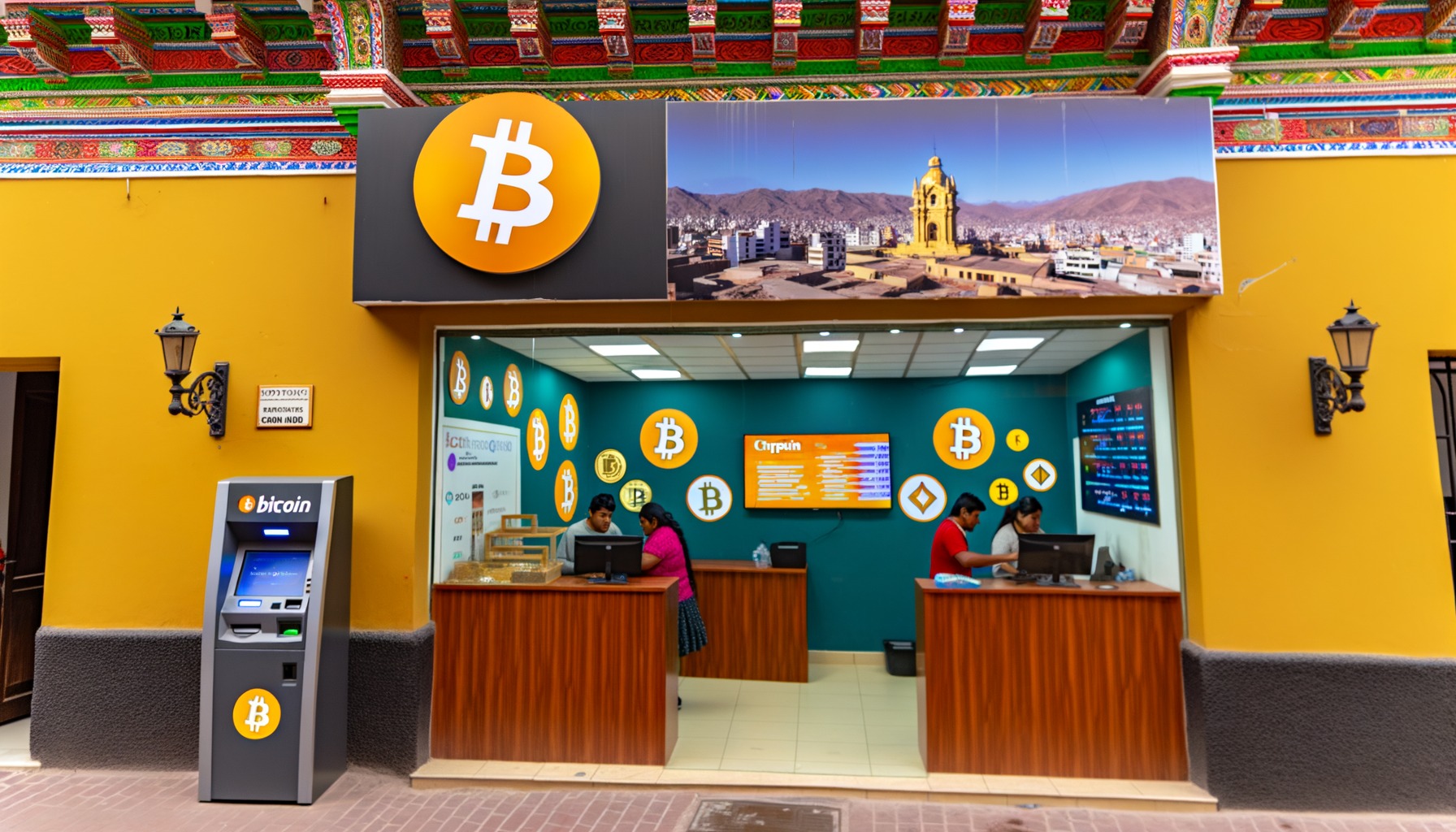
Cryptocurrency adoption is on the rise in Peru, with Bitcoin purchases becoming increasingly common in physical locations. US-based platform Nemo Latam recently opened a physical office in Lima, offering face-to-face services to build customer trust. A personal approach allows users to interact with trained staff, a move aimed at making cryptocurrency more accessible and reducing the uncertainty often associated with the digital finance sector. Nemo Latam is particularly focused on inclusion, with most of its staff comprising Peruvian women.
The initiative is not unique in Peru. Platforms like 9780Bitcoin.com have been offering in-person cryptocurrency services for years, even expanding into Brazil. These efforts reflect a broader goal to promote the continued growth of cryptocurrency usage in Peru, where interest in digital assets has surged. According to a study by Sherlock Communications, Peru ranks as one of the top 50 countries for cryptocurrency adoption and sits 42nd globally for cryptocurrency use, based on Chainalysis data.
The increasing adoption is driven by the need for financial alternatives as Peruvians face rising living costs and economic challenges. Bitcoin has particularly gained traction among Indigenous communities, helping residents manage their finances independently for the first time. With more companies attracted to Peru’s growing crypto market, the government is now exploring the launch of a digital sol, a central bank digital currency (CBDC), to compete with cryptocurrencies.
Ericsson has recently joined the Mobile Satellite Services Association (MSSA), marking a significant step in advancing Non-Terrestrial Networks (NTNs) and expanding global connectivity. The following collaboration underscores Ericsson’s commitment to developing Direct-to-Device (D2D) and Internet of Things (IoT) services through space-based networks, integrating satellite networks with terrestrial cellular systems to address coverage gaps.
Recognising the transformative potential of 5G NTN, Ericsson aims to extend mobile coverage to underserved areas, leveraging L- and S-band spectrum well-suited for mobile satellite services. By employing 3GPP standards, this integration will enable conventional 5G devices to maintain connectivity even in regions lacking terrestrial network coverage, thus contributing to a scalable, sustainable, and affordable global connectivity ecosystem.
Ericsson’s involvement with the Mobile Satellite Services Association (MSSA) highlights its commitment to improving mobile network coverage and reliability. Freddie Södergren of Ericsson’s Business Area Networks emphasises the potential of integrating Non-Terrestrial Networks with land-based networks to enhance global connectivity. Mark Dankberg, MSSA Board Chairman, views Ericsson’s membership as a key boost to developing standards and best practices for Direct-to-Device (D2D) services, aiming for a seamless and affordable user experience through integrated networks.
ReOrbit and Uzma Berhad have announced a groundbreaking partnership to advance a Geostationary Earth Orbit (GEO) communications satellite project. That collaboration will launch a state-of-the-art GEO satellite to boost connectivity and ensure dependable coverage throughout Malaysia.
By merging ReOrbit’s cutting-edge software-enabled satellite technology with Uzma’s expertise in Malaysia’s energy and technology sectors, the initiative is poised to drive major improvements in the region’s communication infrastructure. Positioned as a transformative venture, this agreement has the potential to revolutionise connectivity solutions. Uzma’s CEO, Dato’ Kamarul Redzuan bin Muhamed, emphasised the project’s role in advancing space technologies and promoting a sustainable future within the New Space Economy.
Through the strategic alliance, ReOrbit and Uzma Berhad aim to bolster Malaysia’s dynamic economy with cutting-edge satellite technology. Sethu Saveda Suvanam, CEO and Founder of ReOrbit expressed enthusiasm for the partnership, noting its alignment with ReOrbit’s mission to enhance connectivity and serve the Malaysian population. The partnership will leverage ReOrbit’s technological expertise to address Malaysia’s evolving communication infrastructure needs.
NTCA (The Rural Broadband Association) and ACA Connects strongly advocate for the NTIA to prioritise fibre deployment in the BEAD Program, asserting that fibre is the most reliable and scalable technology to meet the evolving connectivity needs of households and businesses in the US. They argue that the Infrastructure Investment and Jobs Act (IIJA) and BEAD’s Notice of Funding Opportunity have already established fibre as the preferred broadband infrastructure, given its long-term durability and capacity to support future demand.
Moreover, NTCA & ACA Connects have recommended that NTIA seek further consultation on integrating low-earth orbit (LEO) satellites into the program. They express concerns that LEO systems, with their shared capacity across multiple jurisdictions, may undermine the IIJA’s focus on infrastructure investment. Therefore, they propose that NTIA carefully explore LEO satellite technology’s long-term viability and cost implications before allocating BEAD funding to such projects.
In addition, NTCA & ACA Connects believe that alternative technologies, such as unlicensed spectrum and LEO satellites, should only be considered as a last resort, particularly in cases where deploying fibre or other reliable broadband solutions is not economically feasible. They stress that these non-reliable technologies should be deployed solely in the hardest-to-reach areas, ensuring that fibre remains the primary solution in most cases.
By doing so, NTCA & ACA Connects aim to guarantee that Americans, especially in underserved regions, have access to robust and enduring high-speed internet. Furthermore, they emphasise that NTIA’s broadband strategy should focus on delivering long-term connectivity benefits to rural and remote communities. By concentrating on fibre as the core technology and carefully scrutinising the use of alternatives, they believe the BEAD Program can effectively bridge the digital divide and provide sustainable, high-quality internet access for all Americans.