Chinese social media boosts DeepSeek AI launch

Chinese state-backed social media accounts played a key role in amplifying the launch of DeepSeek’s AI models last week, according to an analysis by the firm Graphika. These accounts, including those of Chinese diplomats and media outlets, used platforms like X (formerly Twitter), Facebook, Instagram, and Weibo to highlight DeepSeek’s challenge to US dominance in the AI sector. This online activity coincided with a significant drop in US tech stocks, including a record one-day loss for Nvidia, shedding $593 billion in market value.

Graphika’s report suggested that this was part of a broader strategy by China to use AI to enhance its global influence and counter American leadership in critical technological fields. The surge in online discussion about DeepSeek’s AI capabilities was noticeable, especially on X, where it surpassed US rival ChatGPT in downloads from Apple’s app store shortly after its release. DeepSeek’s AI assistant also claimed to have been developed at a much lower cost than US competitors, raising concerns about a potential price war in the sector.

While China celebrates DeepSeek’s advancements as a victory over US efforts to limit its tech growth, the US has raised suspicions about whether the company improperly accessed American technology. The Commerce Department is investigating whether DeepSeek used banned US chips in its models, further intensifying tensions between the two countries over AI and tech competition. Meanwhile, major US companies like Microsoft and Meta continue their AI investments despite the challenges.

India removes import duties to boost mobile phone production

India has scrapped import duties on key mobile phone components to support local manufacturing, Finance Minister Nirmala Sitharaman announced in the annual budget. The move benefits major firms such as Apple and Xiaomi and is expected to strengthen India‘s position as a global smartphone manufacturing hub. The country has more than doubled its electronics production in six years, reaching $115 billion in 2024, making it the world’s second-largest mobile phone producer.

Key components such as printed circuit board assemblies, camera module parts, and USB cables, which previously faced a 2.5% tax, are now exempt from import duties. The cuts aim to enhance India’s competitiveness against China and Vietnam in the smartphone export market. The Indian IT ministry had previously warned that maintaining high tariffs could cause India to fall behind in the race to attract global companies.

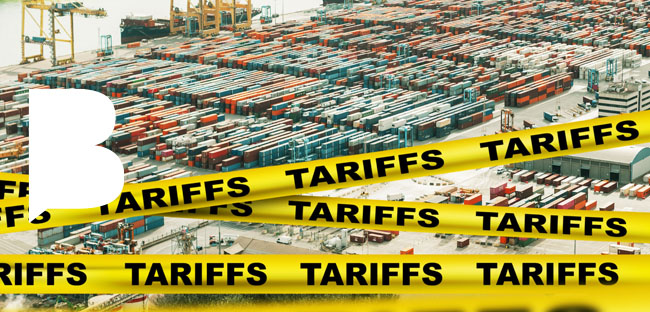
Sitharaman’s budget follows a broader review of India’s customs duty structure to simplify trade and remove tariff inconsistencies. With global trade uncertainty driven by United States President Donald Trump’s tariff policies, India is positioning itself to capitalise on shifts in global supply chains. Experts believe that a more efficient tariff system will encourage further investment in local production and exports.

Nigeria partners with WIOCC on $10 million fibre-to-home internet project for economic growth

The Nigerian Ministry of Communications, Innovation and Digital Economy signed a $10 million MoU with WIOCC to launch fibre-to-home internet connectivity targeting three million homes in the first phase of the project with plans to expand as the rollout progresses.

The government, led by Dr Bosun Tijani, emphasises the importance of digital technology in driving productivity and economic growth, with a goal of building a $1 trillion economy. However, balancing sustainable investment by telecom providers with affordable services for citizens remains a challenge, as highlighted by the recent approval of a tariff hike.

Currently, most Nigerians rely on mobile internet, which lacks the speed and reliability of true high-speed broadband. The fibre-to-home project seeks to address this gap, creating a more connected environment that supports individuals, businesses, and institutions. By improving internet infrastructure nationwide, the initiative aims to foster a more inclusive digital economy, ensuring that more Nigerians benefit from the opportunities offered by high-speed internet.

Why does it matter?

In the long term, the project is designed to scale up, with additional capital being raised and invested to connect more people across Nigeria. As the initiative evolves, it will re-evaluate its targets and expand its reach, ensuring that high-speed broadband becomes accessible to a larger portion of the population.

That effort aligns with the government’s vision of making connectivity a cornerstone of economic development, supporting small businesses and enabling Nigerians to stay connected both at home and on the go. Through this partnership, Nigeria is taking a critical step toward transforming its digital landscape and achieving its economic goals.

Saudi Arabia enhances Hajj experience through strategic partnership with Zain KSA and advanced 5G technology

The Ministry of Hajj and Umrah have partnered with Mobile Telecommunication Company Saudi Arabia (Zain KSA) to enhance the pilgrim experience through the ‘Direct Hajj’ program, which serves visitors from over 120 countries via the Nusuk Hajj platform. The collaboration aims to improve communication services, provide reliable information, and offer exclusive features for pilgrims, ensuring a seamless and enriched journey.

Zain KSA will sponsor the Nusuk Hajj platform and has achieved 100% 5G network coverage at holy sites, backed by a SAR 1.6 billion investment in digital infrastructure. The partnership aligns with Saudi Arabia’s national goals to enhance the digital capacity of the ‘Guests of God Service Program’ and support the target of hosting 30 million Umrah and Hajj pilgrims by 2030, while providing an unprecedented digital experience that complements their spiritual and cultural journey.

That initiative reflects Zain KSA’s commitment to digital inclusivity and advanced infrastructure, as well as the Kingdom’s broader Vision 2030 objectives to improve the quality of services for pilgrims and strengthen its position as a global leader in Hajj and Umrah services.

Ericsson and Batelco to boost Bahrain’s 4G/5G Network

Ericsson and Bahrain Telecommunications Company (Batelco) have partnered to expand and modernise Batelco’s mobile broadband network in Bahrain, enhancing 4G and 5G capabilities, coverage, and capacity. Batelco has deployed Ericsson’s latest Radio Access Network (RAN) products, including massive MIMO antennas.

It has upgraded its Core network infrastructure to the latest Network Function Virtualisation Infrastructure (NFVI) release to handle increased voice and data traffic. Energy-efficient solutions like dual-mode triple band radios and Interleaved AIR 3218 have been integrated, reducing space requirements and energy consumption by up to 20% while improving network performance.

Additionally, Batelco has modernised its Ericsson Mediation system to a cloud-native platform, improving operational efficiency and supporting applications such as IoT and 5G standalone use cases. The new platform ensures scalability, flexibility, and faster time-to-market for future-ready network services.

These advancements collectively strengthen Batelco’s network, making it more efficient, sustainable, and capable of meeting the growing demands of consumers and businesses in Bahrain. The collaboration with Ericsson ensures that Batelco’s infrastructure is future-proof, optimised for resource utilisation, and ready to support emerging technologies.

Mexico challenges Google over gulf name change

Mexico has objected to Google’s decision to rename the Gulf of Mexico as the Gulf of America for US users on Google Maps. President Claudia Sheinbaum confirmed on Wednesday that her government will send an official letter to the tech giant demanding clarification.

The name change follows an announcement by the US government that it had officially rebranded the body of water. In response, Google stated that its platform displays local official names when they differ across countries.

The move has sparked concerns in Mexico over sovereignty and historical recognition. With the government pressing for an explanation, the issue highlights the growing tension between technology firms and national identities in the digital space.

French privacy watchdog to investigate DeepSeek AI over data concerns

France‘s data protection authority, the CNIL, announced it will question DeepSeek to better understand how the Chinese company’s AI system operates and assess potential privacy risks for users. The move comes as European regulators intensify scrutiny of AI, following concerns raised by Italy and Ireland over DeepSeek’s handling of personal data.

DeepSeek recently gained international attention after revealing its latest AI model, DeepSeek-V3, was trained using less than $6 million worth of Nvidia H800 computing power. European authorities have been particularly vigilant about data protection, with the EU’s General Data Protection Regulation (GDPR) setting stringent standards for privacy. Under GDPR, violations can result in fines of up to 4% of a company’s global turnover.

The CNIL’s investigation follows a broader European push to regulate AI technology, with new rules imposing strict transparency obligations on high-risk AI systems. Other countries, such as Italy and Ireland, have also launched inquiries into DeepSeek, reflecting growing concerns over AI’s implications for data privacy across the continent.

DeepSeek: Speeding up the planet or levelling with ChatGPT?

Although the company’s name somewhat overlaps with Google DeepMind, which was launched earlier, the new player in the market has sparked a leap in attention and public interest, becoming one of the biggest AI surprises on the planet upon its launch.

DeepSeek, a company headquartered in China, enjoys significant popularity primarily because its most sought-after features keep pace with giants like OpenAI and Google, as well as due to notable stock market changes that are far from negligible.

In the following points, we will explore these factors and what the future holds for this young company, particularly in the context of the dynamics between China and the US.

How did it start? Origins of DeepSeek

DeepSeek is an AI company from China based in Hangzhou, Zhejiang, founded by entrepreneur and businessman Liang Wenfeng. The company develops open-source LLMs and is owned by a Chinese hedge fund, High-Flyer.

It all started back in 2015 when Liang Wenfeng cofounded High-Flyer. At first, it was a startup, but in 2019, it grew into a hedge fund focused on developing and using AI trading algorithms. For the first two years, they used AI only for trading.

In 2023, High-Flyer founded a startup called DeepSeek, and Liang Wenfeng was appointed CEO. Two years later, on 10 January 2025, DeepSeek announced the release of its first free-to-use chatbot app. The app surpassed its main competitor, ChatGPT, as the most downloaded free app in the US in just 17 days, causing an unprecedented stir on the market.

Unprecedented impact on the market

Few missed the launch of the DeepSeek model, which is why the stock market felt the impact, and so did some of the biggest giants.

For instance, the value of Nvidia shares dropped by as much as 18%. Similar declines were experienced by giants like OpenAI, Google, and other AI companies focused on small and medium-sized enterprises.

On top of this, there is justified concern among investors, who could quickly shift their focus and redirect their investments. However, this could lead to an even more significant drop in the shares of the largest companies.

Open-source approach

DeepSeek embraces an open-source philosophy, making its AI algorithms, models, and training details freely accessible to the public. The company stated that it is committed to transparency and fosters collaboration among developers and researchers worldwide. They also advocate for a more inclusive and innovative AI ecosystem.

Their strategy has the potential to reshape the AI landscape, as it empowers individuals and organisations to contribute to the evolution of AI technology. DeepSeek’s initiative highlights the importance of open collaboration in driving progress and solving complex challenges in the tech industry.

DeepSeek quickly secured the information after being alerted.

With the growing demand for ethical and transparent AI development, DeepSeek’s open-source model sets a precedent for the industry. The company paves the way for a future where AI breakthroughs are driven by collective effort rather than proprietary control.

Cheaper AI model that shook the market

By being cheaper than the competition, DeepSeek has opened the doors of the AI market to many other companies that do not have as much financial power. As dr Jovan Kurbalija, executive director of Diplo, says in his blog post titled ‘How David outwits Goliath in the age of AI?‘, ‘the age of David challenging Goliath has arrived in AI’.

For individuals, this means monthly costs are reduced by 30% to 50%, which can be, and often is, the biggest incentive for users looking to save.

The privileges once enjoyed by those with greater financial resources are now available to those who want to advance their small and medium-sized businesses.

Cyber threats and challenges faced by DeepSeek

Shortly after its launch, DeepSeek faced a significant setback when it was revealed that an error had exposed sensitive information to the public.

This raised alarms for many, especially as the immense popularity led to the AI Assistant being removed from the AppStore more times than OpenAI’s offering, and a large amount of data became accessible.

Experts have expressed concerns that others may have accessed the leaked data. The company has not yet commented on the incident, while the system’s vulnerability provides a foundation for hacking groups to exploit.

DeepSeek for the top spot, ChatGPT defends the throne

The AI race is heating up as DeepSeek challenges industry leader ChatGPT, aiming to claim the top spot in AI. With its open-source approach, DeepSeek is rapidly gaining attention by publicly making its models and training methods available, fostering innovation and collaboration across the AI community.

The race was further spiced up by DeepSeek’s claim that it built an AI model on par with OpenAI’s ChatGPT for under $6 million (£4.8 million). In comparison, Microsoft, OpenAI’s main partner, plans to invest around $80 billion in AI infrastructure this year.

OpenAI’s ChatGPT search tool faces risks of manipulation via hidden content, leading to biased or harmful outputs.

As DeepSeek pushes forward with its transparent and accessible model, the battle for AI supremacy intensifies. Whether openness will outmatch ChatGPT’s established presence remains to be seen, but one thing is sure—the AI landscape is evolving faster than ever.

Why is DeepSeek gaining popularity in 2025?

DeepSeek has emerged as a major player in AI by embracing an open-source philosophy, making its models and training data freely available to developers. This transparency has fueled rapid innovation, allowing researchers and businesses to build upon its technology and contribute to advancements in AI.

Unlike closed systems controlled by major tech giants, DeepSeek’s approach promotes accessibility and collaboration, attracting a growing community of AI enthusiasts. Its cost-effective development, reportedly achieving results comparable to top-tier models with significantly lower investment, has also drawn attention.

As the demand for more open and adaptable AI solutions rises, DeepSeek’s commitment to shared knowledge positions it as a strong contender in the industry. Whether this strategy will redefine the AI landscape remains to be seen, but its growing influence in 2025 is undeniable.

DeepSeek in the future: Development, features, and strategies

Now that it has experienced ‘overnight success,’ the Chinese company aims to push DeepSeek to the top and position it among the most powerful AI firms in the world.

Users can definitely expect many advanced features that will fuel a fierce battle with giants like DeepMind and ChatGPT.

Strategically, DeepSeek will attempt to break into the American market and offer more financially accessible solutions, forcing the key players to make significant cuts.

DeepSeek is undoubtedly a real hit in the market, but it remains to be seen whether price is the only measure of its success.

Whether it will make a leap in its own technology and completely outpace the competition or remain shoulder to shoulder with the giants—or even falter—will be revealed in the near future.

One thing is sure: the Chinese company has seriously shaken up the market, which will need considerable time to recover.

Vodafone achieves world first satellite video call

Vodafone has achieved a world first by making a video call via satellite using a standard smartphone, marking a significant breakthrough in mobile technology. The call, made from the remote Welsh mountains where there was no network signal, was received by CEO Margherita Della Valle. Vodafone used AST SpaceMobile’s BlueBird satellites, which provide speeds of up to 120 megabits per second, to enable the video call, which included voice, text, and data transmission.

This satellite technology is part of Vodafone’s broader plan to expand satellite connectivity across Europe by 2026. The company aims to offer users a full mobile experience, including video calls, even in areas where traditional network coverage is unavailable. Vodafone is also an investor in AST SpaceMobile, alongside major companies like AT&T, Verizon, and Google.

The race to deploy satellite services is heating up, with competitors like Apple, T-Mobile, and SpaceX already working on satellite-based connectivity. Apple’s iPhones, starting from the iPhone 14, offer satellite texting for emergency services and location sharing. Other companies are testing similar services, with plans for voice and data connectivity in the future.

British astronaut Tim Peake, who attended the launch of Vodafone’s space-to-land gateway, hailed the ability to connect via satellite as an ‘incredible breakthrough.’ Peake, who spent six months aboard the International Space Station, highlighted the importance of staying connected while in remote environments and expressed interest in future space missions.

Apple iPhones included in Starlink satellite trial

Apple’s iPhone devices are now eligible to test SpaceX’s Starlink’s direct-to-cell service, which offers satellite-based coverage, according to T-Mobile. The trial, which started after receiving approval from the Federal Communications Commission (FCC) in November, currently provides “text via satellite” capabilities, with plans to add voice and data features in the future.

Initially, only select Android smartphones were eligible for the test, but T-Mobile has expanded compatibility to include iPhones running the latest iOS 18.3 software update. The partnership between Apple, SpaceX, and T-Mobile has been kept under wraps, with the companies working together to integrate Starlink support into Apple’s devices.

The FCC’s approval last year also allowed Starlink’s direct-to-cell service to assist in providing coverage in areas like North Carolina, which were severely impacted by Hurricane Helene. While Apple and SpaceX did not comment outside business hours, the initiative marks a significant step in expanding satellite coverage for mobile users.