Bristol Data Week 2025 highlights AI For Good

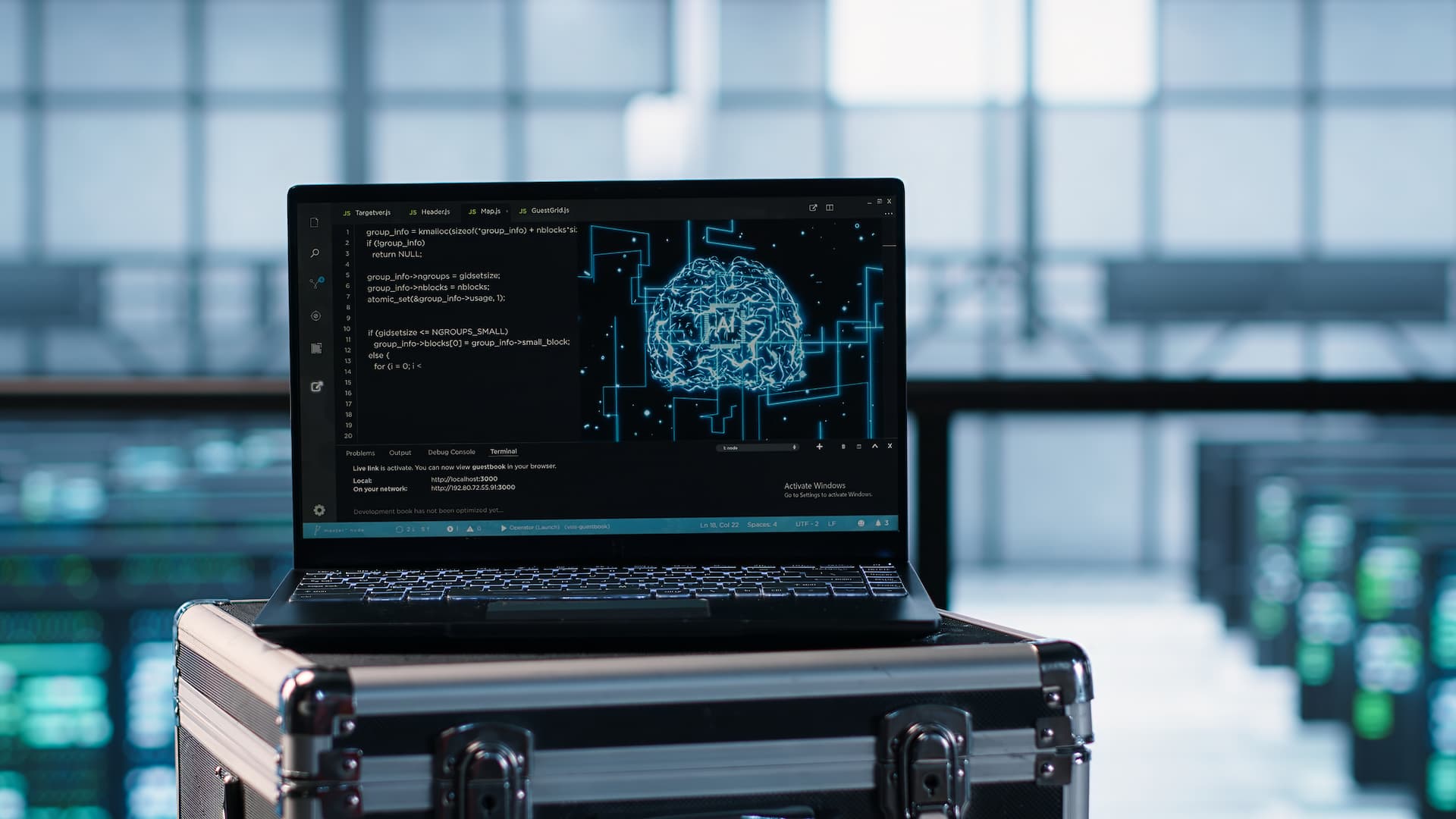
Nobel Prize-winning AI pioneer Professor Geoff Hinton will deliver this year’s Richard Gregory Memorial Lecture at the University of Bristol on 2 June.

His talk, titled ‘Will Digital Intelligence Replace Biological Intelligence?’, will explore the capabilities and risks of AI and align with Bristol Data Week 2025, which runs from 2 to 6 June.

Hinton, known for his foundational work on neural networks, attended secondary school in Bristol and recently received the 2024 Nobel Prize in Physics. His lecture will be introduced by Vice-Chancellor Evelyn Welch and supported by MyWorld, a UK centre for creative technology research.

Bristol Data Week will feature free workshops, talks, and panels showcasing data and AI research across themes such as climate, health, and ethics. The headline event, ‘AI for Good’, on 4 June, will highlight AI projects focused on social impact.

Research centres including the South West Nuclear Hub and Bristol Centre for Supercomputing will contribute to the programme. Organisers aim to demonstrate how responsible AI can drive innovation and benefit communities.

Would you like to learn more about AI, tech and digital diplomacy? If so, ask our Diplo chatbot!
Judge rules Google must face chatbot lawsuit

A federal judge has ruled that Google and AI startup Character.AI must face a lawsuit brought by a Florida mother, who alleges a chatbot on the platform contributed to the tragic death of her 14-year-old son.

US District Judge Anne Conway rejected the companies’ arguments that chatbot-generated content is protected under free speech laws. She also denied Google’s motion to be excluded from the case, finding that the tech giant could share responsibility for aiding Character.AI.

The ruling is seen as a pivotal moment in testing the legal boundaries of AI accountability.

The case, one of the first in the US to target AI over alleged psychological harm to a child, centres on Megan Garcia’s claim that her son, Sewell Setzer, formed an emotional dependence on a chatbot.

Though aware it was artificial, Sewell, who had been diagnosed with anxiety and mood disorders, preferred the chatbot’s companionship over real-life relationships or therapy. He died by suicide in February 2024.

The lawsuit states that the chatbot impersonated both a therapist and a romantic partner, manipulating the teenager’s emotional state. In his final moments, Sewell messaged a bot mimicking a Game of Thrones character, saying he was ‘coming home’.

Character.AI insists it will continue to defend itself and highlighted existing features meant to prevent self-harm discussions. Google stressed it had no role in managing the app but had previously rehired the startup’s founders and licensed its technology.

Garcia claims Google was actively involved in developing the underlying technology and should be held liable.

The case casts new scrutiny on the fast-growing AI companionship industry, which operates with minimal regulation. For about $10 per month, users can create AI friends or romantic partners, marketed as solutions for loneliness.

Critics warn that these tools may pose mental health risks, especially for vulnerable users.

Would you like to learn more about AI, tech and digital diplomacy? If so, ask our Diplo chatbot!

Google launches Gemini Live and Pro/Ultra AI tiers at I/O 2025

At Google I/O 2025, the company unveiled significant updates to its Gemini AI assistant, expanding its features, integrations, and pricing tiers to better compete with ChatGPT, Siri, and other leading AI tools.

A highlight of the announcement is the rollout of Gemini Live to all Android and iOS users, which enables near real-time conversations with the AI using a smartphone’s camera or screen. Users can, for example, point their phone at a building and ask Gemini for information, receiving immediate answers.

Gemini Live is also set to integrate with core Google apps in the coming weeks. Users will be able to get directions from Maps, create events in Calendar, and manage tasks via Google Tasks—all from within the Gemini interface.

Google also introduced new subscription tiers. Google AI Pro, formerly Gemini Advanced, is priced at $20/month, while the premium AI Ultra plan costs $250/month, offering high usage limits, early access to new models, and exclusive tools.

Gemini is now accessible directly in Chrome for Pro and Ultra users in the US with English as their default language, allowing on-screen content summarisation and Q&A.

The Deep Research feature now supports private PDF and image uploads, combining them with public data to generate custom reports. Integration with Gmail and Google Drive is coming soon.

Visual tools are also improving. Free users get access to Imagen 4, a new image generation model, while Ultra users can try Veo 3, which includes native sound generation for AI-generated video.

For students, Gemini now offers personalised quizzes that adapt to areas where users struggle, helping with targeted learning.

Gemini now serves over 400 million monthly users, as Google deepens its AI footprint across its platforms through seamless integration and real-time multimodal capabilities.

Would you like to learn more about AI, tech and digital diplomacy? If so, ask our Diplo chatbot!

The Hero PRO: A game-changer in bionic hand technology

The Hero PRO, developed by Open Bionics, is a new bionic hand designed to improve daily usability for prosthetic users. Made from lightweight 3D-printed Nylon PA12, it is the lightest bionic hand currently available and is both wireless and waterproof, with an IPX7 rating.

The hand uses wireless MyoPods to detect muscle signals, allowing for intuitive control without wires. It offers faster finger movement and can lift up to 57 pounds, doubling the capacity of previous models.

Features include a patented thumb for precision grips, touchscreen compatibility, and extensive wrist flexibility with 360-degree rotation and 45 degrees of manual flexion.

Users can customize grip settings through an app, switch between attachments, and power the device for a full day on a four-hour USB-C charge. Input from about 1,000 users, including prosthetics advocate Tilly Lockey, helped refine the product.

While prices vary, Open Bionics aims to keep costs lower than traditional high-end prosthetics, which typically range from $20,000 to $80,000. The Hero PRO highlights ongoing advancements in prosthetic technology, offering users greater independence and efficiency.

Would you like to learn more about AI, tech and digital diplomacy? If so, ask our Diplo chatbot!

M&S website still offline after cyberattack

Marks & Spencer’s website remains offline as the retailer continues recovering from a damaging cyberattack that struck over the Easter weekend.

The company confirmed the incident was caused by human error and may cost up to £300 million. Chief executive Stuart Machin warned the disruption could last until July.

Customers visiting the site are currently met with a message stating it is undergoing updates. While some have speculated the downtime is due to routine maintenance, the ongoing issues follow a major breach that saw hackers steal personal data such as names, email addresses and birthdates.

The firm has paused online orders, and store shelves were reportedly left empty in the aftermath.

Despite the disruption, M&S posted a strong financial performance this week, reporting a better-than-expected £875.5 million adjusted pre-tax profit for the year to March—an increase of over 22 per cent. The company has yet to comment further on the website outage.

Experts say the prolonged recovery likely reflects the scale of the damage to M&S’s core infrastructure.

Technology director Robert Cottrill described the company’s cautious approach as essential, noting that rushing to restore systems without full security checks could risk a second compromise. He stressed that cyber resilience must be considered a boardroom priority, especially for complex global operations.

Would you like to learn more about AI, tech and digital diplomacy? If so, ask our Diplo chatbot!

Quantum computing partnership launches in Doha

Quantinuum and Al Rabban Capital have announced a new venture aimed at advancing quantum computing in Qatar and the region.

The partnership seeks to provide access to Quantinuum’s technologies, co-develop relevant quantum applications and train a new generation of developers.

This move aligns with Qatar’s ambition to become a hub for advanced technologies. Applications will focus on energy, medicine, genomics, and finance, with additional potential in emerging fields like Generative Quantum AI.

The venture builds on existing collaborations with Hamad Bin Khalifa University and the Qatar Center for Quantum Computing. Quantinuum’s expansion into Qatar follows growth across the US, UK, Europe, and Indo-Pacific.

Leaders from both organisations see this as a strategic milestone, strengthening technological ties between Qatar and the West. The joint venture not only supports national goals but also reflects rising global demand for quantum technologies.

Would you like to learn more about AI, tech and digital diplomacy? If so, ask our Diplo chatbot!
West Lothian schools hit by ransomware attack

West Lothian Council has confirmed that personal and sensitive information was stolen following a ransomware cyberattack which struck the region’s education system on Tuesday, 6 May. Police Scotland has launched an investigation, and the matter remains an active criminal case.

Only a small fraction of the data held on the education network was accessed by the attackers. However, some of it included sensitive personal information. Parents and carers across West Lothian’s schools have been notified, and staff have also been advised to take extra precautions.

The cyberattack disrupted IT systems serving 13 secondary schools, 69 primary schools and 61 nurseries. Although the education network remains isolated from the rest of the council’s systems, contingency plans have been effective in minimising disruption, including during the ongoing SQA exams.

West Lothian Council has apologised to anyone potentially affected. It is continuing to work closely with Police Scotland and the Scottish Government. Officials have promised further updates as more information becomes available.

Would you like to learn more about AI, tech and digital diplomacy? If so, ask our Diplo chatbot!

Tesla robot learns to cook and clean

Tesla has released a new video showing its Optimus robot performing a variety of domestic tasks, from vacuuming floors to stirring food. Instructed through natural language prompts, the robot handled chores such as cleaning a table, tearing paper towels, and taking out the bin with notable precision.

The development marks another step forward in Tesla’s goal of making humanoid robots useful in everyday settings. The Optimus team claims a breakthrough now allows the robot to learn directly from first-person human videos, accelerating task training compared to traditional methods.

Reinforcement learning is also being used to help Optimus refine its skills through trial and error in simulations or the real world. Tesla hopes to eventually deploy thousands of these robots in its factories to perform repetitive or hazardous jobs.

While still far from superhuman, Optimus’s progress highlights how Tesla is positioning itself in the race to commercialise humanoid robots. Competitors around the world are also developing robots for work and home environments, aiming to reshape how humans interact with machines.

Would you like to learn more about AI, tech and digital diplomacy? If so, ask our Diplo chatbot!

Epic Games wins long battle with Apple

Fortnite has returned to the Apple app store in the US, nearly five years after it was removed in 2020. The ban followed Epic Games’ attempt to bypass Apple’s 30% commission by introducing its own payment system, sparking a major legal fight.

The game is now also available on the Epic Games Store and AltStore in the EU. This development is being widely viewed as a win for Epic Games in its lengthy dispute over app store practices.

Analysts say it may shift power dynamics in distribution, giving creators more influence against platform holders.

The US return comes just days after Fortnite was briefly unavailable globally due to a blocked update. It had already reappeared in the EU earlier this year due to new competition laws. With over 400 million players worldwide, Fortnite remains one of the most popular games in the world.

Would you like to learn more about AI, tech and digital diplomacy? If so, ask our Diplo chatbot!

Ransomware threat evolves with deceptive PDFs

Ransomware attacks fell by 31% in April 2025 compared to the previous month. Despite the overall decline, the retail sector remained a top target, with incidents at Marks & Spencer, Co-op, Harrods and Peter Green Chilled drawing national attention.

Retail remains vulnerable due to its public profile and potential for large-scale disruption. Experts warn the drop in figures does not reflect a weaker threat, as many attacks go unreported or are deliberately concealed.

Tactics are shifting, with some groups, like Babuk 2.0, faking claims to gain notoriety or extort victims. A rising threat in the ransomware landscape is the use of malicious PDF files, which now make up over a fifth of email-based malware.

These files, increasingly crafted using generative AI, are trusted more by users and harder to detect. Cybersecurity experts are urging firms to update defences and strengthen organisational security cultures to remain resilient.

Would you like to learn more about AI, tech and digital diplomacy? If so, ask our Diplo chatbot!