The Hollywood actors’ union, SAG-AFTRA, has agreed with the online talent marketplace Narrativ, allowing actors to sell the rights to digitally replicate their voices using AI. The following deal addresses growing concerns among performers about the potential theft of their likenesses through AI, providing them with a way to earn income and retain control over how their voice replicas are used. Actors can set the price for their digital voice, ensuring it meets at least the union’s minimum pay standards, and advertisers must obtain consent for each use.
SAG-AFTRA has praised this agreement as a model for the ethical use of AI in advertising, emphasising the importance of safeguarding performers’ rights in the digital age. The issue of AI-driven voice replication has been a significant concern in Hollywood, highlighted by actress Scarlett Johansson’s accusations against OpenAI for the unauthorised use of her voice. That concern was also central to last year’s Hollywood strike and remains a key issue in ongoing labour disputes involving video game voice actors and motion-capture performers.
In response to the rise of AI-generated deepfakes and their potential misuse, the NO FAKES Act has been introduced in Congress, aiming to make unauthorised AI copying of a person’s voice and likeness illegal. The bill has gained support from major industry players, including SAG-AFTRA, Disney, and The Recording Academy, reflecting widespread concern over the implications of AI in entertainment and beyond.
Google has unveiled its latest lineup of Pixel smartphones, marking a significant shift towards deeper integration of artificial intelligence in its hardware. Unlike previous years, the company chose to announce the new models in the summer, positioning itself ahead of competitors as it races to incorporate AI technology across its products.
The new Pixel devices feature innovative AI-powered tools, including a unique function that allows users to search for information within screenshots. Additionally, Google’s chatbot, Gemini, can now be accessed as an overlay on other apps, offering assistance and generating content. The launch event, held at Alphabet’s Bay View campus, showcased these advancements, with Google’s senior vice president of devices and services, Rick Osterloh, emphasising the company’s commitment to practical AI applications.
With AI taking centre stage, Google’s event impressed industry experts, with some noting it as one of the most comprehensive presentations the company has ever held. This early release strategy comes as Google aims to stay ahead of its rivals, particularly Apple, which is expected to launch new AI features in its products later this year.
The Pixel 9 series includes several models, with the base version priced at $799, $100 more than its predecessor. The devices will start shipping in August, with the Pixel 9 Pro and Pixel 9 Pro Fold set for release in September, further highlighting Google’s push to lead in the AI-driven smartphone market.
Dutch copyright enforcement group BREIN has successfully taken down a large language dataset that trains AI models without proper permissions. The dataset contained information gathered from tens of thousands of books, news sites, and Dutch language subtitles from numerous films and TV series. BREIN’s Director, Bastiaan van Ramshorst, noted the difficulty in determining whether and how extensively AI companies had already used the dataset.
The removal comes as the EU prepares to enforce its AI Act, requiring companies to disclose the datasets used in training AI models. The person responsible for offering the Dutch dataset complied with a cease and desist order and removed it from the website where it was available.
Why does this matter?
The following action follows similar moves in other countries, such as Denmark, where a copyright protection group took down a large dataset called ‘Books3’ last year. BREIN did not disclose the individual’s identity behind the dataset, citing Dutch privacy regulations.
As per new research conducted by Anglia Ruskin University, there is a rising interest among online offenders in learning how to create AI-generated child sexual abuse material, as evident from interactions on the dark web. The revelation was made by analysing the chats that took place in the dark web forum over the past 12 months, where group members were found to be teaching each other how to create child sexual abuse material by using online guides and videos and exchanging advice.
Members in these forums have gathered their supply of non-AI content to learn how to make these images. Researchers Dr Deanna Davy and Prof Sam Lundrigan also revealed that some members referred others who created AI images as artists. In contrast, others hoped the technology would soon become sufficiently capable to make the process easier.
Why does it matter?
The following trend has massive ramifications for child safety. Dr Davy stated how AI-generated child sexual abuse material warrants a greater understanding of how offenders are creating and sharing such content, especially for police and public protection agencies. Professor Lundrigan added how this trend ‘adds to the growing global threat of online child abuse in all forms and must be viewed as a critical area to address in our response to this type of crime’.
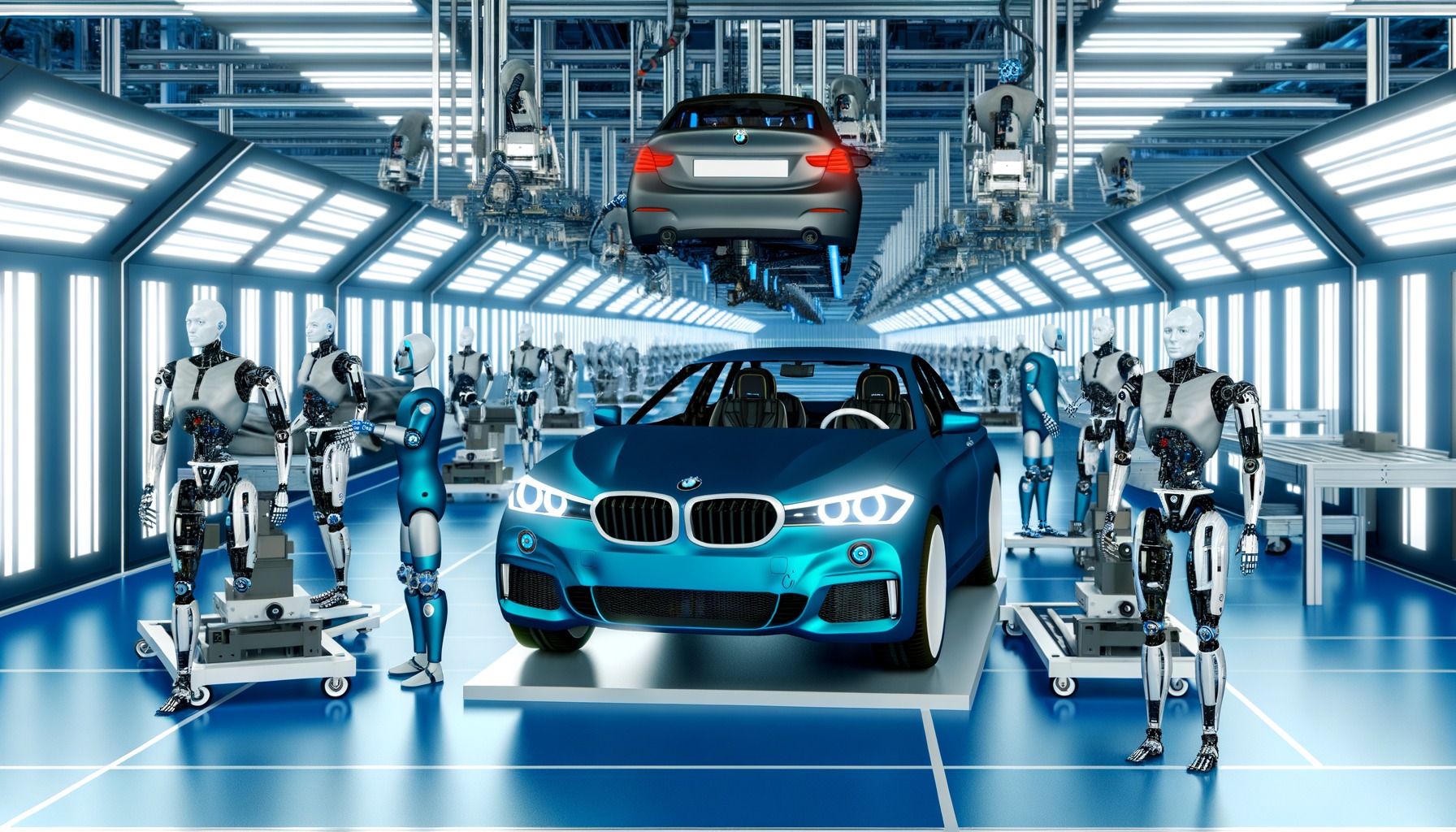
BMW is exploring the potential of AI-powered humanoid robots to assist in car manufacturing. The German automaker has partnered with California-based Figure to trial their advanced humanoid robot, Figure 02, at the South Carolina BMW Group Plant Spartanburg. The robot’s ability to handle complex tasks with human-like dexterity was put to the test during the trial, focusing on whether these machines could safely integrate into production lines.
Footage from the trial showcases the robot’s capabilities, including its ability to walk, grasp, and coordinate two-handed tasks. The Figure 02 is equipped with a powerful processor, advanced sensors, and human-scale hands, making it suitable for physically demanding and repetitive tasks in the factory. The combination of mobility and dexterity positions the robot as a potential asset in challenging work environments.
Why does this matter?
BMW highlights the significance of these developments in robotics, noting the promise they hold for the future of production. While the company has not yet committed to incorporating AI robots into its workforce, the rapid advancement of AI suggests that their use in manufacturing may soon become a reality.
The trial serves as an early step in assessing the feasibility of humanoid robots in production settings, with BMW keen to stay at the forefront of this technological evolution. The company is carefully evaluating the results to determine the best possible applications for these robots in the automotive industry.
Companies from US and China are leading the race in AI research, with Alphabet, the parent company of Google, at the forefront. A recent study from Georgetown University revealed that Alphabet has published the most frequently cited AI academic papers over the past decade. Seven of the top ten positions are held by US companies, including Microsoft and Meta, reflecting their dominance in the field.
Chinese firms are not far behind, with Tencent, Alibaba, and Huawei securing spots within the top ten. These companies have shown remarkable growth, particularly in the number of papers accepted at major conferences. Huawei has outpaced its competitors with a 98.2% annual growth rate in this area, followed by Alibaba at 53.5%.
The competition extends beyond academic publications to patents. Baidu, a leading Chinese tech firm, topped the list of patent applications with over 10,000 submissions from 2013 to 2023. Baidu’s growth has been particularly striking, with a 228% increase in patent applications year-on-year in 2020. US companies hold three spots in the top ten for patents, with IBM making the list.
Samsung Electronics is the only Korean company to make the top 100, ranking No. 14 for highly cited AI articles and No. 4 for patents. However, Samsung’s growth in these areas has been slower compared to other global leaders, with modest increases in conference paper acceptances in recent years.
Tokyo has introduced a new AI-driven system aimed at improving the speed and efficiency of disaster response efforts. The technology, developed by Hitachi Ltd., leverages high-altitude cameras to detect fires and building collapses in real-time, ensuring that emergency services receive critical information without delay.
The system is designed to automatically identify signs of disasters, such as structural collapses and fires, and immediately notify the police, fire department, and Japan’s self-defense forces. This rapid communication is intended to streamline response efforts, potentially saving lives during emergencies.
High-resolution cameras have been strategically installed at various locations across Tokyo, including the metropolitan government buildings, to support the system’s operations. The initiative is particularly significant given Japan’s ongoing concerns about the threat of a ‘mega’ earthquake.
Tokyo’s investment in AI technology reflects the city’s commitment to bolstering its disaster preparedness, aiming to safeguard its residents by ensuring quicker and more effective emergency responses.
Prime Minister of Pakistan, Shehbaz Sharif, has highlighted the significant role of provinces in supporting students through the National Finance Commission (NFC), which allocates 60 percent of its shares to them. Speaking at the International Youth Day event, he pointed out that provinces now have ample resources to invest in educational initiatives, including the distribution of laptops, a practice he championed as Chief Minister of Punjab.
The Prime Minister announced that the federal government would distribute smartphones to one million high-achieving students, while provinces will continue to provide laptops. Emphasising the importance of technology in education, he underlined that equipping the new generation with modern tools is essential for the country’s future. AI, he noted, is a key area for growth.
Citing China’s success through technological advancements, the Prime Minister of Pakistan vowed to make all necessary resources available to students. He also reflected on accumulated debt over the past 70 years, contrasting it with the vision of the country’s founders. The speech included a call to action for a long-term educational programme to be launched after 14 August.
Sharif’s remarks stressed the need to bridge the gap between different social classes in Pakistan, with a focus on ensuring that every child, regardless of background, has access to the latest technology. He expressed hope that these initiatives would lead to a brighter future for the nation.
Huawei Technologies is on the brink of releasing a new AI chip, Ascend 910C, to challenge Nvidia’s dominance in the Chinese market. The company has made significant strides despite US sanctions, with Chinese internet firms and telecom operators recently testing the processor.
Huawei claims that the Ascend 910C rivals Nvidia’s H100, a powerful AI chip that has been unavailable in China.
Why does this matter?
The development signals Huawei’s ongoing efforts to circumvent restrictions and bolster its position in the AI sector.
The potential impact of OpenAI’s realistic voice feature on human interactions has raised concerns, with the company warning that people might form emotional bonds with AI at the expense of real-life relationships. The company noted that users of its GPT-4 model have shown signs of anthropomorphizing the AI, attributing human-like qualities to it, which could lead to misplaced trust and dependency. OpenAI’s report highlighted that the high-quality voice interaction might exacerbate these issues, raising questions about the long-term effects on social norms.
The company observed that some testers of the AI voice feature interacted with it in ways that suggested an emotional connection, such as expressing sadness over the end of their session. While these behaviours might seem harmless, OpenAI emphasised the need to study their potential evolution over time. The report also suggested that reliance on AI for social interaction could diminish users’ abilities or willingness to engage in human relationships, altering how people interact with one another.
Concerns were also raised about the AI’s ability to recall details and handle tasks, which might lead to over-reliance on the technology. OpenAI further noted that its AI models, designed to be deferential in conversations, might inadvertently promote anti-social norms when users become accustomed to behaviours, such as interrupting, that are inappropriate in human interactions. The company pledged to continue testing how these voice capabilities could affect emotional attachment and social behaviour.
The issue gained attention following a controversy in June when OpenAI was criticized for allegedly using a voice similar to actress Scarlett Johansson‘s in its chatbot. Although the company denied the voice belonged to Johansson, the incident underscored the risks associated with voice-cloning technology. As AI models continue to advance toward human-like reasoning, experts are increasingly urging a pause to consider the broader implications for human relationships and societal norms.