ChatGPT to exit WhatsApp after Meta policy change

OpenAI says ChatGPT will leave WhatsApp on 15 January 2026 after Meta’s new rules banning general-purpose AI chatbots on the platform. ChatGPT will remain available on iOS, Android, and the web, the company said.

Users are urged to link their WhatsApp number to a ChatGPT account to preserve history, as WhatsApp doesn’t support chat exports. OpenAI will also let users unlink their phone numbers after linking.

Until now, users could message ChatGPT on WhatsApp to ask questions, search the web, generate images, or talk to the assistant. Similar third-party bots offered comparable features.

Meta quietly updated WhatsApp’s business API to prohibit AI providers from accessing or using it, directly or indirectly. The change effectively forces ChatGPT, Perplexity, Luzia, Poke, and others to shut down their WhatsApp bots.

The move highlights platform risk for AI assistants and shifts demand toward native apps and web. Businesses relying on WhatsApp AI automations will need alternatives that comply with Meta’s policies.

Would you like to learn more about AI, tech and digital diplomacy? If so, ask our Diplo chatbot!

Innovation versus risk shapes Australia’s AI debate

Australia’s business leaders were urged to adopt AI now to stay competitive, despite the absence of hard rules, at the AI Leadership Summit in Brisbane. The National AI Centre unveiled revised voluntary guidelines, and Assistant Minister Andrew Charlton said a national AI plan will arrive later this year.

The guidance sets six priorities, from stress-testing and human oversight to clearer accountability, aiming to give boards practical guardrails. Speakers from NVIDIA, OpenAI, and legal and academic circles welcomed direction but pressed for certainty to unlock stalled investment.

Charlton said the plan will focus on economic opportunity, equitable access, and risk mitigation, noting some harms are already banned, including ‘nudify’ apps. He argued Australia will be poorer if it hesitates, and regulators must be ready to address new threats directly.

The debate centred on proportional regulation: too many rules could stifle innovation, said Clayton Utz partner Simon Newcomb, yet delays and ambiguity can also chill projects. A ‘gap analysis’ announced by Treasurer Jim Chalmers will map which risks existing laws already cover.

CyberCX’s Alastair MacGibbon warned that criminals are using AI to deliver sharper phishing attacks and flagged the return of erotic features in some chatbots as an oversight test. His message echoed across panels: move fast with governance, or risk ceding both competitiveness and safety.

Would you like to learn more about AI, tech, and digital diplomacy? If so, ask our Diplo chatbot!

Medical group hit with £100,000 penalty after cyberattack exposes patient data

Emails containing sensitive health data were stolen from the Medical Specialist Group (MSG) in a 2021 cyberattack. The data has been later used in phishing campaigns, prompting the Office of the Data Protection Authority (ODPA) to fine MSG £100,000 for insufficiently safeguarding personal data and breaching data protection legislation.

Investigators found the clinic’s email server was compromised in August 2021 and went undetected for more than three months. Health data is sensitive information that requires stringent protection. However, the ODPA found MSG neglected to install routine security updates for thirteen months, and weaknesses in its threat-detection system led to multiple missed chances to identify unauthorised access to its email server.

The ODPA has ordered MSG to pay £75,000 within 60 days and a further £25,000 after 14 months, with the final amount being waived if it completes an agreed security action plan. MSG stated it has invested in new technology, system monitoring and staff training. The exact number of stolen emails remains unclear, though thousands were left exposed to unauthorised access.

The breach adds to a growing list of cyberattacks targeting the healthcare sector over the past year, including incidents like the Anne Arundel Dermatology cyberattack affecting nearly two million patients and the McLaren Health Care ransomware attack, affecting over 700,000 individuals.

Would you like to learn more about AI, tech, and digital diplomacy? If so, ask our Diplo chatbot!

AI chats with ‘Jesus’ spark curiosity and criticism

Text With Jesus, an AI chatbot from Catloaf Software, lets users message figures like ‘Jesus’ and ‘Moses’ for scripture-quoting replies. CEO Stéphane Peter says curiosity is driving rapid growth despite accusations of blasphemy and worries about tech intruding on faith.

Built on OpenAI’s ChatGPT, the app now includes AI pastors and counsellors for questions on scripture, ethics, and everyday dilemmas. Peter, who describes himself as not particularly religious, says the aim is access and engagement, not replacing ministry or community.

Examples range from ‘Do not be anxious…’ (Philippians 4:6) to the Golden Rule (Matthew 7:12), with answers framed in familiar verse. Fans call it a safe, approachable way to explore belief; critics argue only scripture itself should speak.

Faith leaders and commentators have cautioned against mistaking AI outputs for wisdom. The Vatican has stressed that AI is a tool, not truth, and that young people need guidance, not substitution, in spiritual formation.

Reception is sharply split online. Supporters praise convenience and curiosity-spark; detractors cite theological drift, emoji-laden replies, and a ‘Satan’ mode they find chilling. The app holds a 4.7 rating on the Apple App Store from more than 2,700 reviews.

Would you like to learn more about AI, tech and digital diplomacy? If so, ask our Diplo chatbot!

AWS outage turned a mundane DNS slip into global chaos

Cloudflare’s boss summed up the mood after Monday’s chaos, relieved his firm wasn’t to blame as outages rippled across more than 1,000 companies. Snapchat, Reddit, Roblox, Fortnite, banks, and government portals faltered together, exposing how much of the web leans on Amazon Web Services.

AWS is the backbone for a vast slice of the internet, renting compute, storage, and databases so firms avoid running their own stacks. However, a mundane Domain Name System error in its Northern Virginia region scrambled routing, leaving services online yet unreachable as traffic lost its map.

Engineers call it a classic failure mode: ‘It’s always DNS.’ Misconfigurations, maintenance slips, or server faults can cascade quickly across shared platforms. AWS says teams moved to mitigate, but the episode showed how a small mistake at scale becomes a global headache in minutes.

Experts warned of concentration risk: when one hyperscaler stumbles, many fall. Yet few true alternatives exist at AWS’s scale beyond Microsoft Azure and Google Cloud, with smaller rivals from IBM to Alibaba, and fledgling European plays, far behind.

Calls for UKEU cloud sovereignty are growing, but timelines and costs are steep. Monday’s outage is a reminder that resilience needs multi-region and multi-cloud designs, tested failovers, and clear incident comms, not just faith in a single provider.

Would you like to learn more about AI, tech, and digital diplomacy? If so, ask our Diplo chatbot!

AI is transforming patient care and medical visits

AI is increasingly shaping the patient experience, from digital intake forms to AI-powered ambient scribes in exam rooms. Stanford experts explain that while these tools can streamline processes, patients should remain aware of how their data is collected, stored, and used.

De-identified information may still be shared for research, marketing, or AI training, raising privacy considerations.

AI is also transforming treatment planning. Platforms like Atropos Health allow doctors to query hundreds of millions of records, generating real-world evidence to inform faster and more effective care.

Patients may benefit from data-driven treatment decisions, but human oversight remains essential to ensure accuracy and safety.

Outside the clinic, AI is being integrated into health apps and devices. From mental health support to disease detection, these tools offer convenience and early insights. Experts warn that stronger evaluation and regulation are needed to confirm their reliability and effectiveness.

Patients are encouraged to ask providers about data storage, third-party access, and real-time recording during visits. While AI promises to improve healthcare, realistic expectations are vital, and individuals should actively monitor how their personal health information is used.

Would you like to learn more about AI, tech and digital diplomacy? If so, ask our Diplo chatbot!

UK actors’ union demands rights as AI uses performers’ likenesses without consent

The British performers’ union Equity has warned of coordinated mass action against technology companies and entertainment producers that use its members’ images, voices or likenesses in artificial-intelligence-generated content without proper consent.

Equity’s general secretary, Paul W Fleming, announced plans to mobilise tens of thousands of actors through subject access requests under data-protection law, compelling companies to disclose whether they have used performers’ data in AI content.

The move follows growing numbers of complaints from actors about alleged mis-use of their likenesses or voices in AI material. One prominent case involves Scottish actor Briony Monroe, who claims her facial features and mannerisms were used to create the synthetic performer ‘Tilly Norwood’. The AI-studio behind the character denies the allegations.

Equity says the strategy is intended to ‘make it so hard for tech companies and producers to not enter into collective rights’ deals. It argues that existing legislation is being circumvented as foundational AI models are trained using data from actors, but with little transparency or compensation.

The trade body Pact, representing studios and producers, acknowledges the importance of AI but counters that without accessing new tools firms may fall behind commercially. Pact complains about the lack of transparency from companies on what data is used to train AI systems.

In essence, the standoff reflects deeper tensions in the creative industries: how to balance innovation, performer rights and transparency in an era when digital likenesses and synthetic ‘actors’ are emerging rapidly.

Would you like to learn more about AI, tech and digital diplomacy? If so, ask our Diplo chatbot

Civil groups question independence of Irish privacy watchdog

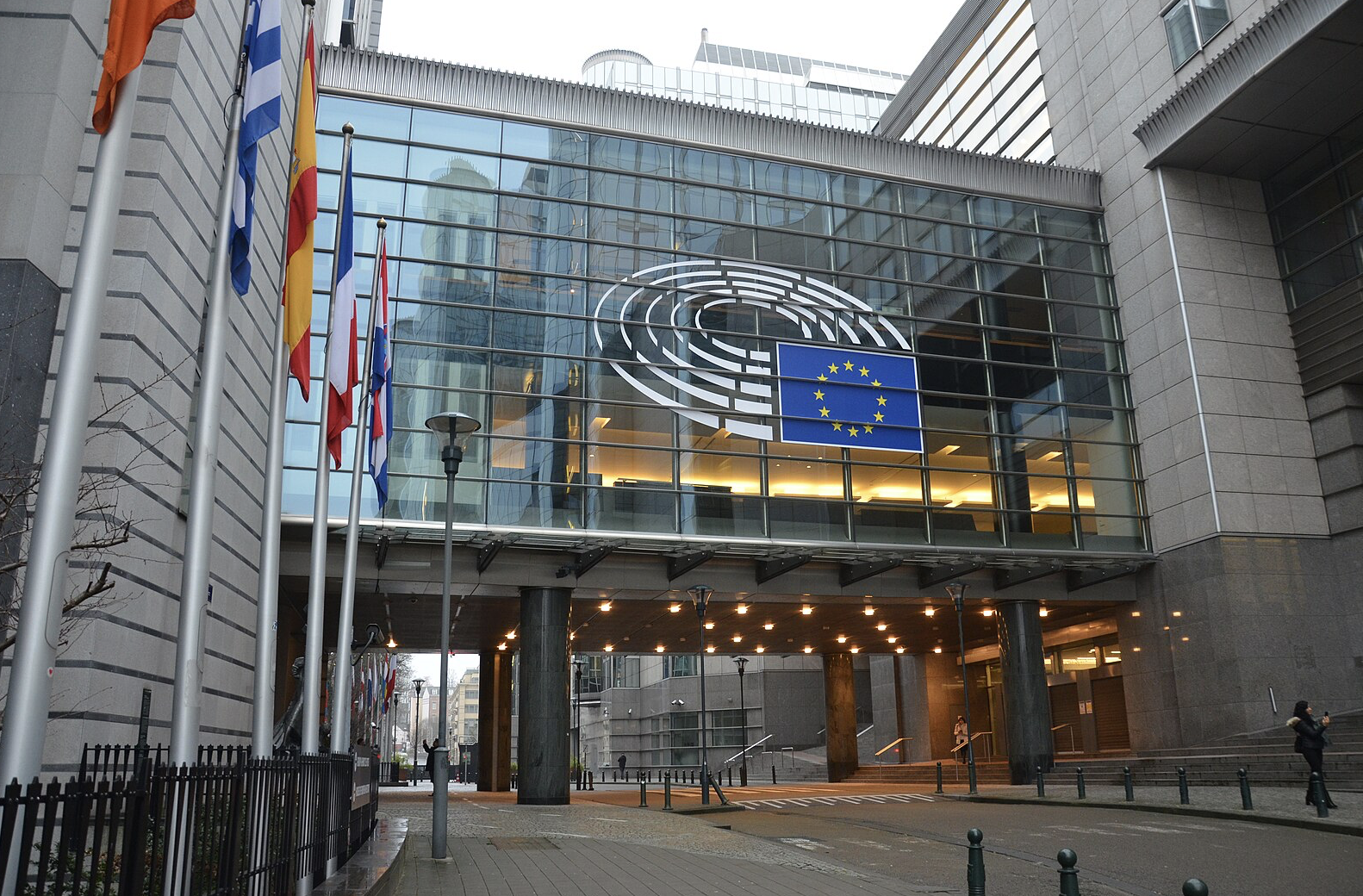
More than 40 civil society organisations have asked the European Commission to investigate Ireland’s privacy regulator. Their letter questions whether the Irish Data Protection Commission (DPC) remains independent following the appointment of a former Meta lobbyist as Commissioner.

Niamh Sweeney, previously Facebook’s head of public policy for Ireland, became the DPC’s third commissioner in September. Her appointment has triggered concerns among digital rights groups that oversee compliance with the EU’s General Data Protection Regulation.

The letter calls for a formal work programme to ensure that data protection rules are enforced consistently and free from political or corporate influence. Civil society groups argue that effective oversight is essential to preserve citizens’ trust and uphold the GDPR’s credibility.

The DPC, headquartered in Dublin, supervises major tech firms such as Meta, Apple, and Google under the EU’s privacy regime. Critics have long accused it of being too lenient toward large companies operating in Ireland’s digital sector.

Would you like to learn more about AI, tech and digital diplomacy? If so, ask our Diplo chatbot

AI transforms Japanese education while raising ethical questions

AI is reshaping Japanese education, from predicting truancy risks to teaching English and preserving survivor memories. Schools and universities nationwide are experimenting with systems designed to support teachers and engage students more effectively.

In Saitama’s Toda City, AI analysed attendance, health records, and bullying data to identify pupils at risk of skipping school. During a 2023 pilot, it flagged more than a thousand students and helped teachers prioritise support for those most vulnerable.

Experts praised the system’s potential but warned against excessive dependence on algorithms. Keio University’s Professor Makiko Nakamuro said educators must balance data-driven insights with privacy safeguards and human judgment. Toda City has already banned discriminatory use of AI results.

AI’s role is also expanding in language learning. Universities such as Waseda and Kyushu now use a Tokyo-developed conversation AI that assesses grammar, pronunciation, and confidence. Students say they feel more comfortable practising with a machine than in front of classmates.

Would you like to learn more about AI, tech and digital diplomacy? If so, ask our Diplo chatbot

Startup raises $9m to orchestrate Gulf digital infrastructure

Bilal Abu-Ghazaleh has launched 1001 AI, a London–Dubai startup building an AI-native operating system for critical MENA industries. The two-month-old firm raised $9m seed from CIV, General Catalyst and Lux Capital, with angels including Chris Ré, Amjad Masad and Amira Sajwani.

Target sectors include airports, ports, construction, and oil and gas, where 1001 AI sees billions in avoidable inefficiencies. Its engine ingests live operational data, models workflows and issues real-time directives, rerouting vehicles, reassigning crews and adjusting plans autonomously.

Abu-Ghazaleh brings scale-up experience from Hive AI and Scale AI, where he led GenAI operations and contributor networks. 1001 borrows a consulting-style rollout: embed with clients, co-develop the model, then standardise reusable patterns across similar operational flows.

Investors argue the Gulf is an ideal test bed given sovereign-backed AI ambitions and under-digitised, mission-critical infrastructure. Deena Shakir of Lux says the region is ripe for AI that optimises physical operations at scale, from flight turnarounds to cargo moves.

First deployments are slated for construction by year-end, with aviation and logistics to follow. The funding supports early pilots and hiring across engineering, operations and go-to-market, as 1001 aims to become the Gulf’s orchestration layer before expanding globally.

Would you like to learn more about AI, tech and digital diplomacy? If so, ask our Diplo chatbot!