Teen victim turns deepfake experience into education

A US teenager targeted by explicit deepfake images has helped create a new training course. The programme aims to support students, parents and school staff facing online abuse.

The course explains how AI tools are used to create sexualised fake images. It also outlines legal rights, reporting steps and available victim support resources.

Research shows deepfake abuse is spreading among teenagers, despite stronger laws. One in eight US teens know someone targeted by non-consensual fake images.

Developers say education remains critical as AI tools become easier to access. Schools are encouraged to adopt training to protect students and prevent harm.

Would you like to learn more about AI, tech and digital diplomacy? If so, ask our Diplo chatbot

Taiwan aims to train 500,000 AI professionals

Taiwan aims to train 500,000 AI professionals by 2040, backed by a NT$100 billion (US$31.6 billion) government venture fund. President Lai Ching-te announced the 2026 AI talent forum in Taipei.

The government’s 10-year AI plan includes a national computing centre and the development of technologies such as silicon photonics, quantum computing, and robotics. President Lai said that national competitiveness depends on both chipmaking and citizens’ ability to utilise AI across various disciplines.

To achieve these goals, AI training courses are being introduced for public sector employees, and students are being encouraged to acquire AI skills. The initiative aims to foster cooperation between government, industry, and academia to drive economic transformation.

With a larger pool of AI professionals, Taiwan hopes to help small and medium-sized enterprises accelerate digital upgrades, enhance innovation, and strengthen the nation’s global competitiveness in emerging technologies.

Would you like to learn more about AI, tech and digital diplomacy? If so, ask our Diplo chatbot

Google removes AI health summaries after safety concerns

Google removed some AI health summaries after a Guardian investigation found they gave misleading and potentially dangerous information. The AI Overviews contained inaccurate liver test data, potentially leading patients to believe they were healthy falsely.

Experts have criticised AI Overviews for oversimplifying complex medical topics, ignoring essential factors such as age, sex, and ethnicity. Charities have warned that misleading AI content could deter people from seeking medical care and erode trust in online health information.

Google removed AI Overviews for some queries, but concerns remain over cancer and mental health summaries that may still be inaccurate or unsafe. Professionals emphasise that AI tools must direct users to reliable sources and advise seeking expert medical input.

The company stated it is reviewing flagged examples and making broad improvements, but experts insist that more comprehensive oversight is needed to prevent AI from dispensing harmful health misinformation.

Would you like to learn more about AI, tech and digital diplomacy? If so, ask our Diplo chatbot

BBC launches media literacy series for teenagers

BBC Children’s and Education has launched Solve The Story, a new series tackling online misinformation among teenagers. The six-part programme is designed for classroom use across UK schools.

The British series follows research showing teachers lack resources to teach critical thinking effectively. Surveys found teenagers struggle with online content volume, while one in three teachers find media literacy difficult to deliver.

Solve The Story uses mystery-style storytelling to help pupils question sources, spot deepfakes and challenge viral claims. Each episode includes practical classroom guides supporting teachers and lesson planning.

BBC figures say two thirds of teenagers worry about fake news causing confusion and stress. Educators argue AI-driven misinformation makes structured media literacy support increasingly urgent.

Would you like to learn more about AI, tech and digital diplomacy? If so, ask our Diplo chatbot

AI earbuds go beyond music

Startups are transforming everyday earbuds into AI assistants that can record meetings, translate languages, or offer cross-platform support, expanding the devices’ role beyond music. Major tech firms, such as Apple and Samsung, laid the groundwork with noise-cancelling and voice features.

At CES, companies such as OSO, Viaim and Timekettle demonstrated professional and educational use cases. Schools utilise translation earbuds to assist non-English-speaking students in following lessons, while professionals can retrieve meeting highlights on demand.

Experts note that earbuds are more accessible than smart glasses, but remain limited by voice-only interaction and reliance on smartphones. Neural earbuds with sensitive sensors could enable hands-free control or internet access for individuals with disabilities.

Although most headphones today still focus on listening, AI earbuds hint at a shift in personal technology, blending convenience, intelligence and accessibility into devices people already wear every day.

Would you like to learn more about AI, tech, and digital diplomacy? If so, ask our Diplo chatbot!

AI receptionist begins work at UK GP surgery

A GP practice in North Lincolnshire, UK, has introduced an AI receptionist named Emma to reduce long wait times on calls. Emma collects patient details and prioritises appointments for doctors to review.

Doctors say the system has improved efficiency, with most patients contacted within hours. Dr Satpal Shekhawat explained that the information from Emma helps identify clinical priorities effectively.

Some patients reported issues, including mistakes with dates of birth and difficulties explaining health problems. The practice reassured patients that human receptionists remain available and that the AI supports staff rather than replacing them.

The technology has drawn attention from other practices in the region. NHS officials are monitoring feedback to refine the system and improve patient experience.

Would you like to learn more about AI, tech, and digital diplomacy? If so, ask our Diplo chatbot!

ChatGPT reaches 40 million daily users for health advice

More than 40 million people worldwide now use ChatGPT daily for health-related advice, according to OpenAI.

Over 5 percent of all messages sent to the chatbot relate to healthcare, with three in five US adults reporting use in the past three months. Many interactions occur outside clinic hours, highlighting the demand for AI guidance in navigating complex medical systems.

Users primarily turn to AI to check symptoms, understand medical terms, and explore treatment options.

OpenAI emphasises that ChatGPT helps patients gain agency over their health, particularly in rural areas where hospitals and specialised services are scarce.

The technology also supports healthcare professionals by reducing administrative burdens and providing timely information.

Despite growing adoption, regulatory oversight remains limited. Some US states have attempted to regulate AI in healthcare, and lawsuits have emerged over cases where AI-generated advice has caused harm.

OpenAI argues that ChatGPT supplements rather than replaces medical services, helping patients interpret information, prepare for care, and navigate gaps in access.

Healthcare workers are also increasingly using AI. Surveys show that two in five US professionals, including nurses and pharmacists, use generative AI weekly to draft notes, summarise research, and streamline workflows.

OpenAI plans to release healthcare policy recommendations to guide the responsible adoption of AI in clinical settings.

Would you like to learn more about AI, tech and digital diplomacy? If so, ask our Diplochatbot!

AI apprenticeships and short courses advance online learning

Diplo Academy strengthened its online education offer in 2025, placing AI and practical learning at the centre of training for diplomats, policy makers and public officials facing growing digital pressures.

A notable change was the transition from traditional eight-week online courses to more focused four-week formats. The ongoing shift aims to better match the schedules of working professionals without compromising academic rigour, applied learning or peer exchange.

Artificial intelligence featured prominently across the curriculum, particularly through the AI Apprenticeship. Three editions of the course were delivered in 2025, including one designed for Geneva-based international organisations.

The AI Apprenticeship emphasises informed, knowledgeable, effective and responsible use of AI in everyday professional contexts. Inspired by the Swiss apprenticeship tradition, it combines hands-on practice, mentorship and critical thinking, enabling participants to apply AI tools while retaining human judgement and accountability.

Diplo Academy 2025: Online courses in numbers

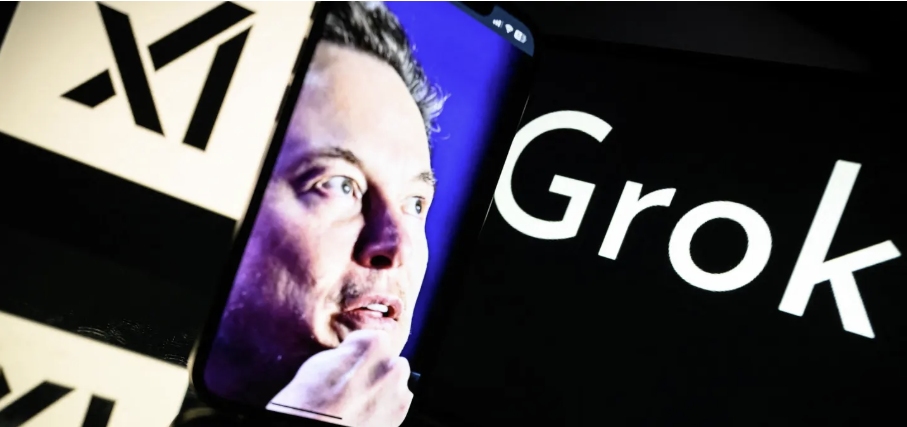
Musk says users are liable for the illegal Grok content

Scrutiny has intensified around X after its Grok chatbot was found generating non-consensual explicit images when prompted by users.

Grok had been positioned as a creative AI assistant, yet regulators reacted swiftly once altered photos were linked to content involving minors. Governments and rights groups renewed pressure on platforms to prevent abusive use of generative AI.

India’s Ministry of Electronics and IT issued a notice to X demanding an Action Taken Report within 72 hours, citing failure to restrict unlawful content.

Authorities in France referred similar cases to prosecutors and urged enforcement under the EU’s Digital Services Act, signalling growing international resolve to control AI misuse.

Elon Musk responded by stating users, instead of Grok, would be legally responsible for illegal material generated through prompts. The company said offenders would face permanent bans and cooperation with law enforcement.

Critics argue that transferring liability to users does not remove the platform’s duty to embed stronger safeguards.

Independent reports suggest Grok has previously been involved in deepfake creation, creating a wider debate about accountability in the AI sector. The outcome could shape expectations worldwide regarding how platforms design and police powerful AI tools.

Would you like to learn more aboutAI, tech and digital diplomacy? If so, ask our Diplo chatbot!

Reddit overtakes TikTok in the UK social media race

In the UK, Reddit has quietly overtaken TikTok to become Britain’s fourth most-visited social media platform, marking a major shift in how people search for information and share opinions online.

Use of the platform among UK internet users has risen sharply over the past two years, driven strongly by younger audiences who are increasingly drawn to open discussion instead of polished influencer content.

Google’s algorithm changes have helped accelerate Reddit’s rise by prioritising forum-based conversations in search results. Partnership deals with major AI companies have reinforced visibility further, as AI tools increasingly cite Reddit threads.

Younger users in the UK appear to value unfiltered and experience-based conversations, creating strong growth across lifestyle, beauty, parenting and relationship communities, alongside major expansion in football-related discussion.

Women now make up more than half of Reddit’s UK audience, signalling a major demographic shift for a platform once associated mainly with male users. Government departments, including ministers, are also using Reddit for direct engagement through public Q&A sessions.

Tension remains part of the platform’s culture, yet company leaders argue that community moderation and voting systems help manage behaviour.

Reddit is now encouraging users to visit directly instead of arriving via search or AI summaries, positioning the platform as a human alternative to automated answers.

Would you like to learn more about AI, tech and digital diplomacy? If so, ask our Diplo chatbot!