Italy fines Apple €98 million over App Store competition breach

Apple has been fined €98 million by Italy’s competition authority after regulators concluded that its App Tracking Transparency framework distorted competition in the app store market.

Authorities stated that the policy strengthened Apple’s dominant position while limiting how third-party developers collect advertising data.

The investigation found that developers were required to request consent multiple times for the same data processing purposes, creating friction that disproportionately affected competitors.

Regulators in Italy argued that equivalent privacy protections could have been achieved through a single consent mechanism instead of duplicated prompts.

According to the Italian authority, the rules were imposed unilaterally across the App Store ecosystem and harmed commercial partners reliant on targeted advertising. The watchdog also questioned whether the policy was proportionate from a data protection perspective under the EU law.

Apple rejected the findings and confirmed plans to appeal, stating that App Tracking Transparency prioritises user privacy over the interests of ad technology firms.

The decision follows similar penalties and warnings issued in France and Germany, reinforcing broader European scrutiny of platform governance.

Would you like to learn more about AI, tech and digital diplomacy? If so, ask our Diplo chatbot!

Cyber incident hits France’s postal and banking networks

France’s national postal service, La Poste, suffered a cyber incident days before Christmas that disrupted websites, mobile applications and parts of its delivery network.

The organisation confirmed a distributed denial of service attack temporarily knocked key digital systems offline, slowing parcel distribution during the busiest period of the year.

A disruption that also affected La Banque Postale, with customers reporting limited access to online banking and mobile services. Card payments in stores, ATM withdrawals, and authenticated online payments continued to function, easing concerns over wider financial instability.

La Poste stated there was no evidence of customer data exposure, although several post offices in France operated at reduced capacity. Staff were deployed to restore services while maintaining in-person banking and postal transactions where possible.

The incident added to growing anxiety over digital resilience in critical public services, particularly following a separate data breach disclosed at France’s Interior Ministry last week. Authorities have yet to identify those responsible for the attack on La Poste.

Would you like to learn more about AI, tech and digital diplomacy? If so, ask our Diplo chatbot!

Nvidia seeks China market access as US eases AI chip restrictions

The US tech giant NVIDIA has largely remained shut out of China’s market for advanced AI chips, as US export controls have restricted sales due to national security concerns.

High-performance processors such as the H100 and H200 were barred, forcing NVIDIA to develop downgraded alternatives tailored for Chinese customers instead of flagship products.

A shift in policy emerged after President Donald Trump announced that H200 chip sales to China could proceed following a licensing review and a proposed 25% fee. The decision reopened a limited pathway for exporting advanced US AI hardware, subject to regulatory approval in both Washington and Beijing.

If authorised, the H200 shipments would represent the most powerful US-made AI chips permitted in China since restrictions were introduced. The move could help NVIDIA monetise existing H200 inventory while easing pressure on its China business as it transitions towards newer Blackwell chips.

Strategically, the decision may slow China’s push for AI chip self-sufficiency, as domestic alternatives still lag behind NVIDIA’s technology.

At the same time, the policy highlights a transactional approach to export controls, raising uncertainty over long-term US efforts to contain China’s technological rise.

Would you like to learn more about AI, tech and digital diplomacy? If so, ask our Diplo chatbot!
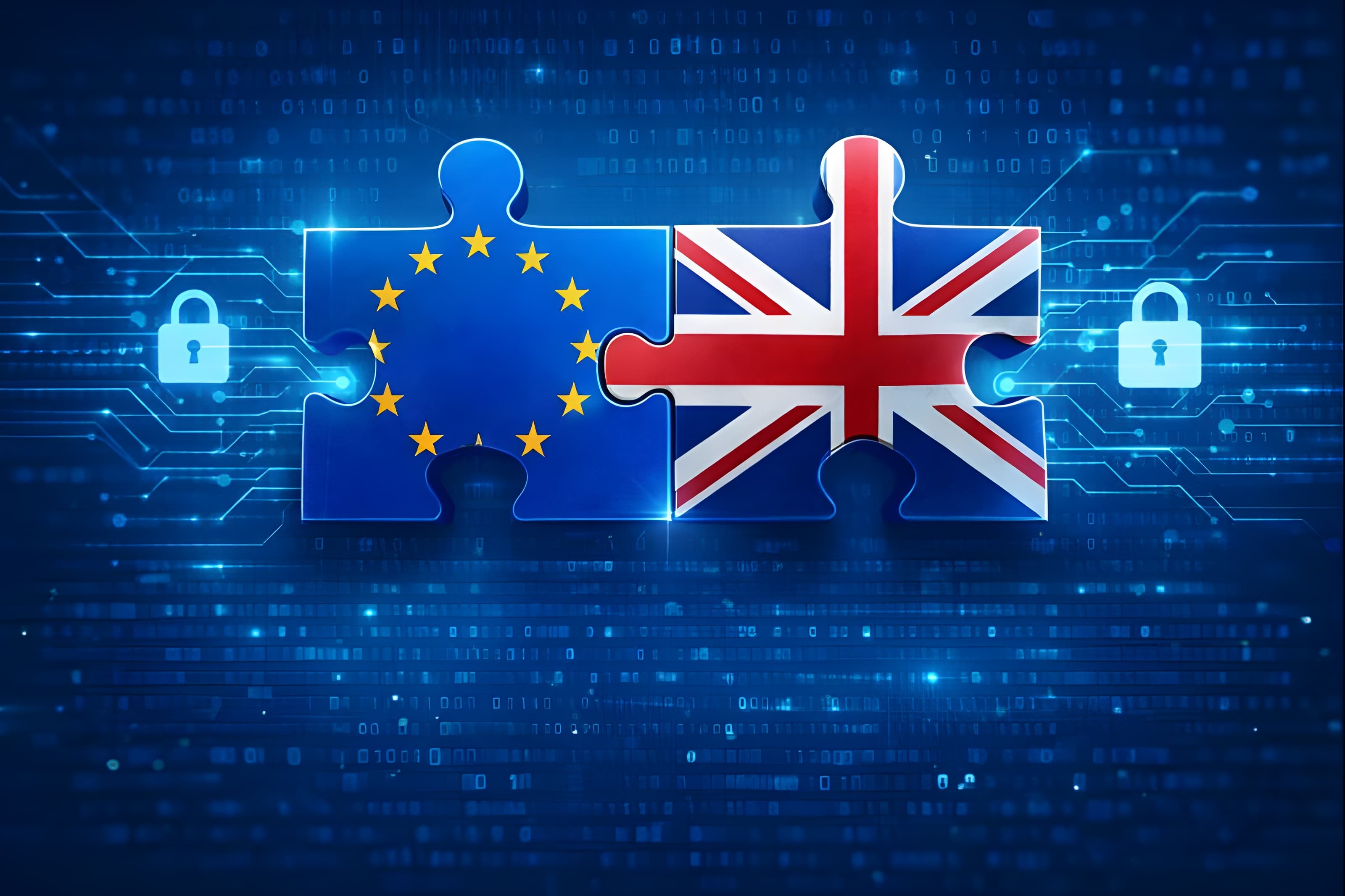
EU renews UK data adequacy decisions until 2031

The European Commission has renewed its two adequacy decisions allowing the continued free flow of personal data between the European Union and the United Kingdom. The decision confirms that UK data protection rules remain essentially equivalent to EU standards.

The adequacy findings cover both the General Data Protection Regulation and the Law Enforcement Directive, enabling personal data to move freely between the European Economic Area and the UK without additional safeguards.

In June 2025, the Commission adopted a temporary six-month extension after the original decisions were due to expire, allowing time to assess changes introduced by the UK’s Data (Use and Access) Act.

The renewal follows a positive opinion from the European Data Protection Board and approval from EU member states through the comitology procedure, completing the formal adoption process.

The renewed decisions include a six-year sunset clause, running until December 2031. A joint review by the Commission and the European Data Protection Board is scheduled after four years.

Would you like to learn more about AI, tech, and digital diplomacy? If so, ask our Diplo chatbot!

EU moves to extend child abuse detection rules

The European Commission has proposed extending the Interim Regulation that allows online service providers to voluntarily detect and report child sexual abuse instead of facing a legal gap once the current rules expire.

These measures would preserve existing safeguards while negotiations on permanent legislation continue.

The Interim Regulation enables providers of certain communication services to identify and remove child sexual abuse material under a temporary exemption from e-Privacy rules.

Without an extension beyond April 2026, voluntary detection would have to stop, making it easier for offenders to share illegal material and groom children online.

According to the Commission, proactive reporting by platforms has played a critical role for more than fifteen years in identifying abuse and supporting criminal investigations. Extending the interim framework until April 2028 is intended to maintain these protections until long-term EU rules are agreed.

The proposal now moves to the European Parliament and the Council, with the Commission urging swift agreement to ensure continued protection for children across the Union.

Would you like to learn more about AI, tech and digital diplomacy? If so, ask our Diplo chatbot!
Civil servants and AI will work together in 2050

Public administrations worldwide are facing unprecedented change as AI reshapes automation, procurement, and decision-making. Governments must stay flexible, open, and resilient, preparing for multiple futures with foresight, continuous learning, and adaptability.

During World Futures Day, experts from the SPARK-AI Alliance and representatives from governments, academia, and the private sector explored four potential scenarios for public service in 2050.

Scenarios ranged from human-centred administrations that reinforce trust, to algorithmic bureaucracies focused on oversight, agentic administrations with semi-autonomous AI actors, and data-eroded futures that require renewed governance of poor-quality data.

Key insights highlighted the growing importance of anticipatory capacity, positioning AI as a ‘co-worker’ rather than a replacement, and emphasising the need to safeguard public trust.

Civil servants will increasingly focus on ethical reasoning, interpretation of automated processes, and cross-disciplinary collaboration, supported by robust accountability and transparent data governance.

The SPARK-AI Alliance has launched a Working Group on the Future of Work in the Public Sector to help governments anticipate and prepare for change. Its focus will be on building resilient public administrations, evolving civil-service roles, and maintaining trust in AI-enabled governance.

Would you like to learn more about AI, tech and digital diplomacy? If so, ask our Diplo chatbot

EU sets course for digital euro adoption

The Council of the European Union has agreed on its negotiating position on legislation enabling a digital euro while reinforcing the legal status of euro cash.

An initiative that aims to strengthen the resilience of the EU payments system and support strategic autonomy by ensuring public money remains central in a rapidly digitising economy.

Under the proposal, the digital euro would complement cash, rather than replace it, offering a public payment option backed by the European Central Bank. It would function both online and offline, allow payments with a high degree of privacy, and operate in conjunction with private cards and applications.

Limits on holdings would apply to reduce risks to financial stability, with core services provided free to consumers.

The Council position also clarifies compensation rules for payment service providers and requires fair access to mobile device hardware and software. Interchange and merchant fees would be capped during a transitional period, with future pricing linked to actual operational costs.

At the same time, the Council has moved to strengthen the role of cash by safeguarding acceptance across the € area and guaranteeing access for citizens.

Member states would be required to monitor cash availability and prepare contingency measures for situations where electronic payments are disrupted.

Would you like to learn more about AI, tech and digital diplomacy? If so, ask our Diplo chatbot!

US platforms signal political shift in DSA risk reports

Major online platforms have submitted their 2025 systemic risk assessments under the Digital Services Act as the European Commission moves towards issuing its first fine against a Very Large Online Platform.

The reports arrive amid mounting political friction between Brussels and Washington, placing platform compliance under heightened scrutiny on both regulatory and geopolitical fronts.

Several US-based companies adjusted how risks related to hate speech, misinformation and diversity are framed, reflecting political changes in the US while maintaining formal alignment with EU law.

Meta softened enforcement language, reclassified hate speech under broader categories and reduced visibility of civil rights structures, while continuing to emphasise freedom of expression as a guiding principle.

Google and YouTube similarly narrowed references to misinformation, replaced established terminology with less charged language and limited enforcement narratives to cases involving severe harm.

LinkedIn followed comparable patterns, removing references to earlier commitments on health misinformation, civic integrity and EU voluntary codes that have since been integrated into the DSA framework.

X largely retained its prior approach, although its report continues to reference cooperation with governments and civil society that contrasts with the platform’s public positioning.

TikTok diverged from other platforms by expanding disclosures on hate speech, election integrity and fact-checking, likely reflecting its vulnerability to regulatory action in both the EU and the US.

European regulators are expected to assess whether these shifts represent genuine risk mitigation or strategic alignment with US political priorities.

As systemic risk reports increasingly inform enforcement decisions, subtle changes in language, scope and emphasis may carry regulatory consequences well beyond their formal compliance function.

Would you like to learn more about AI, tech and digital diplomacy? If so, ask our Diplo chatbot!

Russia considers restoring Roblox access after compliance talks

Roblox has signalled willingness to comply with Russian law, opening the possibility of the platform being unblocked in Russia following earlier access restrictions.

Roskomnadzor stated that cooperation could resume if Roblox demonstrates concrete steps instead of declarations towards meeting domestic legal requirements.

The regulator said Roblox acknowledged shortcomings in moderating game content and ensuring the safety of user chats, particularly involving minors.

Russian authorities stressed that compliance would require systematic measures to remove harmful material and prevent criminal communication rather than partial adjustments.

Access to Roblox was restricted in early December after officials cited the spread of content linked to extremist and terrorist activity.

Roskomnadzor indicated that continued engagement and demonstrable compliance could allow the platform to restore operations under the regulatory oversight of Russia.

Would you like to learn more about AI, tech and digital diplomacy? If so, ask our Diplo chatbot!

UNDP and UNESCO support AI training for judiciary

UNESCO and UNDP have partnered to enhance judicial capacity on the ethical use of AI. A three-day Bangkok training, supported by the Thailand Institute of Justice, brought together 27 judges from 13 Asia-Pacific countries to discuss the impact of AI on justice and safeguards for fairness.

Expert sessions highlighted the global use of AI in court administration, research, and case management, emphasising opportunities and risks. Participants explored ways to use AI ethically while protecting human rights and judicial integrity, warning that unsupervised tools could increase bias and undermine public trust.

Trainers emphasised that AI must be implemented with careful attention to bias, transparency, and structural inequalities.

Judges reflected on the growing complexity of verifying evidence in the age of generative AI and deepfakes, and acknowledged that responsible AI can improve access to justice, support case reviews, and free time for substantive decision-making.

The initiative concluded with a consensus that AI adoption in courts should be guided by governance, transparency, and ongoing dialogue. The UNDP will continue to collaborate in advancing ethical, human rights-focused AI in regional judiciaries.

Would you like to learn more about AI, tech and digital diplomacy? If so, ask our Diplo chatbot