Samsung R&D Institute, Noida (SRI-Noida), and the Indian Institute of Technology Bombay (IIT Bombay) have entered into a five-year Memorandum of Understanding (MoU) to drive innovation in critical areas such as AI, digital health, and other emerging technologies. That collaboration highlights Samsung’s commitment to strengthening industry-academia ties for technological advancements.
The MoU establishes a framework for joint research projects, where IIT Bombay students and faculty will collaborate with Samsung engineers. This initiative enhances students’ industry readiness and facilitates the publication of joint research papers, promoting knowledge sharing that will accelerate technological progress and industry-aligned innovation.
In addition to research collaboration, the partnership offers specialised training and certification programs for Samsung engineers in cutting-edge fields like AI and digital health. This expertise exchange ensures that academia and industry professionals benefit from the partnership.
Through this partnership, Samsung and IIT Bombay aim to foster innovation and push the boundaries of next-generation technologies. By combining industry expertise and academic knowledge, the collaboration seeks to inspire future breakthroughs and set the foundation for sustained technological progress.
A groundbreaking AI model was introduced by Nvidia, showcasing advanced capabilities in audio and music generation. Known as Fugatto, the model can create novel sounds, modify voices, and even transform existing audio. Unlike other AI tools, it can take a piano melody and convert it into a human voice or adjust accents and emotional tones in spoken recordings.
Fugatto builds on generative AI’s potential to reshape creative industries like music, film, and gaming. Nvidia’s vice president of applied deep learning, Bryan Catanzaro, highlighted how computers have already revolutionised music through synthesizers, suggesting AI will usher in even greater innovation. While promising, the technology is not yet slated for public release due to concerns over ethical misuse and potential copyright issues.
The model was developed using open-source data and joins a growing trend of tools from companies like Meta and Runway, which also generate audio and video from text prompts. Nvidia’s innovation stands out for its focus on transforming existing recordings into entirely new formats, a feature that could significantly enhance creative possibilities.
Generative AI remains under scrutiny as industry leaders grapple with ethical concerns. The entertainment industry, already wary after disputes involving voice imitation, is debating how to integrate such technologies responsibly. Nvidia and others have acknowledged the risks of misuse, prompting a cautious approach to public rollouts.
Brave Search has unveiled an AI-powered chat feature that lets users ask follow-up questions to refine their initial search queries. This addition builds on Brave’s earlier ‘Answer with AI’ tool, which generates quick summaries for search queries. Now, users can engage further with a chat bar that appears beneath the summary, enabling deeper exploration without starting a new search.
For instance, a search for ‘Christopher Nolan films’ will provide an AI-generated list of his notable works. Users can then ask a follow-up question, such as “Which actors appear most in his films?” The AI will respond with relevant information while citing its sources. Powered by a mix of open and proprietary large language models, the feature seamlessly integrates search and chat for a more versatile user experience.
Unlike Google, which offers AI summaries but lacks a follow-up chat option, Brave is bridging the gap between search engines and chatbots. Brave also emphasizes privacy, ensuring that queries are not stored or used to profile users. With over 36M daily searches and 11M AI responses generated daily, Brave is advancing its commitment to private, user-friendly innovation.
Numenta, supported by the Gates Foundation, has introduced an open-source AI model designed to cut down on energy and data use compared to existing AI systems. This innovation reflects the company’s unique take on how the brain functions, inspired by co-founder Jeff Hawkins’ expertise in neuroscience. Hawkins, known for creating the Palm Pilot, has channeled his understanding of human cognition into this new AI approach.
Unlike conventional AI systems that require vast data and electricity for training, Numenta’s model mimics the brain’s ability to process information in real time. It can adapt dynamically, like a child learning through exploration. The technology is designed to improve robotics, writing tools, and more, emphasising flexibility and efficiency.
To encourage broader adoption, Numenta has made its technology freely available, following a similar open-source trend seen with tech giants like Meta. However, CEO Subutai Ahmad emphasised the importance of closely monitoring its use, given concerns over potential misuse as the technology evolves.
New Lantern, a startup founded by engineer Shiva Suri, has raised $19M in Series A funding led by Benchmark. Inspired by observing his mother’s work as a radiologist, Suri created the platform to address inefficiencies in the field. New Lantern combines two core radiology tools, PACS, which stores medical images and reporting software, into a streamlined system powered by AI.
Unlike other AI solutions that focus on replacing radiologists, New Lantern enhances productivity by automating repetitive tasks like measurements and report generation. This approach allows radiologists to focus on analysing scans, which Benchmark’s Eric Vishria praised for doubling efficiency. The startup’s software is already being used by some radiology practices, although specifics remain undisclosed.
Suri envisions New Lantern as the next major evolution in radiology, akin to the industry’s shift from physical film to digital PACS. With plans to fully modernise the field, including cloud-based data storage, the company aims to disrupt entrenched players like GE Healthcare and Microsoft’s Nuance. For Suri, the personal stakes are high as his mom is an avid supporter of the platform she inspired.
The Singapore National University Health System (NUHS), Sweden Sahlgrenska University Hospital, AstraZeneca, and Business Sweden are partnering through the Global Health Innovation Network (GHIN) to advance global healthcare innovation. That strategic initiative, therefore, aims to drive progress in screening, diagnosis, and monitoring technologies by combining expertise from the healthcare, pharmaceutical, and technology sectors.
Specifically, NUHS and Sahlgrenska University Hospital will provide clinical expertise, hospital resources, and research collaboration, while AstraZeneca, Ericsson, and Business Sweden will contribute their strengths in pharmaceutical innovation, technological connectivity, and project management. The partnership was formalised by signing a Memorandum of Understanding (MoU) at the Singapore-Sweden Royal Business Forum, marking the first project under the government-to-government MoU on healthcare innovation between Singapore and Sweden.
As a result, GHIN’s goal is to accelerate the development and global implementation of innovative healthcare solutions, addressing the evolving needs of healthcare systems worldwide. By bringing together diverse industry leaders, the initiative aims to improve healthcare outcomes globally and ensure that both technological and clinical advancements are integrated into scalable solutions. Ultimately, this collaboration is set to make cutting-edge healthcare innovations more accessible to populations worldwide.
Actor and filmmaker Ben Affleck has weighed in on the ongoing debate over AI in the entertainment industry, arguing that AI poses little immediate threat to actors and screenwriters. Speaking to CNBC, Affleck stated that while AI can replicate certain styles, it lacks the creative depth required to craft meaningful narratives or performances, likening it to a poor substitute for human ingenuity.
Affleck, co-founder of a film studio with fellow actor Matt Damon, expressed optimism about AI’s role in Hollywood, suggesting it might even generate new opportunities for creative professionals. However, he raised concerns about its potential impact on the visual effects industry, which could face significant disruptions as AI technologies advance.
Strikes by Hollywood unions last year highlighted fears that AI could replace creative talent. Affleck remains sceptical of such a scenario, maintaining that storytelling and human performance remain uniquely human domains that AI is unlikely to master soon.
Security experts are urging caution when using AI chatbots like ChatGPT and Grok for interpreting medical scans or sharing private health information. Recent trends show users uploading X-rays, MRIs, and other sensitive data to these platforms, but such actions can pose significant privacy risks. Uploaded medical images may become part of training datasets for AI models, leaving personal information exposed to misuse.
Unlike healthcare apps covered by laws like HIPAA, many AI chatbots lack strict data protection safeguards. Companies offering these services may use the data to improve their algorithms, but it’s often unclear who has access or how the data will be used. This lack of transparency has raised alarms among privacy advocates.
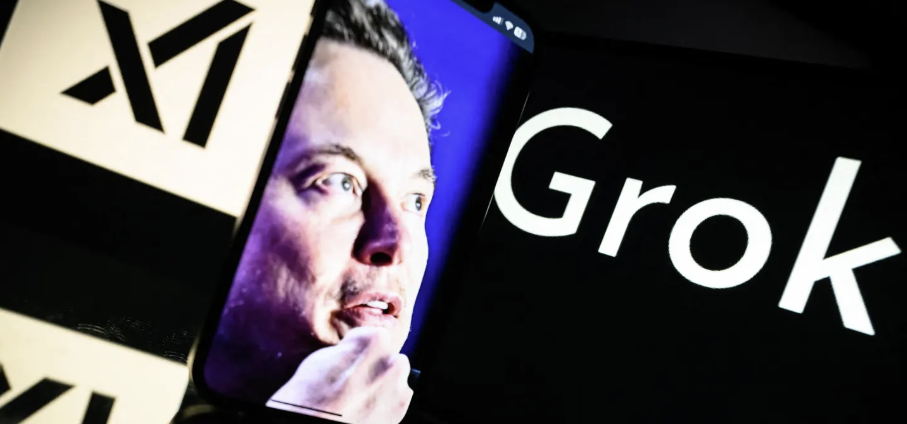
X-owner Elon Musk recently encouraged users to upload medical imagery to Grok, his platform’s AI chatbot, citing its potential to evolve into a reliable diagnostic tool. However, Musk acknowledged that Grok is still in its early stages, and critics warn that sharing such data online could have lasting consequences.
Google has announced a $20 million fund, with an additional $2 million in cloud credits, to support researchers using AI to tackle complex scientific challenges. The initiative, unveiled by Google DeepMind CEO Demis Hassabis at the AI for Science Forum in London, is part of Google’s broader strategy to foster innovation and collaboration with academic and non-profit organisations globally.
The funding will prioritise interdisciplinary projects addressing challenges in fields such as rare disease research, experimental biology, sustainability, and materials science. Google plans to distribute the funding to approximately 15 organisations by 2026, ensuring each grant is substantial enough to drive impactful breakthroughs. The programme reflects Google’s aim to position itself as a key partner in advancing science through AI, building on successes like AlphaFold, which recently earned DeepMind leaders a Nobel Prize in Chemistry.
The move aligns with a growing trend among Big Tech firms investing heavily in AI-driven research. Amazon’s AWS recently committed $110 million to similar grants, underscoring the race to attract leading scientists and researchers into their ecosystems. Hassabis expressed hope that the initiative would inspire greater collaboration between the private and public sectors and further demonstrate AI’s transformative potential in science.
A chapel in Lucerne, Switzerland, has introduced an AI-powered confessional, featuring an avatar named ‘AI Jesus’ to offer spiritual advice. Parishioners communicate with the AI by voicing concerns and receiving machine-generated guidance. The experiment, developed at a local university, aims to spark debate about technology’s role in religion.
Theologians involved highlight AI’s 24/7 availability as a key advantage, contrasting it with human pastors‘ limited schedules. Parishioners have expressed mixed reactions, with some praising its convenience and others criticising its generic responses as superficial.
Despite the novelty, the AI advises users not to disclose personal data, underscoring privacy concerns. Traditional clergy remain essential, as many see the AI as a supplementary tool rather than a replacement for spiritual leaders.