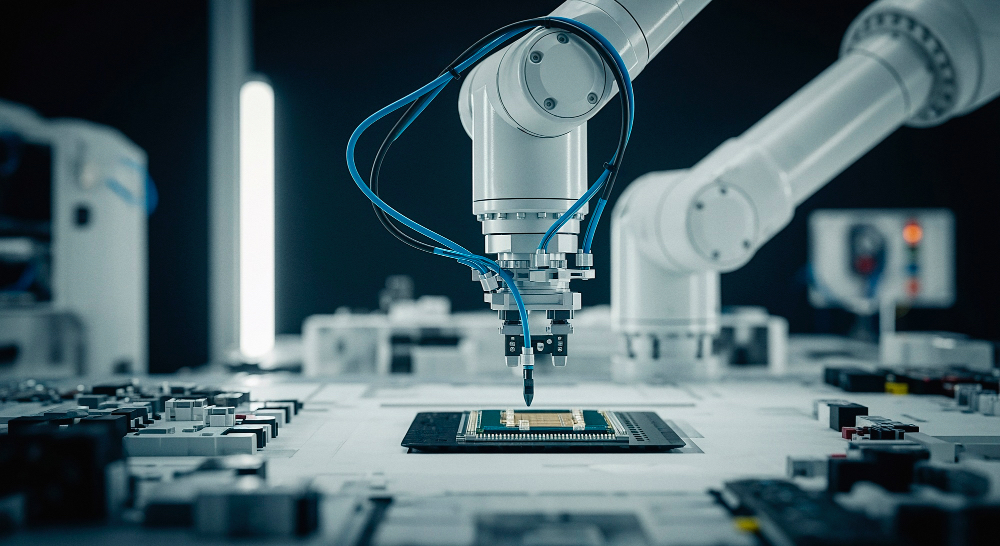
AI-generated search summaries are reshaping online discovery and pushing Reddit to the forefront of global information flows.
The rise of Google’s AI Overview feature places curated AI summaries above traditional search results, encouraging users to rely on machine-generated syntheses instead of browsing lists of websites.
Reddit’s visibility surged after the platform agreed to data access partnerships with Google and OpenAI, enabling large language models to train on its vast archive of human conversations.
The platform’s user-generated discussions are increasingly prioritised because they provide commentary viewed as more neutral and less commercially influenced.
Research from Profound identifies Reddit as the most cited source across major AI platforms. Reddit’s rapid expansion reflects such a shift.
It has overtaken TikTok in the UK, according to Ofcom and now reports 116 million daily active users and more than one billion monthly users.
Communities built around niche interests, combined with voting systems and karma-driven credibility, create a structure that appeals to AI systems searching for grounded, human-authored content.
The platform’s design, centred on subreddits run by volunteer moderators, reinforces trust signals that large models can evaluate when generating AI Overview results.
As AI-powered search becomes the dominant interface for navigating the internet, Reddit’s role as a primary corpus for training and citation continues to expand, reshaping how people discover and verify information.
Would you like to learn more about AI, tech and digital diplomacy? If so, ask our Diplo chatbot!
The South Korean electronics corporation, Samsung, is preparing a major shift to autonomous manufacturing, converting global production sites into AI-driven factories by 2030.
As such, the company is moving toward a model in which AI systems understand on-site conditions and make operational decisions independently, rather than relying on fixed automation.
A transition that will use digital twin simulations across the whole manufacturing cycle, from materials warehousing to shipping.
Samsung will deploy AI agents for quality control, production and logistics, aiming for stronger data-driven verification and improved efficiency. Wider adoption of AI in environmental health and safety is expected to raise workplace safety standards.
The firm plans to integrate agentic AI, first introduced with the Galaxy S26, into industrial operations, enabling systems to set and execute their own tasks. Humanoid manufacturing robots will be rolled out in phases as Samsung builds fully optimised smart factories.
Samsung will present its manufacturing vision at Mobile World Congress 2026, followed by the Samsung Mobile Business Summit, where executives will detail governance strategies for managing the rise of agentic AI across industries.
Would you like to learn more about AI, tech and digital diplomacy? If so, ask our Diplo chatbot!
South Korean President Lee Jae Myung used the opening day of his state visit to Singapore to set out plans for deeper cooperation in emerging technologies and renewable energy.
He framed the partnership as a chance to build a future-oriented agenda shaped by a shared reliance on human capital rather than natural resources.
The visit precedes a summit with Lawrence Wong, their second meeting in four months following the upgrade of bilateral ties to a strategic partnership. Both governments want to broaden collaboration across AI, energy, the green transition and defence while maintaining strong trade and investment links.
Lee told Korean residents in Singapore that the strengthened partnership could guide relations for the next fifty years by opening new routes for collaboration across strategic sectors. He added that expanding cooperation would support wider regional stability and long-term technological development.
The programme also includes a meeting with Tharman Shanmugaratnam and attendance at AI Connect. This forum connects business leaders and entrepreneurs from both countries seeking opportunities in AI research and commercial innovation.
Would you like to learn more about AI, tech and digital diplomacy? If so, ask our Diplo chatbot!
Microsoft and OpenAI have reaffirmed their long-standing collaboration after new funding and partnerships raised speculation about their relationship.
Both firms stressed that recent announcements leave their original agreements intact, preserving a framework built on technical integration, trust and shared ambitions for AI development.
Microsoft’s exclusive licence to OpenAI’s intellectual property remains untouched, as does its position as the sole cloud provider for stateless APIs powering OpenAI models.
These APIs can be accessed through either company. Yet all such calls, including those arising from third-party partnerships such as OpenAI’s work with Amazon, continue to run on Azure rather than on alternative clouds. OpenAI’s own products, including Frontier, also stay hosted on Azure.
Revenue-sharing arrangements are unchanged, alongside the contractual definition and evaluation process for artificial general intelligence.
OpenAI retains the freedom to secure additional compute capacity elsewhere, supported by large-scale initiatives such as the Stargate project.
Even with broader collaborations emerging across the industry, both firms present their alliance as central to advancing responsible AI and expanding access to powerful tools worldwide.
Would you like to learn more about AI, tech and digital diplomacy? If so, ask our Diplo chatbot!
Florida Crystals, a diversified agribusiness serving sugar, sweeteners, bioenergy and agriculture markets, has adopted an AI-driven process intelligence platform to improve operational performance by linking data across siloed systems and making business processes more transparent and measurable.
The platform captures workflow telemetry, translates it into structured insights and surfaces opportunities for automation and efficiency improvements.
Executives describe how process intelligence helps teams identify bottlenecks in order fulfilment, customer onboarding and production planning, and how it assists in prioritising tasks that deliver measurable value rather than manual administrative work.
Using AI to analyse process data also supports root-cause analysis and predictive problem-solving, enabling managers to intervene before minor issues escalate.
The implementation underscores a shift from traditional reporting and human-intensive analysis toward AI-augmented operational decision-making, where data-centric process insights guide resourcing, exceptions handling and performance optimisation.
Rather than replacing staff, leaders emphasise that the technology is intended to augment human capabilities, allowing employees to focus on strategic decision-making while routine patterns are automated or re-engineered.
Florida Crystals’ approach reflects broader enterprise trends where intelligent data platforms, process mining and machine learning combine to support digital transformation efforts across supply chain, customer service and production functions.
Would you like to learn more about AI, tech and digital diplomacy? If so, ask our Diplo chatbot!
Queen’s University Belfast and University College Dublin (UCD) have formalised a cross-border partnership focused on artificial intelligence research and talent development.
The collaboration will bring together researchers, faculty and students from both institutions to address shared challenges and opportunities in AI, including applications in healthcare, cybersecurity, data analytics and ethical AI governance.
The initiative aims to deepen academic cooperation, foster joint research projects, and expand interdisciplinary learning programmes that equip students with AI-relevant skills.
Leaders from both universities emphasised the importance of an all-island approach to strengthening AI expertise, enhancing competitiveness, and contributing to economic growth in Northern Ireland and the Republic of Ireland.
The partnership is expected to facilitate knowledge exchange, researcher mobility, and shared access to specialised facilities and funding opportunities.
Stakeholders also highlighted the broader societal context: as AI becomes integral to multiple sectors, coordinated academic and research ecosystems can help ensure that innovation aligns with ethical standards and public value.
By pooling resources and expertise across jurisdictions, the initiative positions both universities to play a more influential role in shaping AI policy, industry adoption and workforce development.
Would you like to learn more about AI, tech and digital diplomacy? If so, ask our Diplo chatbot!
Mizuho Financial Group plans to reduce work equivalent to 5,000 administrative positions over the next decade by introducing AI systems to improve operational efficiency. Around one-third of its 15,000 clerical staff nationwide will see their duties reshaped rather than eliminated.
Administrative employees currently manage processes such as document checks and data entry when opening accounts at subsidiary branches. Management expects many of these routine activities to be handled by AI as automation expands across operations.
Company leaders confirmed no layoffs are planned, with affected employees set to move into roles requiring direct customer interaction. Staff will transition towards investment product sales, corporate services and other positions where human engagement remains essential.
Mizuho intends to invest up to 100 billion yen by fiscal 2028 to develop and deploy AI technologies supporting business reform. An internal department overseeing clerical work will also be renamed the ‘Process Design Group’, signalling a stronger focus on AI-driven transformation.
Would you like to learn more about AI, tech and digital diplomacy? If so, ask our Diplo chatbot!
Dell is accelerating development of AI PCs, positioning them as the next standard for personal computing rather than a niche category. Industry forecasts suggest AI-enabled devices could account for more than half of global PC sales by 2026.
Dedicated neural processing units allow AI tasks to run directly on devices, freeing central and graphics processors for demanding creative workflows. Dell says such hardware enables faster editing, improved generative tools and smoother multitasking for designers, editors and digital creators.
Louise Quennell, UK Senior Director at Dell Technologies, emphasised that AI should support creativity rather than replace it. Automating repetitive tasks aims to give professionals more time for experimentation, artistic decision-making and higher-value creative work.
AI assistants are increasingly capable of managing scheduling, summarising information and reducing routine digital administration. Dell believes reducing these ‘digital chores’ could significantly improve productivity, particularly for freelancers balancing creative production with business responsibilities.
Would you like to learn more about AI, tech and digital diplomacy? If so, ask our Diplo chatbot!
Speaking at the Bengaluru GAFX Conference, a major event for the Games, Animation, Visual Effects and Extended Reality (AVGC-XR) sector, Karnataka Chief Minister Siddaramaiah positioned AI as a tool to augment artistic work rather than replace human creators.
He highlighted the importance of ethical AI adoption, respect for intellectual property, data privacy, and ensuring fair compensation for artists and creative professionals as the sector grows.
Siddaramaiah underscored that the ‘soul of storytelling’ and human emotion cannot be fully replicated by algorithms, stressing that technology should amplify human potential without erasing it.
He also urged industry leaders to invest in original content, educational institutions to modernise curricula, and global partners to collaborate with Karnataka’s burgeoning creative ecosystem.
The remarks came amid efforts to develop the AVGC-XR sector through policy support, infrastructure, skill development, and the creation of digital creative clusters beyond Bengaluru in cities like Mysuru, Mangaluru and Hubballi-Dharwad.
Siddaramaiah framed this approach as both an economic and cultural opportunity that must be inclusive and ethically grounded.
Would you like to learn more about AI, tech and digital diplomacy? If so, ask our Diplo chatbot!
Hyundai will invest 9 trillion won ($6.3B) to build an AI data centre, robot hub, and hydrogen plant in Saemangeum. The project is part of Hyundai’s 125.2 trillion won domestic investment plan through 2030. Shares surged 10.7% following the announcement.
The AI data centre, costing 5.8 trillion won and due in 2029, will host up to 50,000 GPUs to process data from Hyundai’s automotive, steel, logistics, and defence units. The facility enables ‘physical AI,’ adding intelligence to vehicles and robots, not just software.
Hyundai will invest 400 billion won in a robot manufacturing complex with a capacity of 30,000 units annually. The fully automated facility integrates assembly, parts production, and logistics.
Robotics is central to Hyundai’s shift from automaker to AI platform operator, building on innovations such as the Atlas humanoid robot.
The plan includes a 200-megawatt hydrogen plant powered by solar energy, gigawatt-scale solar generation, and a pilot AI Hydrogen City zone. Hyundai estimates 16 trillion won in economic impact and 71,000 jobs.
President Lee Jae Myung highlighted the project as key to South Korea’s AI, robotics, and clean energy ambitions, promising regulatory support.
Would you like to learn more about AI, tech and digital diplomacy? If so, ask our Diplo chatbot!