Click To Do and Settings agent bring AI to Windows 11 beta

Microsoft has rolled out Windows 11 Insider Preview Build 26120.3964 to the Beta Channel, marking the official start of the 24H2 version. Available to Insider users starting this week, the update delivers key AI-driven enhancements—most notably, a new agent built into the Settings app and upgraded text actions.

The AI agent in Settings allows users to interact using natural language instead of simple keywords. Microsoft says users can ask questions like ‘how to control my PC by voice’ or ‘my mouse pointer is too small’ to receive personalised help navigating and adjusting system settings.

Initially, the feature is limited to Copilot+ PCs powered by Snapdragon processors and set to English as the primary language. Microsoft plans to expand support to AMD and Intel devices in the near future.

The update also introduces a new FAQs section on the About page under Settings > System. The company says this addition will help users better understand their device’s configuration, performance, and compatibility.

Microsoft is also enhancing its ‘Click To Do’ feature. On Copilot+ PCs with AMD or Intel chips, users can now highlight text (10 words or more) and press Win + Click or Win + Q to access quick AI actions like Summarise, Rewrite, or Create a bulleted list.

These tools are powered by Phi Silica, an on-device small language model. The features require the system language to be English and the user to be signed in with a Microsoft account.

Microsoft notes that Rewrite is temporarily unavailable for users with French or Spanish as their default language but will return in a future update.

Would you like to learn more about AI, tech and digital diplomacy? If so, ask our Diplo chatbot!

SoftBank profit jumps on AI-driven rebound

SoftBank Group reported a 124% surge in quarterly profit, driven by booming AI demand that lifted chip sales and startup valuations. Net income reached ¥517.18 billion ($3.5 billion) in the fiscal fourth quarter, with the Vision Fund swinging back to a profit of ¥26.1 billion.

The results provide momentum for SoftBank’s ambitions to invest heavily in OpenAI and US-based AI infrastructure. Plans include a $30 billion stake in OpenAI and leading a $100 billion push into data centres under the Stargate project, which could eventually grow to $500 billion.

However, investor caution amid tariffs and tech protectionism has delayed detailed financing discussions. Despite these hurdles, SoftBank’s chip unit Arm Holdings has benefited from rising global AI investments, even as near-term forecasts remain mixed.

For the full year, SoftBank earned ¥1.15 trillion, reversing a significant loss from the previous year. The company continues to navigate risks tied to the volatile tech start-up market, especially as Vision Fund portfolio firms go public in India.

Would you like to learn more about AI, tech and digital diplomacy? If so, ask our Diplo chatbot!
China bets big on humanoid robots to transform factories

Chinese start-up AgiBot is leading the charge in humanoid robotics, using data-intensive training to develop machines capable of everyday tasks like folding clothes and making sandwiches.

Backed by strong government support and over $20 billion in recent subsidies, China sees these AI-powered robots as a way to maintain its manufacturing edge amid demographic decline and global trade tensions. President Xi Jinping’s recent visit to AgiBot underlined the political significance of this push.

Humanoid robots in China are rapidly advancing beyond demonstration, with models already performing somersaults and quality checks on production lines. With the cost of components falling and state-backed funding expanding, firms like Unitree and UBTech are entering or preparing for mass production.

Analysts predict global sales of humanoid robots could reach one million annually by 2030, with China dominating both manufacturing and the underlying supply chains. The rise of humanoids has raised concerns over job displacement in a nation with over 120 million factory workers.

Lawmakers are debating AI-related unemployment insurance, while others argue robots can fill roles that are dull, dangerous or undesirable. The technology is also being positioned as a solution for elderly care, with firms like Ant Lingbo developing service robots for ageing populations.

Would you like to learn more about AI, tech and digital diplomacy? If so, ask our Diplo chatbot!
Google tests AI tool to automate software development

Google is internally testing an advanced AI tool designed to support software engineers through the entire development cycle, according to The Information. The firm is also expected to demonstrate integration between its Gemini chatbot in voice mode and Android-powered XR headsets.

The agentic AI assistant is said to handle tasks such as code generation and documentation, and has already been previewed to staff and developers ahead of Google’s I/O conference on 20 May. The move reflects a wider trend among tech giants racing to automate programming.

Amazon is developing its own coding assistant, Kiro, which can process both text and visual inputs, detect bugs, and auto-document code. While AWS initially targeted a June launch, the current release date remains uncertain.

Microsoft and Google have claimed that around 30% of their code is now AI-generated. OpenAI is also eyeing expansion, reportedly in talks to acquire AI coding start-up Windsurf for $3 billion.

Would you like to learn more about AI, tech and digital diplomacy? If so, ask our Diplo chatbot!
US Copyright Office avoids clear decision on AI and fair use

The US Copyright Office has stopped short of deciding whether AI companies can legally use copyrighted material to train their systems under fair use.

Its newly released report acknowledges that some uses—such as non-commercial research—may qualify, while others, like replicating expressive works from pirated content to produce market-ready AI output, likely won’t.

Rather than offering a definitive answer, the Office said such cases must be assessed by the courts, not through a universal standard.

The latest report is the third in a series aimed at guiding how copyright law applies to AI-generated content. It reiterates that works entirely created by AI cannot be copyrighted, but human-edited outputs might still qualify.

The 108-page document focuses heavily on whether AI training methods transform content enough to justify legal protection, and whether they harm creators’ livelihoods through lost sales or diluted markets.

Instead of setting new policy, the Office highlights existing legal principles, especially the four factors of fair use: the purpose, the nature of the work, the amount used, and the impact on the original market.

It notes that AI-generated content can sometimes alter original works meaningfully, but when styles or outputs closely resemble protected material, legal risks remain. Tools like content filters are seen as helpful in preventing infringement, even though they’re not always reliable.

The timing of the report has been overshadowed by political turmoil. President Donald Trump reportedly dismissed both the Librarian of Congress and the head of the Copyright Office days before the report’s release.

Meanwhile, creators continue urging the government not to permit fair use in AI training, arguing it threatens the value of original work. The debate is now expected to unfold further in courtrooms instead of regulatory offices.

Would you like to learn more about AI, tech and digital diplomacy? If so, ask our Diplo chatbot!
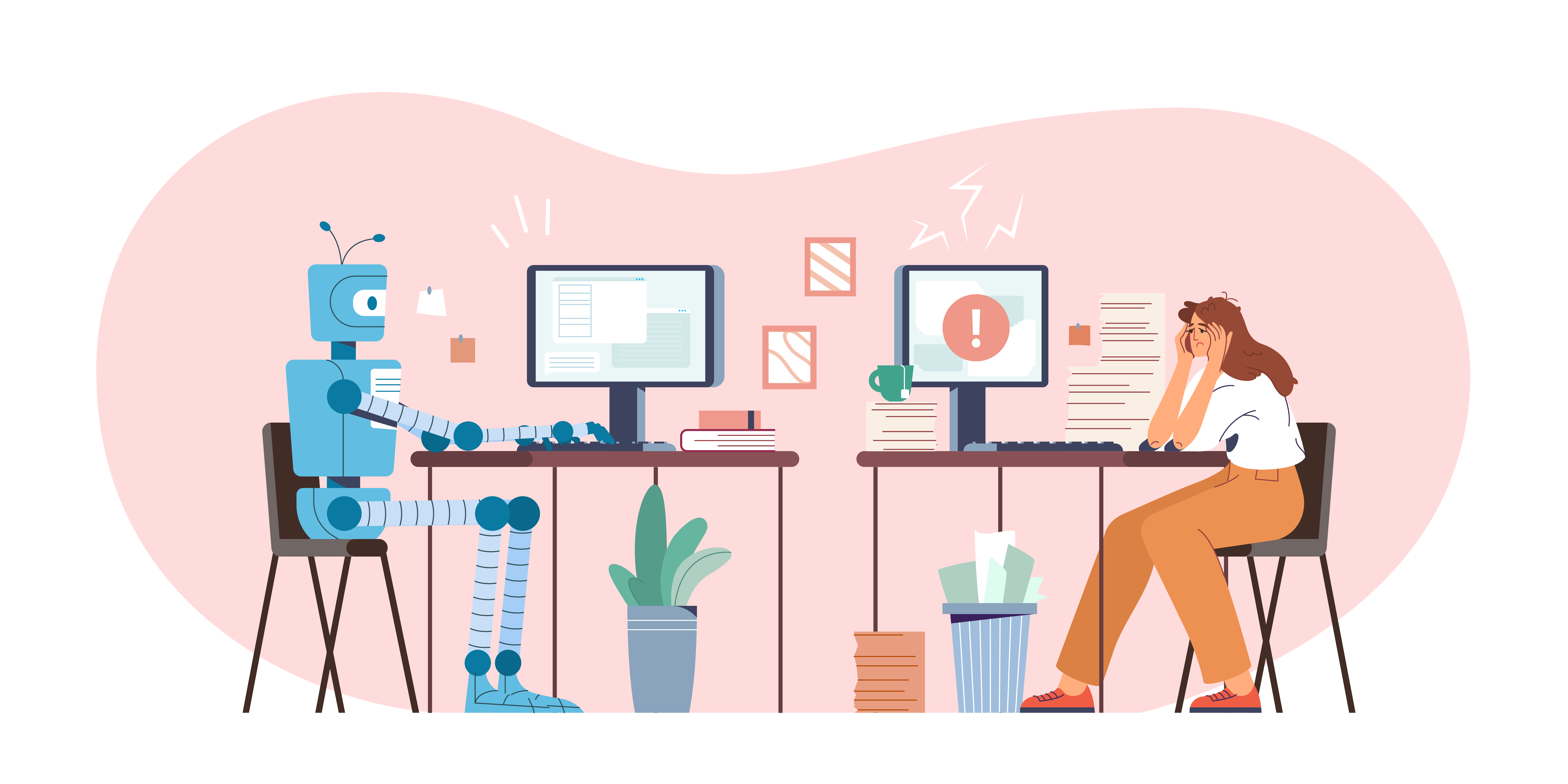
Autonomous AI agents are the next phase of enterprise automation

Organisations across sectors are turning to agentic automation—an emerging class of AI systems designed to think, plan, and act autonomously to solve complex, multi-step problems.

Unlike traditional automation tools, which follow rigid rules, agentic systems use large language models (LLMs) and robotic process automation (RPA) to navigate ambiguity and make contextual decisions.

‘Agentic automation is the next generation of automation,’ said UiPath VP Robbie Mackness. ‘It’s about creating systems that can observe, reason, and act with minimal human input.’

Early adopters include the financial sector, where over 25% of firms plan to deploy agentic solutions this year, according to Bank Automation News.

Companies like BlackLine are using it to automate high-judgement accounting tasks, while public sector agencies like the US Navy are trialling the technology for logistics and admin workloads. The recruitment industry is also exploring AI agents for candidate screening and initial assessments.

Experts caution that success depends on identifying the right use cases and implementing proper governance. Still, the potential is clear: agentic automation could unlock entirely new capabilities and redefine how complex work gets done.

Would you like to learn more about AI, tech and digital diplomacy? If so, ask our Diplo chatbot!

Morrisons tests Tally robots amid job cut fears

Supermarket giant Morrisons has introduced shelf-scanning robots in several of its UK stores as part of a push to streamline operations and improve inventory accuracy.

The robots, known as Tally, are currently being trialled in three branches—Wetherby, Redcar, and Stockton—where they autonomously roam aisles to monitor product placement, stock levels, and pricing.

Developed by US-based Symbi Robotics, Tally is the world’s first autonomous item-scanning robot, capable of scanning up to 30,000 items per hour with 99% accuracy.

Already in use by major international retailers including Carrefour and Kroger, the robot is designed to operate in a range of retail environments, from chilled aisles to traditional shelves.

Morrisons says the robots will enhance store efficiency and reduce out-of-stock issues, but the move has sparked concern after reports that as many as 365 employees could lose their jobs due to automation.

The robots are part of a broader trend in retail toward AI-powered tools that boost productivity—but often at the expense of human labour.

Tally units are slim, mobile, and equipped with friendly digital faces. They return automatically to their charging stations when power runs low, and operate with minimal staff intervention.

While Morrisons has not confirmed a wider rollout in the UK, the trial reflects a growing shift in retail automation. As AI technologies evolve, companies are weighing the balance between operational gains and workforce impact.

Would you like to learn more about AI, tech and digital diplomacy? If so, ask our Diplo chatbot!

New AI tool predicts post-surgery infection risk

Leiden University Medical Center (LUMC) has developed a pioneering AI model, PERISCOPE, designed to predict infection risk in patients following surgery. PERISCOPE will become a standard tool at LUMC, with full implementation expected by mid-2026.

Based on data from over 250,000 surgical procedures, the tool provides a personalised risk assessment within seven to thirty days post-operation, helping healthcare providers intervene earlier and reduce complications.

The AI model, developed by PhD researcher Siri van der Meijden, uses pseudonymised patient data including medical history, vital signs and existing conditions to identify those most at risk.

During testing, PERISCOPE performed as well as experienced doctors and outperformed less experienced ones, making it a valuable decision-support tool. Once fully adopted, the tool is expected to save time, improve patient outcomes, and potentially predict other complications.

Rather than replace clinicians, it complements their judgement by offering a clear, visual dashboard of infection risk levels. Integration into hospital systems remains a challenge, but preparations are underway.

Van der Meijden continues to develop the model to expand its predictive capabilities and ensure long-term impact not only in the Netherlands, but globally.

Would you like to learn more about AI, tech and digital diplomacy? If so, ask our Diplo chatbot!

Lendlord introduces AI tools for property investors

Lendlord has launched LendlordAI, a suite of AI tools designed to support landlords and property investors with faster, smarter decision-making.

Available now to all users of the platform, the AI assistant offers instant insights into property listings, real-time deal analysis, and automated portfolio reviews.

The system helps estimate refurbishment costs and projected value for BRR and flip projects, while also generating summaries and even drafting emails for communication with agents or tenants.

These features aim to cut through information overload and support efficient portfolio management.

Co-founder and CEO Aviram Shahar described LendlordAI as a tailored smart assistant for professionals, reducing manual work and offering clarity in a complex investment market.

The platform also includes account-specific responses and educational resources to help users improve their knowledge.

Would you like to learn more about AI, tech and digital diplomacy? If so, ask our Diplo chatbot!

Alphabet stock dips as AI tools begin to dent Google search volumes

Alphabet shares fell sharply on Wednesday following courtroom testimony that Google searches on Apple’s Safari browser declined in April—reportedly for the first time ever.

Apple’s senior executive Eddy Cue said the drop came as users increasingly turned to AI tools like ChatGPT and Perplexity instead of traditional search engines.

The market reaction was swift, with Alphabet losing ground before partially recovering after Google clarified that overall search volumes remain on the rise.

Several analysts argued the sell-off may have been exaggerated, noting Apple’s incentive to downplay Google’s dominance as the companies face antitrust scrutiny. In 2022, Google reportedly paid Apple $20 billion to remain Safari’s default search provider.

Still, some analysts warn of a longer-term shift. Tech veteran Gene Munster called it the ‘beginning of the decline’, arguing that the way people find information is undergoing a fundamental change. Unlike search results pages, AI assistants provide direct answers—undermining Google’s ad-driven revenue model.

While Alphabet still owns a broad portfolio including YouTube, Android, Google Cloud and autonomous driving company Waymo, its core business is facing structural headwinds.

Investors are already adjusting expectations. Alphabet’s price-to-earnings ratio has dropped to 18, down from a 10-year average of 28, reflecting growing concerns around disruption.

Some see an opportunity; others, a reckoning. Whether this moment marks a short-term dip or a longer-term revaluation will depend on how Google adapts to the AI-driven shift in how people search for—and monetise—information.

Would you like to learn more about AI, tech and digital diplomacy? If so, ask our Diplo chatbot!