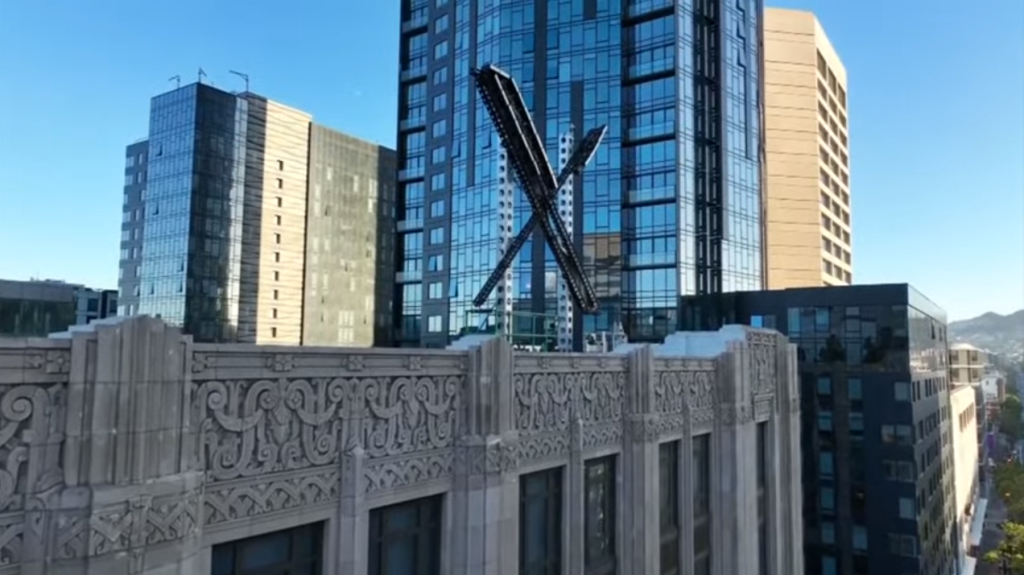
Brazil’s Supreme Court has lifted the freeze on the bank accounts of Starlink and X after transferring 18.35 million reais ($3.3 million) to the national treasury. The decision follows a legal standoff between Justice Alexandre de Moraes and billionaire Elon Musk, who owns X and 40% of Starlink’s parent company, SpaceX. The fines, initially imposed over noncompliance, have now been settled, prompting the unfreezing of the accounts.
Despite the resolution of the fines, Moraes has not lifted his order to block access to X in Brazil, the platform’s sixth-largest market. The restriction is tied to the platform’s failure to meet other legal obligations, such as removing specific content and appointing a legal representative in the country.
As the legal tussle continues, Musk’s companies remain under scrutiny in Brazil, a key battleground in the global debate over the regulation of social media and the balance between free speech and public safety.
A federal judge has temporarily halted a new Utah law designed to protect minors’ mental health by regulating social media use. The law, set to go into effect on 1 October, would have required social media companies to verify users’ ages and impose restrictions on accounts used by minors. Chief US District Judge Robert Shelby granted a preliminary injunction, stating that the law likely violates the First Amendment rights of social media companies by overly restricting their free speech.
The lawsuit, filed by tech industry group NetChoice, argued that the law unfairly targets social media platforms while exempting other websites, creating content-based restrictions. NetChoice represents major tech firms, including Meta, YouTube, Snapchat, and X (formerly Twitter). The court found their arguments convincing, highlighting that the law failed to meet the high scrutiny required for laws regulating speech.
Utah officials expressed disappointment with the ruling but affirmed their commitment to protecting children from the harmful effects of social media. Attorney General Sean Reyes stated that his office is reviewing the decision and is considering further steps. Governor Spencer Cox signed the law in March, hoping to shield minors from the negative impact of social media. Still, the legal battle underscores the complexity of balancing free speech with safeguarding children online.
The ruling is part of a broader national debate, with courts blocking similar laws in states like California, Texas, and Arkansas. Chris Marchese, director of NetChoice’s litigation centre, hailed the decision as a victory, emphasising that the law is deeply flawed and should be permanently struck down. This ongoing legal struggle reveals the challenge of finding solutions to address growing concerns over the effects of social media on youth without infringing on constitutional rights.
Russia is ramping up its efforts to control the internet by allocating nearly 60 billion roubles ($660 million) over the next five years to upgrade its web censorship system, known as TSPU. The system, developed by state regulator Roskomnadzor, is designed to filter and block content deemed harmful or illegal by the government. The funding, part of a broader ‘Cybersecurity Infrastructure’ project, will acquire new software and hardware and expand the system’s capabilities.
The initiative is seen as part of Moscow’s broader crackdown on online freedoms, which has intensified since Russia‘s invasion of Ukraine in 2022. The government has been targeting independent media and social media platforms, blocking websites, and cracking down on using Virtual Private Networks (VPNs), which many Russians use to bypass government restrictions. Roskomnadzor has been increasingly influential in blocking access to these tools, with officials planning to enhance the system’s efficiency further.
The TSPU system was introduced under a 2019 law that requires internet service providers to install government-controlled equipment to monitor and manage web traffic. As of late 2022, over 6,000 TSPU devices had been deployed across Russian networks. The new funding will modernise this infrastructure and improve the system’s ability to detect and block VPN services, making it harder for Russians to access uncensored content.
Why does this matter?
While the Kremlin continues to position these measures as necessary for national security, critics see them as a blatant attack on free speech. Digital rights activists, including those from Roskomsvoboda, warn that while new investments in censorship technology will tighten government control, it is unlikely to eliminate access to independent information. Developers of VPNs and other circumvention tools remain determined, stating that innovation and motivation are essential in the ongoing struggle between censorship and free access.
Russia’s battle with VPNs and independent media is part of a broader campaign against what it calls Western information warfare. Despite the government’s efforts to clamp down, demand for alternative ways to access the internet remains high. Developers are working on more resilient tools, even as the state pours resources into strengthening its censorship apparatus. This tug-of-war between government control and free access to information seems set to continue, with both sides ramping up their efforts.
Telegram founder Pavel Durov announced that the messaging platform will tighten its content moderation policies following criticism over its use for illegal activities. The decision comes after Durov was placed under formal investigation in France for crimes linked to fraud, money laundering, and sharing abusive content. In a message to his 12.2 million subscribers, Durov stressed that most users were law-abiding but acknowledged that a small percentage were tarnishing the platform’s reputation. He vowed to transform Telegram’s moderation practices from a source of criticism to one of praise.
While details on how Telegram will improve its moderation remain sparse, Durov revealed that some features frequently misused for illegal activity had already been removed. These include disabling media uploads on a standalone blogging tool and scrapping the People Nearby feature, which scammers had exploited. The platform will now focus on showcasing legitimate businesses instead. These changes follow Durov’s arrest and questioning in France, raising significant concerns within the tech industry over free speech, platform responsibility, and content policing.
Critics, including former Meta executive Katie Harbath, warned that improving moderation would not be simple. Harbath suggested that Durov, like other tech CEOs, may find himself in for a difficult task. Telegram also quietly updated its Frequently Asked Questions, removing language that previously claimed it did not monitor illegal content in private chats, signalling a potential shift in how it approaches privacy and illegal activity.
Durov also defended Telegram’s moderation efforts, stating that the platform removes millions of harmful posts and channels daily, dismissing claims that it is a haven for illegal content. He expressed surprise at the French investigation, noting that authorities could have contacted the company’s the EU representative or himself directly to address concerns.
Malaysia’s communications minister, Fahmi Fadzil, announced on Sunday that he has instructed the communications regulator not to reroute web traffic through local DNS servers, following feedback from public engagement sessions. The proposed directive, set to take effect on September 30, had raised concerns about potential online censorship and harm to Malaysia‘s digital economy.
The Malaysian Communications and Multimedia Commission defended the measure as a safeguard against malicious content, such as online gambling, phishing, and copyright violations. However, critics argued that the plan would increase censorship and pose cybersecurity risks, such as DNS poisoning.
Assemblyman Syed Ahmad Syed Abdul Rahman Alhadad labelled the directive ‘draconian,’ cautioning it could negatively impact the digital economy, which has seen significant investment from major tech companies. The government has been under growing scrutiny over its regulation of online content since Prime Minister Anwar Ibrahim came to power in 2022.
Fadzil emphasised the importance of combating online crime and vowed to continue engaging with stakeholders to find balanced solutions for a safer internet while maintaining economic stability.
YouTube has terminated the Tenet Media channel and four other channels run by its owner, Lauren Chen, after an indictment by the US Department of Justice. The Justice Department filed money-laundering charges against two employees of Russian state media network RT, accusing them of using shell companies to funnel $10 million to an unnamed US company to produce online content aimed at influencing the 2024 presidential election.
Prosecutors said the accused used fake identities to hire an American firm to create videos designed to deepen political divides in the United States. Though the company was not identified by name, court details point to Tenet Media, a Nashville-based organisation responsible for nearly 2,000 YouTube videos in under a year.
Tenet Media did not respond to requests for comment after its channels were removed by YouTube.
The indictment reflects growing concerns about foreign interference in the United States elections, with platforms like YouTube taking action against channels involved in such activities.
Brazil’s Supreme Court is set to make the final decision on a case involving the suspension of social media platform X, formerly known as Twitter. The case, brought forward by the conservative political party Partido Novo, challenges Justice Alexandre de Moraes’ order to block the platform for failing to comply with court orders to remove accounts spreading misinformation and hate speech. The suspension has sparked a national debate, with many viewing it as a fight over freedom of expression and the rule of law.
Justice Kassio Nunes Marques referred the case to the full Supreme Court, highlighting its significance for public and social order. However, Marques may still issue an individual ruling before the case reaches all 11 justices. In the meantime, Brazil’s attorney general’s office has been asked to provide its opinion on the matter.
The suspension has divided public opinion in Brazil, with a slight majority supporting Moraes’ decision, while others, including Elon Musk, owner of X, have accused the judge of overreach. Musk has called Moraes a ‘dictator’ and criticised the freezing of assets tied to his satellite firm, Starlink, which was implemented to cover potential fines. Brazil’s president, Luiz Inacio Lula da Silva, has supported the ban, reinforcing the need for tech companies to respect local laws.
Telegram founder Pavel Durov has criticised French authorities for detaining him during an investigation into the app, suggesting they could have contacted his company through established channels instead. Durov, now a French national, made his first public statement following his detention last month, denying claims that Telegram is an ‘anarchic paradise’ and defending the app’s moderation efforts.
He expressed surprise at the investigation, pointing out that French authorities had access to a hotline specifically set up for communication with Telegram’s EU representative. Durov argued that it would have been more appropriate for legal action to target the platform rather than holding him personally responsible for third-party activities.
The investigation involves allegations of crimes such as child pornography, drug trafficking, and fraudulent transactions linked to the app. Durov emphasised that Telegram works diligently to remove harmful content, taking down millions of posts and channels daily.
Colombian President Gustavo Petro has called for an investigation into the previous administration’s $11 million purchase of Pegasus spyware. He raised concerns that the spyware, known for hacking the phones of opposition figures and journalists, may have been used to target political opponents. Petro questioned how such a large sum of cash was transported to Israel to purchase this software designed to spy on private communications.
During a televised broadcast, Petro expressed concern about whether he or other politicians in Colombia were under surveillance, calling into question the legal justification for such actions. He has asked the Information and Analysis Unit (UIAF) and the police to provide relevant documents and hand over the software to the attorney general for a thorough investigation.
President Petro emphasised the need for transparency, stating that citizens must trust that the state respects their rights. He vowed to uncover the full details of the purchase and ensure accountability.
Meta’s Oversight Board has advised the Facebook parent company not to automatically remove the phrase ‘From the river to the sea’, which is interpreted by some as a show of solidarity with Palestinians and by others as antisemitic. The board determined that the phrase holds multiple meanings and cannot be universally deemed harmful or violent.
The phrase refers to the region between the River Jordan and the Mediterranean Sea, encompassing Israel and the Palestinian territories. Often used at pro-Palestinian rallies, critics argue it calls for Israel’s destruction, while others dispute this interpretation. The board emphasised the importance of context in assessing such political speech, urging Meta to allow space for debate, particularly during times of conflict.
Meta expressed support for the board’s review, acknowledging the complexities involved in global content moderation. However, the Anti-Defamation League criticised the decision, saying the phrase makes Jewish and pro-Israel communities feel unsafe. The Oversight Board also called on Meta to restore data access for researchers and journalists following its recent decision to end the CrowdTangle tool.
The board’s ruling highlights the ongoing challenges in regulating sensitive content on social media platforms, with a need for balancing free speech and community safety.