Russia moves to classify crypto as marital property

A Russian lawmaker has proposed recognising crypto as marital property to clarify asset ownership in divorce cases. The bill, introduced by Igor Antropenko of the United Russia party, seeks to amend Articles 34 and 36 of the Family Code to classify crypto acquired during marriage as joint property.

Digital assets obtained before marriage or through gifts would remain individually owned.

The proposal aims to address what Antropenko described as ‘risks to property rights’ arising from the current legal ambiguity surrounding digital currencies. It has been sent to Prime Minister Mikhail Mishustin and Central Bank Chairwoman Elvira Nabiullina for review.

The explanatory note highlights the constitutional obligation to protect property rights and cites the growing use of crypto among Russian citizens for investment and savings.

Russia’s move mirrors South Korea’s approach, where courts already recognise cryptocurrencies as divisible marital assets. Under Article 839-2 of Korea’s Civil Act, spouses can request investigations into hidden crypto holdings and either liquidate or divide tokens directly.

Blockchain transparency has made digital asset tracking easier than tracing cash, closing loopholes in asset concealment during divorce.

The proposal comes as Russia’s crypto activity hit $376.3 billion between July 2024 and June 2025, overtaking all European markets. Growing use of DeFi, stablecoins, and plans for a national crypto bank show increasing state involvement in digital finance.

Legal recognition of crypto as property would bring family law in line with this broader regulatory shift.

Would you like to learn more about AI, tech and digital diplomacy? If so, ask our Diplo chatbot!

Crypto hiring snaps back as AI cools

Tech firms led crypto’s hiring rebound, adding over 12,000 roles since late 2022, according to A16z’s State of Crypto 2025. Finance and consulting contributed 6,000, offsetting talent pulled into AI after ChatGPT’s debut. Net, crypto gained 1,000 positions as workers rotated in from tech, fintech, and education.

The recovery tracks a market turn: crypto capitalisation topping US$4T and new Bitcoin highs. A friendlier US policy stance on stablecoins and digital-asset oversight buoyed sentiment. Institutions from JPMorgan to BlackRock and Fidelity widened offerings beyond pilots.

Hiring is diversifying beyond developers toward compliance, infrastructure, and product. Firms are moving from proofs of concept to production systems with clearer revenue paths. Result: broader role mix and steadier talent pipelines.

A16z contrasts AI centralisation with crypto’s open ethos. OpenAI/Anthropic dominate AI-native revenue; big clouds hold most of the infrastructure share; NVIDIA leads GPUs. Crypto advocates pitch blockchains as a counterweight via verifiable compute and open rails.

Utility signals mature, too. Stablecoins settled around US$9T in 12 months, up 87% year over year. That’s over half of Visa’s annual volume and five times that of PayPal’s.

Would you like to learn more about AI, tech, and digital diplomacy? If so, ask our Diplo chatbot!


Zuckerberg to testify in landmark trial over social media’s harm to youth

A US court has mandated that Mark Zuckerberg, CEO of Meta, must appear and testify in a high-stakes trial about social media’s effects on children and adolescents. The case, brought by parents and school districts, alleges that platforms contributed to mental health harms by deploying addictive algorithms and weak moderation in their efforts to retain user engagement.

The plaintiffs argue that platforms including Facebook, Instagram, TikTok and Snapchat failed to protect young users, particularly through weak parental controls and design choices that encourage harmful usage patterns. They contend that the executives and companies neglected risks in favour of growth and profits.

Meta had argued that such platforms are shielded from liability under US federal law (Section 230) and that high-level executives should not be dragged into testimony. But the judge rejected those defenses, saying that hearing directly from executives is integral to assessing accountability and proving claims of negligence.

Legal experts say the decision marks an inflection point: social media’s architecture and leadership may now be put under the microscope in ways previously reserved for sectors like tobacco and pharmaceuticals. The trial could set a precedent for how tech chief executives are held personally responsible for harms tied to platform design.

Would you like to learn more about AI, tech and digital diplomacy? If so, ask our Diplo chatbot

Kazakhstan to achieve full Internet access for all citizens by 2027

Kazakhstan aims to provide Internet access to its entire population by 2027 as part of the national ‘Affordable Internet’ project.

Deputy Prime Minister and Minister of AI and Digital Development Zhaslan Madiyev outlined the country’s digital transformation goals during a government session, highlighting plans to eliminate digital inequality and expand broadband connectivity.

Over one trillion tenge has been invested in telecommunications in the past three years, bringing average Internet speeds to 94 Mbps. By 2027, Kazakhstan expects to achieve 100% Internet coverage, speeds above 100 Mbps, and fiber-optic access for 90% of rural settlements.

Currently, 84% of villages already have mobile Internet, and 2,606 are connected to main fibre-optic lines.

The plan includes 4G coverage for 92% of settlements, 5G deployment in 20 cities, and 4G connectivity across 40,000 km of highways. Satellite Internet will reach 504 remote villages by 2025.

Madiyev also noted Kazakhstan’s strategic role in global data transit, with projects such as the Caspian Sea undersea fibre-optic line aiming to raise its share of international traffic from 1.5% to 5% by 2027.

An initiative that supports Kazakhstan’s ambition to become a regional IT hub by 2030, with the number of IT racks set to grow from 4,000 to 20,000, and at least nine Tier III-IV data centres planned.

The country has also launched the National Supercomputer Center ‘alem.cloud’ and the ‘Al-Farabium’ tech cluster to strengthen its digital ecosystem.

Would you like to learn more about AI, tech and digital diplomacy? If so, ask our Diplo chatbot!

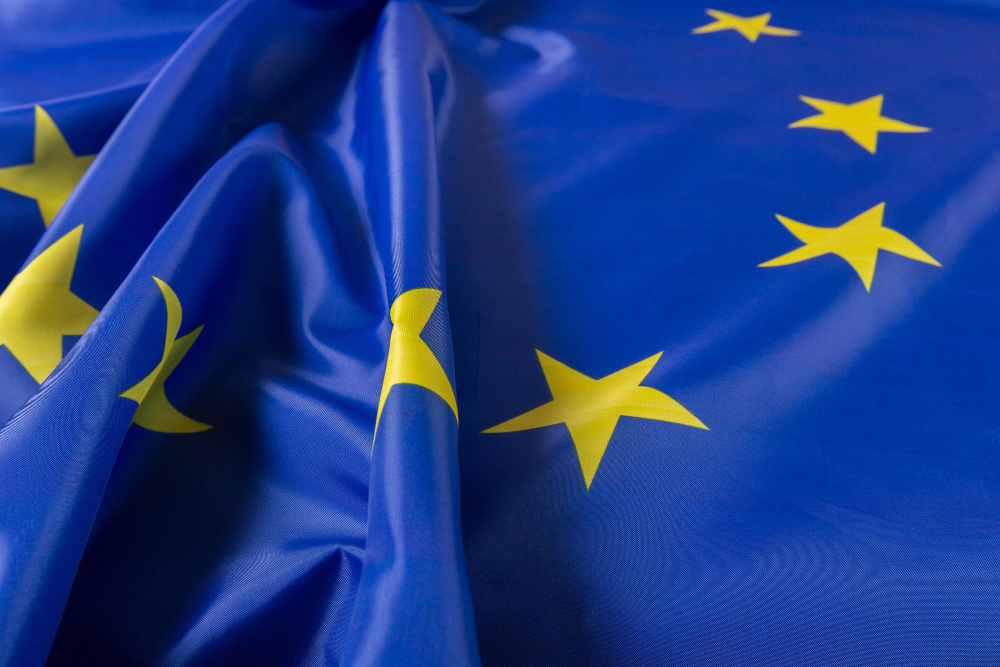
EU sets new rules for cloud sovereignty framework

The European Commission has launched its Cloud Sovereignty Framework to assess the independence of cloud services. The initiative defines clear criteria and scoring methods for evaluating how providers meet EU sovereignty standards.

Under the framework, the Sovereign European Assurance Level, or SEAL, will rank services by compliance. Assessments cover strategic, legal, operational, and technological aspects, aiming to strengthen data security and reduce reliance on foreign systems.

Officials say the framework will guide both public authorities and private companies in choosing secure cloud options. It also supports the EU’s broader goal of achieving technological autonomy and protecting sensitive information.

The Commission’s move follows growing concern over extra-EU data transfers and third-country surveillance. Industry observers view it as a significant step toward Europe’s ambition for trusted, sovereign digital infrastructure.

Would you like to learn more about AI, tech and digital diplomacy? If so, ask our Diplo chatbot

Andreessen Horowitz backed Codi startup launches AI tool to streamline office operations

Codi, an Andreessen Horowitz–backed startup founded by Christelle Rohaut and Dave Schuman, has launched an AI-powered platform that is said to fully automate office management.

The San Francisco-based company was founded in 2018 to help firms find flexible workspaces. It first operated as a marketplace, matching companies to buildings with flexible office arrangements but has since evolved into an AI-powered software platform. The new AI agent handles logistics such as vendor coordination, cleaning and pantry restocking for any leased office, meeting a need that, according to Rohaut, remains very manual and costly.

Chief executive Christelle Rohaut said advances in AI made the shift possible. ‘Whatever office you lease, you can use this to automate your office logistics,’ she told TechCrunch.

The product entered beta in May and officially launched this week. Codi, which has raised $23 million to date, including a $16 million Series A led by Andreessen Horowitz in 2022 , reported reaching $100,000 in annual recurring revenue within five weeks of the beta launch.

The company says the platform can save firms hundreds of hours in administrative work and reduce costs compared with hiring an in-house or part-time office manager. Early adopters include TaskRabbit and Northbeam.

Would you like to learn more about AI, tech and digital diplomacy? If so, ask our Diplo chatbot

CMC pegs JLR hack at £1.9bn with 5,000 firms affected

JLR’s cyberattack is pegged at £1.9bn, the UK’s costliest on record. Production paused for five weeks from 1 September across Solihull, Halewood, and Wolverhampton. CMC says 5,000 firms were hit, with full recovery expected by January 2026.

JLR is restoring manufacturing in phases and declined to comment on the estimate. UK dealer systems were intermittently down, orders were cancelled or delayed, and suppliers faced uncertainty. More than half of the losses fall on JLR; the remainder hits its supply chain and local economies.

The CMC classed the incident as Category 3 on its five-level scale. Chair Ciaran Martin warned organisations to harden critical networks and plan for disruption. The CMC’s assessment draws on public data, surveys, and interviews rather than on disclosed forensic evidence.

Researchers say costs hinge on the attack type, which JLR has not confirmed. Data theft is faster to recover than ransomware; wiper malware would be worse. A claimed hacker group linked to earlier high-profile breaches is unverified.

The CMC’s estimate excludes any ransom, which could add tens of millions of dollars. Earlier this year, retail hacks at M&S, the Co-op, and Harrods were tagged Category 2. Those were pegged at £270m–£440m, below the £506m cited by some victims.

Would you like to learn more about AI, tech and digital diplomacy? If so, ask our Diplo chatbot!

EU states split over children’s social media rules

European leaders remain divided over how to restrict children’s use of social media platforms. While most governments agree stronger protections are needed, there is no consensus on enforcement or age limits.

Twenty-five EU countries, joined by Norway and Iceland, recently signed a declaration supporting tougher child protection rules online. The plan calls for a digital age of majority, potentially restricting under-15s or under-16s from joining social platforms.

France and Denmark back full bans for children below 15, while others, prefer verified parental consent. Some nations argue parents should retain primary responsibility, with the state setting only basic safeguards.

Brussels faces pressure to propose EU-wide legislation, but several capitals insist decisions should stay national. Estonia and Belgium declined to sign the declaration, warning that new bans risk overreach and calling instead for digital education.

Would you like to learn more about AI, tech and digital diplomacy? If so, ask our Diplo chatbot

USB inventor and Phison CEO warns of an AI storage crunch

Datuk Pua Khein-Seng, inventor of the single-chip USB flash drive and CEO of Phison, warns that AI machines will generate 1,000 times more data than humans. He says the real bottleneck isn’t GPUs but memory, foreshadowing a global storage crunch as AI scales.

Speaking at GITEX Global, Pua outlined Phison’s focus on NAND controllers and systems that can expand effective memory. Adaptive tiering across DRAM and flash, he argues, will ease constraints and cut costs, making AI deployments more attainable beyond elite data centres.

Flash becomes the expansion valve: DRAM stays scarce and expensive, while high-end GPUs are over-credited for AI cost overruns. By intelligently offloading and caching to NAND, cheaper accelerators can still drive useful workloads, widening access to AI capacity.

Cloud centralisation intensifies the risk. With the US and China dominating the AI cloud market, many countries lack the capital and talent to build sovereign stacks. Pua calls for ‘AI blue-collar’ skills to localise open source and tailor systems to real-world applications.

Storage leadership is consolidating in the US, Japan, Korea, and China, with Taiwan rising as a fifth pillar. Hardware strength alone won’t suffice, Pua says; Taiwan must close the AI software gap to capture more value in the data era.

Would you like to learn more about AI, tech, and digital diplomacy? If so, ask our Diplo chatbot!

DeepSeek dominates AI crypto trading challenge

Chinese AI model DeepSeek V3.1 has outperformed its global competitors in a real-market cryptocurrency trading challenge, earning over 10 per cent profit in just a few days.

The experiment, named Alpha Arena, was launched by US research firm Nof1 to test the investing skills of leading LLMs.

Each participating AI was given US$10,000 to trade in six cryptocurrency perpetual contracts, including bitcoin and solana, on the decentralised exchange Hyperliquid. By Tuesday afternoon, DeepSeek V3.1 led the field, while OpenAI’s GPT-5 trailed behind with a loss of nearly 40 per cent.

The competition highlights the growing potential of AI models to make autonomous financial decisions in real markets.

It also underscores the rivalry between Chinese and American AI developers as they push to demonstrate their models’ adaptability beyond traditional text-based tasks.

Would you like to learn more about AI, tech and digital diplomacy? If so, ask our Diplo chatbot!