Durk Kingma, one of the lesser-known co-founders of OpenAI, has announced he is joining AI research company Anthropic. Kingma, who will work remotely from the Netherlands, expressed excitement about aligning with Anthropic’s mission to develop AI systems responsibly. However, he did not specify his exact role within the company.
Kingma, with a PhD in machine learning from the University of Amsterdam, played a crucial role in developing generative AI models like DALL-E and ChatGPT during his time at OpenAI. After leaving OpenAI in 2018, he rejoined Google Brain before its merger with DeepMind in 2023, while also working as an angel investor for AI startups.
Kingma’s hiring is part of a broader trend, with several key figures from OpenAI moving to Anthropic in recent months, including safety lead Jan Leike and co-founder John Schulman. Anthropic, led by former OpenAI VP Dario Amodei, continues to attract top talent as it positions itself as a more safety-conscious alternative in the AI industry.
Binance, the world’s leading cryptocurrency exchange, has secured regulatory approval in Argentina, marking its official entry into the country’s market. By registering with Argentina’s National Securities Commission, Binance can now offer its full range of crypto services to local users, providing access to various digital currencies.
This approval is part of Binance’s broader strategy to expand into regions with strong potential for crypto adoption, such as Latin America. The company’s web and mobile applications are now available throughout Argentina, enabling users to trade, buy, and sell cryptocurrencies like Bitcoin and Ethereum.
Despite legal challenges faced by its former CEO in the US, Binance continues to prioritise global expansion. Recent regulatory successes in India, Kazakhstan, and Indonesia have further solidified its presence worldwide.
Musicians worldwide are increasingly turning to platforms like Wavlake and Fountain, where they can earn Bitcoin in the form of satoshis for streaming their songs. Artists like Ainsley Costello and Joe Martin have reported making more from these platforms than from traditional DSPs like Spotify, where payments are typically low. For example, Costello earned over $13,000 in bitcoin in one year through Wavlake, compared to just $750 in five years on traditional streaming platforms.
These platforms operate under a Value for Value model, allowing listeners to tip artists directly with satoshis, creating a stronger connection between fans and musicians. With the introduction of the “zap” feature, fans can send micropayments quickly, bypassing the complexity of other systems. Nostr, a decentralised social media protocol, is also gaining popularity among musicians, helping them share their work more effectively and engage with their community.
As these new platforms grow, many artists believe they offer a fairer and more profitable alternative to traditional music industry practices. Musicians like Joe Martin encourage others to join platforms like Wavlake and Nostr to take control of their careers and foster more direct relationships with their fans.
Pinterest has introduced new generative AI features for its advertisers, enhancing the functionality of its Performance+ suite during the recent Pinterest Presents event. This update allows advertisers to transform plain backgrounds into engaging lifestyle imagery, helping to boost the appeal of their product pins. Pinterest’s move follows similar offerings from major tech companies like Google and Amazon, which have also adopted generative AI to improve advertising effectiveness.
In tests with Walgreens, an early user of Pinterest’s generative AI, the drugstore chain experienced a 55% increase in clickthrough rates and a 13% decrease in cost-per-click when using AI-generated backgrounds. Pinterest claims its new tools will streamline campaign creation, requiring 50% less input from advertisers and potentially leading to a 64% reduction in cost per action and a 30% rise in conversion rates.
Additionally, Pinterest is rolling out new promotional tools that will allow advertisers to offer discounts to users in various countries, including the US, UK, Canada, and Japan. The platform is also enhancing its Performance+ bidding system to prioritise high-value conversions rather than clicks, thereby providing advertisers with greater flexibility in achieving their marketing goals. All global advertisers will now have access to these improved Performance+ campaigns, aimed at driving consideration, conversions, and catalogue sales.
Ohio Senator Niraj Antani has introduced a bill to allow residents to pay their state and local taxes using cryptocurrencies such as Bitcoin. Announced at the end of September, the proposal aims to push Ohio into the digital age by embracing cryptocurrencies for government transactions, giving taxpayers a modern option to settle their obligations. Senator Antani emphasised the importance of keeping the state’s economy innovative, stating that cryptocurrencies represent both the present and the future.
The new proposal follows a similar attempt in 2018, which was short-lived due to bureaucratic issues. Antani’s bill is designed to avoid the hurdles that caused the previous initiative to fail. By explicitly mandating the acceptance of crypto payments for taxes, the legislation seeks to establish Ohio as a leader in crypto integration for public services. The bill also proposes allowing state universities and pension funds to invest in digital assets, offering more financial flexibility.
However, concerns have emerged about potential privacy risks, with critics arguing that the move could expose taxpayers’ crypto transactions to government scrutiny. The bill is currently awaiting committee assignment and must navigate the legislative process before being enacted. If successful, Ohio would follow in the footsteps of states like Colorado, which introduced a similar programme in 2022.
Bithumb, one of South Korea’s leading crypto exchanges, has announced plans for an initial public offering on the Nasdaq stock exchange, aiming for a listing in the second half of 2025. The announcement was made during a shareholders’ meeting, where Bithumb confirmed it is actively pursuing this IPO with Samsung Securities as its lead underwriter.
In a strategic move to enhance its IPO prospects, Bithumb has implemented a 60:40 corporate share split, allowing the exchange to concentrate on its core business while spinning off non-essential activities, such as investment and real estate leasing. This newly formed entity is set to be named Bithumb Korea or Bithumb Investment.
This isn’t Bithumb’s first attempt at going public; the exchange previously sought a Kosdaq listing in 2020 but abandoned the effort due to regulatory uncertainties. With South Korea‘s crypto regulations remaining tight, the firm hopes to find a more favourable environment in the US, following in the footsteps of Coinbase, which is already listed on Nasdaq.
Despite facing challenges, including an operating loss of $11 million in the last fiscal year and a steep decline in revenue, Bithumb remains optimistic about its future growth and is gearing up for this significant transition to the public market.
Toncoin continues to face significant challenges, with its price down more than 30% from its year-to-date high, trading at $5.81 as of 30th September. Despite strong on-chain activity, including a surge in activated wallets and an increase in the number of burned Toncoins, its role in the decentralised finance space is fading. The total value locked in Toncoin’s network has plunged from $765 million in July to $427 million, causing the token to slip in DeFi rankings.
Contributing to this decline is the arrest of Telegram founder Pavel Durov in France and the poor performance of newly launched tap-to-earn tokens, which have seen steep drops in value. Alongside these setbacks, Toncoin’s futures open interest has also declined, indicating weaker demand. Technically, Toncoin is approaching a critical point where the 50-day and 200-day moving averages may form a death cross, which could trigger further price declines if it fails to break above these levels.
Unless Toncoin can regain momentum, a bearish breakout to the $4.45 support level appears likely. The last time this pattern formed, Toncoin experienced a significant drop, and its future remains uncertain unless it can overcome its current technical and market challenges.
Apple has reportedly exited negotiations to participate in OpenAI’s upcoming funding round, expected to raise around $6.5 billion. The round is anticipated to close next week, according to the Wall Street Journal. Other major tech companies, including Microsoft and Nvidia, are still engaged in talks to invest.
Microsoft is expected to contribute approximately $1 billion to the round, after previously investing $13 billion into OpenAI. The funding round is part of the tech industry’s growing interest in generative AI, which has sparked an arms race among companies to secure a competitive edge.
OpenAI‘s fundraising is projected to value the company at over $100 billion, largely driven by the success of ChatGPT. The AI model’s launch in late 2022 encouraged companies across multiple sectors to invest heavily in the technology to remain competitive.
OpenAI declined to comment on the news, while Apple did not respond to requests for clarification regarding its withdrawal from the negotiations.
Jesse Pollak, the mastermind behind Ethereum’s Layer 2 blockchain Base, has taken a significant step in his career by joining the Coinbase executive team. In addition to leading the Base project, Pollak will now also oversee Coinbase Wallet, a key component in the company’s mission to enhance blockchain accessibility for a broader audience.
In a recent announcement on X (formerly Twitter), Pollak expressed his enthusiasm for his dual role, stating that both Base and Coinbase Wallet aim to simplify the process of connecting people to the expanding decentralised economy. He emphasised that this collaboration will strengthen efforts to onboard users onto the blockchain and enhance the overall experience.
Despite his expanded responsibilities, Pollak reassured the community that Base will maintain its core principles of decentralisation and openness. He underscored that both Base and Coinbase Wallet share the vision of being inclusive and accessible to everyone, fostering a collaborative environment between the two teams.
Coinbase is also enhancing its services with the recent launch of ‘Coinbase Wrapped Bitcoin’ (cbBTC), a new ERC-20 token that is backed 1:1 by Bitcoin. The initiative aims to improve the utility of Bitcoin within decentralised finance, allowing users to leverage their Bitcoin across various dApps on Ethereum and the Base network.
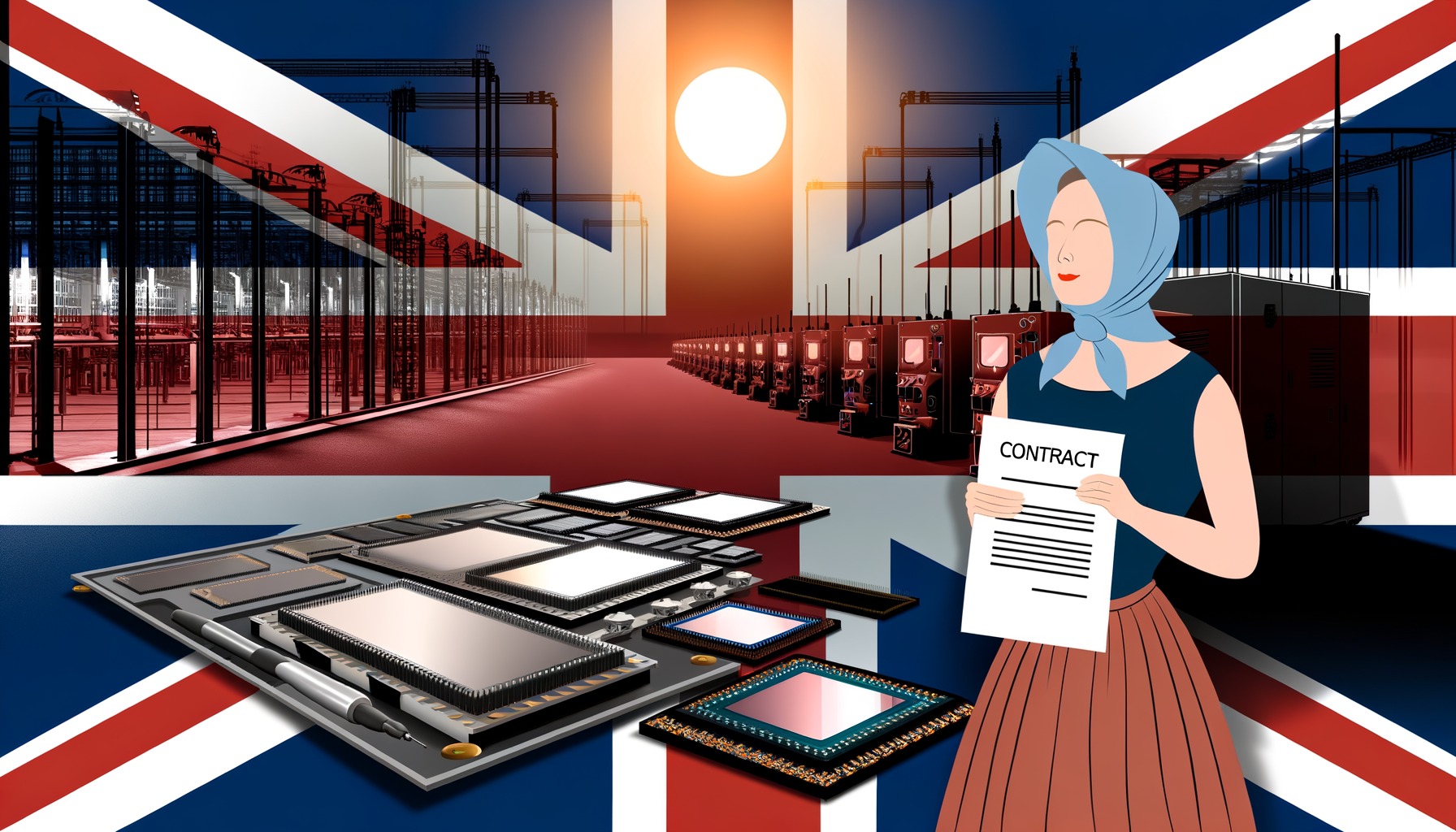
The British government has purchased a struggling semiconductor factory from United States-based Coherent Inc. to safeguard domestic production of gallium arsenide semiconductors. These components are vital for military technology, including fighter jets. The plant, located in Newton Aycliffe, northern England, is the United Kingdom‘s only secure producer of these semiconductors.
The acquisition, estimated at £20 million ($27 million), ensures the preservation of 100 skilled jobs. While it is unusual for the government to intervene in private companies, the semiconductor industry has become a strategic priority due to its crucial role in both the economy and national security.
Semiconductors are key to the UK’s future technological advancements, particularly in growth and clean energy sectors. The British government has previously intervened in the industry, having bought Newport Wafer Fab three years ago to prevent a sale to a Chinese-owned firm.
The Newton Aycliffe factory, which had faced financial challenges after losing contracts, will receive government investment under its new name, Octric Semiconductors UK, as part of efforts to revitalise the business.