A federal judge in Little Rock, Arkansas, has temporarily blocked state officials from shutting down a cryptocurrency mining firm owned by a naturalised US citizen of Chinese descent. The company, Jones Eagle, was targeted under Arkansas laws prohibiting property and business ownership by Chinese nationals or entities, despite its owner, Qimin ‘Jimmy’ Chen, holding US citizenship.
The court’s restraining order, issued by Chief Judge Kristine Baker, stops Arkansas from taking immediate action against Chen’s business. Chen argued the state’s actions were discriminatory, as he had previously provided documentation confirming his US citizenship and compliance with local laws. The state’s case relied on Acts 636 and 174, which restrict property ownership by individuals linked to China and foreign digital asset miners.
The restraining order is in effect for 14 days, allowing time for a hearing to decide whether it will be extended. Chen’s legal team intends to challenge the constitutionality of the laws, describing them as overreaching and discriminatory. The outcome could have broader implications for property and business rights in the US amidst growing scrutiny of enterprises linked to China.
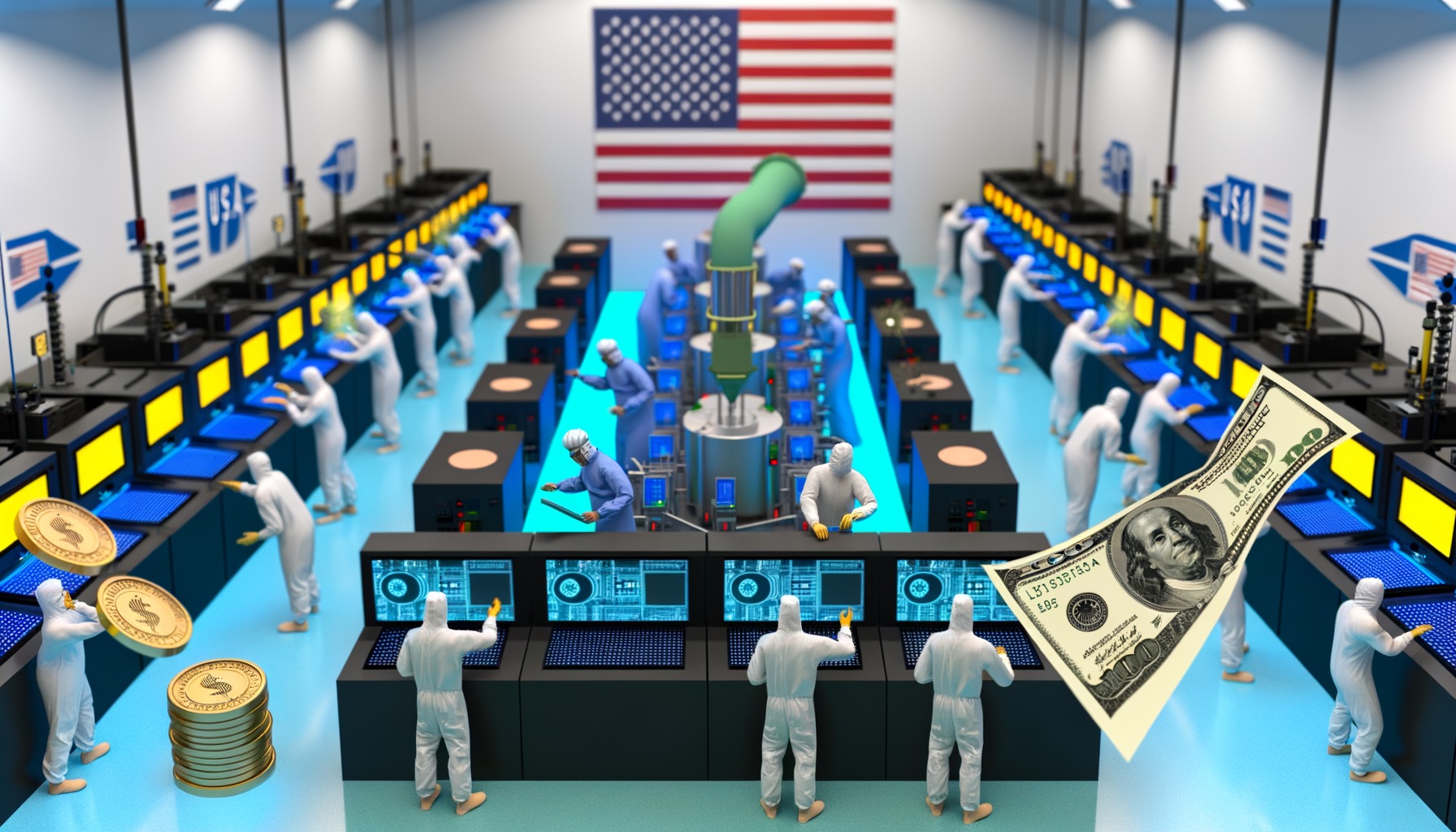
Intel has secured a $7.86 billion subsidy from the US Commerce Department to bolster its domestic semiconductor production. The revised figure is lower than the $8.5 billion initially announced in March, following Intel’s receipt of a $3 billion Pentagon award. The funding will support key projects in Arizona, New Mexico, Ohio, and Oregon, advancing the nation’s chip-making capabilities.
Commerce Secretary Gina Raimondo highlighted the deal as a step towards revitalising US manufacturing. She emphasised the importance of having American-designed chips produced domestically, benefiting national security and economic growth. Intel will receive at least $1 billion of the subsidy by the year’s end, having met key project milestones.
The grant is part of a broader $52.7 billion initiative under the 2022 CHIPS Act, aimed at strengthening the US semiconductor industry. While Intel declined an $11 billion low-cost loan offered earlier, the company plans to leverage a 25% Treasury Investment Tax Credit for investments exceeding $100 billion. Intel CEO Pat Gelsinger noted bipartisan support for the sector’s growth, calling it vital for America’s future.
The award comes with strict conditions, including a five-year prohibition on stock buybacks and requirements to share excess profits. Raimondo reassured that these safeguards are designed to protect taxpayers, with additional awards expected in the coming weeks.
Donald Trump’s incoming administration is reportedly considering a significant shift in how cryptocurrency is regulated in the US. The Commodity Futures Trading Commission (CFTC) is being positioned to take over from the Securities and Exchange Commission (SEC) as the primary authority overseeing the digital asset sector. The move, if approved by Congress, would empower the CFTC to regulate crypto assets, exchanges, and emerging products like Bitcoin and Ethereum spot ETFs.
The SEC has faced criticism during Joe Biden’s presidency for its strict enforcement actions against crypto firms. In 2022 alone, the commission filed 46 lawsuits against crypto-related entities, a 53% increase from the previous year. Major exchanges like Binance and Coinbase were among the SEC’s primary targets, accused of operating unregistered platforms and breaching securities laws.
Trump’s plan is seen as an effort to create a more innovative and supportive environment for the cryptocurrency industry, which he views as a growing financial market with 50 million traders globally. By shifting oversight to the CFTC, the administration aims to promote development while ensuring proper regulation for the sector’s $3 trillion market size.
This proposed change marks a turning point in US crypto regulation, as the CFTC’s approach could redefine how digital assets are managed and potentially foster a more collaborative relationship with the industry.
Cybersecurity firm CrowdStrike has increased its annual revenue and profit projections, reporting a 29% rise in third-quarter revenue to $1.01 billion, surpassing analyst estimates. The company credits robust demand for its comprehensive cybersecurity services as businesses address growing online threats. Notable clients, including AT&T and Ticketmaster, have faced recent cyberattacks, driving greater investment in digital defences.
CrowdStrike now expects annual revenue between $3.92 billion and $3.93 billion, up from previous forecasts. Adjusted profit per share estimates have also been raised to $3.74–$3.76. However, its fourth-quarter revenue outlook, in line with analyst expectations, led to a slight dip in share value.
Rival Palo Alto Networks has similarly seen strong growth, reflecting increased spending in the cybersecurity sector. Despite challenges such as a July outage, CrowdStrike maintains optimism for sustained growth, bolstered by its enhanced customer engagement programmes.
The United StatesCommerce Department has announced nearly $60 million in subsidies for BAE Systems and Rocket Lab to boost semiconductor production crucial for aerospace and space technologies. BAE will receive $35.5 million to quadruple the production of chips used in F-35 fighter jets and satellites, cutting its modernisation timeline significantly.
Rocket Lab’s SolAero Technologies will receive $23.9 million to expand solar cell production by 50% over three years. These space-grade semiconductors power key missions, including NASA’s Artemis programme and the James Webb Space Telescope.
The investments are part of the Biden administration’s $52.7 billion ‘Chips and Science‘ programme aimed at bolstering domestic semiconductor manufacturing.
The Bank of England is expediting its efforts to develop a central bank digital currency (CBDC), with Governor Andrew Bailey highlighting the urgency of creating a secure, accessible form of digital money for the UK. This move follows growing concerns that private fintech firms are outpacing traditional financial institutions in digital innovation, raising risks to financial stability, security and consumer privacy.
Bailey’s comments reflect a global challenge: central banks must modernise to keep pace with the rapid advancements in blockchain and Web3 technologies. Private sector firms, often operating with fewer regulatory constraints, are achieving breakthroughs that leave traditional systems struggling to adapt. However, their unchecked progress could deepen vulnerabilities in the global financial landscape.
The push for a digital pound is seen as essential not just for competitiveness but also for aligning with society’s shifting expectations. As consumers increasingly demand transparent, on-demand financial services, central banks face a crucial decision. They must either embrace partnerships with fintech firms and reform outdated frameworks or risk falling behind in the race for digital innovation. A CBDC, if implemented correctly, could pave the way for greater financial inclusivity and economic stability.
Chinese robotaxi firm Pony AI secured $260 million in a US IPO, valuing the startup at $4.55 billion. This marks a resurgence in US investor confidence for Chinese tech companies, with the IPO reflecting renewed interest in autonomous driving technologies despite ongoing geopolitical tensions.
The company’s move follows a period of uncertainty for Chinese firms in US markets, notably after Didi Global’s delisting. Regulatory disputes between China and the US have eased, bolstering opportunities for companies like Pony AI. However, the robotaxi sector faces challenges, including public concerns about autonomous vehicles’ safety, data privacy, and stiff competition from rivals such as Tesla, which plans to launch similar services in the US next year.
Pony AI sold 20 million American depositary shares at $13 each and raised an additional $153.4 million through private placements. Backed by Toyota, the company’s valuation has declined from $8.5 billion two years ago, highlighting the competitive and uncertain nature of the market. Analysts note widespread robotaxi adoption may take years due to safety and reliability hurdles.
The IPO follows a trend of other Chinese firms, including Zeekr and WeRide, also going public in the US. While Pony AI’s operations in the US remain limited, its public listing underscores growing investor interest in technology startups despite profitability challenges and intense market competition.
Morocco is preparing to regulate cryptocurrencies with a draft law currently in the process of adoption, according to central bank governor Abdellatif Jouahri. Despite a ban on cryptocurrencies since 2017, underground usage has persisted among the public, prompting Bank Al Maghrib to take steps toward formal oversight.
At an international conference in Rabat, Jouahri highlighted the bank’s dual focus on regulating crypto assets and exploring a central bank digital currency (CBDC). Unlike decentralised cryptocurrencies, a CBDC would be centrally managed, potentially supporting public policy goals such as financial inclusion.
This move reflects a global trend as countries assess how digital currencies can align with regulatory frameworks while fostering innovation. The initiative aims to address the risks of unregulated crypto use while leveraging its potential benefits for Morocco’s financial system.
Brazil has unveiled a proposal to create a sovereign Bitcoin reserve, aiming to integrate digital assets into its financial system. Congressman Eros Biondini introduced the bill on 25 November, calling for a Sovereign Strategic Bitcoin Reserve, known as RESBit, to safeguard the country’s economy from currency volatility and geopolitical risks. The reserve would also serve as collateral for Brazil’s forthcoming central bank digital currency, Real Digital.
The proposal suggests allocating up to 5% of Brazil’s $355 billion reserves to Bitcoin through phased purchases, with the central bank overseeing its management using blockchain and artificial intelligence technologies. Drawing inspiration from El Salvador, which adopted Bitcoin as legal tender in 2021, the bill highlights how Bitcoin has helped diversify economies and foster financial inclusion. El Salvador now holds nearly 6,000 BTC, valued at $542 million.
The draft law includes penalties for mismanagement of the RESBit reserve and is currently under review by the Speaker of Brazil’s House of Representatives. If approved, it will proceed to committees for further debate. Brazil continues to advance its digital asset policies, having established a legal framework in June 2023 to regulate virtual asset providers and securities tokens under its central bank and securities commission.
Indonesia has upheld its ban on Apple’s iPhone 16, rejecting the tech giant’s $100M investment offer. The government maintains that Apple failed to meet regulations requiring 40% of phone components to be locally produced, a rule aimed at fostering domestic manufacturing.
Indonesian industry Minister Agus Gumiwang Kartasasmita stated Apple’s proposal lacked fairness, particularly when compared to the company’s investments in other nations. He urged the company to establish a production facility in Indonesia to avoid repeated investment negotiations.
While iPhone 16 sales remain prohibited, approximately 9,000 units have entered Indonesia for personal use. The government has imposed similar restrictions on Google Pixel phones, highlighting a firm stance on enforcing local manufacturing policies.