Efforts to strengthen technological competitiveness in Europe focus on advancing AI capabilities, developing new forms of talent and improving access to investment.
Discussions at the CTx Tech Experience in Seville highlighted a growing consensus that innovation must scale more effectively if the region is to compete globally.
Participants emphasised that Europe continues to face structural challenges, including fragmented markets, regulatory complexity and limited capital for high-growth companies.
These constraints have made it more difficult for startups to expand, prompting calls for stronger coordination between public institutions and private investors.
AI is increasingly viewed as the foundation of the transformation. Industry leaders pointed to the emergence of new business opportunities driven by AI, alongside the need to translate innovation into scalable commercial outcomes.
At the same time, labour market dynamics are shifting towards hybrid skillsets that combine technical expertise with business understanding and critical thinking.
In such a context, strengthening Europe’s innovation capacity is seen as essential to competing with global powers such as the US and China.
The Trump Administration unveiled a national AI framework to boost competitiveness, security, and benefits for Americans. The plan seeks to ensure that AI innovation supports all citizens while maintaining public trust in the technology.
Six key objectives form the foundation of the policy. These include protecting children online, empowering parents with tools to manage digital safety, strengthening communities and small businesses, respecting intellectual property, defending free speech, and fostering innovation.
The framework also prioritises workforce development to prepare Americans for AI-driven job opportunities.
Federal uniformity is considered critical to the plan’s success. The Administration warns that a patchwork of state regulations could stifle innovation and reduce the United States’ ability to lead globally.
Congress is encouraged to collaborate closely to implement the framework nationwide.
The Administration emphasises that the United States must lead the AI race, ensuring the benefits of AI reach all Americans while addressing challenges such as privacy, security, and equitable access to opportunities.
Would you like to learn more about AI, tech and digital diplomacy? If so, ask our Diplo chatbot!
AI-generated deepfake abuse is emerging as a serious global threat, with women and girls disproportionately affected by non-consensual and harmful digital content. Advances in AI make it easy to create manipulated content that can spread across platforms within minutes and reach millions.
Data highlights the scale of the issue. The vast majority of deepfake content online consists of explicit material, overwhelmingly targeting women.
Accessible and often free tools have lowered the barrier to entry, enabling widespread misuse. At the same time, the ability to endlessly replicate and share such content makes removal nearly impossible once it is published.
Legal responses remain fragmented, with many pre-existing laws leaving gaps in addressing AI-generated deepfake abuse. Enforcement issues, such as cross-border challenges and limited digital forensics capabilities, make it unlikely that perpetrators will face consequences.
Pressure is mounting on governments and technology platforms to act. Calls for reform include clearer legislation, faster obligations to remove content, improved law enforcement capabilities, and stronger support systems for victims.
Without coordinated global action, deepfake abuse is set to expand alongside the technologies enabling it.
Would you like to learn more about AI, tech and digital diplomacy? If so, ask our Diplo chatbot!
Brazil has postponed discussions on its upcoming cryptocurrency tax framework until after the October 2026 presidential elections, signalling a cautious political approach to digital asset regulation.
Finance officials aim to avoid introducing contentious fiscal measures during an election cycle, despite earlier plans to launch a public consultation later this year.
Recent tax reforms have already marked a significant shift in Brazil’s crypto policy. A flat 17.5% tax on capital gains was introduced in June 2025, replacing earlier exemptions for smaller transactions.
Previous rules allowed tax-free monthly sales up to 35,000 Brazilian real, while higher volumes were subject to progressive rates. Banco Central do Brasil classified stablecoin transfers as foreign exchange, making them subject to standard currency tax rules.
Authorities are considering broader crypto taxes, including on assets used for international payments. Alignment with the Crypto-Asset Reporting Framework also remains on the agenda, indicating a move towards tighter oversight and global regulatory coordination.
Strong adoption highlights the policy’s importance, with Brazil leading Latin America and ranking among the world’s top crypto markets. Regional data shows a surge in adoption, strengthening Brazil’s role in the global digital asset market.
Would you like to learn more about AI, tech and digital diplomacy? If so, ask our Diplo chatbot!
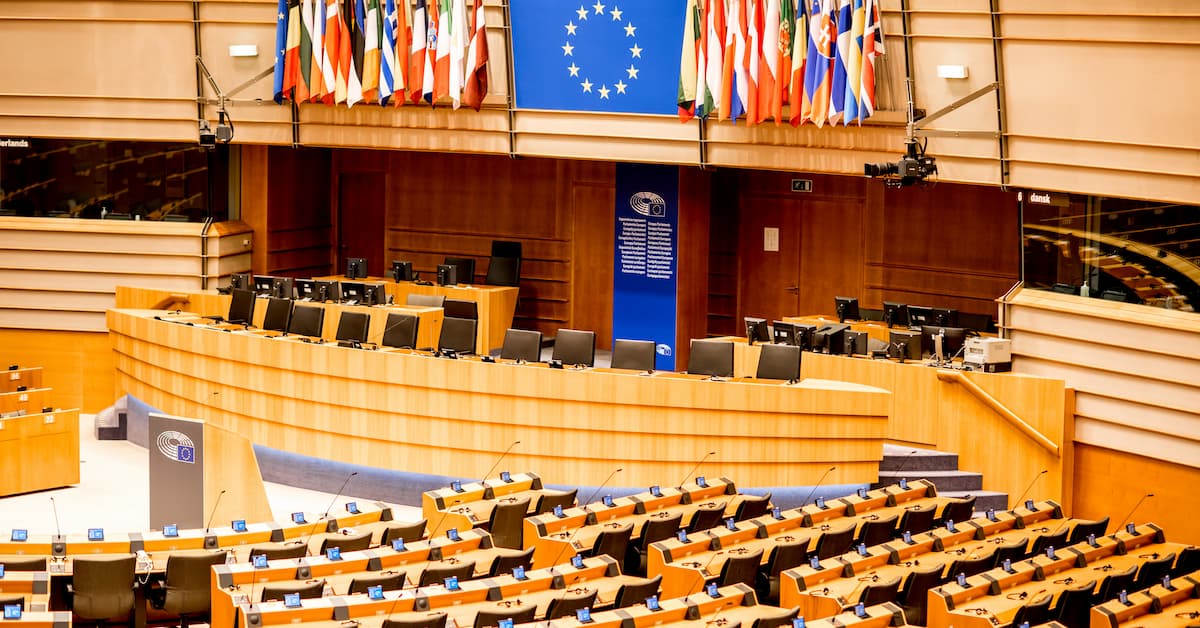
Members of the European Parliament are calling for more rapid progress in implementing the bloc’s digital competition framework, with particular focus on the Digital Markets Act.
In a recent resolution, lawmakers urged the European Commission to ensure timely and effective enforcement of the rules designed to regulate large online platforms. The legislation aims to address concerns around market dominance and promote fair competition across the digital economy.
The discussions reflect ongoing concerns that delays in enforcement could undermine the framework’s effectiveness, particularly as major technology companies continue to expand their influence. Platforms such as Google, Apple and Meta are among those expected to comply with the new obligations.
At the same time, policymakers are balancing regulatory oversight with the need to maintain innovation and competitiveness. The debate forms part of a broader effort in the EU to strengthen digital governance and reinforce the region’s position in global technology markets.
Would you like to learn more about AI, tech and digital diplomacy? If so, ask our Diplo chatbot!
Telefónica Tech has partnered with three European firms to bring AI and quantum computing closer together. The collaboration aims to improve how advanced models are developed and deployed across different environments.
The initiative brings together Qilimanjaro Quantum Tech, Multiverse Computing and Qcentroid. Their combined expertise is expected to support more efficient, compact and locally deployable AI systems.
Quantum computing is seen as a way to reduce the heavy processing demands of large AI models. Faster computation could yield more accurate results while reducing the time required to solve complex problems.
Each partner contributes specialised capabilities, from quantum hardware and algorithms to software platforms and orchestration tools. These technologies could support applications such as simulations, edge AI and rapid prototyping.
Telefónica Tech is also strengthening its role in integrating AI and quantum solutions for enterprise clients. The move reflects a broader push to build scalable, sovereign and next-generation digital infrastructure in Europe.
Would you like to learn more about AI, tech and digital diplomacy? If so, ask our Diplo chatbot!
A large-scale fraud scheme using AI-generated music has exposed vulnerabilities in streaming platforms and royalty systems. Billions of fake streams were used to divert payments away from legitimate artists and rights holders.
The scheme ran from 2017 to 2024 and involved uploading hundreds of thousands of AI-generated tracks. Automated programs were then used to stream the songs at scale, inflating play counts and generating revenue.
The operation relied on thousands of bot accounts, bulk email registrations and cloud-based systems. Streaming activity was spread across many tracks to reduce detection and maintain consistent earnings over time.
Michael Smith, a 54-year-old from North Carolina, has pleaded guilty to conspiracy to commit wire fraud in federal court. Prosecutors say he obtained more than $10 million and agreed to forfeit over $8 million in proceeds.
Authorities say the case highlights how AI and automation can be used to manipulate digital platforms. The court will determine the final sentence as concerns grow over similar schemes.
Would you like to learn more about AI, tech and digital diplomacy? If so, ask our Diplo chatbot!
A growing number of individuals worldwide are participating in a new digital economy built around supplying data for AI systems.
Through platforms such as Kled AI and Silencio, users upload videos, audio recordings and personal interactions in exchange for payment, contributing to the development of increasingly sophisticated AI models.
Such a trend reflects a broader shift in the AI industry, where demand for high-quality human-generated data is rising as traditional web-based sources become more limited.
Researchers suggest that human data remains essential for improving system performance and modelling behaviour beyond existing datasets. As a result, data marketplaces have emerged as an alternative supply mechanism.
Economic considerations often shape participation. In regions facing limited employment opportunities or currency instability, earning income in global currencies can provide a meaningful financial incentive.
At the same time, similar practices are expanding in higher-income countries, where individuals seek supplementary income streams amid rising living costs.
However, the model introduces complex trade-offs.
Contributors may grant extensive usage rights over their data, sometimes on a long-term or irreversible basis. Experts note that such arrangements can reduce control over how personal information is reused, including in contexts not initially anticipated.
Concerns also extend to issues such as data security, transparency and the potential for misuse in areas including synthetic media and identity replication.
Would you like to learn more about AI, tech and digital diplomacy? If so, ask our Diplo chatbot!
OpenAI will begin rolling out ChatGPT ads to Free and Go users in the United States in the coming weeks, marking a significant shift in how the company monetises its flagship AI product.
The ads will be shown to logged-in adult users on lower-tier plans, while paid subscriptions, including Plus, Pro, Business, Enterprise, and Education, will remain ad-free. The rollout in the US positions ChatGPT ads as a tiered feature, separating premium experiences from ad-supported access.
To support the initiative, OpenAI has integrated advertising technology firm Criteo into its pilot programme, enabling ad buying and more targeted placements. Advertisers are reportedly being offered entry commitments ranging from $50,000 to $100,000, reflecting early efforts to build a structured advertising marketplace.
The company has also launched a dedicated advertiser page that presents ChatGPT as a platform for reaching users during active research and decision-making. ChatGPT ads are being framed as part of conversational discovery, with OpenAI advising brands to provide multiple variations of creative content to improve performance.
The rollout comes as OpenAI seeks to diversify revenue amid rising compute costs and intensifying competition. Alongside subscriptions and API services, ChatGPT ads are expected to play an increasingly important role in supporting the platform’s long-term business model.
Would you like to learn more about AI, tech, and digital diplomacy? If so, ask our Diplo chatbot!
Microsoft is scaling back the presence of Copilot across Windows 11, signalling a shift toward a more selective and user-focused approach to AI integration.
Microsoft said it will reduce Copilot features in several built-in applications, including Photos, Widgets, Notepad and the Snipping Tool. The company described the move as part of a broader effort to integrate AI only where it delivers clear value to users.
The decision follows growing concerns about ‘AI bloat’ and user trust, with recent research indicating rising scepticism around AI. Microsoft is responding by prioritising more practical and reliable use cases rather than widespread deployment.
The change also aligns with earlier adjustments to Copilot plans, including shelving some system-level integrations and delaying features such as Windows Recall due to privacy and security concerns. Even after launch, vulnerabilities in Recall have continued to surface, reinforcing the need for caution.
Beyond AI, Microsoft is introducing several usability improvements to Windows 11. These include allowing users to reposition the taskbar, enhancing File Explorer performance, refining Widgets, and giving users greater control over system updates.
The update signals a broader recalibration, as Microsoft balances innovation with user expectations, aiming to deliver AI features that are both useful and trusted within everyday computing environments.
Would you like to learn more about AI, tech, and digital diplomacy? If so, ask our Diplo chatbot!