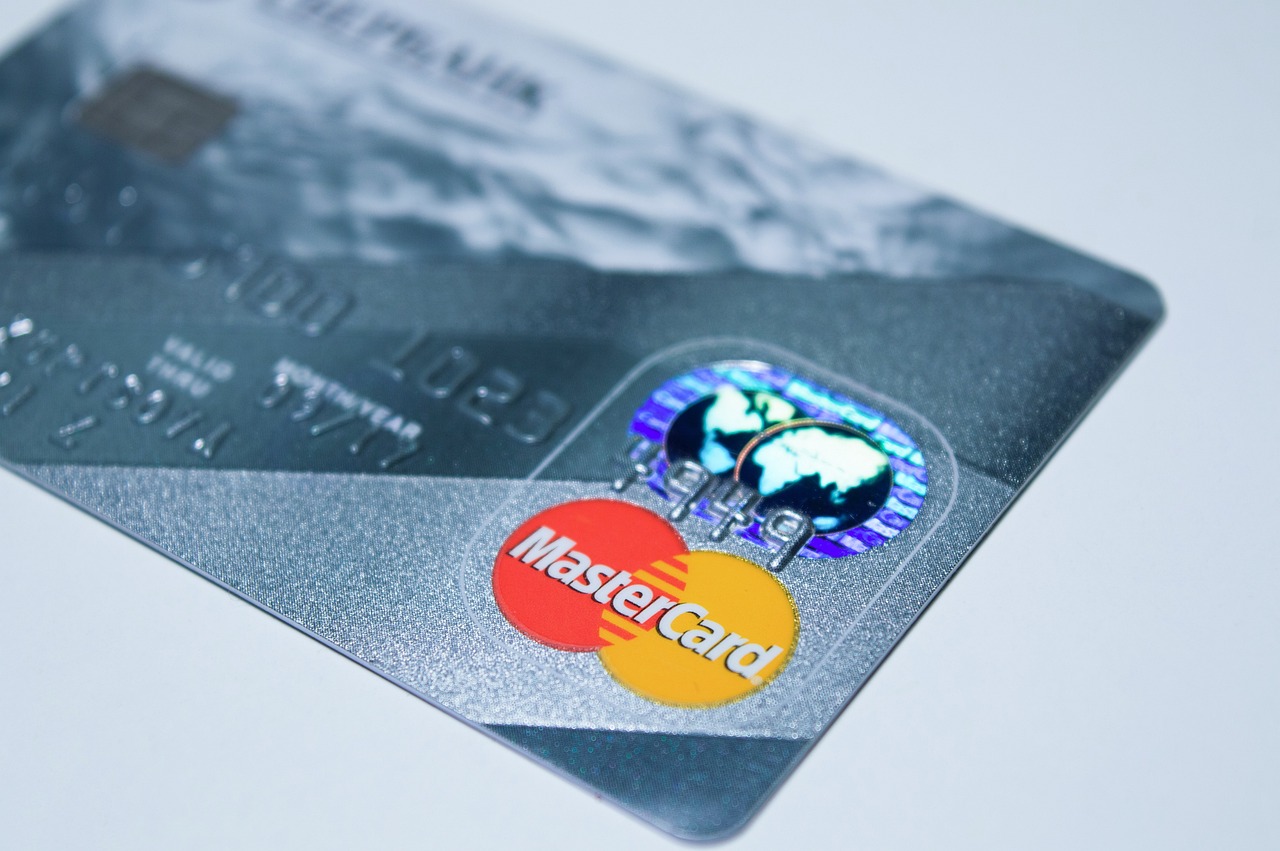
Mastercard has tokenised 30% of its transactions in 2024, marking a significant step in its efforts to innovate the payments ecosystem. The company highlighted its commitment to supporting blockchain and digital currencies, working alongside various crypto players to allow consumers to buy and spend crypto on cards where Mastercard is accepted.
The payment giant also acknowledged the growing competition from stablecoins and other cryptocurrencies, which it views as potential disruptors of traditional finance. Mastercard stated that digital currencies could challenge existing payment products by offering benefits such as accessibility, efficiency, and immutability, especially as regulatory frameworks continue to develop.
In addition to its blockchain efforts, Mastercard reported $28.2 billion in net revenue for 2024, a 12% increase from the previous year. The company’s recognition of stablecoins and crypto as serious competitors reflects the shifting landscape of the global payments market.
Stablecoins saw significant volume growth in 2024, with transfer volumes exceeding $27.6 trillion, surpassing the combined volumes of Visa and Mastercard. While bots have contributed to the spike, experts assert that their use enhances market efficiency rather than diminishing the volume.
For more information on these topics, visit diplomacy.edu.
Taiwan‘s President Lai Ching-te has pledged to address concerns raised by former US President Donald Trump regarding Taiwan’s semiconductor industry. Speaking after a National Security Council meeting, Lai acknowledged the importance of global semiconductor supply chains and vowed to work with Taiwan’s semiconductor sector to develop strategies to address US concerns. He emphasised the need for democratic nations, including the US, to collaborate on creating a “democratic supply chain” for advanced chips, particularly in the growing AI sector.
Lai also reassured the US of Taiwan’s commitment to contributing to the international economy, noting that Taiwan, home to the world’s largest contract chipmaker, TSMC, plays a vital role in the semiconductor market. TSMC is heavily invested in the US, including a $65 billion investment in new factories in Arizona. Despite these efforts, Taiwan’s defence spending remains a topic of criticism, particularly from Trump, who has repeatedly highlighted Taiwan’s insufficient military expenditure amid increasing threats from China.
In response to US concerns, Lai revealed plans to propose a special budget to raise Taiwan’s defence spending from 2.5% of GDP to 3%. This proposal is currently being debated in parliament, where opposition parties hold a majority. Lai stressed that Taiwan’s determination to defend itself must be clear, as international allies continue to voice concerns over its defence readiness.
Finally, Lai reiterated Taiwan’s key role as a reliable trading partner to the US, especially in high-tech exports such as semiconductors. Taiwan’s trade surplus with the US surged by 83% last year, with exports reaching a record $111.4 billion.
For more information on these topics, visit diplomacy.edu.
South Korea is set to gradually lift its ban on corporate cryptocurrency trading, according to the latest announcement from the Financial Services Commission. The phased approach will begin with law enforcement agencies, non-profits, universities and school corporations being permitted to sell Bitcoin and Ethereum for the purpose of cashing out in the first half of the year.
In the second phase, listed companies and corporations will be allowed to buy and sell digital assets under a pilot programme. The expansion, expected in the latter half of the year, will be regulated under South Korea’s Capital Markets Act, providing a structured framework for professional investors.
The ban, imposed in 2017 to tackle speculation and financial crime, is being eased following the implementation of the Virtual Asset User Protection Act. Authorities argue that stronger safeguards now allow for regulated institutional participation, aligning with global trends where businesses are increasingly integrating digital assets.
To ensure a smooth transition, the Financial Services Commission will form a task force in collaboration with banks, regulators and crypto exchanges. The group will develop internal control standards and trading guidelines, ensuring South Korea’s corporate sector can engage in digital assets securely and transparently.
For more information on these topics, visit diplomacy.edu.
Michigan has introduced a bill to create a strategic cryptocurrency reserve, joining 19 other US states exploring similar initiatives. The proposal, put forward by Representatives Bryan Posthumus and Ron Robinson, would allow up to 10% of the state’s general and economic stabilisation funds to be invested in digital assets.
The bill grants the state treasurer authority to manage crypto holdings using secure custody solutions or regulated investment products. It also permits lending cryptocurrency to generate additional returns, provided it does not increase financial risk. Additionally, any crypto tax payments must be converted into fiat currency before being allocated to state funds.
Michigan’s proposal follows a similar bill in Texas and reflects a growing trend amongst states to embrace digital assets. The move builds on Michigan’s previous crypto investments, including its significant holdings in Bitcoin and Ethereum exchange-traded funds.
For more information on these topics, visit diplomacy.edu.
AI is set to revolutionise wealth management by lowering the barriers to entry for new players, according to a Microsoft executive. Martin Moeller, head of AI for financial services at Microsoft, highlighted that AI’s ability to process vast amounts of data could allow small teams or even individuals to offer services that traditionally required entire teams at banks. This shift is expected to reshape the competitive landscape, much like the internet did decades ago.
AI is already being used in the financial sector, with Swedish payment provider Klarna employing AI from OpenAI to handle tasks previously carried out by 700 employees. UBS, the world’s largest asset manager, also sees significant potential in AI to boost productivity and ease job functions. AI is expected to reduce operational costs for startups and allow banks that have not been involved in wealth management to enter the market with minimal investment.
Customer behaviour is also changing, with younger entrepreneurs increasingly managing their own investments. In response, banks are using AI to enable customers to consolidate financial information independently. While AI currently does not provide specific investment advice, ‘agentic AI’ is expected to be developed in the next two years, which will make independent decisions without human input, further transforming the industry.
For more information on these topics, visit diplomacy.edu.
Alibaba has announced a new partnership with Apple to support the development of AI services for iPhones in China, a move that aims to help Apple counter declining smartphone sales in its crucial market. The collaboration is seen as a significant win for Alibaba, which is gaining ground in China’s competitive AI industry, dominated by local players like DeepSeek. This deal comes after months of speculation regarding Apple’s AI strategy in the region, as the tech giant held discussions with other Chinese companies such as Baidu, ByteDance, and Tencent.
While the specifics of the partnership are still unclear, Alibaba’s chairman Tsai noted that Apple chose their AI technology to power its phones in China. The two companies have already submitted necessary regulatory materials to Chinese authorities, as consumer-facing AI products in the country require approval. Alibaba’s stock saw a notable rise following the announcement, reflecting investor optimism about the deal.
The timing of this collaboration is crucial for Apple, which has faced challenges in China, including falling iPhone sales and increased competition from domestic rivals like Huawei. Analysts suggest that Apple’s struggles in the region are partly due to the lack of advanced AI features in its phones, a growing demand in the Chinese market. Apple’s sales in Greater China dropped significantly in late 2024, and the company lost its top position in the market to local players like Vivo and Huawei.
For Alibaba, the partnership underscores its growing strength in AI, with its stock price surging in 2025. The company’s Qwen 2.5 AI model, which surpassed the capabilities of competitors, has become a focal point of its recent success. As Apple seeks to re-establish its presence in China, the effectiveness of this AI collaboration will likely play a critical role in its future in the market.
For more information on these topics, visit diplomacy.edu.
The rise of DeepSeek’s AI models is offering Chinese chipmakers like Huawei a better chance to compete in the domestic market against the powerful processors from US companies like Nvidia. For years, Huawei and other Chinese manufacturers have struggled to match Nvidia’s high-end chips, which are essential for training AI models. However, DeepSeek’s focus on ‘inference’ rather than raw processing power has led analysts to believe that it could help close the gap between Chinese-made processors and their US counterparts. Inference refers to the phase where AI models use trained data to make predictions, a process less reliant on heavy computational resources.
Several Chinese AI chipmakers, including Huawei, EnFlame, and Moore Threads, have recently stated that their products will support DeepSeek models, although few details have been disclosed. Industry executives predict that DeepSeek’s open-source nature and its low fees will drive the adoption of AI, helping Chinese companies bypass US export restrictions on advanced chips. In fact, Chinese chips like Huawei’s Ascend 910B have already been recognised as better suited for inference tasks, which require less computational power than training.
Despite these developments, Nvidia still dominates the global AI chip market. Analysts point out that while Chinese chips are cost-effective for inference tasks, Nvidia’s superior chips remain the preferred choice even for inference. Nvidia’s CUDA platform, which provides developers with a robust software environment, remains a key advantage, and Chinese companies like Huawei have struggled to convince developers to abandon CUDA in favour of their platforms, such as Huawei’s Compute Architecture for Neural Networks (CANN). The software performance of Chinese AI chips continues to lag behind, making it challenging for them to directly challenge Nvidia’s dominance.
For more information on these topics, visit diplomacy.edu.
Coinbase is making fresh efforts to relaunch its services in India after its failed attempt in 2022. The US-based crypto exchange is reportedly in discussions with Indian regulators, including the Financial Intelligence Unit, in a bid to secure approval for its operations.
The exchange first launched in India in April 2022, introducing support for the UPI payment system. However, within days, the National Payments Corporation of India declined to back its services, and regulatory pressures forced Coinbase to halt operations. In 2023, the company further restricted access by disabling new user sign-ups for Indian customers.
Despite past obstacles, Coinbase is now looking to return under proper regulatory oversight. Its comeback could provide an alternative for traders following the collapse of WazirX, while its investments in local platforms like CoinSwitch and CoinDCX may also support its efforts.
India’s crypto market faces challenges, including a 30% tax on digital asset earnings and a 1% levy on transactions, which have slowed growth. However, with Coinbase preparing for a fresh push, the exchange could play a key role in reviving trading activity in the country.
For more information on these topics, visit diplomacy.edu.
Elon Musk has stated he will withdraw his $97.4 billion bid for OpenAI’s non-profit arm if the company halts plans to become a for-profit entity. Musk’s lawyers clarified in a court filing that if OpenAI’s board agrees to maintain the charity’s mission and remove the ‘for sale’ sign from its assets, he will retract his offer. However, if the conversion to a for-profit model continues, Musk’s consortium insists the charity must be compensated by what an independent buyer would pay for its assets.
OpenAI, originally founded by Musk and Sam Altman in 2015 as a non-profit, is in the midst of restructuring. Altman, now CEO, has moved to create a for-profit unit within the organisation to attract investors like Microsoft.
Musk, who left the company over disagreements with Altman, is suing to block this transition. This legal battle intensified this week when Musk’s group made a bid to purchase the non-profit’s assets, which Altman has rejected, stating that the organisation is not for sale.
For more information on these topics, visit diplomacy.edu.
Tencent, a leading Chinese tech giant, has won a significant copyright infringement case in a US district court. The ruling resulted in nearly $85 million in compensation after a Taiwan-based TV box firm, Unblock Tech, and its distributors were found guilty of violating copyrights on over 1,500 Tencent shows, including ‘Little Days’ and ‘Three Body Problem’.
The judgement was handed down by the US District Court for the Western District of Texas. Tencent units, including Tencent Penguin Film and Tencent Technology, brought the case against the defendants for copying, distributing, and importing the content without permission.
Neither Tencent nor Unblock Tech provided comments regarding the ruling.
Analyst Vivian Toh highlighted the challenges of addressing cross-border infringement, stating that Tencent’s success underscores its commitment to protecting intellectual property.
The win reflects the broader issue of video content piracy, which remains a persistent problem across global markets.
Tencent has also pursued similar cases in China, targeting TikTok and Douyin-owner ByteDance over unauthorised use of its content. The outcomes of those lawsuits have yet to be publicly disclosed.
For more information on these topics, visit diplomacy.edu.