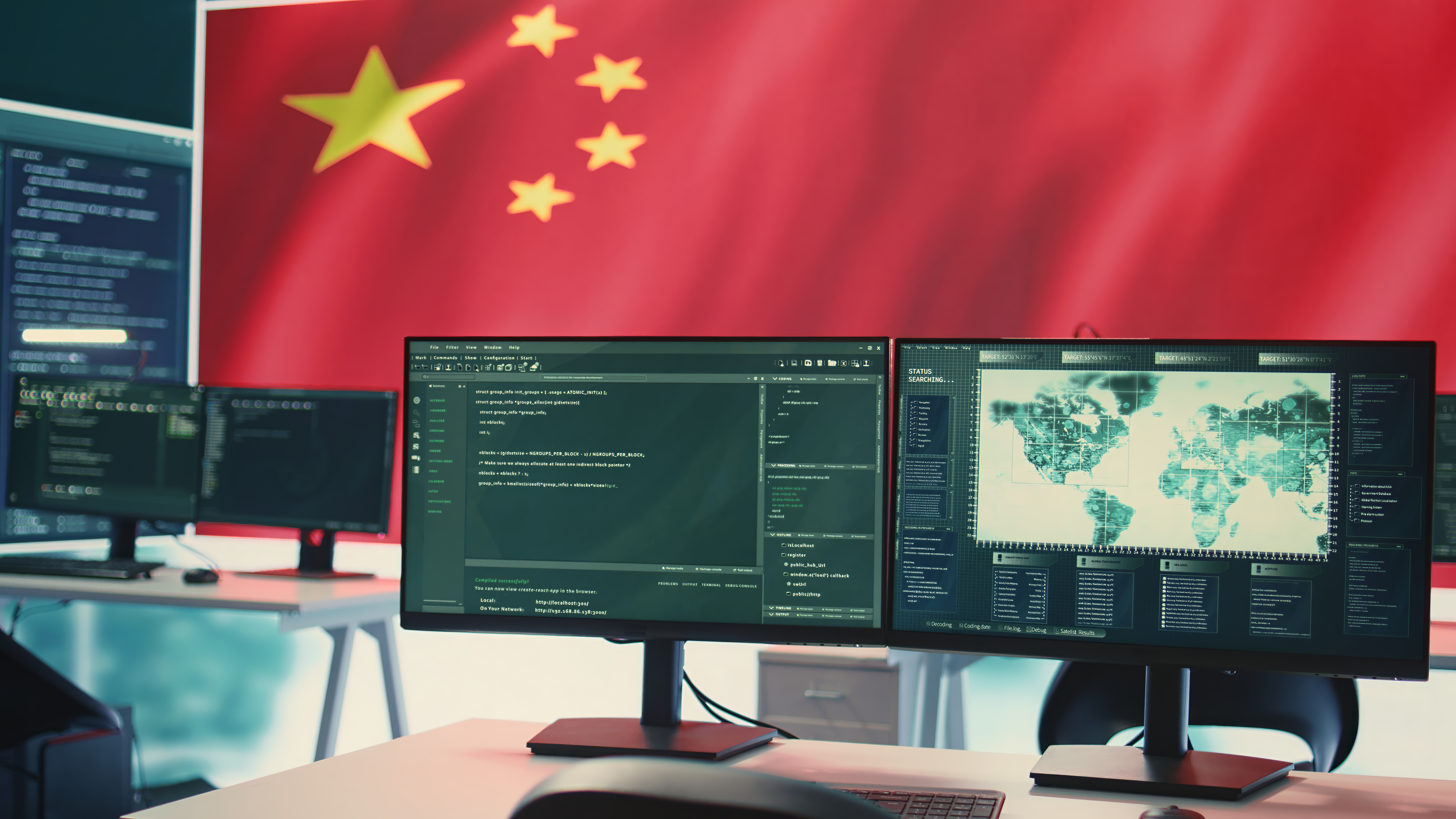
CrowdStrike warns of faster AI driven threats

Cyber adversaries increasingly used AI to accelerate attacks and evade detection in 2025, according to CrowdStrike’s 2026 Global Threat Report. The company described the period as the year of the evasive adversary, marked by subtle and rapid intrusions.

The average time to a financially motivated online crime breakout fell to 29 minutes, with the fastest recorded at 27 seconds. CrowdStrike observed an 89 percent rise in attacks by AI-enabled threat actors compared with 2024.

Attackers also targeted AI systems themselves, exploiting GenAI tools at more than 90 organisations through malicious prompt injection. Supply chain compromises and the abuse of valid credentials enabled intrusions to blend into legitimate activity, with most detections classified as malware-free.

China linked activity rose by 38 percent across sectors, while North Korea linked incidents increased by 130 percent. CrowdStrike tracked more than 281 adversaries in total, warning that speed, credential abuse, and AI fluency now define the modern threat landscape.

Would you like to learn more about AI, tech and digital diplomacy? If so, ask our Diplo chatbot

AI-powered electronic nose shows promise for early ovarian cancer screening

Researchers at Linköping University have developed an AI-powered electronic nose capable of detecting early signs of ovarian cancer in blood plasma samples. The pilot study, published in Advanced Intelligent Systems, reports 97 per cent accuracy using machine-learning models trained on biobank data.

Ovarian cancer is often diagnosed late because symptoms resemble those of more common conditions. In 2022, around 325,000 new cases and more than 200,000 deaths were recorded globally. Earlier detection could significantly improve survival rates and access to timely treatment.

The prototype device contains 32 commercially available sensors that detect volatile substances emitted by blood samples. Rather than targeting a single biomarker, the system analyses complex chemical patterns, with machine learning identifying signatures linked to ovarian cancer.

Unlike conventional blood tests, which can be slow and rely on specific biomarkers, the electronic nose evaluates a broad spectrum of compounds. Researchers say the approach offers greater precision and could reduce screening costs while improving accessibility.

Developers estimate the test takes around 10 minutes and could become part of cancer screening programmes within three years. Although currently focused on ovarian cancer, the team suggests the method could eventually be adapted to detect multiple cancer types.

Would you like to learn more about AI, tech, and digital diplomacy? If so, ask our Diplo chatbot!

US tech giants eye Wales for major AI investment

American technology firms are increasingly looking to Wales as a destination for AI investment and data infrastructure. Strong inward investment figures and expanding growth zones are putting the nation firmly on the technology map.

Last year Wales secured £4.6bn in global investment across 65 foreign direct investment projects, marking a 23 per cent rise year on year. Thousands of jobs were created or safeguarded, outperforming many other UK regions.

Major projects underline the shift. US firm Vantage plans to transform the former Ford Bridgend plant into a large-scale data centre campus, while Microsoft is supporting another proposed scheme in Newport, both located within designated AI growth zones.

Beyond data centres, Wales offers land, connectivity and a supportive regulatory environment. Innovation clusters across Cardiff, Newport and North Wales, alongside strengths in life sciences, advanced manufacturing and renewable energy, are strengthening its appeal to global investors.

With expanding energy projects and a growing start-up pipeline, Wales is positioning itself as a competitive base for global business. Investors are increasingly encouraged to see it not as a regional outpost, but as an international platform rooted in strong economic foundations.

Would you like to learn more about AI, tech, and digital diplomacy? If so, ask our Diplo chatbot!

OpenClaw vulnerabilities exposed by AI-powered code scanner

Researchers at Endor Labs identified six high- to critical vulnerabilities in the open-source AI agent framework OpenClaw using an AI-powered static application security testing engine to trace untrusted data flows. The flaws included server-side request forgery, authentication bypass, and path traversal.

The bugs affected multiple components of the agentic system, which integrates large language models with external tools and web services. Several SSRF issues were found in the gateway and authentication modules, potentially exposing internal services or cloud metadata depending on the deployment context.

Access control failures were also found in OpenClaw. A webhook handler lacked proper verification, enabling forged requests, while another flaw allowed unauthenticated access to protected functionality. Researchers confirmed exploitability with proof-of-concept demonstrations.

The team said that traditional static analysis tools struggle with modern AI software stacks, where inputs undergo multiple transformations before reaching sensitive operations. Their AI-based SAST engine preserved context across layers, tracing untrusted data from entry points to critical functions.

OpenClaw maintainers were notified through responsible disclosure and have since issued patches and advisories. Researchers argue that as AI agent frameworks expand into enterprise environments, security analysis must adapt to address both conventional vulnerabilities and AI-specific attack surfaces.

Would you like to learn more about AI, tech, and digital diplomacy? If so, ask our Diplo chatbot!

Sony targets AI music copyright use

Sony Group has developed technology designed to identify the original sources of music generated by AI. The move comes amid growing concern over the unauthorised use of copyrighted works in AI training.

According to Sony Group, the system can extract data from an underlying AI model and compare generated tracks with original compositions. The process aims to quantify how much specific works contributed to the output.

Composers, songwriters and publishers could use the technology to seek compensation from AI developers if their material was used without permission. Sony said the goal is to help ensure creators are properly rewarded.

Efforts to safeguard intellectual property have intensified across the music industry. Sony Music Entertainment in the US previously filed a copyright infringement lawsuit in 2024 over AI-generated music, underscoring wider tensions around AI and creative rights.

Would you like to learn more about AI, tech and digital diplomacy? If so, ask our Diplo chatbot

Enterprises rethink cloud amid digital sovereignty push

Digital sovereignty has moved to the boardroom as geopolitical tensions rise and cloud adoption accelerates. Organisations are reassessing infrastructure to protect autonomy, ensure compliance, and manage jurisdictional risk. Cloud strategy is increasingly shaped by data location, control, and resilience.

Regulations such as NIS2, DORA, and national data laws have intensified scrutiny of cross-border dependencies. Sovereignty concerns now extend beyond governments to sectors such as healthcare and finance. Vendor selection increasingly prioritises sovereign regions and stricter data controls.

Hybrid cloud remains dominant. Organisations place sensitive workloads on private platforms to strengthen oversight while retaining public cloud innovation. Large-scale repatriation is rare due to cost and complexity, though compliance pressures are driving broader multicloud diversification.

Government investment and oversight are reinforcing the shift. Sovereignty is becoming part of national resilience policy, prompting stricter audits and governance expectations. Enterprises face growing pressure to demonstrate control over critical systems, supply chains, and data flows.

A pragmatic approach, often described as minimum viable sovereignty, helps reduce exposure without unnecessary complexity. Organisations can identify critical workloads, secure enforceable vendor commitments, and plan for disruption. Early adaptation supports resilience and long-term flexibility.

Would you like to learn more about AI, tech, and digital diplomacy? If so, ask our Diplo chatbot!

Romania’s job market faces structural change as AI and automation rise

A Think by ING analysis finds that Romania’s recent macroeconomic slowdown reflects more profound structural change than cyclical weakness.

After years of robust consumption-led expansion, fiscal tightening and weak domestic demand have curbed growth, while firms increasingly invest in automation and AI to boost productivity rather than expand headcount.

Industrial employment has declined; for example, manufacturing jobs fell by around 25,000 in late 2025, and labour market hiring has shifted toward defensive, replacement-only patterns.

Firms are integrating robotics, automated assembly lines and intelligent logistics systems, and service-sector work is also being reshaped by AI tools, even where formal adoption is still emerging.

A recent survey suggests that 68% of people in Romania have used AI tools, and 44% rely on them for work tasks such as administrative support and analysis, signalling rising informal use ahead of widespread enterprise deployment.

While automation and AI can raise productivity and output without proportional employment growth, they also tilt the labour market: high-skill specialised roles (e.g. AI, engineering, advanced management) are expected to remain resilient or grow, while routine roles, including some entry-level tech positions, call-centre jobs and administrative tasks, face stagnation or decline.

However, this can create a ‘barbell’ labour market with growth chiefly at the high and low ends, and limited opportunities in mid-skill roles.

Real wage erosion, tight hiring and demographic trends (including a shrinking workforce) add to short-term challenges. In the near term, employment may remain subdued even as economic output recovers modestly by 2027.

Over the longer term, the economy’s shift toward capital-intensive, productivity-driven growth could support stronger output without generating broad employment, underscoring the need for education, reskilling and policy strategies that help workers adapt to AI-driven labour demand.

Would you like to learn more about AI, tech and digital diplomacy? If so, ask our Diplo chatbot!

Study warns AI chatbots can reinforce delusions and mania

AI chatbots may pose serious risks for people with severe mental illnesses, according to a new study from Acta Psychiatrica Scandinavica. Researchers found that tools such as ChatGPT can worsen psychiatric conditions by reinforcing users’ delusions, paranoia, mania, suicidal thoughts, and eating disorders.

The team examined health records from more than 54,000 patients and identified dozens of cases where AI interactions appeared to exacerbate symptoms. Experts warn that the actual number of affected individuals is likely far higher.

AI’s design to follow and validate a user’s input can unintentionally strengthen delusional thinking, turning digital assistants into echo chambers for psychosis.

Despite potential benefits for psychoeducation or alleviating loneliness, experts caution against using AI as a substitute for trained therapists. Chatbots should be tested in rigorous clinical trials before any therapeutic use, says Professor Søren Dinesen Østergaard.

The researchers urge healthcare providers to discuss AI chatbot use with patients, particularly those with severe mental illnesses, and call for central regulation of the technology. They argue that lessons from social media show that early oversight is essential to protect vulnerable populations.

Would you like to learn more about AI, tech and digital diplomacy? If so, ask our Diplo chatbot

OpenClaw users face account suspensions under Google AI rules

Google has suspended access to its Antigravity AI platform for numerous OpenClaw users, citing violations of its terms of service. Developers had used OpenClaw’s OAuth plugin to access subsidised Gemini model tokens, triggering backend strain and service degradation.

OpenClaw, launched in November 2025, gained more than 219,000 GitHub stars by enabling local AI agents for tasks such as email management and web browsing. Users authenticated through Antigravity to access advanced Gemini models at reduced cost, bypassing official distribution channels.

Google said the third-party integration powered non-authorised products on Antigravity infrastructure, triggering usage flagged as malicious. In February 2026, AI Ultra subscribers reported 403 errors and account restrictions, with some citing temporary disruptions to Gmail and Workspace.

Varun Mohan of Google DeepMind said the surge had degraded service quality and that enforcement prioritised legitimate users. Limited reinstatement options were offered to those unaware of violations, while capacity constraints were cited as the reason.

The move follows similar restrictions by Anthropic on third-party OAuth usage. Developers are shifting to alternative forks, as debate intensifies over open tooling, platform control, and the risks of agentic AI ecosystems.

Would you like to learn more about AI, tech, and digital diplomacy? If so, ask our Diplo chatbot!

IQM puts Finland on Europe’s quantum computing map

Finland is emerging as a key hub in Europe’s quantum computing landscape as startup IQM prepares to become one of the continent’s first publicly listed quantum firms.

The company is developing full-stack, open-architecture quantum systems designed for on-premise deployment or cloud access. It aims to advance the practical use of quantum computing across research and industry.

Founded in 2018, IQM has already delivered 21 quantum systems to 13 customers, highlighting growing European interest in commercial quantum technologies.

Analysts note that while challenges remain, meaningful breakthroughs are now occurring, signalling that quantum computing is shifting from purely experimental science to an operational industry.

IQM’s technology could support advancements in medicine, science, and computational research, enabling the solution to complex problems far beyond the reach of classical computers.

The firm exemplifies Europe’s ambition to build quantum capabilities independently of larger players in the US and China, positioning Finland as a strategic hub for next-generation computing.

The company’s work aligns with broader European efforts to foster innovation in quantum technologies.

By combining domestic expertise with open-access systems, IQM demonstrates how Finland is contributing to the continent’s emerging quantum ecosystem, bridging academic research and industrial application.

Would you like to learn more about AI, tech and digital diplomacyIf so, ask our Diplo chatbot!