Spar in Switzerland enables Bitcoin payments at checkout

Shoppers at a Spar supermarket in Zug, Switzerland, can now pay for groceries using Bitcoin, thanks to a new Lightning Network integration. The feature was introduced via BTC Map. It was supported by DFX Swiss and highlights the growing use of crypto in everyday transactions.

Customers can complete their purchases simply by scanning a static QR code at checkout, making Bitcoin payments seamless and accessible. Rahim Taghizadegan, a Swiss lecturer and crypto expert, praised the system’s ease of use and its potential for wider adoption.

With over 1,000 Swiss businesses already accepting Bitcoin, the country remains one of Europe’s strongest cryptocurrency supporters. As a global chain with nearly 14,000 stores worldwide, Spar’s participation signals greater trust in digital payments.

Meanwhile, Switzerland’s Crypto Valley continues to thrive, reaching a $593 billion valuation in 2024.

Would you like to learn more about AI, tech and digital diplomacy? If so, ask our Diplo chatbot!

Meta uses AI to spot teens lying about age

Meta has announced it is ramping up efforts to protect teenagers on Instagram by deploying AI to detect users who may have lied about their age. The technology will automatically place suspected underage users into Teen Accounts, even if their profiles state they are adults.

These special accounts come with stricter safety settings designed for users under 16. Those who believe they’ve been misclassified will have the option to adjust their settings manually.

Instead of relying solely on self-reported birthdates, Meta is using its AI to analyse behaviour and signals that suggest a user might be younger than claimed.

While the company has used this technology to estimate age ranges before, it is now applying it more aggressively to catch teens who attempt to bypass the platform’s safeguards. The tech giant insists it’s working to ensure the accuracy of these classifications to prevent mistakes.

Alongside this new AI tool, Meta will also begin sending notifications to parents about their children’s Instagram settings.

These alerts, which are sent only to parents who have Instagram accounts of their own, aim to encourage open conversations at home about the importance of honest age representation online.

Teen Accounts were first introduced last year and are designed to limit access to harmful content, reduce contact from strangers, and promote healthier screen time habits.

Instead of granting unrestricted access, these accounts are private by default, block unsolicited messages, and remind teens to take breaks after prolonged scrolling.

Meta says the goal is to adapt to the digital age and partner with parents to make Instagram a safer space for young users.

Would you like to learn more about AI, tech and digital diplomacy? If so, ask our Diplo chatbot!

Apple tries makes climate progress with greener supply chain

Apple has made progress in reducing its environmental impact, according to the company’s own latest environmental progress report.

Its total greenhouse gas emissions dropped by 800,000 metric tons in 2024, marking a 5 percent reduction from the previous year.

Over the last decade, Apple has cut its global emissions by more than 60 percent, an achievement as emissions from other tech firms continue to rise due to the growing demands of AI.

The reduction stems from efforts to use renewable energy, increase recycling, and work with suppliers to cut emissions. Apple reported that its suppliers collectively avoided nearly 24 million metric tons of greenhouse gas emissions last year through cleaner energy and improved efficiency.

The company is also tackling highly potent fluorinated gases used in making semiconductors and displays, with all direct display suppliers and 26 semiconductor partners committing to reducing such emissions by at least 90 percent.

Recycled materials played a larger role in Apple’s products in 2024, making up nearly a quarter of all materials used. Notably, 80 percent of the rare earth elements and most of the tungsten, cobalt, and aluminium used came from recycled sources.

Despite these efforts, Apple still generated 15.3 million metric tons of CO₂ last year, though it aims to reduce emissions by 75 percent from 2015 levels by 2030 and eliminate 90 percent by 2050 to meet international climate goals.

Would you like to learn more about AI, tech and digital diplomacy? If so, ask our Diplo chatbot!

Hong Joon-pyo aims to model South Korea’s crypto strategy after Trump

South Korea’s presidential candidate Hong Joon-pyo has vowed to deregulate the country’s cryptocurrency industry. Hong declared his intent to foster blockchain and virtual assets as a fully recognised industry, introducing the technology into public services.

His statement follows recent US moves to ease crypto regulations, including Trump’s resolution removing IRS reporting requirements for DeFi platforms.

Hong aims to align South Korea’s digital asset policies with the US’s lenient stance, bolstered by initiatives like the Strategic Bitcoin Reserve.

The push to embrace cryptocurrencies comes amid growing calls from South Korean lawmakers to integrate digital assets into the country’s financial system.

However, opposition remains, with the Bank of Korea recently rejecting the idea of holding Bitcoin in reserves due to its price volatility.

With the US leading on crypto initiatives, South Korea’s presidential race could soon determine whether Hong’s plans will shape the nation’s future approach to blockchain.

Would you like to learn more about AI, tech and digital diplomacy? If so, ask our Diplo chatbot

DWF Labs backs Trump-linked DeFi firm with $25 million

Dubai-based DWF Labs has invested $25 million in World Liberty Financial (WLFI), a decentralised finance project supported by Donald Trump and his sons. As part of the deal, DWF Labs acquired WLFI tokens via a private transaction, giving the firm governance rights in the protocol.

The company said the investment aligns with its strategy to support USD-pegged stablecoins and DeFi adoption.

The collaboration includes providing liquidity for WLFI’s stablecoin, USD1, which launched in March on both Ethereum and BNB Chain.

While the stablecoin is not yet tradable, DWF Labs aims to boost its development. The market maker provides liquidity to over 60 exchanges, enabling smoother trade execution.

DWF Labs is also expanding into the United States and has opened a New York office. The move is expected to bolster the company’s partnerships with banks, asset managers, and fintech firms.

WLFI has raised over $600 million since launching in September 2024. Initial token sales brought in $550 million, with an additional $30 million investment from Tron founder Justin Sun.

Web3Port and Oddiyana Ventures have also contributed to the funding, further signalling strong interest in the Trump-backed DeFi platform.

Would you like to learn more about AI, tech and digital diplomacy? If so, ask our Diplo chatbot

DOJ adds to Google’s antitrust trial the AI-driven search monopoly

The US Department of Justice (DOJ) launched its opening arguments this week in a landmark antitrust trial against Google, aiming to curb the tech giant’s dominance in online search and prevent it from leveraging AI to entrench its position further.

Prosecutors argue that Google’s market control is bolstered by exclusive contracts, such as being the default smartphone search engine, and now by integrating AI tools that guide users back to its ecosystem. 

The DOJ calls for decisive action, including the potential sale of Google’s Chrome browser and changes to its default settings agreements with device manufacturers.

Central to the DOJ’s argument is the concern that Google’s AI products, including its Gemini app installed on Samsung devices, create feedback loops reinforcing its search monopoly

Court documents reveal that Google pays Samsung a significant monthly sum for this privilege, with the deal potentially extending into 2028. 

The DOJ contends that remedies must be forward-looking to ensure competition as generative AI becomes increasingly intertwined with search.

Google, however, rejects the proposed measures as excessive. Its legal team argues that competitors perform well in AI without regulatory intervention and that forced divestitures or licensing obligations would harm innovation. 

The company insists that AI falls outside the scope of the case, which is focused on traditional search, and has pledged to appeal any adverse ruling. 

A key concern for Google is the DOJ’s suggestion that, should other remedies fail, the court could mandate the breakup of its Android mobile business, a move Google claims would disrupt the wider digital ecosystem.

DOJ officials emphasised that the legal remedies proposed are nonpartisan and reflect a consistent policy direction. Meanwhile, other tech giants, including Meta, are also under increasing scrutiny, with separate trials looming over market dominance and acquisitions.

Trump meme coin team moves $4.6M ahead of token unlock

The team behind the Trump-themed meme coin on Solana has withdrawn $4.6 million in USDC just days before a massive token unlock.

The funds were pulled from the liquidity pool and sent to Coinbase Prime, marking the creators’ first known withdrawal.

On Thursday, the TRUMP token is set to release 40 million coins into circulation, valued at around $309 million.

The event coincides with the three-month anniversary of the token’s launch. At its peak, the same amount would have been worth close to $2.9 billion.

The reason behind the recent transfer remains unclear, and no official comment has been made by those connected to the project.

The TRUMP token has dropped 89% from its all-time high and is now trading at $7.73. Analysts expect the upcoming unlock to increase selling pressure.

However, the token’s unique community, many of whom are new to crypto, may respond differently than traditional investors.

A large portion of the total supply, 80%, is allocated to the project’s creators, including Donald Trump himself.

Would you like to learn more about AI, tech and digital diplomacy? If so, ask our Diplo chatbot

Temu and Shein to raise US prices due to new tariffs

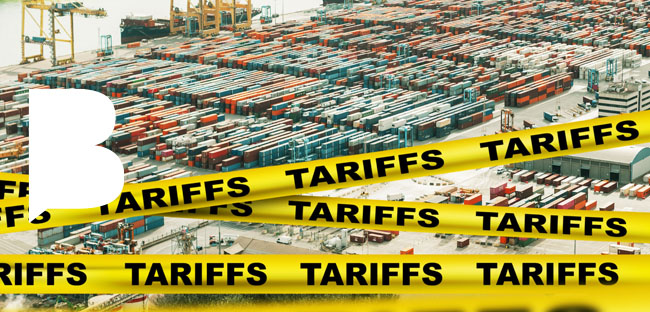
Fast fashion giants Temu and Shein have warned US shoppers to expect price hikes from next week, as sweeping new tariffs on Chinese imports come into effect under Donald Trump’s trade policy.

Both companies will lose access to the ‘de minimis’ exemption, which has allowed packages under $800 to enter the US duty-free. That change, taking effect from 2 May, will significantly raise costs for low-cost retailers who depend on cheap cross-border shipments.

The tariffs, which now reach up to 145%, are part of Trump’s escalating trade war with China. His revised plans impose a tax of $75 per item, rising to $150 by June, for shipments that were previously exempt.

Shein has told customers its operating expenses have risen and prices will be adjusted from 25 April in an effort to maintain product quality while absorbing the new costs.

In response to the tariffs and likely slowdown in US demand, both companies have also scaled back digital advertising.

According to Sensor Tower, Temu’s average US ad spend across major platforms dropped by 31% over two weeks, while Shein’s spending fell 19%.

The tariffs are expected to reshape fast fashion in the US, though some experts believe prices may still remain competitive compared to domestic alternatives.

Would you like to learn more about AI, tech and digital diplomacy? If so, ask our Diplo chatbot!

Cash-only Tuvalu installs ATMs

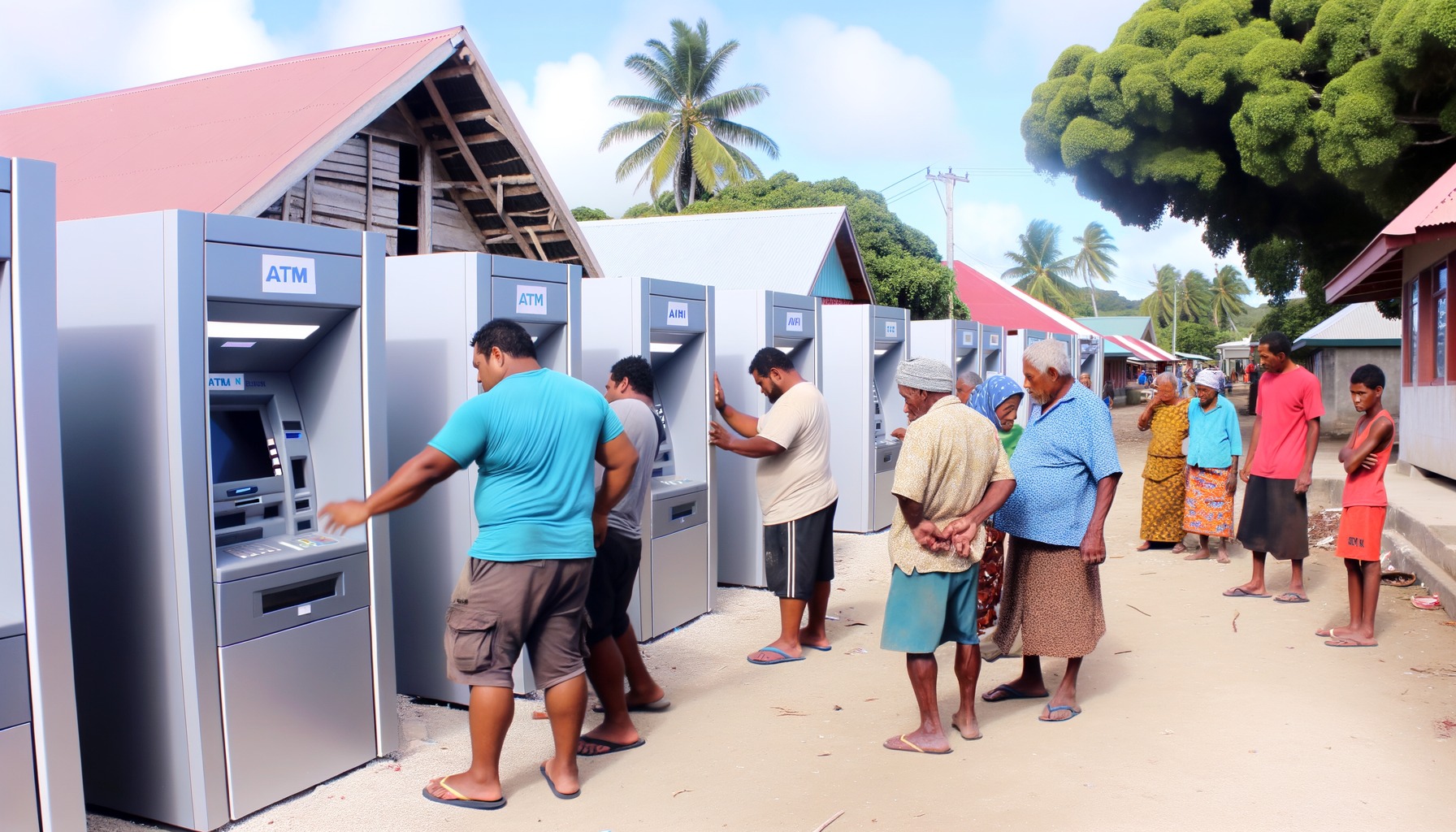
Tuvalu has launched its first-ever ATMs, marking a major leap into electronic banking for the remote Pacific island nation.

At a ceremony in the village of Vaiaku on Funafuti, the National Bank of Tuvalu unveiled the machines, which are expected to transform how residents access their finances.

The event was attended by Prime Minister Feleti Teo, senior government officials, and community leaders, all celebrating a shift from Tuvalu’s long-standing reliance on cash.

Until now, Tuvalu’s 12,000 residents have conducted all banking in person, often queuing at the bank to collect wages or withdraw funds before closing time at 2pm.

With the introduction of five ATMs and 30 point-of-sale terminals, daily transactions will become more efficient, easing congestion and improving access to banking services, especially for those living on outer islands.

The bank partnered with Pacific Technologies Limited in Fiji to roll out the A$3m project, which initially supports only prepaid cards.

Plans are already under way to issue Tuvaluan debit cards and eventually offer Visa card capabilities for online and overseas use.

For now, the services are free while users adapt to the new system, as the country embraces a future of greater financial inclusion and digital access.

Would you like to learn more about AI, tech and digital diplomacy? If so, ask our Diplo chatbot!

TSMC profits surge despite trade concerns

Taiwan Semiconductor Manufacturing Company (TSMC) posted a significant jump in quarterly profits, driven by robust demand for AI chips. Net income rose by just over 60% year-on-year to NT$360.7bn (£9.77bn), outpacing analysts’ expectations.

Revenue also grew by 41.6% compared to the same period in 2024, although it dipped slightly from the previous quarter due to weaker smartphone sales.

The world’s largest contract chipmaker has not yet seen any major changes in customer behaviour, including from Apple and Nvidia, despite increasing uncertainty over potential US tariffs on Taiwanese semiconductors.

While concerns about trade tensions grow, particularly with former President Donald Trump suggesting the US should reclaim chip production, TSMC says it is continuing with business as usual for now.

Instead of scaling back, TSMC is expanding its investment in the US, with plans to spend up to $160bn. Analysts believe this move could help the firm argue for a more favourable position should tariff negotiations intensify.

The company’s Chief Financial Officer, Wendell Huang, acknowledged the risks posed by changing trade policies but said revenue growth is still expected in the next quarter.

Despite global pressures, TSMC remains optimistic, forecasting revenue between $28.4bn and $29.2bn. Although the company’s shares have fallen more than 20% so far this year, some analysts say the stock is now undervalued and well-positioned to rebound once market conditions stabilise.

Would you like to learn more about AI, tech and digital diplomacy? If so, ask our Diplo chatbot!