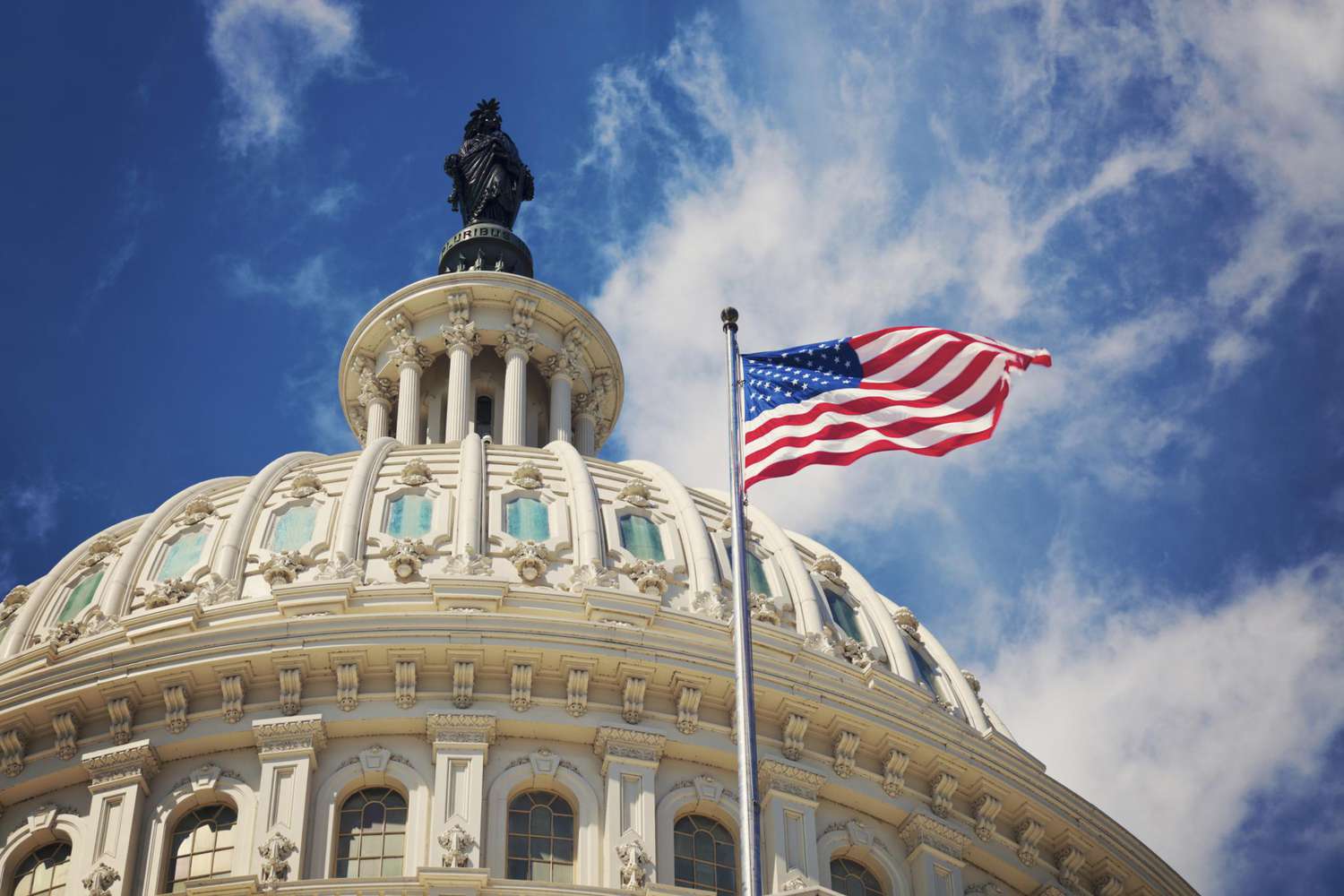
The US Conference of Catholic Bishops has urged Congress to centre AI policy on human dignity and the common good.
Their message outlines moral principles rather than technical guidance, warning against misuse of technology that may erode truth, justice, or the protection of the vulnerable.
The bishops caution against letting AI replace human moral judgement, especially in sensitive areas like family life, work, and warfare. They express concern about AI deepening inequality and harming those already marginalised without strict oversight.
Their call includes demands for greater transparency, regulation of autonomous weapons, and stronger protections for children and workers in the US.
Rooted in Catholic social teaching, the letter frames AI not as a neutral innovation but as a force that must serve people, not displace them.
Would you like to learn more about AI, tech and digital diplomacy? If so, ask our Diplo chatbot!
Two of Hollywood’s most powerful studios, Disney and Universal, have launched a copyright infringement lawsuit against the AI firm Midjourney, accusing it of illegally replicating iconic characters.
The studios claim the San Francisco-based company copied their creative works without permission, describing it as a ‘bottomless pit of plagiarism’.
Characters such as Darth Vader, Elsa, and the Minions were cited in the 143-page complaint, which alleges Midjourney used these images to train its AI system and generate similar content.
Disney and Universal argue that the AI firm failed to invest in the creative process, yet profited heavily from the output — reportedly earning $US300 million in paid subscriptions last year.
Despite early attempts by the studios to raise concerns and propose safeguards already adopted by other AI developers,
Midjourney allegedly ignored them and pressed ahead with further product releases. The company, which calls itself a small, self-funded team of 11, has declined to comment on the lawsuit directly but insists it has a long future ahead.
Disney’s legal chief, Horacio Gutierrez, stressed the importance of protecting creative works that result from decades of investment. While supporting AI as a tool for innovation, he maintained that ‘piracy is piracy’, regardless of whether humans or machines carry it out.
The studios are seeking damages and a court order to stop the AI firm from continuing its alleged copyright violations.
Would you like to learn more aboutAI, tech and digital diplomacy? If so, ask our Diplo chatbot!
The US Senate has taken a significant step towards regulating stablecoins, voting 68–30 to advance the GENIUS Act. The legislation requires stablecoins to be fully backed and mandates yearly audits for issuers valued at over $50 billion.
A final vote is expected on Monday unless the debate is concluded sooner.
Although the bill received bipartisan support, it has also triggered notable opposition. Leading Democrats, including Elizabeth Warren and Chuck Schumer, voted against it, citing unresolved amendments and ethical concerns.
Senator Warren accused lawmakers of facilitating corruption linked to Donald Trump’s expanding involvement in the crypto sector.
Trump’s growing ties to digital assets have added fresh controversy. His firm, World Liberty Financial, recently launched a US Treasury-backed stablecoin named USD1.
The Trump family has also introduced meme coins such as $TRUMP and $MELANIA, reportedly generating profits from transaction fees despite significant price volatility.
While the Senate progresses towards a final vote, the outcome in the House remains uncertain. Issues between the two chambers, especially regarding foreign issuers and state regulation, need resolution before a unified framework can be implemented.
Would you like to learn more about AI, tech and digital diplomacy? If so, ask our Diplo chatbot!
Wikipedia has paused a controversial trial of AI-generated article summaries following intense backlash from its community of volunteer editors.
The Wikimedia Foundation had planned a two-week opt-in test for mobile users using summaries produced by Aya, an open-weight AI model developed by Cohere.
However, the reaction from editors was swift and overwhelmingly negative. The discussion page became flooded with objections, with contributors arguing that such summaries risked undermining the site’s reputation for neutrality and accuracy.
Some expressed concerns that inserting AI content would override Wikipedia’s long-standing collaborative approach by effectively installing a single, unverifiable voice atop articles.
Editors warned that AI-generated summaries lacked proper sourcing and could compromise the site’s credibility. Recent AI blunders by other tech giants, including Google’s glue-on-pizza mishap and Apple’s false death alert, were cited as cautionary examples of reputational risk.
For many, the possibility of similar errors appearing on Wikipedia was unacceptable.
Marshall Miller of the Wikimedia Foundation acknowledged the misstep in communication and confirmed the project’s suspension.
While the Foundation remains interested in exploring AI to improve accessibility, it has committed to ensuring any future implementation involves direct participation from the Wikipedia community.
Would you like to learn more aboutAI, tech and digital diplomacy? If so, ask our Diplo chatbot!
According to CEO Brian Moynihan, Bank of America is developing a dollar-pegged stablecoin. The bank collaborates with industry players but will only move forward once federal regulations are finalised.
Moynihan told investors that readiness is key, even though current demand for such an asset remains unclear.
The timing aligns with progress on the GENIUS Act, which aims to standardise stablecoin rules. The Senate voted to end debate on the bill, setting the stage for a final vote.
Proposed amendments would ensure stablecoins are backed one-to-one by secure assets and clarify the role of non-bank issuers.
Meanwhile, France’s Societe Generale-FORGE has launched a US dollar stablecoin called USD CoinVertible. The Ethereum and Solana-based token follows its earlier euro-backed version and meets the EU crypto rules.
The bank has partnered with BNY Mellon as the reserve custodian and will begin round-the-clock trading in early July.
Would you like to learn more about AI, tech and digital diplomacy? If so, ask our Diplo chatbot!
French police have arrested several suspects in connection with a series of violent kidnappings aimed at cryptocurrency executives and their families. The latest arrests, made on Tuesday, are part of a broader crackdown on what authorities describe as a highly organised extortion ring.
The group is believed to be behind the 1 May abduction of a crypto entrepreneur’s father, who was kidnapped in broad daylight in Paris by men disguised as delivery workers. The kidnappers reportedly cut off a finger to demand cryptocurrency before police rescued the victim days later.
Investigators suspect Badiss Mohamed Amide Bajjou, a 24-year-old dual French-Moroccan national, of orchestrating the attacks. Moroccan police arrested him in Tangier last week, seizing weapons, electronics, and illicit funds.
He is also linked to the January kidnapping of Ledger co-founder David Balland, with French authorities now seeking his extradition.
By the end of May, prosecutors had charged 25 people, mostly under 24, who were recruited online and promised financial rewards. Many were used as operatives in kidnapping attempts, including a failed effort to abduct the family of Paymium CEO Pierre Noizat.
Would you like to learn more about AI, tech and digital diplomacy? If so, ask our Diplo chatbot!
What began as a company powering 3D games in the 1990s has evolved into the backbone of the global AI revolution. Nvidia, once best known for its Riva TNT2 chips in consumer graphics cards like the Elsa Erazor III, now sits at the centre of scientific computing, defence, and national-scale innovation.
While gaming remains part of its identity—with record revenue of $3.8 billion in Q1 FY2026—it now accounts for less than 9% of Nvidia’s $44.1 billion total revenue. The company’s trajectory reflects its founder Jensen Huang’s ambition to lead beyond the gaming space, targeting AI, supercomputing, and global infrastructure.
Recent announcements reinforce this shift. Huang joined UK Prime Minister Sir Keir Starmer to open London Tech Week, affirming Nvidia’s commitment to launch an AI lab in the UK, as the government commits £1 billion to AI compute by 2030.
Nvidia also revealed its Rubin-Vera superchip will power Germany’s ‘Blue Lion’ supercomputer, and its Grace Hopper platform is at the heart of Jupiter—Europe’s first exascale AI system, located at the Jülich Supercomputing Centre.
Nvidia’s presence now spans continents and disciplines, from powering national research to driving breakthroughs in climate modelling, quantum computing, and structural biology.
‘AI will supercharge scientific discovery and industrial innovation,’ said Huang. And with systems like Jupiter poised to run a quintillion operations per second, the company’s growth story is far from over.
Would you like to learn more about AI, tech and digital diplomacy? If so, ask our Diplo chatbot!
The round was led by ClearSky, with backing from Phoenix Financial, Glilot Capital Partners, SentinelOne, Hanaco Ventures, and others, bringing the company’s total funding to $84 million in just over two years.
Since emerging from stealth in early 2023, Guardz has built a global presence, partnering with hundreds of MSPs to secure thousands of small and mid-sized businesses.
With the new capital, the company aims to accelerate go-to-market efforts and enhance its platform with more automation, compliance tools, and cyber insurance capabilities.
The Guardz platform integrates threat protection across identities, email, endpoints, cloud, and data into a single engine. Combining AI-driven automation with human-led Managed Detection and Response (MDR), it provides 24/7 monitoring and rapid response to threats.
Seamless integrations with Microsoft 365 and Google Workspace allow MSPs to pre-emptively detect suspicious activity and respond in real time.
‘Our goal is to empower MSPs with enterprise-grade security tools to protect the global economy’s most vulnerable targets — small and mid-sized businesses,’ said Guardz CEO and co-founder Dor Eisner. ‘This funding allows us to further that mission and help businesses thrive in a secure environment.’
Would you like to learn more about AI, tech and digital diplomacy? If so, ask our Diplo chatbot!
The Bank of Japan (BOJ) is set to hold a key monetary policy meeting on 16–17 June 2025. Market watchers expect the meeting could spark a rally in risk assets such as stocks and cryptocurrencies.
The BOJ’s approach to bond purchases will be closely scrutinised for signs of a shift in monetary strategy.
Industry experts, including Arthur Hayes, co-founder of BitMEX, have highlighted the possibility of renewed quantitative easing (QE). If the BOJ eases bond cuts and injects money, investments like Bitcoin could surge.
Japan’s bond market is under strain, with the 30-year government bond yield recently reaching 3.185%. Meanwhile, Bitcoin hit a record $112,000 shortly after.
Analysts suggest that growing concerns over government debt could push Bitcoin even higher, with some predicting it may reach $200,000 if fears intensify.
All eyes remain on the BOJ’s upcoming decision, as it may set the tone for global markets and cryptocurrencies. A move towards more monetary easing could boost risk assets and reshape investor sentiment.
Would you like to learn more about AI, tech and digital diplomacy? If so, ask our Diplo chatbot!
OpenAI has rolled out its most advanced AI model yet, o3-Pro, delivering significant improvements in reasoning and task complexity while introducing steep price reductions.
The model is now available to ChatGPT Pro and Team users, with Enterprise and Education access coming next week. Developers can also access it via OpenAI’s API.
O3-Pro is designed for high-performance use across technology, education, and science sectors. It supports advanced capabilities such as web browsing, code execution, file analysis, and memory retention during conversations.
Despite these upgrades, pricing has been reduced drastically—87% lower than o1-Pro—costing just $20 per million input tokens and $80 per million output tokens. The base o3 model has also seen an 80% price cut.
Evaluators consistently rated o3-Pro higher than previous models for clarity, instruction-following, and accuracy, with standout results in benchmarks like AIME 2024 and GPQA Diamond, where it beat Google’s Gemini 2.5 Pro and Claude 4 Opus, respectively.
Although the model lacks image generation and Canvas support, its reasoning capabilities mark a major step forward in OpenAI’s AI offerings.
Would you like to learn more about AI, tech and digital diplomacy? If so, ask our Diplo chatbot!