Investment institutions now allocate an average of 7% of their portfolios to digital assets, with projections indicating a rise to 16% within three years. Digital cash and tokenised equities or fixed income dominate, each comprising about 1% of portfolios.
Asset managers show greater exposure than asset owners, particularly in Bitcoin and Ethereum, with some even investing in smaller cryptocurrencies and NFTs.
Asset managers lead in adopting tokenised assets, holding 6% in public asset tokenisation and 5% in private assets, compared to just 1% and 2% for asset owners. Digital cash also sees higher adoption among managers at 7% versus 2% for owners.
Despite this, cryptocurrencies like Bitcoin and Ethereum drive the majority of returns, with 27% and 21% of respondents citing them as top performers, respectively.
Looking ahead, private assets are expected to lead the tokenisation trend, with most institutions anticipating digital assets will become mainstream within a decade. By 2030, over half of respondents expect 10-24% of investments in digital assets or tokenised instruments, showing cautious optimism.
Would you like to learn more about AI, tech and digital diplomacy? If so, ask our Diplo chatbot!
The Dutch Minister of Economic Affairs has invoked the Goods Availability Act in response to serious governance issues at semiconductor manufacturer Nexperia.
The measure, announced on 30 September 2025, seeks to ensure the continued availability of the company’s products in the event of an emergency. Nexperia, headquartered in Nijmegen, will be allowed to maintain its normal production activities.
A decision that follows recent indications of significant management deficiencies and actions within Nexperia that could affect the safeguarding of vital technological knowledge and capacity in the Netherlands and across Europe.
Authorities view these capabilities as essential for economic security, as Nexperia supplies chips for the automotive sector and consumer electronics industries.
Under the order, the Minister of Economic Affairs may block or reverse company decisions considered harmful to Nexperia’s long-term stability or to the preservation of Europe’s semiconductor value chain.
The Netherlands government described the use of the Goods Availability Act as exceptional, citing the urgency and scale of the governance concerns.
Officials emphasised that the action applies only to Nexperia and does not target other companies, sectors, or countries. The decision may be contested through the courts.
Would you like to learn more aboutAI, tech and digital diplomacy? If so, ask our Diplo chatbot!
The apps masquerade as trustworthy privacy tools, but once installed they can steal credentials, exfiltrate data or give attackers backdoor access to devices. Victims may initially notice nothing amiss.
Among the apps flagged, some were available on major app platforms, increasing the risk exposure. Analysts recommend users immediately uninstall any unfamiliar VPN apps, scan devices with a reputable security tool and change banking passwords if suspicious activity is detected.
Developers and platform operators are urged to strengthen vetting of privacy tool submissions. Given that VPNs are inherently powerful (encrypting traffic, accessing network functions), any malicious behaviour can escalate rapidly.
Would you like to learn more about AI, tech and digital diplomacy? If so, ask our Diplo chatbot!
The move was revealed by CEO Adam Mosseri at the Bloomberg Screentime conference in Los Angeles, where he said that as consumption behaviour shifts toward TV, Instagram must follow.
Mosseri clarified that there’s no official launch yet, but that the company is actively considering how to present Instagram content, especially Reels, on TV devices in a compelling way.
He also ruled out plans to license live sports or Hollywood content for the TV app, emphasising Instagram would carry over its existing focus on short-form and vertical video rather than pivoting fully into full-length entertainment.
The proposed TV app would deepen Instagram’s stake in the video space and help it compete more directly with YouTube, TikTok and other video platforms, especially as users increasingly watch video content in living rooms.
However, translating vertical video formats like Reels to a horizontal, large-screen environment poses design, UX and monetisation challenges.
Would you like to learn more about AI, tech and digital diplomacy? If so, ask our Diplo chatbot!
Google faces new regulatory scrutiny in the UK after the competition watchdog designated it with strategic market status under a new digital markets law. The ruling could change how users select search engines and how Google ranks online content.
The Competition and Markets Authority said Google controls more than 90 percent of UK searches, giving it a position of unmatched influence. The designation enables the regulator to propose targeted measures to ensure fair competition, with consultations expected later in 2025.
Google argued that tighter restrictions could slow innovation, claiming its search tools contributed £118 billion to the UK economy in 2023. The company warned that new rules might hinder product development during rapid AI advancement.
The move adds to global scrutiny of the tech giant, which faces significant fines and court cases in the US and EU over advertising and app store practices. The CMA’s decision marks the first important use of its new powers to regulate digital platforms with strategic control.
Would you like to learn more about AI, tech and digital diplomacy? If so, ask our Diplo chatbot!
Cybersecurity experts are urging Android users to uninstall a fake VPN app capable of stealing banking details and draining accounts. The malware, hidden inside a Mobdro Pro IPTV + VPN app, has already infected more than 3,000 devices across Europe.
The app promises free access to films and live sports, but installs Klopatra, a sophisticated malware designed to gain complete control of a device. Once downloaded, it tricks users into granting access through Android’s Accessibility Services, enabling attackers to read screens and perform actions remotely.
Researchers at Cleafy, the firm that uncovered the operation, said attackers can use the permissions to operate phones as if they were the real owners. The firm believes the campaign originated in Turkey and estimates that around 1,000 people have fallen victim to the scam.
Cybersecurity analysts stress that the attack represents a growing trend in banking malware, where accessibility features are exploited to bypass traditional defences and gain near-total control of infected devices.
Would you like to learn more about AI, tech and digital diplomacy? If so, ask our Diplo chatbot!
US CEOs prioritise cost reduction and AI integration amid global economic uncertainty. According to KPMG’s 2025 CEO Outlook, leaders are reshaping supply chains while preparing for rapid AI transformation over the next three years.
Tariffs are a key factor influencing business strategies, with 89% of US CEOs expecting significant operational impacts. Many are adjusting sourcing models, while 86% say they will increase prices where needed. Supply chain resilience remains the top short-term pressure for decision-making.
AI agents are seen as major game-changers. 84% of CEOs expect a native AI company to become a leading industry player within 3 years, displacing incumbents. Companies are accelerating investment returns, with most expecting payoffs within one to three years.
Cybersecurity is a significant concern alongside AI integration. Forty-six percent have increased spending on digital risk resilience, focusing on fraud prevention and data privacy. CEOs recognise that AI and quantum computing introduce both opportunities and new vulnerabilities.
Workforce transformation is a clear priority. Eighty-six percent plan to embed AI agents into teams next year, while 73% focus on retaining and retraining high-potential talent. Upskilling, governance, and organisational redesign are emerging as essential strategies.
Would you like to learn more about AI, tech, and digital diplomacy? If so, ask our Diplo chatbot!
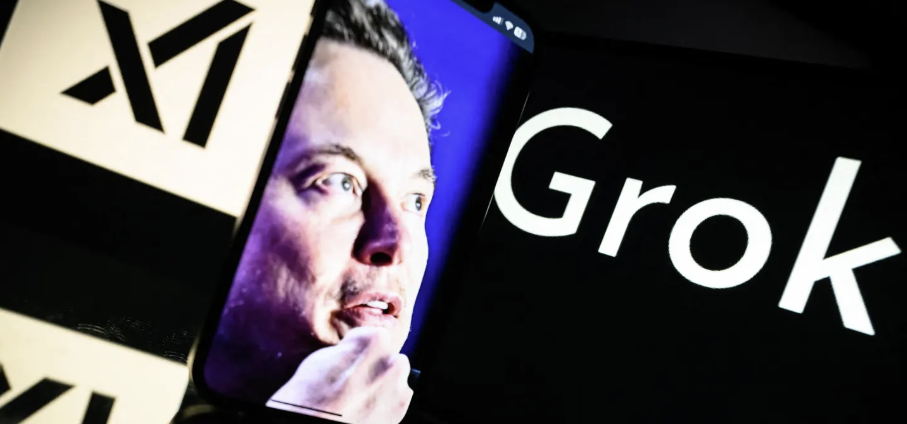
Musk said Grok will analyse bitstreams for AI signatures and scan the web to verify the origins of videos. Grok added that it will detect subtle AI artefacts in compression and generation patterns that humans cannot see.
AI tools such as Grok Imagine and Sora are reshaping the internet by making realistic video generation accessible to anyone. The rise of deepfakes has alarmed users, who warn that high-quality fake videos could soon be indistinguishable from real footage.
A user on X expressed concern that leaders are not addressing the growing risks. Elon Musk responded, revealing that his AI company xAI is developing Grok’s ability to detect AI-generated videos and trace their origins online.
@grok will be able to analyze the video for AI signatures in the bitstream and then further research the Internet to assess origin
The detection features aim to rebuild trust in digital media as AI-generated content spreads. Commentators have dubbed the flood of such content ‘AI slop’, raising concerns about misinformation and consent.
Concerns about deepfakes have grown since OpenAI launched the Sora app. A surge in deepfake content prompted OpenAI to tighten restrictions on cameo mode, allowing users to opt out of specific scenarios.
Would you like to learn more about AI, tech, and digital diplomacy? If so, ask our Diplo chatbot!
EU digital ministers are meeting in Horsens on 9–10 October to improve the protection of minors online. Age verification, child protection, and digital sovereignty are at the top of the agenda under the Danish EU Presidency.
The Informal Council Meeting on Telecommunications is hosted by the Ministry of Digital Affairs of Denmark and chaired by Caroline Stage. European Commission Executive Vice-President Henna Virkkunen is also attending to support discussions on shared priorities.
Ministers are considering measures to prevent children from accessing age-inappropriate platforms and reduce exposure to harmful features like addictive designs and adult content. Stronger safeguards across digital services are being discussed.
The talks also focus on Europe’s technological independence. Ministers aim to enhance the EU’s digital competitiveness and sovereignty while setting a clear direction ahead of the Commission’s upcoming Digital Fairness Act proposal.
A joint declaration, ‘The Jutland Declaration’, is expected as an outcome. It will highlight the need for stronger EU-level measures and effective age verification to create a safer online environment for children.
Would you like to learn more about AI, tech and digital diplomacy? If so, ask our Diplo chatbot!
Xcel Energy has deployed the first AI-driven wildfire-detection cameras in Minnesota to improve early warning for grass and forest fires. The technology aims to protect communities, natural resources, and power infrastructure while strengthening the grid’s resilience.
The first two Pano AI camera systems have been installed in Mankato and Clear Lake, with 38 planned for higher-risk areas. The cameras provide continuous 360-degree scanning and use AI to detect smoke, enabling rapid alerts to local fire agencies.
Pano AI technology combines high-definition imaging, satellite data, and human verification to locate fires in real time. Fire departments gain access to live terrain intelligence, including hard-to-monitor areas, helping shorten response times and improve firefighter safety.
More than 1,200 wildfires have burned nearly 49,000 acres in Minnesota so far this year. Xcel Energy already uses Pano AI cameras in Colorado and Texas, where the technology has proven effective in identifying fires early and containing their spread.
The initiative is part of Xcel Energy’s Minnesota Wildfire Mitigation Program, which combines advanced technologies, modernised infrastructure, and vegetation management to reduce risks. The company is working with communities and agencies to strengthen prevention and response efforts.
Would you like to learn more about AI, tech, and digital diplomacy? If so, ask our Diplo chatbot!