WordPress has released new guidelines to shape how AI is used across plugins, themes, documentation and media assets. The framework focuses on transparency, accountability and maintaining the project’s open source foundations.
Contributors remain fully responsible for AI-assisted work and are expected to disclose meaningful AI use during submissions. Reviewers are encouraged to assess such contributions with awareness of how automated tools influenced the output.
Strong emphasis is placed on licensing, with all AI-generated material required to remain compatible with GPLv2 or later. Tools that restrict redistribution or reproduce incompatible code are explicitly ruled out.
The guidance also targets so-called AI slop, including untested code, fabricated references and unnecessarily complex solutions. Maintainers are authorised to reject low-quality submissions that lack apparent human oversight.
Would you like to learn more about AI, tech and digital diplomacy? If so, ask our Diplo chatbot!
A major international AI safety report warns that AI systems are advancing rapidly, with sharp gains in reasoning, coding and scientific tasks. Researchers say progress remains uneven, leaving systems powerful yet unreliable.
The report highlights rising concerns over deepfakes, cyber misuse and emotional reliance on AI companions in the UK and the US. Experts note growing difficulty in distinguishing AI generated content from human work.
Safeguards against biological, chemical and cyber risks have improved, though oversight challenges persist in the UK and the US. Analysts warn advanced models are becoming better at evading evaluation and controls.
The impact of AI on jobs in the UK and the US remains uncertain, with mixed evidence across sectors. Researchers say labour disruption could accelerate if systems gain greater autonomy.
Would you like to learn more about AI, tech and digital diplomacy? If so, ask our Diplo chatbot!
Technology firms in China are rolling out large cash incentive campaigns to attract users to their AI chatbots ahead of the expected launch of new AI models later this month.
Alibaba Group has earmarked CNY 3 billion for users of its Qwen AI app, with the promotion beginning on 6 February to coincide with Lunar New Year celebrations.
Tencent Holdings and Baidu have announced similar offers, together committing around CNY 1.5 billion in cash rewards and consumer electronics, including smartphones and televisions.
To qualify for prizes, users must register on the platforms and interact with the chatbots during the promotional period by asking questions or completing everyday planning tasks.
The incentives reflect intensifying competition with global developers such as Google and OpenAI, while also strengthening efforts to position China-based firms as potential local AI partners for Apple in the Chinese market.
Would you like to learn more about AI, tech, and digital diplomacy? If so, ask our Diplo chatbot!
Oracle is expanding AI data centres across the United States while pairing infrastructure growth with workforce development through its philanthropic education programme, Oracle Academy.
The initiative provides schools and educators with curriculum, cloud tools, software, and hands-on training designed to prepare students for enterprise-scale technology roles increasingly linked to AI operations.
As demand for specialised skills rises, Oracle Academy is introducing Data Centre Technician courses to fast-track learners into permanent roles supporting AI infrastructure development and maintenance.
The programme already works with hundreds of institutions across multiple US states, including Texas, Michigan, Wisconsin, and New Mexico, spanning disciplines from computer science and engineering to construction management and supply chain studies.
Alongside new courses in machine learning, generative AI, and analytics, Oracle says the approach is intended to close skills gaps and ensure local communities benefit from the rapid expansion of AI infrastructure.
Would you like to learn more about AI, tech, and digital diplomacy? If so, ask our Diplo chatbot!
Web Summit Qatar is underway in Doha, drawing startups, investors, and technology leaders to discuss emerging trends shaping the global digital economy. Early sessions featured startup pitches, investor meetings, and discussions on AI, quantum technologies, and the creator economy.
More than 1,600 startups are taking part, with around 85% arriving from outside Qatar, joined by nearly 1,000 investors. Funds such as Amino Capital, Greycroft, and 500 Global are scouting opportunities, as journalists cover debates on tech geopolitics and innovation policy.
Germany is marking its strongest showing to date, bringing more than 200 startups, investors, and decision-makers. The German Pavilion showcases AI, cybersecurity, deep tech, and industrial innovation, highlighting plans to deepen cooperation with regional partners.
Beyond visibility, the summit emphasises partnerships, market entry, and long-term collaboration. Organisers and participants point to growing ties between Germany and Qatar as both countries seek to deepen cooperation across advanced technology and innovation ecosystems.
Would you like to learn more about AI, tech and digital diplomacy? If so, ask our Diplo chatbot!
European policymakers are sharpening their focus on digital sovereignty as concerns grow over the continent’s reliance on foreign technology providers. Control over key digital infrastructure and technologies is seen as vital to protecting Europe’s economic resilience.
At a fintech regulatory conference in Brussels, European Financial Services Commissioner Maria Luís Albuquerque stressed the need to retain control over core economic technologies. She warned that rising global isolationism is heightening the risks linked to external dependencies.
The comments reflected unease about Europe’s reliance on non-European tech companies, particularly those based in the United States. Such dependence, officials argue, could weaken Europe’s ability to protect its digital infrastructure and shape its own economic future.
Calls for greater digital autonomy are gaining momentum as the EU seeks to balance innovation with security. Policymakers see technological control as key to long-term stability, competitiveness, and strategic independence.
Would you like to learn more about AI, tech and digital diplomacy? If so, ask our Diplo chatbot!
Snapchat has blocked more than 415,000 Australian accounts after the national ban on under-16s began, marking a rapid escalation in the country’s effort to restrict children’s access to major platforms.
The company relied on a mix of self-reported ages and age-detection technologies to identify users who appeared to be under 16.
The platform warned that age verification still faces serious shortcomings, leaving room for teenagers to bypass safeguards rather than supporting reliable compliance.
Facial estimation tools remain accurate only within a narrow range, meaning some young people may slip through while older users risk losing access. Snapchat also noted the likelihood that teenagers will shift towards less regulated messaging apps.
The eSafety commissioner has focused regulatory pressure on the 10 largest platforms, although all services with Australian users are expected to assess whether they fall under the new requirements.
Officials have acknowledged that the technology needs improvement and that reliability issues, such as the absence of a liveness check, contributed to false results.
The EU’s attempt to revise core privacy rules has faced resistance from France, which argues that the Commission’s proposals would weaken rather than strengthen long-standing protections.
Paris objects strongly to proposed changes to the definition of personal data within the General Data Protection Regulation, which remains the foundation of European privacy law. Officials have also raised concerns about several more minor adjustments included in the broader effort to modernise digital legislation.
These proposals form part of the Digital Omnibus package, a set of updates intended to streamline the EU data rules. France argues that altering the GDPR’s definitions could change the balance between data controllers, regulators and citizens, creating uncertainty for national enforcement bodies.
The national government maintains that the existing framework already includes the flexibility needed to interpret sensitive information.
A disagreement that highlights renewed tension inside the Union as institutions examine the future direction of privacy governance.
Several member states want greater clarity in an era shaped by AI and cross-border data flows. In contrast, others fear that opening the GDPR could lead to inconsistent application across Europe.
Talks are expected to continue in the coming months as EU negotiators weigh the political risks of narrowing or widening the scope of personal data.
France’s firm stance suggests that consensus may prove difficult, particularly as governments seek to balance economic goals with unwavering commitments to user protection.
Would you like to learn more about AI, tech and digital diplomacy? If so, ask our Diplo chatbot!
Institutions in the EU have begun designing a new framework to help European armies share defence information securely, rather than relying on US technology.
A plan centred on creating a military-grade data platform, the European Defence Artificial Intelligence Data Space, is intended to support sensitive exchanges among defence authorities.
Ultimately, the approach aims to replace the current patchwork of foreign infrastructure that many member states rely on to store and transfer national security data.
The European Defence Agency is leading the effort and expects the platform to be fully operational by 2030. The concept includes two complementary elements: a sovereign military cloud for data storage and a federated system that allows countries to exchange information on a trusted basis.
Officials argue that this will improve interoperability, speed up joint decision-making, and enhance operational readiness across the bloc.
A project that aligns with broader concerns about strategic autonomy, as EU leaders increasingly question long-standing dependencies on American providers.
Several European companies have been contracted to develop the early technical foundations. The next step is persuading governments to coordinate future purchases so their systems remain compatible with the emerging framework.
Planning documents suggest that by 2029, member states should begin integrating the data space into routine military operations, including training missions and coordinated exercises. EU authorities maintain that stronger control of defence data will be essential as military AI expands across European forces.
Would you like to learn more about AI, tech and digital diplomacy? If so, ask our Diplo chatbot!
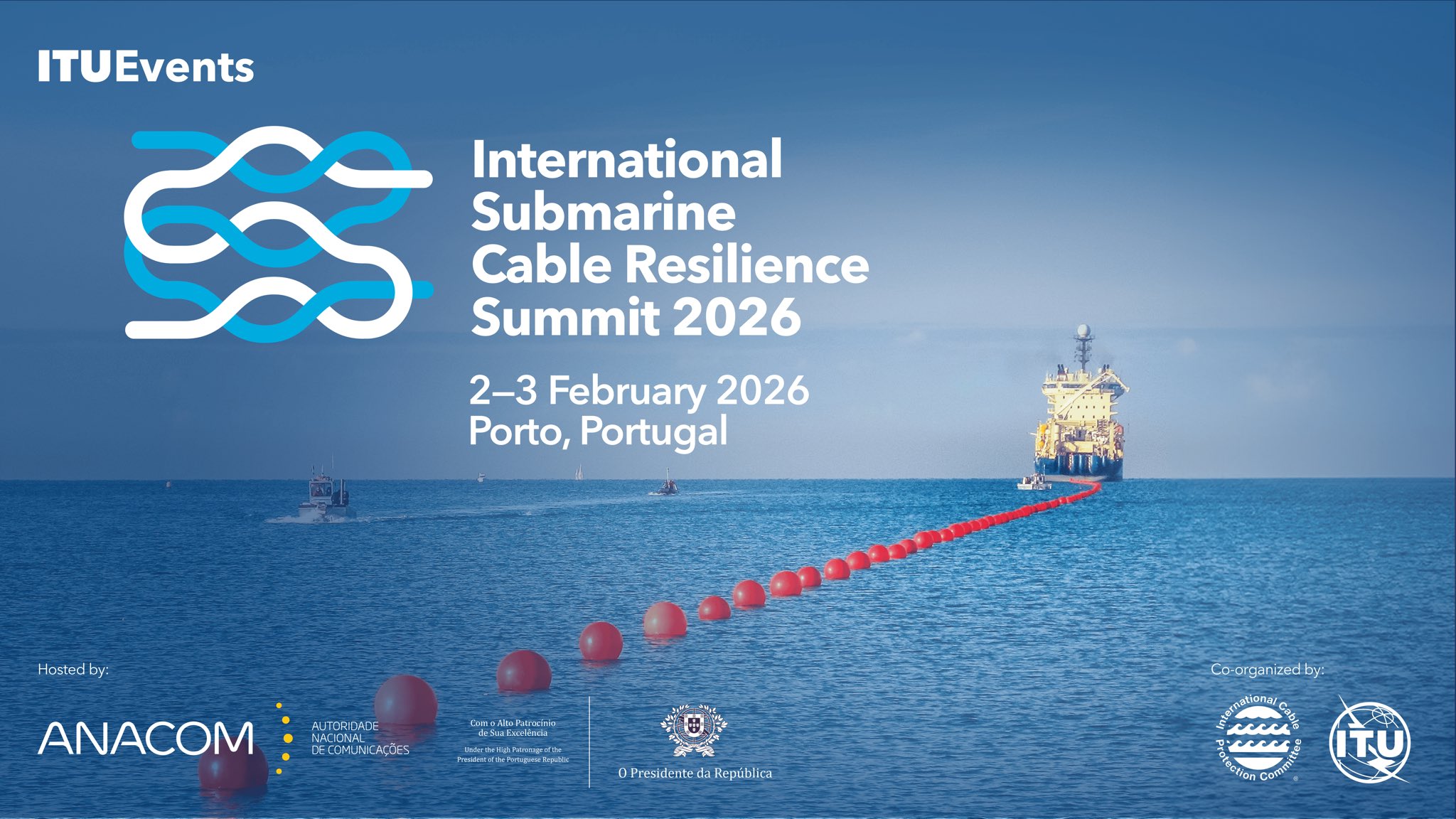
The smooth functioning of the global internet depends on a largely unseen but critical system, the undersea fibre-optic cables that carry nearly all international data traffic. These cables, laid across the ocean floor, support everything from everyday online communication to global financial transactions.
Tomas Lamanauskas, Deputy Secretary-General of ITU, has stressed that submarine cables are the backbone of global connectivity and that their resilience must be strengthened as societies become ever more dependent on digital networks. From their origins as 19th-century telegraph lines, undersea cables have evolved into high-capacity systems capable of transmitting hundreds of terabits of data per second, forming a dense web that connects continents, economies, and communities.
Today, more than 500 commercial submarine cables stretch for roughly 1.7 million kilometres beneath the seas. Although these cables are relatively thin, their installation is complex, requiring detailed seabed surveys, environmental assessments, and specialised cable-laying vessels to ensure safe deployment and protection.
Despite their robust design, undersea cables remain vulnerable. Natural hazards such as earthquakes and underwater landslides pose risks, but around 80% of cable faults are caused by human activities, including ship anchors and fishing trawlers.
When cables are damaged, the effects can be immediate, disrupting internet access, emergency communications, financial services, and digital healthcare and education, particularly in remote or island regions.
Repairing or replacing damaged cables is often slow and costly. While faults can usually be located quickly, repairs may be delayed by complex permitting procedures and coordination across multiple jurisdictions.
With some cables installed during the dot-com boom now approaching the end of their lifespan, ITU is increasingly focused on fostering international cooperation, setting standards, and promoting best practices to ensure that these hidden networks can continue to support global connectivity in the years ahead.
Would you like to learn more about AI, tech, and digital diplomacy? If so, ask our Diplo chatbot!