At UMN, AI meets ethics, history, and craft

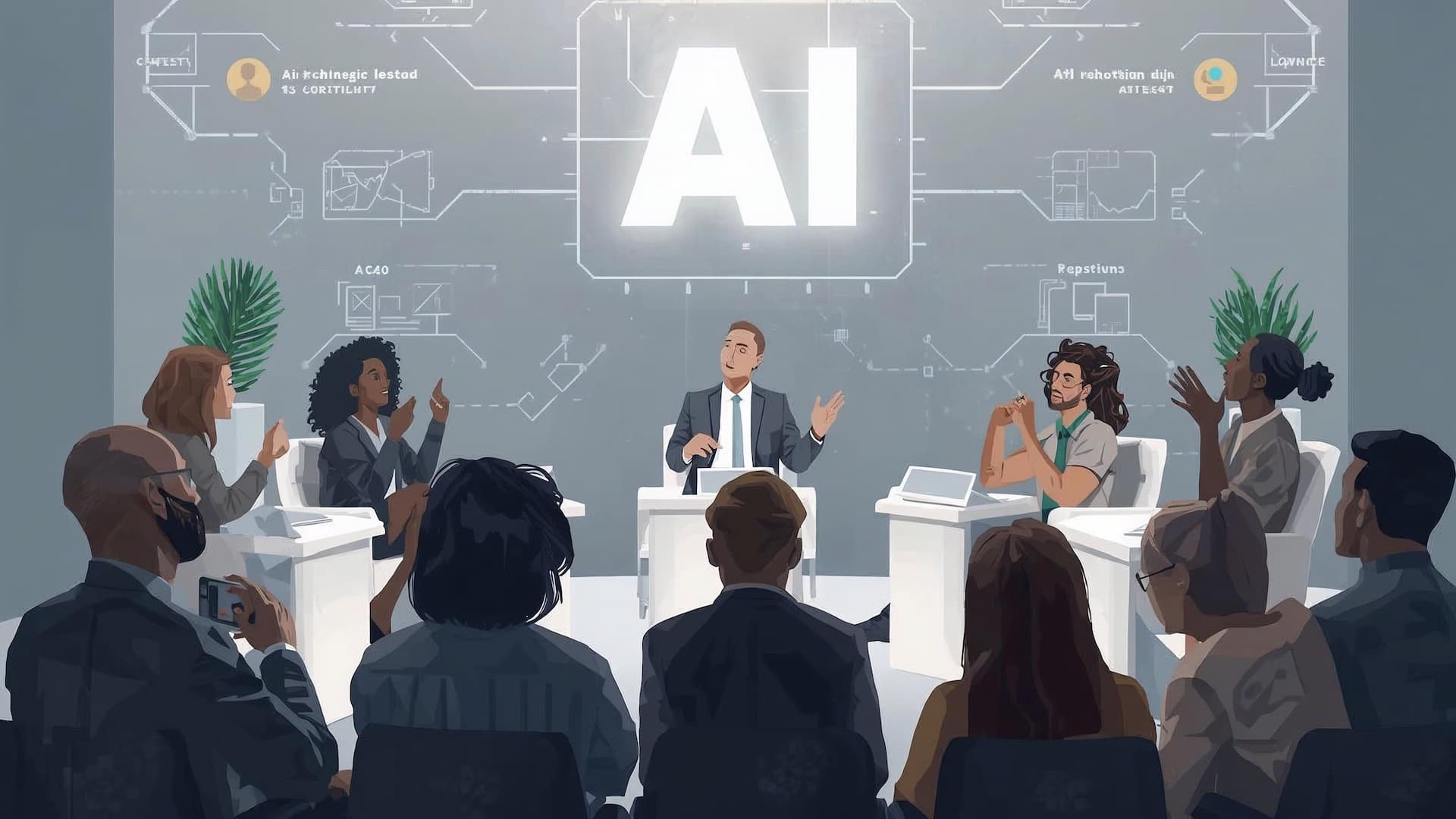
AI is remaking daily life, but it can’t define what makes us human. The liberal arts help us probe ethics, meaning, and power as algorithms scale. At the University of Minnesota Twin Cities, that lens anchors curiosity with responsibility.

In the College of Liberal Arts, scholars are treating AI as both a tool and a textbook. They test its limits, trace its histories, and surface trade-offs around bias, authorship, and agency. Students learn to question design choices rather than just consume outputs.

Linguist Amanda Dalola, who directs the Language Center, experiments with AI as a language partner and reflective coach. Her aim isn’t replacement but augmentation, faster feedback, broader practice, richer cultural context. The point is discernment: when to use, when to refuse.

Statistician Galin Jones underscores the scaffolding beneath the hype. You cannot do AI without statistics, he tells students, so the School of Statistics emphasises inference, uncertainty, and validation. Graduates leave fluent in models, and in the limits of what models claim.

Composer Frederick Kennedy’s opera I am Alan Turing turns theory into performance. By staging Turing’s questions about machine thought and human identity, the work fuses history, sound design, and code. Across philosophy, music, and more, CLA frames AI as a human story first.

Would you like to learn more about AI, tech, and digital diplomacy? If so, ask our Diplo chatbot!

Gigawatt-scale AI marks Anthropic’s next compute leap

Anthropic will massively expand on Google Cloud, planning to deploy up to 1 million TPUs and bring well over a gigawatt online in 2026. The multiyear investment totals tens of billions to accelerate research and product development.

Google Cloud CEO Thomas Kurian said Anthropic’s move reflects TPUs’ price-performance and efficiency, citing ongoing innovations and the seventh-generation ‘Ironwood’ TPU. Google will add capacity and drive further efficiency across its accelerator portfolio.

Anthropic now serves over 300,000 business customers, with large accounts up nearly sevenfold year over year. Added compute will meet demand while enabling deeper testing, alignment research, and responsible deployment at a global scale.

CFO Krishna Rao said the expansion keeps Claude at the frontier for Fortune 500s and AI-native startups alike. Increased capacity ensures reliability as usage and mission-critical workloads grow rapidly.

Anthropic’s diversified strategy spans Google TPUs, Amazon Trainium, and NVIDIA GPUs. It remains committed to Amazon as its primary training partner, including Project Rainier’s vast US clusters, and will continue investing to advance model capabilities.

Would you like to learn more about AI, tech and digital diplomacy? If so, ask our Diplo chatbot!

Meta expands AI safety tools for teens

Meta has announced new AI safety tools to give parents greater control over how teenagers use its AI features. The update will first launch on Instagram, allowing parents to disable one-on-one chats between teens and AI characters.

Parents will be able to block specific AI assistants and see topics teens discuss with them. Meta said the goal is to encourage transparency and support families as young users learn to navigate AI responsibly.

Teen protections already include PG-13-guided responses and restrictions on sensitive discussions, such as self-harm or eating disorders. The company said it also uses AI detection systems to apply safeguards when suspected minors misreport their age.

The new parental controls will roll out in English early next year across the US, UK, Canada, and Australia. Meta said it will continue updating features to address parents’ concerns about privacy, safety, and teen wellbeing online.

Would you like to learn more about AI, tech and digital diplomacy? If so, ask our Diplo chatbot

Russia orders Apple to set Russian search engine by default

Russia’s federal anti-monopoly service has ordered Apple to preinstall a Russian-made search engine, such as Yandex or Mail.ru, by default on all devices sold in Russia and the Eurasian Economic Union. The regulator claims Apple’s current setup gives foreign providers unfair market advantages.

The letter from FAS director Maxim Shaskolsky said Apple’s practices breach consumer protection laws by denying users equal access to local services. Authorities argue that default settings favour non-Russian search engines and restrict fair competition within domestic markets.

Apple has until 31 October to comply or face potential fines and restrictions. Russia’s Ministry of Digital Affairs warned of serious consequences if the company ignores the directive. Officials noted that Google previously avoided penalties after offering users a search engine choice.

Apple’s relations with Moscow have been tense since 2024, when the firm removed VPN apps under government pressure. Digital rights groups described the move as a threat to privacy, and analysts see the latest demand as part of Russia’s push for greater online control.

Would you like to learn more about AI, tech and digital diplomacy? If so, ask our Diplo chatbot

Australia demands answers from AI chatbot providers over child safety

Australia’s eSafety Commissioner has issued legal notices to four major AI companion platforms, requiring them to explain how they are protecting children from harmful or explicit content.

Character.ai, Nomi, Chai, and Chub.ai were all served under the country’s Online Safety Act and must demonstrate compliance with Australia’s Basic Online Safety Expectations.

The notices follow growing concern that AI companions, designed for friendship and emotional support, can expose minors to sexualised conversations, suicidal ideation, and other psychological risks.

eSafety Commissioner Julie Inman Grant said the companies must show how their systems prevent such harms, not merely react to them, warning that failure to comply could lead to penalties of up to $825,000 per day.

AI companion chatbots have surged in popularity among young users, with Character.ai alone attracting nearly 160,000 monthly active users in Australia.

The Commissioner stressed that these services must integrate safety measures by design, as new enforceable codes now extend to AI platforms that previously operated with minimal oversight.

A move that comes amid wider efforts to regulate emerging AI technologies and ensure stronger child protection standards online.

Breaches of the new codes could result in civil penalties of up to $49.5 million, marking one of the toughest online safety enforcement regimes globally.

Would you like to learn more about AI, tech and digital diplomacy? If so, ask our Diplo chatbot!

Alaska Airlines grounds all US flights after IT failure

Alaska Airlines temporarily grounded all US flights on Thursday following a nationwide IT outage. The carrier confirmed a technical failure had disrupted operations and imposed a ground stop while engineers worked to restore systems.

The outage also affected Horizon Air, a regional airline operated by Alaska Airlines, according to the Federal Aviation Administration. The company has not disclosed how many flights were delayed or cancelled.

Alaska Airlines, headquartered in Seattle, serves over 140 destinations across 37 states and 12 countries. Its partner, Hawaiian Airlines, remained unaffected by the disruption, which marked the carrier’s second major outage this year.

The incident comes amid wider US aviation challenges linked to staffing shortages from the ongoing government shutdown. Officials said normal flight operations were gradually resuming as systems recovered nationwide.

Would you like to learn more about AI, tech and digital diplomacy? If so, ask our Diplo chatbot

NVIDIA AI Day Sydney showcases Australia’s growing role in global AI innovation

Australia took centre stage in the global AI landscape last week as NVIDIA AI Day Sydney gathered over a thousand participants to explore the nation’s path toward sovereign AI.

The event, held at ICC Sydney Theatre, featured discussions on agentic and physical AI, robotics and AI factories, highlighting how the next generation of computing is driving transformation across sectors.

Industry leaders, including Commonwealth Bank of Australia, Canva and emerging startups, joined NVIDIA executives to discuss how advanced computing and AI are shaping innovation.

Brendan Hopper of the Commonwealth Bank praised NVIDIA’s role in expanding Australia’s AI ecosystem through infrastructure, partnerships and education.

Speakers such as Giuseppe Barca of QDX Technologies emphasised how AI, high-performance computing and quantum research are redefining scientific progress.

With over 600 NVIDIA Inception startups and more than 20 universities using NVIDIA technologies, Australia’s AI ecosystem is expanding rapidly. Partners like Firmus Technologies, ResetData and SHARON AI underscored how AI Day Sydney demonstrated the nation’s readiness to become a regional AI hub.

The event also hosted Australia’s first ‘Startup, VC and Partner Connect’, linking entrepreneurs, investors and government officials to accelerate collaboration.

Presentations from quantum and healthcare innovators, alongside hands-on NVIDIA Deep Learning Institute sessions, showcased real-world AI applications from generative design to medical transcription.

NVIDIA’s Sudarshan Ramachandran said Australia’s combination of high-performance computing heritage, visual effects expertise and emerging robotics sector positions it to lead in the AI era.

Through collaboration and infrastructure investment, he said, the country is building a thriving ecosystem that supports discovery, sustainability and economic growth.

Would you like to learn more about AI, tech and digital diplomacy? If so, ask our Diplo chatbot!

Amazon launches Help Me Decide to simplify shopping

Amazon has introduced Help Me Decide, a new AI-powered feature designed to make shopping faster and more personalised. The tool analyses browsing history and preferences to recommend the best product with one tap, offering clear explanations.

The feature appears after viewing several similar items, allowing shoppers to quickly narrow choices. It also offers options for an upgrade or a budget-friendly alternative.

Help Me Decide works alongside Amazon’s existing AI tools, including Interests, Shopping Guides, and the assistant Rufus, which provide notifications, expert guidance, and real-time answers.

Using large language models and AWS services, the tool cross-references your shopping data with product details and customer reviews. A family browsing camping gear might get a tent recommendation based on prior searches for sleeping bags, stoves, and hiking boots.

Available on the Amazon app and mobile browser, Help Me Decide helps users save time, reduce guesswork, and shop with confidence. Amazon says the feature reflects its ongoing commitment to AI-driven, user-focused shopping experiences.

Would you like to learn more about AI, tech and digital diplomacy? If so, ask our Diplo chatbot!

Microsoft unveils major Copilot update focused on personal and human-centred AI

Microsoft has launched its Copilot Fall Release, introducing twelve new features designed to make AI more personal, social, and human-centred. The update makes Copilot a flexible AI companion that boosts creativity and productivity while ensuring trust and user control.

A key addition is Groups, which transforms Copilot into a shared workspace for real-time collaboration. Users can brainstorm, plan, and co-write with up to 32 participants as the AI keeps discussions summarised and tasks aligned.

New creative tools such as Imagine encourage remixing and sharing of AI-generated ideas, promoting collaboration over isolation.

The update also introduces Memory & Personalisation, allowing Copilot to remember important information and recall it later, while connectors link services like OneDrive, Gmail, and Google Calendar for seamless data access. Privacy remains central, with explicit consent required for all connections.

Meanwhile, the new animated character Mico brings warmth and expression to voice-based interactions.

Beyond productivity, Microsoft is positioning Copilot as a tool for wellbeing and learning. The AI now supports health queries through trusted medical sources, helps users find doctors, and serves as a Socratic tutor in Learn Live.

Integration across Edge and Windows enhances browsing and multitasking, while the ‘Hey Copilot’ voice command enables hands-free interaction. Microsoft says the update represents a milestone in building AI that truly serves people, not the other way around.

Would you like to learn more about AI, tech and digital diplomacy? If so, ask our Diplo chatbot

$MELANIA coin faces court claims over price manipulation

Executives behind the $MELANIA cryptocurrency, launched by Melania Trump in January, are accused in court filings of orchestrating a pump-and-dump scheme. The coin surged from a few cents to $13.73 before falling to 10 cents, while $TRUMP dropped from $45.47 to $5.79.

Investors allege the creators planned the price surge and collapse to profit from rapid trading. Court papers allege Meteora executives used accomplices to buy and sell $MELANIA quickly, securing large profits while ordinary investors lost money.

Melania Trump herself is not named in the lawsuit, which describes her as unaware of the alleged scheme.

The $MELANIA allegations are now part of broader legal proceedings involving multiple cryptocurrencies that began earlier this year. Meteora has not commented, while the Trump family reportedly earned over $1bn from crypto ventures in the past year.

Would you like to learn more about AI, tech and digital diplomacy? If so, ask our Diplo chatbot