Human staff are more accurate than AI in assessing patient urgency in emergency departments, according to research presented at the European Emergency Medicine Congress in Barcelona.
The study, led by Dr Renata Jukneviciene of Vilnius University, tested ChatGPT 3.5 against clinicians and nurses using real case studies.
Doctors achieved an overall accuracy of 70.6% and nurses 65.5%, compared with 50.4% for AI. Doctors also outperformed AI in surgical and therapeutic cases, while nurses were more reliable overall.
AI did show strength in recognising the most critical cases, surpassing nurses in both accuracy and specificity. Researchers suggested that AI may help prioritise life-threatening situations and support less experienced staff instead of acting as a replacement.
However, over-triaging by AI could lead to inefficiencies, making human oversight essential.
Future studies will explore newer AI models, ECG interpretation, and integration into nurse training, particularly in mass-casualty scenarios.
Commenting on the findings, Dr Barbra Backus from Amsterdam said AI has value in certain areas, such as interpreting scans, but it cannot yet replace trained staff for triage decisions.
Would you like to learn more aboutAI, tech and digital diplomacy? If so, ask our Diplo chatbot!
The University of Pennsylvania’s engineering team has made a breakthrough that could bring the quantum internet much closer to practical use. Researchers have demonstrated that quantum and classical networks can share the same backbone by transmitting quantum signals over standard fibre optic infrastructure using the same Internet Protocol (IP) that powers today’s web.
Their silicon photonics ‘Q-Chip’ achieved over 97% fidelity in real-world field tests, showing that the quantum internet does not necessarily require building entirely new networks from scratch.
That result, while highly technical, has far-reaching implications. Beyond physics and computer science, it raises urgent questions for governance, national infrastructures, and the future of digital societies.
Quantum signals were transmitted as packets with classical headers readable by conventional routers, while the quantum information itself remained intact.
Noise management
The chip corrected disturbances by analysing the classical header without disturbing the quantum payload. An interesting fact is that the test ran on a Verizon fibre link between two buildings, not just in a controlled lab.
That fact makes the experiment different from earlier advances focusing mainly on quantum key distribution (QKD) or specialised lab setups. It points toward a future in which quantum networking and classical internet coexist and are managed through similar protocols.
Implications for governance and society
Government administration
Governments increasingly rely on digital infrastructure to deliver services, store sensitive records, and conduct diplomacy. The quantum internet could provide secure e-government services resistant to espionage or tampering, protected digital IDs and voting systems, reinforcing democratic integrity, and classified communication channels that even future quantum computers cannot decrypt.
That positions quantum networking as a sovereignty tool, not just a scientific advance.
Healthcare
Health systems are frequent targets of cyberattacks. Quantum-secured communication could protect patient records and telemedicine platforms, enable safe data sharing between hospitals and research centres, support quantum-assisted drug discovery and personalised medicine via distributed quantum computing.
Here, the technology directly impacts citizens’ trust in digital health.
Critical infrastructure and IT systems
National infrastructures, such as energy grids, financial networks, and transport systems, could gain resilience from quantum-secured communication layers.
In addition, quantum-enhanced sensing could provide more reliable navigation independent of GPS, enable early-warning systems for earthquakes or natural disasters, and strengthen resilience against cyber-sabotage of strategic assets.
Citizens and everyday services
For ordinary users, the quantum internet will first be invisible. Their emails, bank transactions, and medical consultations will simply become harder to hack.
Over time, however, quantum-secured platforms may become a market differentiator for banks, telecoms, and healthcare providers.
Citizens and universities may gain remote access to quantum computing resources, democratising advanced research and innovation.
Building a quantum-ready society
The Penn experiment matters because it shows that quantum internet infrastructure can evolve on top of existing systems. For policymakers, this raises several urgent points.
Standardisation
International bodies (IETF, ITU-T, ETSI) will need to define packet structures, error correction, and interoperability rules for quantum-classical networks.
Strategic investment
Countries face a decision whether to invest early in pilot testbeds (urban campuses, healthcare systems, or government services).
Cybersecurity planning
Quantum internet deployment should be aligned with the post-quantum cryptography transition, ensuring coherence between classical and quantum security measures.
Public trust
As with any critical infrastructure, clear communication will be needed to explain how quantum-secured systems benefit citizens and why governments are investing in them.
Key takeaways for policymakers
Quantum internet is governance, not just science. The Penn breakthrough shows that quantum signals can run on today’s networks, shifting the conversation from pure research to infrastructure and policy planning.
Governments should treat the quantum internet as a strategic asset, protecting national administrations, elections, and critical services from future cyber threats.
Early adoption in health systems could secure patient data, telemedicine, and medical research, strengthening public trust in digital services.
International cooperation (IETF, ITU-T, ETSI) will be needed to define protocols, interoperability, and security frameworks before large-scale rollouts.
Policymakers should align quantum network deployment with the global transition to post-quantum encryption, ensuring coherence across digital security strategies.
Governments could start with small-scale testbeds (smart cities, e-government nodes, or healthcare networks) to build expertise and shape standards from within.
Why does it matter?
The University of Pennsylvania’s ‘Q-Chip’ is a proof-of-concept that quantum and classical networks can speak the same language. While technical challenges remain, especially around scaling and quantum repeaters, the political and societal questions can no longer be postponed.
The quantum internet is not just a scientific project. It is emerging as a strategic infrastructure for the digital state of the future. Governments, regulators, and international organisations must begin preparing today so that tomorrow’s networks deliver speed and efficiency, trust, sovereignty, and resilience.
Would you like to learn more about AI, tech, and digital diplomacy? If so, ask our Diplo chatbot!
Imgur has cut off access for UK users after regulators warned its parent company, MediaLab AI, of a potential fine over child data protection.
Visitors to the platform since 30 September have been met with a notice saying that content is unavailable in their region, with embedded Imgur images on other sites also no longer visible.
The UK’s Information Commissioner’s Office (ICO) began investigating the platform in March, questioning whether it complied with data laws and the Children’s Code.
The regulator said it had issued MediaLab with a notice of intent to fine the company following provisional findings. Officials also emphasised that leaving the UK would not shield Imgur from responsibility for any past breaches.
Some users speculated that the withdrawal was tied to new duties under the Online Safety Act, which requires platforms to check whether visitors are over 18 before allowing access to harmful content.
However, both the ICO and Ofcom stated that Imgur decided on a commercial choice. Other MediaLab services, such as Kik Messenger, continue to operate in the UK with age verification measures in place.
Would you like to learn more aboutAI, tech and digital diplomacy? If so, ask our Diplo chatbot!
Anthropic has released Claude Sonnet 4.5, featuring a suite of new upgrades designed to enhance coding, automation, and creativity. The update enhances Claude Code, extends Computer Use, and introduces experimental tools to boost productivity and facilitate real-world applications.
Claude Code now features checkpoints, allowing developers to roll back projects to earlier versions. The Claude API has also been expanded, supporting longer-running agents to generate files such as slides, spreadsheets, and documents directly within chats.
The model’s Computer Use function has been strengthened, enabling agents to operate applications for up to 30 hours autonomously. Anthropic says Claude Sonnet 4.5 built a Slack-style app with 11,000 lines of code in one session.
A new feature, Imagine with Claude, focuses on generating creative software. The system produced a Shakespeare-themed desktop with customised scripts and performance schedules from a single prompt, highlighting its versatility.
Anthropic has maintained steady pricing for free and premium users, positioning Sonnet 4.5 as its most practical and feature-rich release yet, combining reliability with expanded creative and developer-friendly tools.
Would you like to learn more about AI, tech, and digital diplomacy? If so, ask our Diplo chatbot!
The 2025 Athens Democracy Forum opened in Athens with a dedicated session on AI, ethics and democracy, co-organised by Kathimerini in partnership with The New York Times.
Held at the Athens Conservatoire, the event placed AI at the heart of discussions on the future of democratic governance.
Speakers underlined the urgency of addressing systemic challenges created by AI.
Achilleas Tsaltas, president of the Democracy & Culture Foundation, described AI as the central concern of the era. At the same time, Greece’s minister of digital governance, Dimitris Papastergiou, warned that AI should remain a servant instead of becoming a master.
Axel Dauchez, founder of Make.org, pointed to the conflict between democratic and authoritarian governance models and called for stronger civic education.
The opening panel brought together academics such as Oxford’s Stathis Kalyvas and Yale’s Hélène Landemore, who examined how AI affects liberal democracies, global inequalities and political accountability.
Discussions concluded with a debate on Aristotle’s ethics as a framework for evaluating opportunities and risks in AI development, moderated by Stephen Dunbar-Johnson of The New York Times.
The session continues with panels on the AI transformation blueprint of Greece, regulation of AI, and the emerging concept of AI sovereignty as a business model.
Would you like to learn more aboutAI, tech and digital diplomacy? If so, ask our Diplo chatbot!
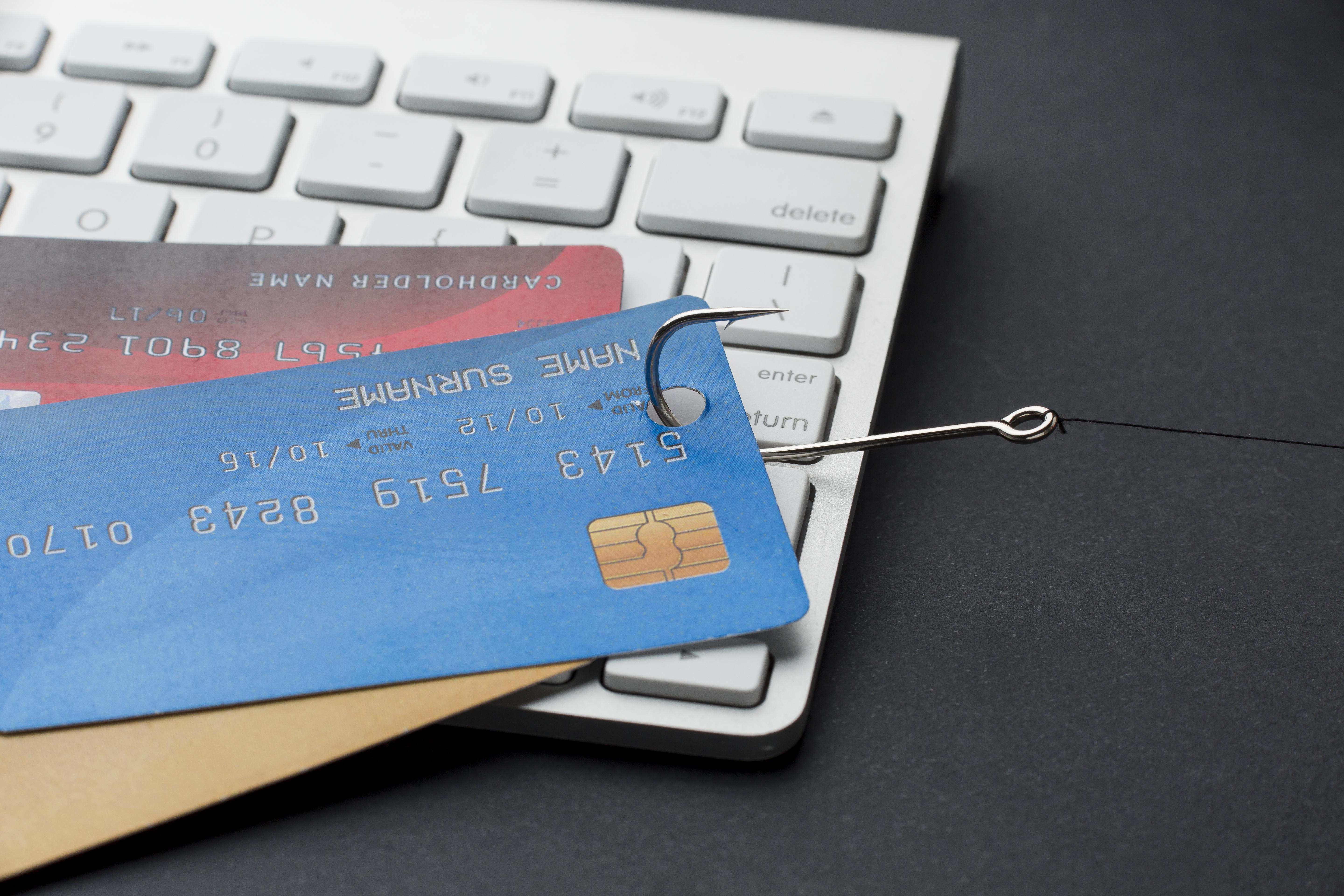
A global survey commissioned by Yubico suggests that younger workers are more vulnerable to phishing scams than older generations. Gen Z respondents reported the highest level of interaction with phishing messages, with 62 percent admitting they engaged with a scam in the past year.
The study gathered responses from 18,000 employed adults in nine countries, including the UK, US, France, and Japan. In the past twelve months, 44 percent of participants admitted to clicking on or replying to a phishing message.
AI is raising the stakes for cybersecurity. Seventy percent of those surveyed believe phishing has become more effective due to AI, and 78 percent said the attacks seem more sophisticated. More than half could not confidently identify a phishing email when shown one.
Despite growing risks, cyber defences remain patchy. Only 48 percent said their workplace used multi-factor authentication across all services, and 40 percent reported never receiving cybersecurity training from their employer.
Would you like to learn more about AI, tech and digital diplomacy? If so, ask our Diplo chatbot!
Burnout is a significant challenge in the cybersecurity sector, as workers face rising threats and constant pressure to defend organisations. A BBC report highlights how professionals often feel overworked and undervalued, with stress levels leading some to take extended leave.
UK-based surveys reflect growing strain. Membership body ISC2 found that job satisfaction among cybersecurity staff dropped in 2024, with burnout cited as a key issue. Experts say demands have increased while resources remain stretched, leaving staff expected to stay on call around the clock.
Hackers are becoming more aggressive, targeting health services, retailers, and critical national infrastructure. Nation-state actors, including North Korean groups linked to large crypto thefts, are also stepping up activity. These attacks add to the psychological burden on frontline defenders.
Industry figures warn that high turnover risks weakening cyber resilience, especially in junior roles. Initiatives like Cybermindz call for better mental health support, while some argue for protections akin to those for first responders.
Would you like to learn more about AI, tech and digital diplomacy? If so, ask our Diplo chatbot!
Japanese brewing giant Asahi has suffered a cyberattack that triggered a systems failure, disrupting shipping and customer services in Japan. The company stressed that European operations, including the UK, remain unaffected.
Order and shipment processes in its domestic market have been suspended, alongside customer service functions. Asahi apologised to customers and business partners, saying the cause is under investigation and there is no clear timeline for recovery.
The brewer is the largest in Japan, owning global beer brands such as Peroni, Pilsner Urquell, and Grolsch. It operates Fuller’s in the UK, which produces London Pride and Cornish Orchards cider.
Asahi has identified cyberattacks as a key business risk, with concerns over cash flow and brand damage. The incident comes as several major UK companies, including Harrods and Jaguar Land Rover, have also faced recent cyber breaches.
Would you like to learn more about AI, tech and digital diplomacy? If so, ask our Diplo chatbot!
Anthropic has released Claude Sonnet 4.5, its most advanced AI model yet, claiming state-of-the-art results in coding benchmarks. The company says the model can build production-ready applications, rather than limited prototypes, making it more reliable than earlier versions.
Claude Sonnet 4.5 is available through the Claude API and chatbot at the same price as its predecessor, with $3 per million input tokens and $15 per million output tokens.
Early enterprise tests suggest the model can autonomously code for extended periods, integrate databases, secure domains, and perform compliance checks such as SOC 2 audits.
Industry leaders have endorsed the launch, with Cursor and Windsurf calling it a new generation of AI coding models. Anthropic also emphasises more substantial alignment, noting reduced risks of deception and sycophancy, and improved resistance to prompt injection attacks.
Alongside the model, the company has introduced a Claude Agent SDK to let developers build customised agents, and launched ‘Imagine with Claude’, a research preview showing real-time code generation.
A release that highlights the intense competition in AI, with Anthropic pushing frequent updates to keep pace with rivals such as OpenAI, which has recently gained ground on coding performance with GPT-5.
Claude Sonnet 4.5 follows just weeks after Anthropic’s Claude Opus 4.1, underlining the rapid development cycles driving the sector.
Would you like to learn more aboutAI, tech and digital diplomacy? If so, ask our Diplo chatbot!
The tool, developed within the department’s Sydney-based cloud environment, prioritises privacy, security, and equity while tailoring content to the state’s educational context. It is aligned with the NSW AI Assessment Framework.
The trial began in 16 schools in Term 1, 2024, and then expanded to 50 schools in Term 2. Teachers reported efficiency gains, and students showed strong engagement. Access was extended to all staff in Term 4, 2024, with Years 5–12 students due to follow in Term 4, 2025.
Key features include a privacy-first design, built-in safeguards, and a student mode that encourages critical thinking by offering guided prompts rather than direct answers. Staff can switch between staff and student modes for lesson planning and preparation.
All data is stored in Australia under departmental control. NSWEduChat is free and billed as the most cost-effective AI tool for schools. Other systems are accessible but not endorsed; staff must follow safety rules, while students are limited to approved tools.
Would you like to learn more about AI, tech, and digital diplomacy? If so, ask our Diplo chatbot!