OpenAI has formed a new partnership with Deutsche Telekom to deliver advanced AI capabilities to millions of people across Europe. The collaboration brings together Deutsche Telekom’s customer base and OpenAI’s research to expand the availability of practical AI tools.
The companies aim to introduce simple, multilingual and privacy-focused AI services starting in 2026, helping users communicate, learn and accomplish tasks more efficiently. Widespread familiarity with platforms such as ChatGPT is expected to support rapid uptake of these new offerings.
Deutsche Telekom will introduce ChatGPT Enterprise internally, giving staff secure access to tools that improve customer support and streamline workflows. The move aligns with the firm’s goal of modernising operations through intelligent automation.
Further integration of AI into network management and employee copilots will support the transition towards more autonomous, self-optimising systems. The partnership is expected to strengthen the availability and reliability of AI services throughout Europe.
Would you like to learn more about AI, tech and digital diplomacy? If so, ask our Diplo chatbot!
European firms continue to invest actively despite a volatile global environment, demonstrating resilience, innovation, and commitment to sustainability, according to the European Investment Bank (EIB) Group’s 2025 Investment Survey.
Across the EU, companies are expanding capacity, adopting advanced digital technologies, and pursuing green investment to strengthen competitiveness.
Spanish firms, for example, are optimistic about their sector, prioritising capacity growth, using generative AI, and investing in energy efficiency and climate risk insurance.
Digital transformation is accelerating across the continent. Austrian and Finnish firms stand out for their extensive adoption of generative AI and multiple advanced digital tools, while Belgian companies excel in integrating digital technologies alongside green initiatives.
Czech firms devote a larger share of investment to capacity expansion and innovation, with high engagement in international trade and strategic use of digital solutions. These trends are highlighted in country-level EIB reports and reflect broader European patterns.
The green transition remains central to corporate strategies. Many firms actively reduce emissions, improve energy efficiency, and view sustainability as a business opportunity rather than a regulatory burden.
In Belgium, investments in energy efficiency and waste reduction are among the highest in the EU, while nearly all Finnish companies report taking measures to reduce greenhouse gases.
Across Europe, firms increasingly combine environmental action with innovation to maintain competitiveness and resilience.
Challenges persist, including skills shortages, uncertainty, high energy costs, and regulatory complexity. Despite these obstacles, European businesses continue to innovate, expand, and embrace international trade.
EIB surveys show that firms are leveraging technology and green investments not only to navigate economic uncertainty but also to position themselves for long-term growth and strategic advantage in a changing global landscape.
Would you like to learn more aboutAI, tech and digital diplomacy? If so, ask our Diplo chatbot!
The US tech giant, Microsoft, has announced its largest investment in Asia, committing US$17.5 billion to India over four years to expand cloud and AI infrastructure, workforce skilling, and operations nationwide.
An announcement that follows the US$3 billion investment earlier in 2025 and aims to support India’s ambition to become a global AI leader.
The investment focuses on three pillars: hyperscale infrastructure, sovereign-ready solutions, and workforce development. A new hyperscale data centre in Hyderabad, set to go live by mid-2026, will become Microsoft’s largest in India.
Expansion of existing data centres in Chennai, Hyderabad and Pune will improve resilience and low-latency performance for enterprises, startups, and public sector organisations.
Microsoft will integrate AI into national platforms, including e-Shram and the National Career Service, benefiting over 310 million informal workers. AI-enabled features include multilingual access, predictive analytics, automated résumé creation, and personalised pathways toward formal employment.
Skilling initiatives will be doubled to reach 20 million Indians by 2030, building an AI-ready workforce that can shape the country’s digital future.
Sovereign Public and Private Cloud solutions will provide secure, compliant environments for Indian organisations, supporting both connected and disconnected operations.
Microsoft 365 Copilot will process data entirely within India by the end of 2025, enhancing governance, compliance, and performance across regulated sectors. These initiatives aim to position India as a global AI hub powered by scale, skilling, and digital sovereignty.
Would you like to learn more aboutAI, tech and digital diplomacy? If so, ask our Diplo chatbot!
The platform, called GigaTIME, uses multimodal modelling to analyse routine pathology slides and generate detailed digital maps showing how immune cells interact with cancerous tissue.
Traditional approaches require costly laboratory tests and days of work to produce similar maps, whereas GigaTIME performs the analysis in seconds. The system simulates dozens of protein interactions simultaneously, revealing patterns that were previously difficult or impossible to detect.
By examining tens of thousands of scenarios at once, researchers can better understand tumour behaviour and identify which treatments might offer the greatest benefit. The technology may also clarify why some patients resist therapy and aid the development of new treatment strategies.
GigaTIME is available as an open-source research tool and draws on data from more than 14,000 patients across dozens of hospitals and clinics. The project, developed with Providence and the University of Washington, aims to accelerate cancer research and cut costs.
Would you like to learn more about AI, tech and digital diplomacy? If so, ask our Diplo chatbot!
Ethiopia has launched its National Digital Payment Strategy for 2026 to 2030 alongside a new instant payments platform, marking a significant milestone in the country’s broader push towards digital transformation.
The five-year strategy sets out plans to expand payment interoperability, strengthen public trust, and encourage innovation across the financial sector, with a focus on widening adoption and reducing barriers for underserved and rural communities.
At the centre of the initiative is a national instant payments system designed to support rapid, secure transactions, including person-to-person transfers, QR payments, bulk disbursements, and selected low-value cross-border transactions.
Government officials described the shift as central to building a more inclusive, cash-lite economy, highlighting progress in digital financial access and sustained investment in core digital and payments infrastructure.
The rollout builds on the earlier Digital Ethiopia 2025 agenda and feeds into the longer-term Digital Ethiopia 2030 vision, as authorities position the country to meet rising demand for secure digital financial services across Africa.
Would you like to learn more about AI, tech, and digital diplomacy? If so, ask our Diplo chatbot!
Qatar has launched Qai, a new national AI company designed to strengthen the country’s digital capabilities and accelerate sustainable development. The initiative supports Qatar’s plans to build a knowledge-based economy and deepen economic diversification under Qatar National Vision 2030.
The company will develop, operate and invest in AIinfrastructure both domestically and internationally, offering high-performance computing and secure tools for deploying scalable AI systems. Its work aims to drive innovation while ensuring that governments, companies and researchers can adopt advanced technologies with confidence.
Qai will collaborate closely with research institutions, policymakers and global partners to expand Qatar’s role in data-driven industries. The organisation promotes an approach to AI that prioritises societal benefit, with leaders stressing that people and communities must remain central to technological progress.
Would you like to learn more about AI, tech, and digital diplomacy? If so, ask our Diplo chatbot!
Amnesty International has introduced a toolkit to help investigators, activists, and rights defenders hold governments and corporations accountable for harms caused by AI and automated decision-making systems. The resource draws on investigations across Europe, India, and the United States and focuses on public sector uses in welfare, policing, healthcare, and education.
The toolkit offers practical guidance for researching and challenging opaque algorithmic systems that often produce bias, exclusion, and human rights violations rather than improving public services. It emphasises collaboration with impacted communities, journalists, and civil society organisations to uncover discriminatory practices.
One key case study highlights Denmark’s AI-powered welfare system, which risks discriminating against disabled individuals, migrants, and low-income groups while enabling mass surveillance. Amnesty International underlines human rights law as a vital component of AI accountability, addressing gaps left by conventional ethical audits and responsible AI frameworks.
With growing state and corporate investments in AI, Amnesty International stresses the urgent need to democratise knowledge and empower communities to demand accountability. The toolkit equips civil society, journalists, and affected individuals with the strategies and resources to challenge abusive AI systems and protect fundamental rights.
Would you like to learn more about AI, tech, and digital diplomacy? If so, ask our Diplo chatbot!
Azerbaijan is preparing to update its intellectual property legislation to address the growing impact of artificial intelligence. Kamran Imanov, Chairman of the Intellectual Property Agency, highlighted that AI raises complex questions about authorship, invention, and human–AI collaboration that current laws cannot fully resolve.
The absence of legal personality for AI creates challenges in defining rights and responsibilities, prompting a reassessment of both national and international legal norms. Imanov underlined that reforming intellectual property rules is essential for fostering innovation while protecting creators’ rights.
Recent initiatives, including the adoption of a national AI strategy and the establishment of the Artificial Intelligence Academy, demonstrate Azerbaijan’s commitment to building a robust governance framework for emerging technologies. The country is actively prioritising AI regulation to guide ethical development and usage.
The Intellectual Property Agency, in collaboration with the World Intellectual Property Organization, recently hosted an international conference in Baku on intellectual property and AI. Experts from around the globe convened to discuss the challenges and opportunities posed by AI in the legal protection of inventions and creative works.
Would you like to learn more about AI, tech, and digital diplomacy? If so, ask our Diplo chatbot!
AI is no longer a concept confined to research laboratories or science fiction novels. From smartphones that recognise faces to virtual assistants that understand speech and recommendation engines that predict what we want to watch next, AI has become embedded in everyday life.
Behind this transformation lies a set of core principles, or the fundamentals of AI, which explain how machines learn, adapt, and perform tasks once considered the exclusive domain of humans.
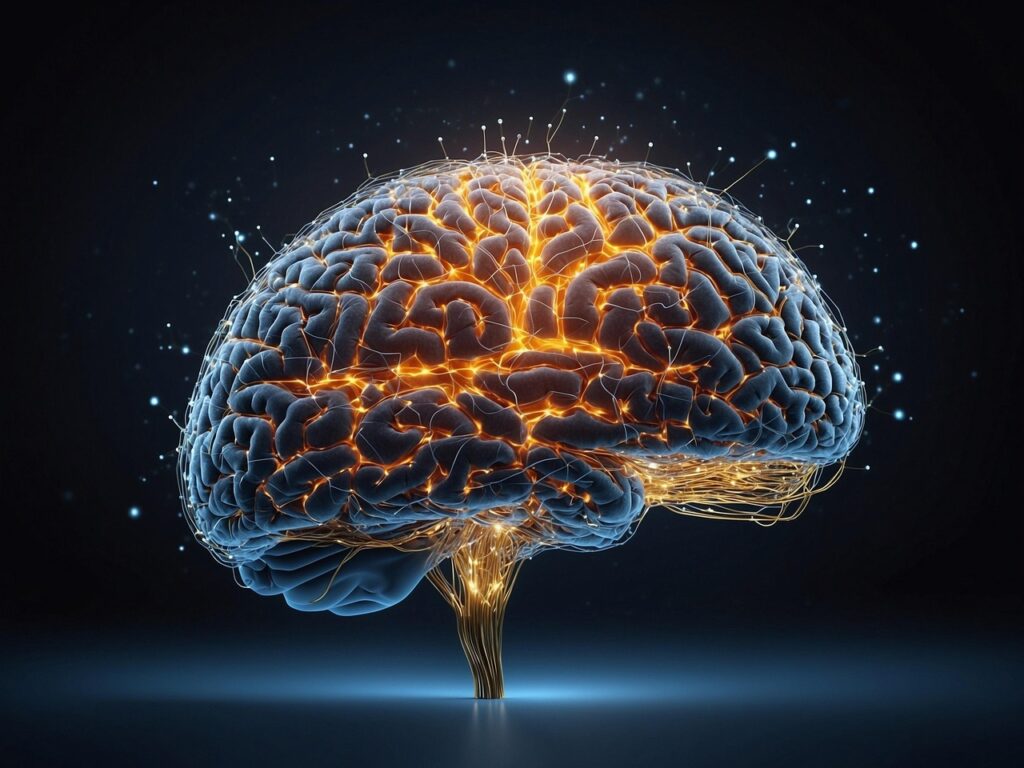
At the heart of modern AI are neural networks, mathematical structures inspired by the human brain. They organise computation into layers of interconnected nodes, or artificial neurones, which process information and learn from examples.
Unlike traditional programming, where every rule must be explicitly defined, neural networks can identify patterns in data autonomously. The ability to learn and improve with experience underpins the astonishing capabilities of today’s AI.
Multi-layer perceptron networks
A neural network consists of multiple layers of interconnected neurons, not just a simple input and output layer. Each layer processes the data it receives from the previous layer, gradually building hierarchical representations.
In image recognition, early layers detect simple features, such as edges or textures, middle layers combine these into shapes, and later layers identify full objects, like faces or cars. In natural language processing, lower layers capture letters or words, while higher layers recognise grammar, context, and meaning.
Without multiple layers, the network would be shallow, limited in its ability to learn, and unable to handle complex tasks. Multi-layer, or deep networks, are what enable AI to perform sophisticated functions like autonomous driving, medical diagnosis, and language translation.
How mathematics drives artificial intelligence
The foundation of AI is mathematics. Without linear algebra, calculus, probability, and optimisation, modern AI systems would not exist. These disciplines allow machines to represent, manipulate, and learn from vast quantities of data.
Linear algebra allows inputs and outputs to be represented as vectors and matrices. Each layer of a neural network transforms these data structures, performing calculations that detect patterns in data, such as shapes in images or relationships between words in a sentence.
Calculus, especially the study of derivatives, is used to measure how small changes in a network’s parameters, called weights, affect its predictions. This information is critical for optimisation, which is the process of adjusting these weights to improve the network’s accuracy.
The loss function measures the difference between the network’s prediction and the actual outcome. It essentially tells the network how wrong it is. For example, the mean squared error measures the average squared difference between the predicted and actual values, while cross-entropy is used in classification tasks to measure how well the predicted probabilities match the correct categories.
Gradient descent is an algorithm that uses the derivative of the loss function to determine the direction and magnitude of changes to each weight. By moving weights gradually in the direction that reduces the loss, the network learns over time to make more accurate predictions.
Backpropagation is a method that makes learning in multi-layer neural networks feasible. Before its introduction in the 1980s, training networks with more than one or two layers was extremely difficult, as it was hard to determine how errors in the output layer should influence the earlier weights. Backpropagation systematically propagates this error information backwards through the network.
At its core, it applies the chain rule of calculus to compute gradients, indicating how much each weight contributes to the overall error and the direction it should be adjusted. Combined with gradient descent, this iterative process allows networks to learn hierarchical patterns, from simple edges in images to complex objects, or from letters to complete sentences.
Backpropagation has transformed neural networks from shallow, limited models into deep, powerful tools capable of learning sophisticated patterns and making human-like predictions.
Why neural network architecture matters
The arrangement of layers in a network, or its architecture, determines its ability to solve specific problems.
Activation functions introduce non-linearity, giving networks the ability to map complex, high-dimensional data. ReLU (Rectified Linear Unit), one of the most widely used activation functions, addresses critical training issues and enables deep networks to learn efficiently.
Convolutional neural networks (CNNs) excel in image and video analysis. By applying filters across images, CNNs detect local patterns like edges and textures. Pooling layers reduce spatial dimensions, making computation faster while preserving essential features. Local connectivity ensures neurones process only relevant input regions, mimicking human vision.
Recurrent neural networks (RNNs) and their variants, such as LSTMs and GRUs, process sequential data like text or audio. They maintain a hidden state that acts as memory, capturing dependencies over time, a crucial feature for tasks such as speech recognition or predictive text.
Transformer revolution and attention mechanisms
In 2017, AI research took a major leap with the introduction of Transformer models. Unlike RNNs, which process sequences step by step, transformers use attention mechanisms to evaluate all parts of the input simultaneously.
The attention mechanism calculates which elements in a sequence are most relevant to each output. Using linear algebra, it compares query, key, and value vectors to assign weights, highlighting important information and suppressing irrelevant details.
That approach enabled the creation of large language models (LLMs) such as GPT and BERT, capable of generating coherent text, answering questions, and translating languages with unprecedented accuracy.
Transformers reshaped natural language processing and have since expanded into areas such as computer vision, multimodal AI, and reinforcement learning. Their ability to capture long-range context efficiently illustrates the power of combining deep learning fundamentals with innovative architectures.
How does AI learn and generalise?
One of the central challenges in AI is ensuring that networks learn meaningful patterns from data rather than simply memorising individual examples. The ability to generalise and apply knowledge learnt from one dataset to new, unseen situations is what allows AI to function reliably in the real world.
Supervised learning is the most widely used approach, where networks are trained on labelled datasets, with each input paired with a known output. The model learns to map inputs to outputs by minimising the difference between its predictions and the actual results.
Applications include image classification, where the system distinguishes cats from dogs, or speech recognition, where spoken words are mapped to text. The accuracy of supervised learning depends heavily on the quality and quantity of labelled data, making data curation critical for reliable performance.
Unsupervised learning, by contrast, works with unlabelled data and seeks to uncover hidden structures and patterns. Clustering algorithms, for instance, can group similar customer profiles in marketing, while dimensionality reduction techniques simplify complex datasets for analysis.
The paradigm enables organisations to detect anomalies, segment populations, and make informed decisions from raw data without explicit guidance.
Reinforcement learning allows machines to learn by interacting with an environment and receiving feedback in the form of rewards or penalties. Unlike supervised learning, the system is not told the correct action in advance; it discovers optimal strategies through trial and error.
That approach powers innovations in robotics, autonomous vehicles, and game-playing AI, enabling systems to learn long-term strategies rather than memorise specific moves.
A persistent challenge across all learning paradigms is overfitting, which occurs when a network performs exceptionally well on training data but fails to generalise to new examples. Techniques such as dropout, which temporarily deactivate random neurons during training, encourage the network to develop robust, redundant representations.
Similarly, weight decay penalises excessively large parameter values, preventing the model from relying too heavily on specific features. Achieving proper generalisation is crucial for real-world applications: self-driving cars must correctly interpret new road conditions, and medical AI systems must accurately assess patients with cases differing from the training dataset.
By learning patterns rather than memorising data, AI systems become adaptable, reliable, and capable of making informed decisions in dynamic environments.
The black box problem and explainable AI (XAI)
Deep learning and other advanced AI technologies rely on multi-layer neural networks that can process vast amounts of data. While these networks achieve remarkable accuracy in image recognition, language translation, and decision-making, their complexity often makes it extremely difficult to explain why a particular prediction was made. That phenomenon is known as the black box problem.
Though these systems are built on rigorous mathematical principles, the interactions between millions or billions of parameters create outputs that are not immediately interpretable. For instance, a healthcare AI might recommend a specific diagnosis, but without interpretability tools, doctors may not know what features influenced that decision.
Similarly, in finance or law, opaque models can inadvertently perpetuate biases or produce unfair outcomes.
Explainable AI (XAI) seeks to address this challenge. By combining the mathematical and structural fundamentals of AI with transparency techniques, XAI allows users to trace predictions back to input features, assess confidence, and identify potential errors or biases.
In practice, this means doctors can verify AI-assisted diagnoses, financial institutions can audit credit decisions, and policymakers can ensure fair and accountable deployment of AI.
Understanding the black box problem is therefore essential not only for developers but for society at large. It bridges the gap between cutting-edge AI capabilities and trustworthy, responsible applications, ensuring that as AI systems become more sophisticated, they remain interpretable, safe, and beneficial.
Data and computational power
Modern AI depends on two critical ingredients: large, high-quality datasets and powerful computational resources. Data provides the raw material for learning, allowing networks to identify patterns and generalise to new situations.
Image recognition systems, for example, require millions of annotated photographs to reliably distinguish objects, while language models like GPT are trained on billions of words from books, articles, and web content, enabling them to generate coherent, contextually aware text.
High-performance computation is equally essential. Training deep neural networks involves performing trillions of calculations, a task far beyond the capacity of conventional processors.
Graphics Processing Units (GPUs) and specialised AI accelerators enable parallel processing, reducing training times from months to days or even hours. This computational power enables real-time applications, such as self-driving cars interpreting sensor data instantly, recommendation engines adjusting content dynamically, and medical AI systems analysing thousands of scans within moments.
The combination of abundant data and fast computation also brings practical challenges. Collecting representative datasets requires significant effort and careful curation to avoid bias, while training large models consumes substantial energy.
Researchers are exploring more efficient architectures and optimisation techniques to reduce environmental impact without sacrificing performance.
The future of AI
The foundations of AI continue to evolve rapidly, driven by advances in algorithms, data availability, and computational power. Researchers are exploring more efficient architectures, capable of learning from smaller datasets while maintaining high performance.
For instance, self-supervised learning allows a model to learn from unlabelled data by predicting missing information within the data itself, while few-shot learning enables a system to understand a new task from just a handful of examples. These methods reduce the need for enormous annotated datasets and make AI development faster and more resource-efficient.
Transformer models, powered by attention mechanisms, remain central to natural language processing. The attention mechanism allows the network to focus on the most relevant parts of the input when making predictions.
For example, when translating a sentence, it helps the model determine which words are most important for understanding the meaning. Transformers have enabled the creation of large language models like GPT and BERT, capable of summarising documents, answering questions, and generating coherent text.
Beyond language, multimodal AI systems are emerging, combining text, images, and audio to understand context across multiple sources. For instance, a medical AI system might analyse a patient’s scan while simultaneously reading their clinical notes, providing more accurate and context-aware insights.
Ethics, transparency, and accountability remain critical. Explainable AI (XAI) techniques help humans understand why a model made a particular decision, which is essential in fields like healthcare, finance, and law. Detecting bias, evaluating fairness, and ensuring that models behave responsibly are becoming standard parts of AI development.
Energy efficiency and sustainability are also priorities, as training large models consumes significant computational resources.
Ultimately, the future of AI will be shaped by models that are not only more capable but also more efficient, interpretable, and responsible.
Would you like to learn more about AI, tech and digital diplomacy? If so, ask our Diplo chatbot!
IBM has agreed to acquire data streaming company Confluent in an all-cash deal valued at about $11 billion, signalling a major push to strengthen its data and AI capabilities for enterprise customers.
The acquisition brings Confluent’s real-time data streaming platform into IBM’s portfolio, aiming to help organisations connect, process, and govern data across hybrid cloud environments as AI agents and applications proliferate.
Both companies argue that faster, trusted data flows are becoming essential as enterprises deploy generative and agentic AI at scale, with real-time access increasingly seen as a prerequisite for reliable automation and decision-making.
IBM said the deal will support its ambition to offer an AI-ready data platform that integrates applications, analytics, and infrastructure. At the same time, Confluent sees the combination as a way to accelerate global reach and commercial execution.
The move reflects broader shifts in enterprise architecture, as demand for real-time data systems grows and competition intensifies around AI infrastructure, streaming technologies, and platforms built to support continuous, distributed workloads.
Would you like to learn more about AI, tech, and digital diplomacy? If so, ask our Diplo chatbot!